
Hidden beneath centuries of soil and legend, the Serpent’s Wall holds secrets that few travelers to Ukraine ever discover. I first learned about these ancient earthworks while researching the Battle of Kiev from 1941, and what I found changed my understanding of military history in Eastern Europe entirely.
The WWII fortifications hidden inside the Serpent’s Wall represent one of the most fascinating intersections of ancient and modern defensive architecture. These massive earthen ramparts, built over a thousand years ago to protect against nomadic invasions, were repurposed by both Soviet and German forces during World War II as ready-made defensive positions.
In this guide, I will share what I have learned about exploring these hidden bunkers, understanding their strategic importance, and safely experiencing a piece of living history. Whether you are a military history enthusiast, an archaeology buff, or simply curious about Ukraine’s layered past, this exploration of Zmievy Valy will reveal something extraordinary.
Table of Contents
- What Are the Serpent’s Walls?
- Where Are the Serpent’s Walls Located?
- WWII Fortifications Hidden Inside the Serpent’s Wall
- Exploring WWII Bunkers in the Serpent’s Wall
- Archaeological Discoveries and Artifacts
- Current State and Preservation
- Frequently Asked Questions
- Were there WWII bunkers in the Serpent’s Walls?
- What are the Serpent Walls in Ukraine?
- Where are the Serpent’s Walls located?
- Who built the Serpent’s Walls?
- How long are the Serpent’s Walls?
- Can you explore Serpent Wall fortifications?
- What artifacts have been found in Serpent’s Walls?
- What was the Battle of Kiev 1941?
- Conclusion
What Are the Serpent’s Walls?
The Serpent’s Wall, known locally as Zmievy Valy or sometimes called the Dragon Walls, is an ancient system of earthwork fortifications stretching across central Ukraine. These massive structures consist of earthen ramparts, defensive ditches, and in some sections, remnants of wooden palisades that once formed a formidable defensive line.
Archaeologists have debated the origins of these walls for generations. Carbon dating suggests multiple construction phases spanning from the 2nd century AD through the early medieval period. The Chernyakhov culture, which flourished in this region during the late Roman period, may have built the earliest sections. Later additions likely came from various groups including the Goths, Sarmatians, and the early East Slavs of Kievan Rus.
The name itself carries mythic weight. Local legends speak of a giant serpent or dragon that was defeated by a hero, its body forming the winding earthworks that protected the approaches to ancient Kiev. Historical sources from Herodotus through medieval chronicles mention defensive structures in this region, though scholars debate which references specifically describe the Serpent’s Wall system.
Construction and Design
Walking along surviving sections of the wall, you can appreciate the engineering skill involved. The earthworks typically rise 3 to 10 meters above the surrounding terrain, with accompanying ditches that add another 2 to 5 meters of depth to the obstacle. The builders took advantage of natural ridges and river valleys, creating a defensive line that stretched for over 1,000 kilometers at its greatest extent.
The construction method involved massive earthmoving without modern equipment. Workers dug trenches and piled the soil to form ramparts, sometimes reinforcing the core with timber and stone. In many sections, a wooden palisade topped the earthwork, creating a formidable barrier against cavalry and infantry alike. The sheer scale suggests organized state resources rather than local tribal efforts.
Where Are the Serpent’s Walls Located?
The Serpent’s Wall system primarily follows the right bank of the Dnieper River through modern-day Kyiv Oblast. Archaeologists have identified approximately eleven distinct wall groups scattered across central and western Ukraine, stretching from the Carpathian foothills to the Dnieper delta region.
The most accessible and well-documented sections lie south and west of modern Kiev. The walls follow the courses of major rivers including the Teteriv, Ros, Sula, and smaller tributaries that feed the Dnieper. This positioning made strategic sense, using natural water barriers to supplement the artificial earthworks.
Major Wall Groups
The eleven classified wall groups cover an enormous territory. Group I extends through Bessarabia and Podolia near the Dniester and Prut rivers. Groups II through IV stretch across Volhynia and Galicia, covering areas near modern Lutsk, Lviv, and Rivne. The most famous sections, Groups V through VII, arc around Kiev itself, forming the historic defensive perimeter of the ancient city.
Additional groups extend eastward toward Poltava and Kharkiv, with some sections reaching toward the Sea of Azov and Crimea. This distribution suggests the walls served multiple purposes over centuries, protecting different regions against various threats rather than forming a single unified defensive system.
Geographic Extent
The total length of all identified Serpent Wall sections exceeds 1,000 kilometers, making this one of the largest ancient fortification systems in Europe. For comparison, this rivals the combined length of Hadrian’s Wall and the Antonine Wall in Britain. Yet unlike those Roman monuments, much of the Serpent’s Wall remains unexcavated and poorly documented.
The walls typically run north-south or northeast-southwest, blocking the approaches to settled areas from the open steppe to the south and east. This orientation reflects their primary purpose: protecting agricultural communities and trade routes from nomadic raiders who swept across the Ukrainian steppe for millennia.
WWII Fortifications Hidden Inside the Serpent’s Wall
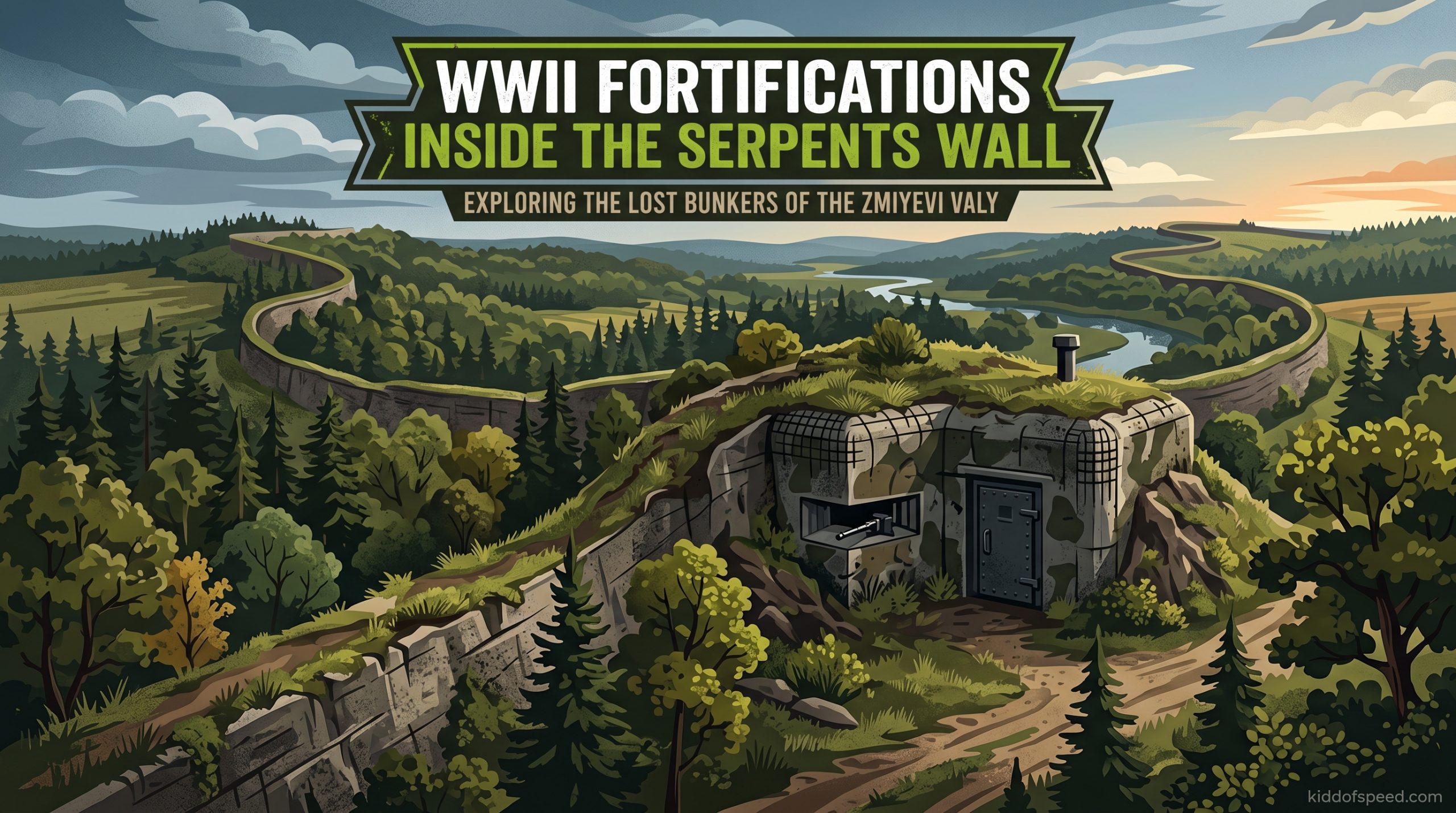
The strategic value of these ancient earthworks did not end with the medieval period. When German forces advanced on Kiev in July 1941, both Soviet defenders and later German occupiers recognized the defensive potential of the Serpent’s Wall. The existing ramparts provided ready-made positions for machine gun nests, artillery observation posts, and infantry strongpoints.
I have explored several sections where concrete bunkers were literally built into the ancient earthworks. These structures represent a fascinating layering of military history, with 20th-century German engineering fused to medieval or earlier fortifications. The builders simply dug into the existing ramparts and installed prefabricated concrete bunker sections, creating positions that were nearly invisible from the surrounding terrain.
The Battle of Kiev 1941
The Battle of Kiev in 1941 stands as the largest encirclement in military history, with over 600,000 Soviet troops trapped and captured. During the desperate defensive fighting, Soviet forces utilized every available position, including ancient fortifications. The Serpent’s Wall sections near the city provided fallback positions as the front collapsed.
German forces suffered approximately 100,000 casualties during the Kiev campaign, indicating the ferocity of the fighting. After capturing the city, German engineers expanded the fortification network, building new bunkers and reinforcing existing positions against the anticipated Soviet counteroffensive. Many of these positions remained in use through the occupation period until the Soviet reconquest in 1943.
Types of WWII Bunkers
Exploring these sites today, you can identify several distinct bunker types integrated into the Serpent’s Wall. The most common are concrete machine gun positions, typically housing MG-34 or MG-42 weapons with fields of fire covering approach routes. These small bunkers, often called “Tobruks” after their North African equivalents, feature a central fighting position surrounded by a ring of concrete.
Larger command bunkers served as observation posts and communication centers. These structures extend deeper into the earthworks, with multiple rooms including living quarters, ammunition storage, and radio equipment spaces. Some feature escape tunnels that emerge behind the main defensive line, a common feature in German bunker design.
Flooded bunkers present both a hazard and an opportunity for exploration. During the German retreat in 1943, many positions were deliberately destroyed or flooded to prevent their reuse by Soviet forces. Today these submerged structures attract divers and underwater exploration teams, though entering them requires specialized equipment and significant risk.
Military Strategy and the Ancient Walls
The German military recognized what ancient builders had understood centuries earlier. The Serpent’s Wall followed terrain that naturally channeled movement, creating killing zones where advancing infantry could be decimated by prepared defenses. By adding modern firepower to these ancient positions, they created a formidable obstacle.
Soviet forces employed similar thinking during their 1943 offensive. Reconnaissance units mapped German positions along the wall sections, identifying bunker locations and planning infiltration routes. The resulting battles often involved hand-to-hand fighting in trenches and bunkers, with ancient earthworks providing the framework for 20th-century combat.
Exploring WWII Bunkers in the Serpent’s Wall
I have spent many days exploring these sites with metal detector in hand, uncovering artifacts that tell stories of the men who fought and died here. The experience combines archaeology with adventure, though it demands respect for both the historical significance and the very real dangers involved.
Metal detecting along the Serpent’s Wall has yielded remarkable finds. German helmets, ammunition casings, and personal items surface regularly from the soil around bunker positions. Soviet artifacts including Mosin-Nagant rifle clips, belt buckles, and even identification documents occasionally emerge. Each item represents a human story frozen in time.
What You Can Find
The most common relics include military equipment and personal items. Shell casings from both German and Soviet weapons litter the ground near former fighting positions. Button and badge collections can be assembled from the soil around bunker entrances, where soldiers would have gathered and lost small items.
More significant finds require careful documentation. I have seen unexploded ordnance, including grenades and mortar rounds, pulled from these sites. Never handle any explosive item. Mark the location and report it to local authorities. The same applies to human remains, which occasionally surface during heavy rains or soil disturbance.
Safety Considerations
Exploring these bunkers involves genuine risks that require preparation and caution. The structures have aged for eighty years without maintenance. Concrete crumbles, wooden supports rot, and entrances collapse without warning. Never enter any underground structure alone, and always inform someone of your planned route and return time.
Air quality presents another hazard. Bunkers sealed for decades may accumulate dangerous gases or lack sufficient oxygen for breathing. Carry a portable gas detector and maintain constant ventilation when exploring enclosed spaces. The temptation to explore deep tunnels must be balanced against the very real possibility of becoming trapped.
The ongoing conflict in Ukraine adds additional complications. Some Serpent’s Wall sections fall within or near contested areas. Verify current security conditions before traveling to any site. Military zones, minefields, and unexploded ordnance contamination make some areas completely inaccessible in 2026.
Equipment for Exploration
For surface exploration and metal detecting, bring sturdy boots, gloves, and appropriate weather gear. A quality metal detector with discrimination capabilities helps distinguish valuable relics from scrap metal. Carry a camera, notebook, and GPS device to document finds and locations for historical research purposes.
If you plan to enter bunker structures, add a hard hat, multiple flashlights with extra batteries, rope, and first aid supplies. Work with a partner who remains outside while you explore, maintaining communication through rope signals or two-way radios. The buddy system has saved lives in these environments.
Archaeological Discoveries and Artifacts
The Serpent’s Wall preserves evidence of human activity spanning two millennia. Archaeological excavations since the 1970s have uncovered artifacts from the Chernyakhov culture, early Slavic settlements, medieval Kiev, and the Second World War. Each layer tells part of the story of this contested landscape.
Ancient finds include pottery shards, jewelry, coins, and weapons from various periods. Roman influence appears in some artifacts, suggesting trade connections across the Black Sea. Medieval items include agricultural tools, religious objects, and remnants of the wooden fortifications that once crowned the earthworks.
WWII Archaeology
The modern conflict layer has attracted particular attention from military archaeologists. Bunker excavations have recovered weapons, equipment, and personal effects that document the daily lives of soldiers on both sides. These finds contribute to our understanding of the Eastern Front, an understudied aspect of World War II history in Western scholarship.
Elena Filatova, known for her Chernobyl motorcycle journeys, documented many of these sites before her passing. Her photographs and notes remain valuable resources for understanding the pre-2014 condition of numerous bunker locations. Her work inspired a generation of Ukrainian explorers to document their heritage before it disappears.
Current State and Preservation
The Serpent’s Wall faces threats from development, agriculture, and the ongoing conflict. Many sections have been plowed under for farmland, while others suffer from unauthorized excavation by treasure hunters. The 2022 Russian invasion caused additional damage to known sites, with military positions and shelling affecting preserved areas.
Preservation efforts remain limited due to funding constraints and the continuing security situation. Ukrainian archaeological services have documented damage where possible, but comprehensive surveys await peace and stable funding. International heritage organizations have expressed concern but can do little while hostilities continue.
Visiting Information
For travelers interested in visiting the Serpent’s Wall, several accessible sections exist near Kiev. The most popular locations include areas near Pereiaslav, where museum exhibits explain the wall’s history, and sections along the Teteriv River that remain relatively preserved. Local guide services can provide transportation and interpretation for international visitors.
Before planning any visit, check current travel advisories and regional security conditions. Some areas remain dangerous due to landmines, unexploded ordnance, or military activity. Never venture into restricted zones, and respect all warning signs and barriers. The walls will wait for safer times.
Frequently Asked Questions
Were there WWII bunkers in the Serpent’s Walls?
Yes, both Soviet and German forces built concrete bunkers into the existing earthworks during World War II. These structures served as machine gun positions, command posts, and defensive strongpoints during the 1941 Battle of Kiev and subsequent occupation. Many remain accessible to careful explorers today.
What are the Serpent Walls in Ukraine?
The Serpent’s Wall (Zmievy Valy) is an ancient system of earthwork fortifications stretching over 1,000 kilometers across central Ukraine, primarily in Kyiv Oblast. Built between the 2nd and 10th centuries AD by various cultures, these earthen ramparts protected ancient Kiev from nomadic invasions.
Where are the Serpent’s Walls located?
The walls primarily follow the right bank of the Dnieper River through Kyiv Oblast, with eleven distinct wall groups extending from Bessarabia and Podolia eastward to Poltava and Kharkiv. The most accessible sections lie south and west of modern Kiev, following the Teteriv, Ros, and Sula river valleys.
Who built the Serpent’s Walls?
Multiple cultures contributed to the Serpent’s Wall over centuries. Carbon dating suggests construction phases spanning from the 2nd century AD through the medieval period. The Chernyakhov culture built early sections, with later additions by Goths, Sarmatians, early East Slavs, and Kievan Rus builders.
How long are the Serpent’s Walls?
The total length of all identified Serpent Wall sections exceeds 1,000 kilometers, making this one of Europe’s largest ancient fortification systems. The walls vary in individual section length, with some continuous stretches extending dozens of kilometers across the Ukrainian landscape.
Can you explore Serpent Wall fortifications?
Yes, though safety precautions are essential. Many sections are accessible near Kiev and Pereiaslav, but exploration requires proper equipment, awareness of unexploded ordnance risks, and respect for current security conditions. Never enter restricted military zones or unstable underground structures without professional guidance.
What artifacts have been found in Serpent’s Walls?
Archaeological discoveries span two millennia, including ancient pottery, jewelry, coins, and weapons from the Chernyakhov culture through medieval Kiev. WWII relics include German and Soviet military equipment, helmets, ammunition, and personal items. Metal detecting regularly reveals shell casings, buttons, badges, and other artifacts.
What was the Battle of Kiev 1941?
The Battle of Kiev in 1941 was the largest encirclement in military history, with over 600,000 Soviet troops captured during a massive German offensive. The Serpent’s Wall provided defensive positions for Soviet forces during the fighting. German forces suffered approximately 100,000 casualties during the campaign.
Conclusion
The WWII fortifications hidden inside the Serpent’s Wall represent one of Ukraine’s most compelling historical intersections. Ancient earthworks that once stopped nomadic horsemen were repurposed with concrete and steel to resist mechanized armies, creating a layered monument to human conflict across two thousand years.
I hope this guide has provided both practical information and inspiration for understanding these remarkable sites. The Serpent’s Wall deserves recognition alongside Europe’s more famous ancient fortifications, not only for its scale but for its continued relevance through the medieval period and into modern warfare. When peace returns to Ukraine, I encourage every military history enthusiast to experience these walls firsthand, to walk the ramparts, and to reflect on the layers of history beneath our feet.
The bunkers await careful explorers, the artifacts await respectful documentation, and the stories of those who fought and died here deserve to be remembered. In understanding the Serpent’s Wall, we understand something essential about Ukraine’s role as a crossroads of civilizations and conflicts throughout history.