
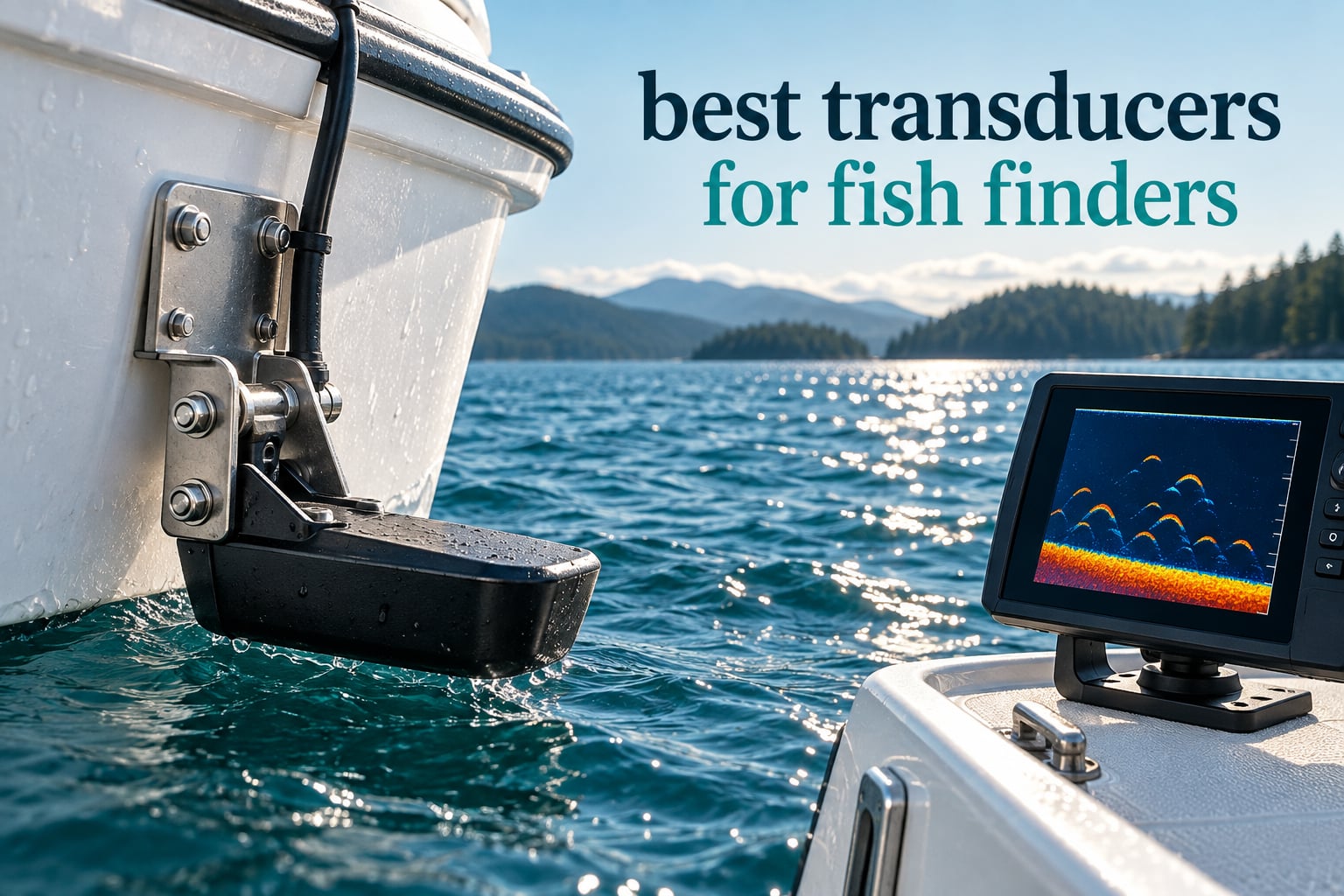
Before you read a single pick on this list, check your fish finder model number. Transducers for fish finders are brand-locked, and often locked to one model family, so a Garmin unit generally will not work with a Humminbird or Lowrance display. That single check prevents the most common expensive mistake in this category, and it takes about thirty seconds on the back of your head unit.
We spent the last two months going through eight of the most-reviewed transducers on the market, matching each one to the display families it actually supports, and reading what owners report after a season on the water. What follows is a compatibility-first roundup: every unit below lists the specific fish finder series it pairs with, so you can buy with confidence instead of gambling on a return.
The field is dominated by three brands. Humminbird, Lowrance and Garmin between them account for essentially every transducer an angler is likely to plug into a current display, and each of them locks you into its own ecosystem. Within those ecosystems the choice comes down to mount type, frequency, and whether you want traditional CHIRP arches, down imaging, side-scan, or all three.
Table of Contents
- Top 3 Picks for Best Transducers for Fish Finders (October 2026)
- Quick Overview: Best Transducers for Fish Finders in 2026
- 1. Humminbird XNT 9 20 T: The Broadest Compatibility in the Humminbird Line
- 2. Lowrance HST-WSBL Skimmer: The Deep Dual-Frequency Transom Workhorse
- 3. Lowrance TripleShot: CHIRP, SideScan and DownScan in One Housing
- 4. Lowrance SplitShot: CHIRP Plus DownScan With Four Ways to Mount It
- 5. Humminbird XNT-9-HW-T: The Widest CHIRP Cone and 1200 Foot Reach
- 6. Garmin GT20-TM: Traditional Sonar With ClearVu Down Imaging
- 7. Garmin GT56UHD-TM: SideVu Scanning Sonar for Structure Hunters
- 8. Garmin GT15M: In-Hull CHIRP That Avoids Transom Cavitation
- Which Mount Type Do You Need? Shoot-Through vs Thru-Hull vs Transom
- How to Check Transducer Compatibility in Four Steps
- Frequency, CHIRP and Beam Angle: What Actually Changes Your Screen
- Why Your Fish Finder Loses Bottom at Speed (And How to Fix It)
- Buying Guide: Match the Transducer to Your Boat and Water
- Frequently Asked Questions
- Conclusion
Top 3 Picks for Best Transducers for Fish Finders (October 2026)

Humminbird XNT 9 20 T
- Single and DualBeam coverage
- Broadest Humminbird compatibility
- Built-in temperature
- 20 ft cable
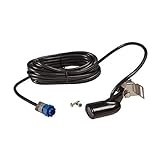
Lowrance HST-WSBL Skimmer
- 83/200 kHz dual frequency
- 1000 ft depth at 83 kHz
- Built-in temperature
- 7-pin connector
The three picks above cover three genuinely different situations. The Humminbird XNT 9 20 T wins on compatibility breadth, working across nearly the whole Humminbird line. The Lowrance skimmer is the budget-friendly deep-water workhorse, rated to 1000 feet at 83 kHz. The SplitShot is the one to pick if you want down imaging and CHIRP in a single housing that can move between the transom, the inside of the hull, the trolling motor, or a scupper hole.
Quick Overview: Best Transducers for Fish Finders in 2026
| Product | Specifications | Action |
|---|---|---|
| Humminbird XNT 9 20 T |
|
Check Latest Price |
| Lowrance HST-WSBL Skimmer |
|
Check Latest Price |
 Lowrance TripleShot Lowrance TripleShot |
|
Check Latest Price |
| Lowrance SplitShot |
|
Check Latest Price |
 Humminbird XNT-9-HW-T Humminbird XNT-9-HW-T |
|
Check Latest Price |
 Garmin GT20-TM Garmin GT20-TM |
|
Check Latest Price |
 Garmin GT56UHD-TM Garmin GT56UHD-TM |
|
Check Latest Price |
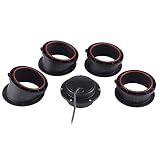 Garmin GT15M Garmin GT15M |
|
Check Latest Price |
1. Humminbird XNT 9 20 T: The Broadest Compatibility in the Humminbird Line
Humminbird XNT-9-20T Transom Mount Transducer W/Temp
Transom mount with built-in temperature
20 ft cable
Maximum depth 600 feet
3.5 oz
Pros
- Works across HELIX
- 100 300 500 600 700 800 900 and 1100 series
- Single and DualBeam coverage
- Built-in temperature sensor
- Lightweight at 3.5 oz
- Mounting hardware and instructions included
Cons
- Does not support non-CHIRP DI models
- 600 ft ceiling is shallower than some CHIRP units
If you own a Humminbird and are not sure which transducer your display will accept, this is the safest purchase on the list. The listed compatibility covers the HELIX series plus the 100, 300, 500, 600, 700, 800, 900, 1100 and HDR650 families, so the odds of it fitting whatever you already own are very good.
It is also the easiest part in the group to live with. At 3.5 ounces it adds nothing to your transom, and the included hardware and instructions are enough to get it bracket-mounted without a second trip to the store.
The one real limitation is the DI carve-out. If your Humminbird is a non-CHIRP down-imaging model, or falls in the older Matrix line, this transducer will not drive it. Check the model number before you order rather than after.
Depth is the other tradeoff. Its 600 foot rating is shallower than several CHIRP units here, which matters if you fish genuinely deep offshore water rather than inshore structure and rivers.
Who it fits best
This is the transducer for the Humminbird owner who has upgraded displays over the years and no longer remembers which generation of hardware is in the console. Broad family coverage means you are not gambling on a single model-year match.
It also suits anyone running mostly traditional 2D sonar on a lake or an estuary, where the 600 foot ceiling is irrelevant and the built-in temperature sensor is the feature you will actually use day to day.
Where it falls short
Owners of down-imaging Humminbird models should look elsewhere, because the DI exclusion is a hard limit rather than a matter of settings. The Single/DualBeam architecture also gives you no side-scan imagery at all.
Reviewers report that a handful of buyers bought it expecting imaging capability and were disappointed, which is a fair expectation to set straight: this is a traditional-echoviewer replacement, done well and cheaply.
2. Lowrance HST-WSBL Skimmer: The Deep Dual-Frequency Transom Workhorse
Lowrance 000-0106-72 HST-WSBL Transom-Mount Skimmer Transducer – 83/200 kHz with Built-in Temperature Sensor, 7-Pin Connector, Black
Transom skimmer mount
83/200 kHz dual frequency
1000 ft at 83 kHz
Built-in temperature
Pros
- Dual-frequency 83/200 kHz covers shallow and deep water
- 1000 ft depth capability at 83 kHz
- Built-in temperature sensor
- Durable skimmer housing
- Generous 20 ft cable
Cons
- No CHIRP or imaging capability
- 7-pin connector limits it to Lowrance displays
This skimmer transducer is the value pick in the roundup, and the reason is simple: it does one job at a wide range of depths. Dual-frequency 83/200 kHz output means you have a low-frequency channel for deep water and a high-frequency channel for shallow detail, in a single housing.
The depth rating is the standout. Reaching 1000 feet at 83 kHz covers coastal ledges and offshore banks that many transom units simply cannot reach, and it does so from a bracket that swaps in minutes.
Owners consistently mention the built-in temperature sensor as more useful than expected. Tracking surface temperature through the season tells you when baitfish are pushing into shallower water, and having it in the transducer means no extra sensor to mount.
Who it fits best
This suits anglers who fish deeper than most transom transducers can follow and do not need photographic imagery. If your priority is knowing where the bottom is and what is sitting just above it, the traditional 2D picture here is reliable and consistent.
It is also a good match for a boat with a lot of hardware around the transom, since the durable skimmer housing tolerates the knocks that fishing boats take. It works with virtually any hull type.
Where it falls short
There is no CHIRP and no imaging in this housing, so if your Lowrance display supports SideScan or DownScan, this will not feed those channels. Target separation suffers next to a CHIRP feed, and reviewers mention that explicitly when they compare the two.
The 7-pin connector also keeps you inside the Lowrance ecosystem, which is fine if you are loyal to the brand and a problem if you ever change displays. Plan around that before you buy.
3. Lowrance TripleShot: CHIRP, SideScan and DownScan in One Housing
Lowrance TripleShot Skimmer Transducer for Hook Reveal and HOOK2 Fish Finders, BLACK
Transom mount 3-in-1 sonar
High CHIRP plus SideScan and DownScan
455/800 kHz imaging
300 ft max depth
Pros
- Three sonar technologies in one housing
- Wide-angle CHIRP covers roughly twice the area
- 455/800 kHz SideScan and DownScan imaging
- Built-in temperature sensor
- Plug-and-play with HOOK2 TripleShot displays
Cons
- 300 ft max depth is shallow for offshore use
- Only pairs with HOOK2 TripleShot displays
- Highest one-star share in the group
The TripleShot is the most capable transducer in the roundup per dollar of capability, packing High CHIRP, SideScan and DownScan into a single transom housing. Owners describe the wide-angle CHIRP cone as roughly doubling the coverage they get from a plain skimmer.
What SideScan adds is the ability to read structure beside the boat rather than only below it. At 455 kHz the images resolve ledges, weed lines and drop-offs well enough that many anglers describe them as photographic rather than as abstract arches.
DownScan at 455/800 kHz does the same job straight down, which is what you want when you are trolling over a shallow reef or working a point where the fish sit beneath you rather than out to the side.
The built-in temperature sensor is standard across this generation of Lowrance transducers, so you get that data without a separate sensor install.
Who it fits best
This is the pick for HOOK2 owners who want to find structure rather than just track depth. If you fish water with visible edges, drop-offs or weed lines, side-scan imagery changes how you cover it compared with traditional 2D alone.
It also suits anyone who wants to stop thinking about which channel they are on. You plug it in and get all three sonar types from one mount point, which simplifies installation on a boat with limited transom space.
Where it falls short
Compatibility is narrow. It plugs into HOOK2 5, 7, 9 and 12 inch TripleShot displays and nothing else, which is where the 9 percent one-star share in the reviews comes from. Buyers who expected it to work with other Lowrance models were disappointed.
The 300 foot depth ceiling is the other limitation, and it matters offshore. On a saltwater boat that regularly works water deeper than that, you will be running a different transducer on the bottom at speed and this one on the structure picture.
4. Lowrance SplitShot: CHIRP Plus DownScan With Four Ways to Mount It
Lowrance SplitShot Skimmer Transducer, fits Lowrance HOOK2 Fish Finders,Gray
CHIRP and DownScan in one housing
Mounts transom, in-hull, trolling motor or scupper
Fits HOOK2 5/7/9/12 inch
Pros
- DownScan and CHIRP from one transducer
- Wider sonar cone gives roughly double traditional coverage
- Four mounting positions
- Built-in temperature sensor
- Fits HOOK2 5
- 7
- 9 and 12 inch models
Cons
- No SideScan imaging
- Limited to Lowrance HOOK2 displays
The SplitShot is the most flexible transducer here, and that mounting flexibility is genuinely useful. The same housing can go on the transom, inside the hull, on the trolling motor, or through a scupper hole, which means it works on a small boat as happily as on a console.
Sonar-wise you get DownScan plus CHIRP in a single element. The wider cone gives roughly double the coverage of a traditional fish finder at the same frequency, so you see more of the column without needing a second transducer.
That makes it a good middle ground between the plain skimmer and the TripleShot. You give up side-scan imagery, and in exchange you get a cleaner downward picture plus installation options the imaging units do not offer.
With an 80 percent five-star share across 555 reviews, it is among the best-rated units in this group, and the praise concentrates on exactly the thing that matters: one install, two sonar types, no guesswork.
Who it fits best
Shallow-water anglers who fish structure directly beneath the boat are the obvious audience. DownScan is the right tool when the target is under the hull rather than beside it, and the wider cone widens your search area on a flat.
It is also the pick for small boats and kayaks with limited mounting options. The scupper and trolling motor positions mean you can install it without drilling a hull, which matters on fiberglass or composite where a hole is close to permanent.
Where it falls short
No SideScan means you cannot read structure to port and starboard, so anglers who like to scan ledges from a distance will find the TripleShot a better fit. The wider cone is also less precise at long range than a narrow high-frequency beam.
It is still restricted to HOOK2 displays, so the same compatibility caution applies as with the TripleShot. Confirm your display before ordering either one.
5. Humminbird XNT-9-HW-T: The Widest CHIRP Cone and 1200 Foot Reach
Humminbird XNT-9-HW-T Transom Mount Transducer W/Temp
Dual Spectrum CHIRP 2D
150-220 kHz range
1200 ft max depth
16 oz
Pros
- Dual Spectrum CHIRP with a wide cone angle
- 1200 ft maximum depth
- High-frequency beam for detailed 2D returns
- Works as 2D source for imaging HELIX displays
- Built-in temperature and 20 ft cable
Cons
- 2D sonar only
- Restricted to HELIX series
This is the highest-rated unit in the roundup, holding a 4.7 average across 492 reviews with 81 percent five-star feedback. The Dual Spectrum CHIRP 2D feed across a 150-220 kHz range gives a wide cone angle, and the 1200 foot depth rating doubles what most transom transducers claim.
Owners point to the combination of wide cone and long reach as the reason it reads cleaner than the older dual-frequency units it replaces. A wide CHIRP cone sweeps more water per pass, which is exactly what you want when you are covering a lot of ground rather than staring at one spot.
It can also serve as a 2D sonar source for HELIX units that have side or down imaging built in, so you get a traditional channel alongside the imaging channels rather than replacing them.
Who it fits best
Owners of GPS-equipped HELIX G2, G3 and G4 displays who want a clean 2D picture and deep reach should start here. It is the natural companion to a modern HELIX console.
Offshore and deep-lake anglers benefit most from the 1200 foot rating, since it covers ledge water and deep basins where a 600 foot unit simply drops off. The wide cone still gives you a usable picture in those depths.
Where it falls short
It is a 2D transducer. There is no dedicated side-scan or down-imaging element in this housing, so on a HELIX with imaging displays you are supplying only the traditional channel from this unit.
Compatibility is also limited to the HELIX series. If you are on an older or different Humminbird family, go back to the XNT 9 20 T instead, which covers far more of the brand.
6. Garmin GT20-TM: Traditional Sonar With ClearVu Down Imaging
Garmin 010-01960-01 GT20-TM Transducer
77/200 kHz traditional plus 455 kHz ClearVu
500 W power rating
1900 ft traditional, 750 ft ClearVu
430 g
Pros
- ClearVu produces near-photographic down imaging
- 77/200 kHz traditional plus 455 kHz ClearVu
- 1900 ft traditional depth capability
- Transom and trolling motor mounts with template
- 20 ft cable with temperature sensor
Cons
- 8-pin connector needs an adapter for 4-pin displays
- Does not fit every Garmin display
- Installation instructions can be unclear
The GT20-TM is the straightforward Garmin option, and it delivers two sonar types at once: 77/200 kHz traditional for arches and depth, and 455 kHz ClearVu for down imaging. Owners consistently describe the ClearVu pictures as near-photographic, which is a big step up from interpreting arcs.
Depth capability is the headline number. It reaches 1900 feet on the traditional channel and 750 feet on ClearVu, with a 500 W power rating and a 20 foot cable with a fast response temperature sensor.
The box includes transom and trolling motor mounts, mounting hardware and a template, so you have a paper guide to mark your holes. Reviewers mention the template and included hardware as a reason installation went smoothly for most people.
Who it fits best
This suits a Garmin owner who wants down imaging without moving to the newest scanning sonar platform. It gives you structure pictures under the boat while keeping the traditional channel for cruising and deep bottom tracking.
For anglers covering both deep and shallow water, the combination of 1900 feet on the traditional channel and ClearVu detail near structure is a practical pairing, and one of the more balanced options in the roundup.
Where it falls short
The 8-pin connector is the recurring complaint. Older 4-pin Garmin displays need an adapter cable, and owners report that this connector does not fit every ECHOMAP UHD2 model, which the listing does not make obvious.
Some buyers also report needing to tighten the sonar connector to keep it secure, and a few found the written installation instructions unclear enough to call the marina. Budget time for a careful read before you drill anything.
7. Garmin GT56UHD-TM: SideVu Scanning Sonar for Structure Hunters
Garmin GT56UHD-TM Transom Mount Transducer
SideVu and ClearVu scanning sonar
455, 800 and 1000 kHz
500 watts
SideVu to 500 ft each side
Pros
- SideVu with 20 percent greater range at 1000 kHz
- Ultra High-Definition ClearVu scanning sonar
- SideVu reads up to 500 ft to each side
- Vivid color palettes separate targets and structure
- Transom and trolling motor mounts included
- 2 year limited warranty
Cons
- Most expensive unit in the roundup
- Interference from non-brushless trolling motors
- Loses bottom above roughly 20 mph unless angled down
- Installation is more involved
The GT56UHD-TM is the top-end pick here, and the only unit with true scanning sonar on both sides and below. SideVu runs at 455, 800 and 1000 kHz with roughly 20 percent greater range at 1000 kHz, and ClearVu scanning sonar handles the downward view, with high wide CHIRP filling in the traditional channel out to 800 feet.
Owners report that it roughly doubles plotter detail compared with what they were running before, and the Vivid color palettes are what make structure readable at a glance. SideVu reaches up to 500 feet on each side of the boat.
The box includes a 12-pin transducer, transom and trolling motor mounts, mounting hardware and documentation, backed by a 2 year limited warranty. That warranty is longer than anything else in this roundup.
The install is not a drop-in swap. Owners describe it as more involved than a simple plug-in replacement, and it is worth setting aside proper time rather than rushing it in the parking lot before a trip.
Who it fits best
This is the transducer for an angler whose method is finding structure offshore. If you spend your time reading ledges and drop-offs from a distance rather than casting at close range, the 500 foot side reach and 1000 kHz resolution change what you can find.
It is also the right call if your display is a current Garmin MFD and you have been thinking about whether LiveScope-style imagery is worth the jump. This is the scanning-sonar end of that question, without the LiveScope price tier.
Where it falls short
Two practical cautions come up repeatedly in the reviews. The unit is susceptible to interference from non-brushless trolling motors, with the Minn Kota Terrova named specifically, so check what motor you run before buying.
Owners also report losing the bottom return above roughly 20 mph unless the transducer is angled down slightly, which is an easy fix if you know to look for it and a mystery if you do not. Factor both into the decision.
8. Garmin GT15M: In-Hull CHIRP That Avoids Transom Cavitation
Garmin GT15M Transducer
In-hull mount, mid-band CHIRP 85-165 kHz
600 W power rating
0 to 25 degree deadrise
500 g
Pros
- In-hull mounting avoids transom cavitation
- Holds accurate depth at high speed
- Fits hull deadrise from 0 to 25 degrees
- 8-pin connector with 4 plastic tanks
- 2 year limited warranty
Cons
- Installation requires cutting and sealing the hull
- Cannot be moved between boats
- Traditional CHIRP only with no imaging
The GT15M is the one permanent installation in this roundup, and it exists to solve a specific problem: cavitation. Mounted inside a fiberglass hull, it never sits in the aerated, turbulent water behind a transom, so it keeps reading accurate depth at speed where bracket-mounted units start dropping out.
Sonar-wise it is mid-band CHIRP across 85-165 kHz with a 600 W power rating, and the deadrise compatibility runs from 0 to 25 degrees. That range covers most production fiberglass hulls, but you need to measure yours before committing.
Owners with a correct in-hull placement report stable, accurate readings and no cavitation issues at all. The 2 year limited warranty is also the joint-longest in the group.
Who it fits best
This is for fiberglass hulls with a deadrise in range who run at speed and care about holding bottom. If your biggest frustration is losing the bottom once you get up on plane, an in-hull location is the cleanest fix that does not involve cutting a hole from below.
It also suits a boat you intend to keep. Once the tank is epoxied in, the install is done for the life of the hull, and there is no bracket to knock loose with weed or spray.
Where it falls short
The install is the honest drawback. It requires cutting and sealing the hull, and it cannot be moved between boats, so a mistake in placement is expensive to correct. Between 3 and 8 percent of reviews land at three stars or below, and installation sensitivity is the reason.
There is also no down or side imaging in this housing. You are buying rock-solid traditional CHIRP, which is a narrower proposition than the SplitShot or the TripleShot for a lot of anglers.
Which Mount Type Do You Need? Shoot-Through vs Thru-Hull vs Transom
There are four types of fish finder transducers: transom mount, which brackets onto the back of the boat; in-hull, also called shoot-through, which mounts inside the hull and sends sound through it; thru-hull, which is flush-mounted through the bottom; and portable or ice transducers used for casting and ice fishing. Most anglers live on the first, and that is a reasonable place to start.
Everything about transducer performance follows from where the unit sits in the water column. A transom mount hangs in the aerated, churning water behind the boat, so it reads beautifully at low speed and starts losing bottom when you get on plane. A thru-hull is flush with the hull surface and stays in clean water at any speed. An in-hull unit sits in still water inside the hull, which is the calmest location of all, but it needs the right hull material and a sealed tank.
Transom mount
Installation is a bracket with no drilling, and swapping a failed unit takes minutes. It is the best read at low and moderate speed because the unit sits right where your fish are. The drawback is air bubbles and turbulence breaking the return, which is exactly what you get once the boat is on plane.
Thru-hull
Installation means cutting and sealing a hole through the hull, but the unit sits flush in clean water and holds bottom better at speed than any bracket option. The drawback is permanence: it is a job to remove later if it ever needs service.
In-hull or shoot-through
Installation is a sealed tank inside a fiberglass hull, which is the calmest location available since the unit never enters moving water. It reads excellently at speed with no transom turbulence. The drawback is that it works only in the right hull material, and deadrise angle has to be within range.
Portable or ice
Installation is a hand-held or ice-hole mount, aimed by hand. It is the answer for anglers who move between water bodies without a permanent setup. The drawback is that it is manual, with no fixed mounting position to aim for you.
One piece of folk advice needs correcting. The common claim that a thru-hull always solves lost bottom is not universally true. Owners report thru-hull units that still lose the return in heavy chop because entrained air is the real culprit, and no mount location fully escapes air in a bad sea state. Mounting position and hull cleanliness matter more than the mount category.
How to Check Transducer Compatibility in Four Steps
Compatibility is the first question in almost every sonar conversation we found, and it is also the easiest to settle. Four steps get you a definitive answer before you spend anything.
Step one is to write down the exact model number of your fish finder or MFD, taken from the label on the back or the model screen in the settings menu. The brand alone is not enough, because each brand runs several model families with different transducer support.
Step two is to note the connector pin count. The Garmin GT20-TM and GT15M use an 8-pin connector, older 4-pin Garmin displays need an adapter, and the Lowrance units here use a 7-pin plug, so a mismatch here ends the search immediately.
Step three is to check the published support list for your specific model number rather than the product family. The Humminbird XNT 9 20 T is a good example of why: it covers most of the brand, but explicitly excludes non-CHIRP down-imaging models and the older Matrix line.
Step four is to confirm the power ceiling. A head unit that can only fire 600 W will not drive a 1 kW transducer properly, so buying the more powerful unit wastes money. This matching of transducer to display capability is the step most people skip.
Frequency, CHIRP and Beam Angle: What Actually Changes Your Screen
Frequency is the single biggest technical driver of what a transducer shows you, and the differences are not subtle. A 50/200 kHz pairing gives you depth and range, an 83/200 kHz pairing trades a little low-end reach for better shallow detail, and 455/800 kHz pairs are for close-range imaging where detail matters more than depth.
Low frequency travels far and sees deep, but it has a wide cone and is more exposed to noise from bubbles and aerated water. High frequency is cleaner and sharper but has a narrow cone that loses the bottom when the boat rolls in a seaway. That tradeoff is the reason a wide CHIRP cone, like the 150-220 kHz range in the XNT-9-HW-T, is often the more useful spec than raw depth rating.
CHIRP sweeps a band of frequencies instead of firing one, which separates targets that a single-frequency unit merges together. Owners consistently describe CHIRP feeds as cleaner and easier to read, and it is the main reason traditional 2D images from the newer units look different rather than just bigger.
The myth worth busting is crystal size. Bigger crystals do not automatically mean a better picture, and chasing that spec sends people toward units that underperform on the frequency and mounting details that actually matter. Beam angle, frequency range, mounting cleanliness and your display’s processing do more for the image than crystal diameter does.
Why Your Fish Finder Loses Bottom at Speed (And How to Fix It)
Losing the bottom at speed is nearly always an air problem, not a transducer failure. A transom-mounted unit sits in exactly the water where your propeller churns air into bubbles, and those bubbles scatter the pulse before it ever reaches the bottom.
The five most common causes, in order of likelihood, are: air bubbles entrained behind the prop or from a wake; a transducer mounted in a turbulence zone behind a strake, a trim tab or a raw water intake; a mounting angle that is too shallow, so the unit sees surface chop instead of pointing down; fouling from growth on the face; and a failing cable or connector.
Start with a wash and a re-angle. A clean face angled slightly downward will often restore a bottom return immediately, and the GT56UHD-TM owners who lose the bottom above 20 mph report that a small downward angle fixes it.
Next, move the mount. Measure your transom, find a spot clear of strakes, trim tabs and raw water intakes, and test there before you commit to a permanent installation. The best mounting location is defined by what is not near it as much as by where it sits.
If you are still losing bottom after a clean install, a thru-hull or an in-hull position is the structural fix, since both live in water your propeller never touches. If your display only fires 600 W, check that before blaming the transducer, because a mismatched power ceiling can look like a dead unit.
Buying Guide: Match the Transducer to Your Boat and Water
Start with speed, because it decides your mount. If you cruise under about 15 knots on a transom-mounted boat, a bracket unit like the Lowrance skimmer or the Humminbird XNT 9 20 T is a fine choice. If you routinely run 25 knots or more, you need a flush location, which means a thru-hull or an in-hull install.
Next, match the water. Shallow flats and sight casting want high-frequency imaging, so a unit with 455 or 800 kHz channels such as the SplitShot or the GT20-TM serves you better than a deep dual-frequency skimmer. Deep offshore structure is the opposite, and rewards the 1200 foot reach of the XNT-9-HW-T or the 1900 foot traditional channel of the GT20-TM.
Then check your hull. Fiberglass opens up in-hull options like the GT15M, while composite and aluminium boats rule them out and push you toward a thru-hull or a no-drill transom mount. In-hull deadrise compatibility is not universal, so measure before you order.
Consider serviceability too. A transom mount can be swapped in minutes, which matters on a boat you fish every weekend. A thru-hull is a major job to remove if it ever fails, so think hard before cutting a hole you cannot uncut.
Finally, ask whether upgrading the transducer is even the right move. If your display is an older unit with limited processing, a better transducer will not overcome it, and the money is better spent on the head unit. If your display already does the processing well and the picture is weak, the transducer is the right place to spend.
Before you buy, it is also worth checking the fish finder itself rather than just the transducer. Our guides to the best fish finders for bass boats and the best fish finders for small boats cover the display side, and matching the right display to a smaller boat changes which transducer options you have.
Winter and shallow platforms need their own shortlist. For ice fishing, the best fish finders for ice fishing roundup covers narrow-beam setups built for deep water. If you are choosing a unit for a small craft or a budget build, the best fish finders under 300 dollars guide covers the entry-tier displays these skimmer transducers pair with, and the best fish finders for bass fishing guide goes deeper on side-scan setups.
Finally, rinse with fresh water after every saltwater session. Corrosion is the slow killer in this category, and a transducer connector left damp will fail weeks after a good season on the water.
Frequently Asked Questions
Will any transducer work with any fish finder?
No. Transducers are frequency- and impedance-matched to a specific brand, and often to a specific model family, so a Garmin unit generally will not work with a Humminbird or Lowrance display. Confirm the exact model number of your fish finder or MFD and check that the transducer is listed as compatible with it before you buy.
What are the four types of transducers?
The four types are transom mount, which hangs off the back of the boat; thru-hull, which is flush-mounted through the bottom; in-hull or shoot-through, which mounts inside the hull and sends sound through it; and portable or ice transducers, used for casting and ice fishing. Transom mounts suit most anglers, thru-hulls hold bottom best at speed, and shoot-throughs are for people who cannot drill their hull.
Is thru-hull better than a transom mount?
Usually, but not always. A thru-hull sits flush in clean water and holds bottom far better at speed than a transom bracket, which sits in aerated water behind the prop. However, thru-hulls can still lose the return in heavy chop when air bubbles are entrained, so mounting location and a clean hull matter as much as the mount category.
Why is my fish finder not reading deep or losing the bottom?
The most common cause is air bubbles entrained behind the propeller, which scatter the sonar pulse before it reaches the bottom. Other causes include mounting near strakes, trim tabs or raw water intakes, a mounting angle that is too shallow, growth on the transducer face, and a display that cannot fire the transducer’s rated power. Clean the face, re-angle the mount slightly down, and relocate it clear of interference zones before replacing anything.
Do I need a 1kW transducer, or is 600W enough?
It depends on your depth and your display. A 600W transducer like the Humminbird XNT 9 20 T covers typical lake and coastal work, and higher power mainly helps in deep offshore water where the signal has further to travel. Check your head unit’s power ceiling first, because a display that can only fire 600W will not get full benefit from a 1kW transducer.
Conclusion
After working through eight transducers and the display families they support, the Humminbird XNT 9 20 T is our pick as the best transducer for fish finders overall, because its compatibility spans nearly the whole Humminbird line and more than a thousand owners have confirmed it works. Lowrance owners on a budget should take the HST-WSBL skimmer for its 83/200 kHz reach to 1000 feet, and anyone who wants imaging should look at the TripleShot for side-scan or the SplitShot for down imaging with flexible mounting.
Garmin anglers have a clear split too: the GT20-TM for classic down imaging, the GT56UHD-TM for full scanning sonar, and the GT15M if you want an in-hull install that ignores transom turbulence. Whichever you pick in 2026, check your exact model number and connector first, because compatibility decides whether it works at all.