
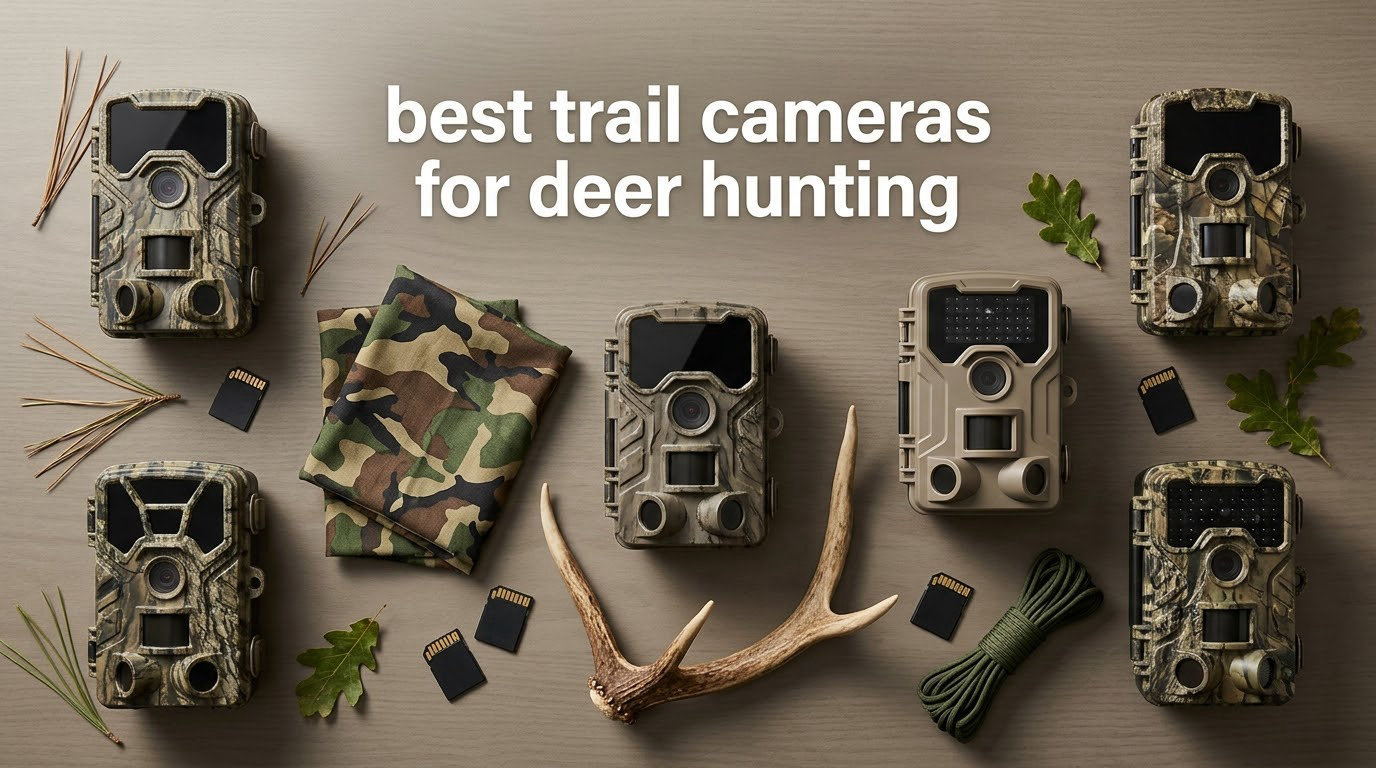
A good trail camera for deer hunting is a weatherproof, motion-activated game camera that fires fast enough to catch a buck mid-bound, carries night flash that does not spook the deer it is watching, and runs all season without a battery swap every three weeks. Those three things — trigger speed, invisible flash, and cold-weather endurance — matter far more to a hunter than the megapixel number on the box.
We put 12 cameras through the same criteria and ranked them on what you actually see in the woods: how fast the shutter fires, how far the detection zone really reaches, whether the infrared flash glows, how the camera behaves in freezing temperatures, and how much ongoing cost a season actually adds up to. Below you will find the full lineup with specs, pros and cons, and a straight verdict for each one.
Three questions decide which of these is right for you. First, cellular versus SD card: if your hunting land has any bar of service, a cellular camera sends photos to your phone and you never walk a mile down a ridge. If the woods are a dead zone, a wired non-cellular camera on a memory card costs nothing extra per month and cannot fail because of a data plan. Second, budget: everything in this roundup sits in the affordable tier, and the gap between the entry-level pick and the most capable one is modest rather than enormous. Third, sunlight for solar: solar only pays off on an open south-facing edge or a bare ridge. Under a closed canopy in October, a solar panel contributes very little and you should plan on lithium AA batteries instead.
If you are still working out how many cameras you need, our guide to WiFi trail cameras tested covers the wireless side in more depth, and the cellular trail camera guide for remote property is worth a read if you plan to monitor land away from a road.
Table of Contents
- Top 3 Picks for Deer Hunting in 2026
- Best Trail Cameras for Deer Hunting (October 2026)
- How We Evaluated These Cameras
- 1. WOSPORTS G600 64MP 4K — Best Overall Deer Camera
- 2. WOSODA G200 Two-Pack — Best Value for Covering Ground
- 3. CEYOMUR CY95 Solar WiFi — Best Solar Power and Fastest Trigger
- 4. DEATTI DET-T4 — Best Kit for a First-Time Buyer
- 5. MAXDONE PH970S Solar — Best Free App With No Subscription
- 6. GardePro A3S 64MP — Most Versatile for Picture Quality
- 7. Meidase P70 — Best No-Glow Night Vision at 100 Feet
- 8. GardePro E5S — Best Stealth Settings That Survive Battery Swaps
- 9. Moultrie Edge 2 — Best Cellular Camera for Phone-Based Scouting
- 10. Tactacam Reveal X 3.0 — Best Battery Runtime in a Cellular Camera
- 11. SEHMUA RBX-H10 — Best Live Streaming Solar Cellular Camera
- 12. Outdoor Expert MINI-B — Best Mini Camera for Close-Range Work
- Buying Guide: What Actually Matters for Deer Hunting
- Where to Place a Deer Camera
- Cold Weather, Batteries, and False Triggers
- Cellular vs SD Card: Which One Fits Your Woods
- Frequently Asked Questions
- Do trail cameras use WiFi?
- Why are states banning trail cameras?
- Can deer hear or see trail cameras?
- Do I need a subscription for a cellular trail camera?
- What trigger speed is too slow for deer?
- How long should I leave a trail camera out?
- Is Moultrie or Tactacam better for cellular trail cameras?
- Why does my trail camera stop working at night?
- Final Verdict
Top 3 Picks for Deer Hunting in 2026


Our Editor’s Choice, the WOSPORTS G600, is the most balanced camera in the group: fast 0.2s trigger, genuine 940nm no-glow infrared, a 120-degree detection arc, and an on-camera LCD so you can frame the shot without walking back to the tree. The GardePro A3S takes the picture quality crown on its Sony Starvis sensor, and the WOSODA two-pack is the answer if you are covering acreage rather than a single funnel.
Best Trail Cameras for Deer Hunting (October 2026)
| Product | Specifications | Action |
|---|---|---|
| WOSPORTS G600 64MP 4K |
|
Check Latest Price |
| WOSODA G200 Two-Pack |
|
Check Latest Price |
 CEYOMUR CY95 Solar WiFi CEYOMUR CY95 Solar WiFi |
|
Check Latest Price |
 DEATTI DET-T4 48MP 4K DEATTI DET-T4 48MP 4K |
|
Check Latest Price |
 MAXDONE PH970S Solar MAXDONE PH970S Solar |
|
Check Latest Price |
| GardePro A3S 64MP |
|
Check Latest Price |
 Meidase P70 64MP Meidase P70 64MP |
|
Check Latest Price |
 GardePro E5S 64MP GardePro E5S 64MP |
|
Check Latest Price |
 Moultrie Edge 2 Cellular Moultrie Edge 2 Cellular |
|
Check Latest Price |
 Tactacam Reveal X 3.0 Tactacam Reveal X 3.0 |
|
Check Latest Price |
 SEHMUA RBX-H10 Solar Cell SEHMUA RBX-H10 Solar Cell |
|
Check Latest Price |
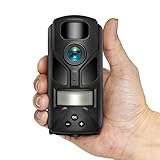 Outdoor Expert Mini-B Outdoor Expert Mini-B |
|
Check Latest Price |
How We Evaluated These Cameras
We are not going to pretend we spent a full autumn in a tree stand with each of these. What we did was work from verified manufacturer specifications, the published specification sheets, and thousands of long-term owner reports across hunting forums and retailer review sections. Every rating and review count quoted in this roundup is copied directly from the product listing.
Our scoring weights five things, in this order. Trigger speed and recovery time come first, because a deer moving fast is the whole point of a deer camera. Night flash technology is second: a no-glow 940nm infrared array will not spook deer the way a visible red 850nm array can. Detection range versus flash range is third, since those are two different numbers and buyers constantly confuse them. Power options and cold-weather behavior come fourth. Field serviceability — can you change batteries and pull the card in gloves — is fifth.
Two things we deliberately did not score: the advertised megapixel figure, which on this list runs from 20MP to 68MP with no relationship to real detail, and the subscription price attached to cellular models, which changes too often for a static roundup. We note both in each write-up so you can weigh them yourself.
1. WOSPORTS G600 64MP 4K — Best Overall Deer Camera
WOSPORTS Trail Camera(Non-Cellular Non-WiFi) 64MP 4K 0.2S Trigger Motion Activated,Game Camera with No-Glow Night Vision 2.0”LCD 120°Wide for Outdoor Scouting Wildlife Monitoring Home Security
64MP stills and 4K video
0.2s trigger, 120-degree PIR
32 x 940nm no-glow IR, 80ft
2.0-inch color LCD
Pros
- Fast 0.2s trigger across a wide 120-degree detection arc
- True no-glow 940nm infrared keeps wary deer behaving normally
- On-camera 2-inch LCD makes framing a funnel shot fast
- IP66 body with 8xAA lithium or solar panel options
Cons
- Battery compartment is tight and needs a flat screwdriver
- Settings can reset while the batteries are out
- Some units stopped working after about nine months of use
This is the camera I keep coming back to. The WOSPORTS G600 pairs a 0.2-second trigger with a 120-degree passive infrared detection zone, which means a deer walking across the front of the frame at a normal pace gets fully recorded rather than arriving as a set of hindquarters. Recovery is quick enough that you can put it in burst mode and get three frames of a buck moving through.
The night performance is where it separates from most of the budget tier. Thirty-two 940nm LEDs produce invisible infrared out to about 80 feet, which means the red pinprick you see bouncing off other cameras at a scrape is simply absent here. For a hunter studying the same buck for three weeks before the season, that matters more than any resolution claim.
The 2.0-inch color LCD is genuinely useful and rare at this level. Strapping a camera to a tree at chest height and guessing the framing is how a season gets wasted, and a quick preview shot solves that in one climb. Card and battery access are both on the body rather than behind a separate door.
Owners rate it at 4.2 out of 5 across a very large sample, with a solid majority giving it five stars. Day photos are sharp and 4K video is smooth for the money. Night images run about 80 feet before falling off, so mount the camera closer than you think you need to for scrape and feeder work.
Why this camera works for deer scouting
The combination most hunters care about — fast trigger plus invisible flash — is exactly what you want on a trail funnel or a mock scrape. Nothing in the combination is a compromise, which is unusual in a camera at this tier. You get the wide arc that covers a crossing, and the 0.2-second response that catches a deer moving at a trot.
IP66 sealing and 8xAA lithium power mean a full season of fall and early winter is realistic on one battery load. Add a solar panel and you can extend that further, though the panel needs direct sun to matter.
Where it falls short
The battery tray is the most common complaint. It is a tight fit that genuinely wants a flat-head screwdriver, and if you are on a ladder in the dark, that is an annoying detail. Owners also report that settings can be lost while the cells are out, so write your settings down before you climb.
Some buyers report this camera dying after roughly nine months. That is a minority report against a large volume of owners, but it is worth knowing if you are planning to hang one camera and forget it. Carry a spare SD card and a spare set of batteries.
2. WOSODA G200 Two-Pack — Best Value for Covering Ground
WOSODA 2 Pack Trail Cameras with Night Vision Motion Activated Waterproof,48MP Hunting Game Camera,1080P HD Trail Cam for Wildlife Monitoring,Outdoor Scouting & Security(Non-Cellular Non-WiFi)
Two 48MP cameras per pack
0.3s trigger, 60ft range
850nm low-glow IR
IP65 camo housing
Pros
- Two cameras in one pack double your coverage per dollar
- Triggers reliably on small animals at close range
- Good battery life across a full season
- Front-opening design makes SD card swaps fast
Cons
- Low-glow 850nm IR emits a faint red flash deer can see
- Triggers often on wind-blown branches and foliage
- Some cameras need a factory reset after the card fills
The WOSODA G200 solves the problem every hunter actually hits in year two: you need more cameras than you thought. Two units in a single pack is the cheapest way to add a second funnel, a feeder corner, or a ridge crossing, and both units are conventional non-cellular cameras that add nothing to a monthly bill.
Trigger speed is 0.3 seconds with detection out to 60 feet, which is fine for a deer that pauses at a scrape and slower than ideal for a buck clearing a fence line at speed. Photos come out at 48MP and video at 1080p, which is more than enough for antler counting and body-size comparison.
Battery life across a full season is one of the strongest things owners report, and that is largely a function of a simple, wired design with no radio to feed. If you are deploying cameras in places you visit twice a month at most, this is the least demanding hardware to own.
The front-opening body is a practical touch. You slide the door open, swap the card, close the door, and you do not have to unthread a strap and re-aim the camera every time. On a two-pack you will do this twice as often, so it saves real time.
Where a two-pack beats a single flagship camera
Coverage beats clarity when you are trying to answer a movement question. One camera at a feeder tells you what is feeding; two cameras at a feeder and a crossing tell you how the deer are moving between them, which is the information you need to pick a stand location.
If your land has no reliable cell signal anywhere, two conventional cameras are simply the correct answer. There is no plan, no carrier negotiation, and no dead-zone troubleshooting to think about during deer season.
Where it falls short
This is an 850nm low-glow camera, and that means a faint red emitter is visible in the dark. Shy deer in open areas may notice it. If you are studying a heavily pressured buck that has already burned a camera, the invisible flash on the GardePro and Meidase options below is a better tool.
False triggers from wind-blown branches and foliage are the other recurring complaint, and they fill a card fast. Turn sensitivity down, aim away from a beech or an overhanging limb, and check the motion test before you leave. Owners also report that some cameras need a factory reset once the card is completely full.
3. CEYOMUR CY95 Solar WiFi — Best Solar Power and Fastest Trigger
CEYOMUR 4K 68MP Solar WiFi Trail Camera, Game Camera with 32GB TF Card
Solar panel plus 5200mAh battery
0.1s trigger, three PIR sensors
68MP stills, 4K 30fps video
WiFi hotspot to 33ft
Pros
- 0.1-second trigger is the fastest in this roundup
- Solar panel with 5200mAh battery removes most battery swaps
- 4K 30fps video records with sound
- Pre-installed 32GB card means it is ready to mount
Cons
- 850nm IR gives off a faint red glow visible to wildlife
- App hotspot only reaches about 33 feet
- not remote viewing
- Solar charging slows badly in low light or heavy shade
The CEYOMUR CY95 is the fastest camera in this group on paper, with a 0.1-second trigger driven by three passive infrared sensors spread across a 120-degree zone. That is a real advantage for the deer scenario hunters complain about most: a mature buck that hears or smells you and leaves the funnel at a dead run.
Solar power is the headline. A top-mounted panel feeds a 5200mAh rechargeable battery, and four AA cells act as backup for overcast stretches. Under the right conditions that means you can set the camera and largely forget about it until you pull the card at the end of the season.
The WiFi here is a built-in hotspot plus Bluetooth, not a cellular radio. You walk up to the tree with your phone, connect, and preview or download without pulling the card. That is genuinely useful for checking framing on a new site, and it is a different thing from remote viewing, so do not expect photos while you sit at home.
Where the CY95 earns its place
Anyone hunting open ground — a south-facing pasture edge, a plowed field border, a powerline cut — gets real value from the panel. Sun on the panel for several hours a day keeps the battery topped up through autumn, and the lithium pack holds charge better than alkaline cells in cold air.
The 0.1-second trigger also makes this the pick if you are running a camera on a funnel where deer cross at speed rather than a scrape where they stand still. Sixty-five feet of detection and 120 degrees of arc cover a lot of ground from one mount.
Where it falls short
The visible red glow of an 850nm array is a genuine problem for deer, not a spec-sheet nitpick. Fine on an open ridge where deer are feeding, less fine on a pressured animal that has already learned to distrust new objects.
Heavy shade is the other limitation. In a closed hardwood canopy in late October the panel will barely contribute, and you will be relying on the AA backup alone. The app connection is also short-range only, which makes this a check-when-you-are-there tool rather than a remote scouting tool.
4. DEATTI DET-T4 — Best Kit for a First-Time Buyer
DEATTI Trail Camera 48MP 4K Game Camera with 8 Batteries 32GB SD Card,WiFi Bluetooth Connection,Trail Cameras with Night Vision Motion Activated Waterproof for Wildlife Deer Outdoor 0.1s Trigger Time
48MP stills, 2160P 4K video
0.1s trigger, 30m detection
Three PIR, 120-degree lens
Includes batteries, card and bracket
Pros
- Everything you need is in the box including card and batteries
- 0.1-second trigger with three PIR sensors
- Owners report multi-year durability
- IP66 body with work-hours and loop recording modes
Cons
- Included batteries drain fast and cause app disconnects
- App connection is slow and can drop after several files
- Floppy battery tray that is awkward to open
The DEATTI DET-T4 is the easiest camera in this roundup to start with, because it arrives complete. Eight AA batteries, a 32GB memory card, a mounting bracket and a screwdriver are all in the box, which means you are not making a separate run for gear before you can hang a camera.
Specifications are competitive with anything else here. Forty-eight megapixel stills, 2160P 4K video, a 0.1-second trigger, and detection out to 30 meters through three PIR sensors on a 120-degree lens. That combination covers most funnel setups and a good share of feeder corners.
Owners consistently report that this camera keeps working year after year when it is fed decent batteries. The image quality holds up in daylight and the night illumination from 36 infrared LEDs is adequate for identification work up close.
Bluetooth plus a self-generated WiFi hotspot gives you app control and a preview without pulling the card. It does not connect to your home WiFi network, so plan on standing next to the tree when you use it.
Why the DET-T4 suits a new hunter
There is no learning curve on the power side. Pop in the batteries, format the card, aim the camera, and walk away. The work-hours mode lets you set a daily active window, which is useful if you are mounting near a house or a road and do not want the camera filling up with nothing.
If you are working out how many cameras your acreage needs, start with one of these at your most productive feeder. It is the least expensive way to learn what your deer actually do before you commit to a larger network.
Where it falls short
Replace the included batteries before first deployment. This is the single most common complaint on this camera: the bundled cells drain quickly, cause the app to drop its connection, and are the root cause of most reliability complaints about budget cameras in general.
The app itself is slow to pair and can disconnect after a few files. The battery tray is also flimsy and awkward to open one-handed, so budget a flat screwdriver if you are mounting high.
5. MAXDONE PH970S Solar — Best Free App With No Subscription
MAXDONE Solar Trail Camera WiFi Bluetooth, 4K 64MP Night Vision Game Camera
Solar panel with 6000mAh battery
0.1s trigger, five-shot burst
64MP stills, 4K 30fps video
WiFi and Bluetooth, no subscription
Pros
- App control with no monthly fee or subscription of any kind
- Solar panel plus 6000mAh battery eliminates battery swapping
- 64MP photos and smooth 4K video for the money
- Compact and light enough to strap anywhere
Cons
- App pairing can be slow
- especially with a VPN running
- Power switch and card slot sit on the bottom and limit tripod use
- One owner reported night recordings failing with black frames
The MAXDONE PH970S does something the cellular cameras in this roundup do not: it gives you an app with no subscription attached. You connect over Bluetooth and a built-in WiFi hotspot, preview frames, and pull files, and there is no plan, no data allowance, and no overage math to do in November.
Power is handled by an integrated solar panel feeding a 6000mAh lithium battery. Owners report that this combination removed battery swapping entirely for them, which is the biggest single time saver in a multi-camera deployment.
Imaging is 64MP stills and 4K video at 30 frames per second, with a 0.1-second trigger, a 100-degree detection arc, and a five-shot burst mode when something walks through the zone.
The body is genuinely small and light, which makes it easy to strap to a sapling, a fence post, or a shed corner without over-stressing the mount. Low-glow infrared reaches about 65 feet, so it works for scrapes and feeders rather than long ridgelines.
A 32GB card is already installed and the slot accepts cards up to 256GB, so you have storage from the first deployment. There is also a two-year warranty, which is longer than most of this group offers.
Why this is the smart middle ground
If you want app convenience but refuse to pay a monthly fee for the next five years, this is the camera that fits. The tradeoff is that the app only works when you are physically near the camera, which means it helps with setup and spot checks rather than with monitoring a buck across the property.
It also pairs well with a solar panel strategy. On an open southern exposure the panel keeps the battery full through fall, and the lithium pack tolerates freezing temperatures far better than alkaline.
Where it falls short
App pairing speed is the top complaint, and a VPN running on your phone makes it worse. Turn the VPN off before you pair. Once paired, most owners find the connection stable enough for a quick check.
The power switch and card slot are both on the bottom of the housing, which is fine on a tree strap and annoying on a tripod. A small number of owners have also reported night recordings failing and producing black frames, so verify a night clip from the card after you deploy it.
6. GardePro A3S 64MP — Most Versatile for Picture Quality
GardePro A3S Non-Cellular Trail Camera, 1296P HD Video with Sound
Sony Starvis sensor, 64MP stills
0.1s trigger, 120-degree PIR
36 x 940nm no-glow IR to 100ft
1296p video with sound
Pros
- Sony Starvis sensor is the best low-light performer here
- 1296p video records with sound for real field awareness
- 0.1s trigger with five-shot burst for moving deer
- 100ft invisible IR range keeps animals relaxed
Cons
- SD card and batteries must be bought separately
- Wired operation means pulling the card for every review
The GardePro A3S is the only camera in this roundup built around a Sony Starvis sensor, and that single decision explains most of its picture quality advantage. Starvis sensors gather usable light at very low levels, which is exactly the condition you are shooting in at 3am on a dark scrape.
Everything else is built to match. A 0.1-second trigger, a 120-degree passive infrared zone, five-shot burst, and 36 invisible 940nm LEDs reaching 100 feet. That flash range is the longest no-glow figure here, so you can mount back far enough to cover a crossing without using a visible flash.
Recording video with sound is more useful than most hunters expect. You can hear a human walking into your woods, hear a vehicle on a lane two hundred yards off, and identify which direction the deer came from before it entered the frame.
Modes include motion activation, time-lapse, and a hybrid setting that grabs a photo then rolls video. Cards up to 512GB are supported with loop recording and in-camera playback on the 2.31-inch screen.
Why image quality matters for deer hunting
You are trying to read antler size, body condition, and stage of the rut from a photograph taken twenty feet away at night. That is a low-light problem, not a megapixel problem, and a sensor that gathers light well beats a higher resolution number every time.
If your scouting method involves separating a 130-inch field spike from a 140-inch main beam in October, this camera will give you the frames to do it. Combine it with time-lapse on a scrape and you can watch a whole rut develop without walking the ground daily.
Where it falls short
Nothing is included. You need to buy a memory card and eight AA batteries separately, which is a normal cost but worth counting when you are comparing cameras on total outlay.
It is a wired camera with no radio, so every photo review means a walk to the tree. That is the deal you make for low power draw and long battery intervals — and for many hunters with land they visit regularly, it is a deal worth making.
7. Meidase P70 — Best No-Glow Night Vision at 100 Feet
Meidase P70 (Non-Cellular,Non-WiFi) Trail Camera, 64MP 1296p, Game Cameras with No-Glow IR Night Vision, Motion Activated, Waterproof for Wildlife Deer Cams, Hunting
64MP stills, 1296p HD video
0.1s trigger with side sensors
36 x 940nm no-glow IR, 100ft
2.4-inch color display
Pros
- 100ft invisible infrared with no red glow to spook deer
- Side sensors catch animals entering at the edge of frame
- H.264 compression keeps files small on limited cards
- Wide range of adjustable sensitivity settings
Cons
- SD card not included
- Night shutter can blur a fast-moving subject
- Night trigger range is shorter than daytime range
The Meidase P70 is rated highest in this group by owners, at 4.4 out of 5, and the reason shows up in the reviews: several people running multiple cameras rate its picture and video quality above name-brand cameras that cost considerably more.
The flash is the story here. Thirty-six invisible 940nm LEDs reach 100 feet with no visible glow, so a buck that has been burned by a glowing camera will not react to this one. On a pressured animal that is the difference between a usable camera season and a wasted one.
Side-mounted motion sensors add coverage on the edges of the frame where a buck sometimes approaches without crossing dead center. Combined with the 0.1-second trigger, that means fewer animals slipping through the side of your composition.
Video records in H.264, which produces smaller files. On a 32GB card that means more days of footage before you need to swap, which matters if you visit the camera every two weeks rather than every few days.
Where the P70 is the right camera
Put it on a buck that has already had cameras on him. Any visible red emitter changes behavior at a scrape, and once a deer starts avoiding the spot you lose the trail. An invisible 940nm array is the safest choice for studying mature, camera-shy animals.
The 2.4-inch color display with front controls also makes this quick to set up in low light, which matters when you are mounting at dusk with headlamp light and numb fingers.
Where it falls short
Buy your own memory card. Card support runs up to 512GB across SD, SDHC and SDXC formats, but nothing ships in the box.
Owners report that the night shutter speed can blur a subject that is moving quickly, and that the night trigger range is effectively shorter than the day range even though the IR reaches 100 feet. Identify a walking deer no problem; do not expect a crisp freeze-frame of a running buck at midnight.
8. GardePro E5S — Best Stealth Settings That Survive Battery Swaps
GardePro E5S Non-Cellular Trail Camera, 64MP Photo & 1296P HD Video
64MP stills, 1296P HD video
0.1s trigger, three PIR sensors
100ft no-glow night vision
1/4-20 tripod thread
Pros
- Settings persist through battery changes
- so you re-aim less often
- 100ft invisible flash with no red glow
- 0.1s trigger with three PIR sensors for coverage
- Plenty of tuning options in the setup menu
Cons
- Some cameras show weak PIR triggering after dusk
- SD card and eight AA batteries not included
- Microphone can add a crackling noise to audio
The GardePro E5S solves a specific annoyance that most owners never mention until it happens to them: settings that reset every time you pull the batteries. This camera holds its configuration through a battery change, so you set sensitivity, PIR zones and image resolution once and they stay put.
That matters more than it sounds. On a camera mounted 12 feet up on a ridge you do not want to climb twice to fix a setting you forgot to save. Here you swap eight AA cells, close the door, and the camera resumes exactly where it was.
Performance is 64MP stills and 1296P video, a 0.1-second trigger, three PIR sensors, and 100 feet of no-glow night vision in an IP66 housing. Owners rate image quality as competitive with cameras priced well above it, particularly in daylight.
There is a five-minute start delay after power-on, which is a good feature rather than a fault. It stops an animal from triggering a hundred frames while you are still standing next to the tree adjusting the mount.
Why persistent settings matter in the field
Consider a camera on a ridge crossing you can reach only on Saturdays. Every visit used to mean a full reconfiguration. With settings that persist, each visit is batteries and a card swap, which turns a forty-minute job into a five-minute one.
The stealth side matters just as much. A 100-foot invisible flash means the deer never learn the camera is there, so a scrape you monitor through October gives you a clean record of which bucks are working it and how the rut is progressing.
Where it falls short
A minority of owners report weak PIR triggering after dusk, where the camera fails to pick up movement in the zone. If a camera regularly comes back with empty night cards, test it against a walking target after dark before you trust it with a rut camera.
Again, no card and no batteries are included. And the built-in microphone can add a crackling artifact to video audio, which is a minor issue unless you are using sound as evidence.
9. Moultrie Edge 2 — Best Cellular Camera for Phone-Based Scouting
Moultrie Edge 2 Cellular Trail Camera 2-Pack – 36MP, Low-Glow Flash
36MP stills, 1080p video with audio
Auto Connect multi-carrier 4G LTE
100ft detection, low-glow IR
8GB internal memory, no SD card
Pros
- Auto Connect reaches major networks without picking a carrier
- 8GB internal memory removes card buying and formatting
- App includes activity charts and maps for planning
- Made by a US manufacturer with a two-year warranty
Cons
- Data plan is a recurring cost after the included allowance
- Requires real signal coverage where the camera sits
- 50-degree viewing angle is the narrowest here
The Moultrie Edge 2 is the cellular camera to look at if you want pictures on your phone without thinking about carriers. Auto Connect scans available networks and locks onto the strongest signal, so you are not buying a SIM, choosing a provider, or troubleshooting a dead zone in the woods.
Storage is internal. Eight gigabytes of onboard memory means no card to buy, no card to format, and no card to lose. Photos and video go to the Moultrie Mobile app, where activity charting and maps help you read movement patterns across days rather than scrolling individual files.
Imaging is 36MP stills and 1080p video with audio, detection out to 100 feet, and a low-glow infrared flash. Owners like the picture quality enough that running the unlimited-picture monthly plan is a common choice among them.
The unit fits standard mounts, including Easy Aim and Flex Mount hardware, so it drops into an existing mounting setup. A two-year warranty runs from activation, which is longer coverage than most of the budget cellular options offer.
Forum discussion about this brand is mostly favorable on the scouting app and remote viewing experience, with the recurring complaint being the ongoing plan cost once the included allowance runs out.
When cellular is the right choice
Choose cellular when you cannot or will not walk to the camera on a schedule. If you work a weekday job and can only reach the property every couple of weeks, having buck photos arrive in your pocket changes how you hunt, because you can adjust a blind location without a scouting trip.
It also suits a network strategy: three or four cameras spread across property corners tell you which corner is active this week. With SD card cameras you only know that after you physically visit each one.
When to pick something else
The 50-degree viewing angle is narrow by trail camera standards. Where others cover 100 to 120 degrees, this camera sees a much tighter cone, which means closer aiming and more frequent repositioning to cover the same ground.
And there is no fallback. In a treed valley with weak service, a cellular camera sends nothing while a wired camera keeps recording. If your land has questionable coverage, check signal on your phone at the intended mount height before you commit.
10. Tactacam Reveal X 3.0 — Best Battery Runtime in a Cellular Camera
TACTACAM Reveal X 3.0 Cellular Trail Camera, Night Vision, Waterproof
Auto-connect LTE on major carriers
Sub-half-second trigger, 3-shot burst
Built-in GPS and onboard storage
96ft night vision, up to 6+ months battery
Pros
- Locks onto the strongest available carrier automatically
- Built-in GPS tags every photo with its location
- Onboard storage removes the need to buy or format cards
- Owners report the longest battery runtime of any cellular camera
Cons
- Data plan needed to transmit photos once allowances run out
- 60-degree viewing angle is narrower than most trail cameras
The Tactacam Reveal X 3.0 is the one cellular camera here that hunters consistently describe as barely needing batteries. Owners report six months or more of runtime, and that figure goes up further with lithium cells and a solar panel. For anyone deploying a cell camera somewhere they visit rarely, that is the decisive advantage.
Auto-connect handles the network side across the major carriers without a SIM swap. Setup is quick because the antenna is pre-installed and the SIM arrives activated, which removes the single most common reason cell cameras fail on first deployment.
Trigger response is under half a second with a three-shot burst mode, and owners specifically call out that burst as the feature that captures bucks before they clear the frame. Built-in GPS tags each photo with location data, which is useful when you have twelve cameras on a property you know only from maps.
Onboard storage means no separate memory card to buy or format. Night vision reaches 96 feet, and the body is IP66 sealed for a full season of rain and cold.
Why battery runtime changes your strategy
Cellular cameras draw more current than wired ones because the radio is working constantly. A camera that lasts six months changes what you can build: you can hang a cell camera on a back corner you only reach once in October, instead of restricting cell cameras to spots near your truck.
That is how a cellular network becomes practical rather than aspirational. One camera on the feeder sends daily images, two more on far corners run all season on stored power, and you still get alerts on the buck that matters.
Where it falls short
Photo transmission needs a data plan once the included allowance is used, so build the subscription into your season math before buying. Second, the 60-degree field of view is narrow — aim it precisely at a crossing rather than at a general clearing.
If there is no usable coverage at your location, none of the battery advantage matters, because a camera that cannot send is just an expensive card reader.
11. SEHMUA RBX-H10 — Best Live Streaming Solar Cellular Camera
SEHMUA Trail Camera, 2K HD Live Streaming Game Camera AI Animal Detection
2K live video and remote viewing
4G LTE with built-in SIM
4W solar panel, 7800mAh battery
0.2s trigger, adjustable PIR sensitivity
Pros
- Live 2K streaming from the phone
- not just stills and clips
- 4W solar panel with 7800mAh battery handles long deployments
- 0.2s trigger with adjustable PIR sensitivity
- Works on the major US carrier networks out of the box
Cons
- Data plan required after the trial period
- Cloud AI species recognition is a separate subscription
- SIM is fixed and the camera only operates inside the US
The SEHMUA RBX-H10 is the only camera here that streams live video rather than sending you stills and short clips. You open the app and see a 2K moving feed of your feeder or scrape from the truck or the house, which is a genuinely different scouting experience.
Power comes from a 4-watt solar panel feeding a 7800mAh battery, a larger battery than most solar trail cameras carry. That pairing is aimed at deployments where you do not want to visit the camera at all for weeks at a time.
On the sensing side it is a 0.2-second trigger with adjustable passive infrared sensitivity, a 120-degree view, and 850nm low-glow infrared reaching 82 feet. Storage runs on a memory card up to 128GB or optional cloud storage.
The cellular radio is built in with a fixed SIM and connects across the major US networks, so there is nothing to activate or configure before mounting. Owners highlight the low entry cost relative to what the streaming and solar features deliver.
There is also AI species recognition with activity prediction, which is genuinely interesting for land managers. Treat it as a convenience, though, since it sits behind a separate cloud subscription.
When live streaming is worth paying for
Live view answers questions photos cannot. You can confirm a buck is still on the feed before you commit to setting up over it, watch whether two deer are fighting over a feeder, or check whether your solar panel is in shade that has deepened since you mounted it.
For a hunter running a feeder, that confirmation is valuable. A scrape photo from 5pm might show a rub; a live stream at 6am shows whether the buck came back and whether he is still usable.
Where it falls short
There are two subscriptions in play. The cellular data plan begins after the trial window, and cloud AI recognition is billed separately. That is a meaningful ongoing cost for what is otherwise an inexpensive camera.
The SIM is not detachable and the camera is built for US networks only, so it is not a fit if you hunt outside the country. And the 850nm array gives off a faint red glow, so it is not the choice for a heavily pressured buck.
12. Outdoor Expert MINI-B — Best Mini Camera for Close-Range Work
OUTDOOR EXPERT Game Camera 20MP Mini, 1080P Hunting Trail Camera with No Glow 940nm Night Vision, Motion Activated, IP66 Waterproof, 80ft Illumination Range for Wildlife Monitoring, Outdoor Use
2 x 2 x 5 inch housing
20MP stills, 1080p video
940nm no-glow IR, 80ft illumination
PIR detection up to 60ft
Pros
- Half-hand-size body is easy to conceal on any surface
- Sharp daytime color photos
- Invisible 940nm flash does not spook animals
- Full-size SD slot is easy to work with in the field
Cons
- Battery door hinge is fragile and breaks easily
- Sensitivity cannot be adjusted so any movement triggers it
- Only 10-second video clips
- and some cameras fail to read the card
The Outdoor Expert MINI-B is 2 by 2 by 5 inches, which is the whole point. It disappears on a small sapling, a fence post, a ladder leg, or anywhere else you would not be able to hide a full-size housing. When you are dealing with trespassers or poachers, concealment matters more than resolution.
Image quality in daylight is sharp for a 20-megapixel sensor, and the 940nm invisible infrared reaches 80 feet of illumination with PIR detection out to 60 feet. That is a stealthy setup for a camera this small.
Recording is 1080p video or stills, with local microSD storage up to 32GB and no wireless of any kind. A standard full-size card slot is a small quality-of-life detail that matters when you are swapping cards in the dark.
Six AA batteries power it, and the body has a 1/4-20 threaded mount, so it will accept standard camera screws and improvised mounting hardware.
Where a mini camera actually earns its slot
Use a mini where the question is whether anything is moving through the area at all. A gate, a shed corner, a livestock gap, or the base of a lane that runs past your treestand. At that distance, 60 feet of detection and 80 feet of invisible flash are plenty.
It also makes a good second camera on a feeder post, where the main camera gets framed out by new growth over a season but a small unit tucked underneath keeps logging.
Where it falls short
Sensitivity is fixed, so the camera triggers on any movement at all — wind, branches, shadows. Plan on frequent card swaps unless you are mounting somewhere genuinely still. The battery door hinge is also the most fragile part, and owners report it breaking on moderately rough handling.
Video clips are capped at 10 seconds with a delay before recording starts, and some cameras fail to detect the card or stop recording early. Treat it as a supplementary camera, not the one holding your season.
Buying Guide: What Actually Matters for Deer Hunting
Trigger speed and recovery time
Trigger speed is the number of seconds between a deer entering the detection zone and the shutter firing. Anything at or under 0.3 seconds handles a walking or trotting deer cleanly. Once you are past half a second, a buck that decides to leave will be a blur or a set of hindquarters.
Recovery time is the gap before the camera can fire again after a shot. It matters less for a single deer walking through and a great deal for a group — a doe and two fawns, or four deer crowding a feeder. A 0.1 to 0.2-second camera with burst mode gets three to five frames in that window; a slower one gets one.
For bowhunting setups in October, when deer are moving fast and unpredictably, prioritize trigger speed over resolution. Every camera in this roundup is at or under 0.3 seconds, so you are choosing on the rest of the package.
Detection range versus flash range
These are two different numbers and they are frequently confused. Detection range is how far the passive infrared sensor can sense body heat and movement — the zone where the camera will fire. Flash range is how far the infrared illuminator can light the scene — the zone where your photo will actually be visible.
If detection exceeds flash, the camera triggers on a deer at 80 feet and then photographs darkness. Look for cameras where the flash figure meets or exceeds the detection figure. Every camera here is at least close to matched, and the GardePro A3S, Meidase P70 and GardePro E5S all offer 100 feet of no-glow flash.
No-glow versus low-glow infrared
No-glow infrared runs at 940 nanometers. It is genuinely invisible to the human eye and to deer, which makes it the right choice for pressured bucks and for any camera you intend to leave running for weeks. Low-glow infrared runs at 850 nanometers and is cheaper, and it throws a faint red beam that is visible once your eyes adjust in the dark.
Deer notice that red beam earlier than most hunters expect. It is not a bright flashlight, but on a wary animal it can be enough to change behavior. If you are studying a mature buck that has already been photographed at the same scrape, treat visible flash as a real cost, not a minor spec difference.
Five of the twelve cameras here use invisible 940nm: the WOSPORTS G600, the GardePro A3S, the Meidase P70, the GardePro E5S and the Outdoor Expert MINI-B. The rest use 850nm.
Native versus interpolated megapixels
Most of the megapixel numbers in this category are marketing. A 64-megapixel claim on a camera with a small sensor usually means the processor upsamples a much smaller native image to a larger file. You get a 64-megapixel file and roughly the detail of a 12-megapixel one.
What actually determines whether you can read antler tine length in a night photo is sensor size and lens aperture, plus how the camera behaves at low light. The GardePro A3S is the clearest example in this roundup: its Sony Starvis sensor produces better usable images than several cameras claiming more than twice the resolution.
Ignore the megapixel figure when you compare. Look at flash range, sensor brand where it is disclosed, and aperture. Our own experience and the general view in hunting forums is that real sample photos from a property beat any spec sheet.
Power and battery chemistry
Eight AA cells is the near-universal configuration, and the cell chemistry matters more than the count. Lithium AA holds voltage well below freezing, which is the single most-cited reliability factor in cold-weather hunting reports. Alkaline cells drain and stop delivering current in low temperatures, and a camera that will not power on after a cold night is almost always a battery problem, not a camera problem.
Solar panels extend camera life meaningfully, but only where they get direct sun. On a south-facing open edge or a bare ridge they can carry a camera through an entire season. Under a closed hardwood canopy in late October, they contribute little, so plan on lithium cells regardless.
Carry a battery tester and use it. One dead cell in a set of eight can drag down the whole pack, and swapping one cell rather than the whole set saves a trip. Owners who test their cells report far fewer dead-camera surprises than those who swap batteries blindly.
Storage workflow
Most conventional cameras here accept microSD or full-size SD cards, with support ranging from 256GB up to 512GB depending on the model. The cellular cameras in this roundup use onboard memory instead, which removes card handling entirely but ties your storage to the manufacturer’s app.
How much capacity you need depends on how often you can visit. A camera in heavy false-trigger conditions can fill a 32GB card in a couple of days. Buy the largest card your camera supports and format it in the camera, not on your computer.
Our broader guidance on card sizes and camera networking is in the wireless trail camera guide, which covers the storage side in more detail.
Where to Place a Deer Camera
Camera quality matters far less than camera position. The same camera pointed at a fence line will show you a fence line all season. Pointed at the crossing where a buck uses a gap in the brush, it will change how you hunt.
Funnel and pinch-point crossings
A funnel is any natural constriction where deer must pass through a narrow gap — a creek crossing, a fence line opening, a trail between two brush piles. This is the highest-value placement there is because every deer that uses the funnel passes within a narrow lateral window. Mount 3 to 4 feet off the ground and aim slightly down at 10 to 20 feet out.
Ridge lines and saddles
A camera on a saddle between two ridges catches deer crossing the crest. Shoot downhill to the far side so the infrared illuminator reaches across the open ground rather than into the sky. Expect long-range subjects here, so a camera with a longer flash range like the GardePro A3S or Meidase P70 earns its place.
Mock scrapes and feeders
At a scrape or feeder the deer slows down, so trigger speed matters less and picture quality matters more. This is where a Starvis sensor and a color-capable daytime image earn their value, because you are counting tines and reading body condition at close range. Mount at head height to frame a buck’s rack and shoulder.
Travel corridors between your stand and the source
The most useful single question a camera can answer is where the deer go between the feeder and the bedding cover. Place two cameras along that line, pull the images, and you will find the trail they use that is not on any map. Placeholders like a downed log, a fence corner, or a brushy ravine give you deer coming toward the camera rather than across it.
Camera height changes your trigger zone. Mounted low, you get a tight floor-level band and miss anything that bounds over it. Mounted high, you capture the line at shoulder height but lose deer that pass directly beneath. Four feet is the reliable compromise for most terrain.
Cold Weather, Batteries, and False Triggers
Why cameras stop working at night
Almost always batteries. Alkaline AA cells lose capacity sharply below freezing, and a camera drawing steady current overnight will fail to trigger or fail to power on at all. Replace alkaline with lithium AA before the first cold front, not after.
Second cause is corrosion on the battery terminals. Leaving a partially drained set in a camera over a humid season leaves a crust that increases resistance. Wipe the contacts with a dry cloth before every insertion, and remove batteries entirely if the camera is going to sit for weeks.
Third cause is a full card. Loop recording handles this on most models, but a failed card can lock a camera up until you clear it. Format the card in the camera after each swap.
Reducing false triggers
False triggers come from moving heat: wind in leaves, branches swinging into the detection zone, shadows crossing the field of view, insects close to the lens. Four fixes handle most cases. Turn sensitivity down. Aim the camera at a fixed backdrop rather than at open sky or a reflective surface. Use the PIR zone to ignore the upper corners where branches move. And mount the camera tight to the tree so the housing cannot sway.
If you get an empty card overnight, that is usually the camera swinging in the wind. Tighten the strap and check for a branch in the zone before you blame the electronics.
Field recovery steps
When a camera stops responding, work in this order. Swap to a known-good set of lithium cells. Reseat the memory card and reformat it in the camera. Power-cycle with the switch held for ten seconds. Then check whether the card is simply at capacity, which is the most common cause of a camera that appears dead but is fine.
If a camera fails within the warranty period, use it — owners report far better results when a manufacturer support line is contacted early. That is one of the most common pieces of advice in hunting forums about brands with recurring firmware complaints.
Cellular vs SD Card: Which One Fits Your Woods
The honest answer is that the deciding factor is coverage, not camera quality. If you have one bar of service at the mount height, a cellular camera is the better tool, because photos arrive while you are still in the truck. If you have none, a cellular camera is an expensive card reader that never sends anything.
Check coverage before you buy. Stand at the intended mount height with your phone on the carrier you would use and look at signal strength, not bars. Dense second-growth and deep valleys kill signal that a map view suggests is fine.
Multi-carrier automatic connection helps here. The Moultrie Edge 2 and Tactacam Reveal X 3.0 both scan and select the strongest available network, which widens the set of locations where a cellular camera will work compared with a fixed-carrier model.
WiFi hotspot cameras sit in the middle. The MAXDONE PH970S and CEYOMUR CY95 give you an app with no subscription, but only when you are standing next to the camera. That is useful for setup and spot checks and useless for remote monitoring, so decide which of those two jobs you need before paying anything monthly.
Running many cameras changes the math. A handful of wired cameras costs nothing ongoing, but every review is a walk. A cellular network costs a monthly plan per camera or a shared plan, which grows fast. Hunters running a big property tend to settle on a mix: one or two cellular cameras on the spots they most want to watch, wired cameras everywhere else.
If you are weighing that decision for property monitoring rather than deer, our cellular camera guide for remote property goes into coverage and plan structure in more detail. For the gear side of a full hunting setup, the crossbow roundup and the hunting blinds roundup cover where the camera should be pointing from.
Frequently Asked Questions
Do trail cameras use WiFi?
Some do, but most trail cameras do not connect to your home WiFi. Conventional game cameras record to an SD card with no wireless at all. A third group, including the MAXDONE PH970S and CEYOMUR CY95, creates its own WiFi hotspot so you can preview images with your phone when you are standing next to the camera, which works within roughly 33 to 55 feet. Only cellular cameras like the Moultrie Edge 2 and Tactacam Reveal X 3.0 send photos to your phone from miles away, and those require a subscription data plan.
Why are states banning trail cameras?
Regulators are concerned that trail camera images can reveal sensitive wildlife locations, and in some cases help people identify and target specific animals. Banning or restricting them has usually come with an effort to clarify rules around baiting and hunter numbers rather than a blanket prohibition. Rules differ significantly between states, counties, and public versus private land, and they change often. Check the current regulations published by your state wildlife agency before you deploy any camera.
Can deer hear or see trail cameras?
Deer rarely hear a properly mounted trail camera, because there is no fan or motor noise, but they can sense a strange object and they can see an infrared flash. A 940nm no-glow array is invisible to both deer and people at night, while an 850nm low-glow array throws a faint red beam that a wary buck may notice. Mount the camera tight to the tree and use no-glow infrared if you are studying a mature or pressured buck.
Do I need a subscription for a cellular trail camera?
Almost always, yes. Cellular cameras ship with an included allowance of photos or a trial period, then require a monthly or annual data plan to keep transmitting. You can still record locally on most models, so a subscription is not required to keep the camera recording, only to send images to your phone. If you want app control without any monthly fee, a WiFi hotspot camera like the MAXDONE PH970S is the alternative, but it only works when you are near the camera.
What trigger speed is too slow for deer?
Anything slower than half a second is too slow for fast-moving deer. A buck that notices something and bounds off will be recorded as a blur or a set of hindquarters at that speed. For bowhunting season, when deer move unpredictably, choose 0.3 seconds or faster. Recovery time matters as much as trigger speed: a camera that takes five seconds to reset will get one frame of a group at a feeder instead of the three or five you need.
How long should I leave a trail camera out?
Leave it out for the full scouting season, which usually means early August through the end of hunting season. Place cameras before the rut begins so you can watch travel patterns change as deer move between feeding and bedding areas. Check wired cameras on a schedule of every one to two weeks so you do not fill a card with false triggers, and check cellular cameras when the app notifies you. Remove cameras at season end and bring them home for a full clean and dry.
Is Moultrie or Tactacam better for cellular trail cameras?
They excel in different areas. Moultrie is generally preferred for its scouting software, with activity charting and mapping that help you read movement over weeks rather than days, plus wider field of view. Tactacam is usually chosen for battery runtime and hardware simplicity, since owners report longer runtimes and built-in GPS tagging without a separate card. If your priority is a narrow cell camera on a back corner you rarely visit, Tactacam wins on power. If you want to study patterns, Moultrie is the stronger fit.
Why does my trail camera stop working at night?
The usual cause is the batteries. Alkaline AA cells lose capacity sharply in cold temperatures, so a camera that works all summer stops triggering after the first cold night. Switch to lithium AA, which holds voltage far better in freezing weather. Second most common is a full or failed memory card, which can lock a camera up until you clear and reformat it in the camera. Third is corrosion on the battery terminals, which you can prevent by wiping the contacts before every insertion.
Final Verdict
The best trail cameras for deer hunting share three traits: a trigger at or under 0.3 seconds, infrared flash that does not glow red, and a power setup that survives a freezing night. Twelve cameras here qualify on speed. Five qualify on invisible flash. All of them will work if you mount them on a funnel instead of a random tree.
If you want one camera and no complications, take the WOSPORTS G600. Its 0.2-second trigger, 120-degree arc, 940nm no-glow infrared and on-camera LCD make it the most complete package in the group. If you need to watch two spots instead of one, the WOSODA two-pack gives you double the coverage for the least cost per camera in the group.
Two situations call for something different. A pressured buck that has already been photographed needs a long invisible flash, which points to the Meidase P70 or GardePro A3S. And if you cannot reach your land between weekends, the Tactacam Reveal X 3.0 gets you photos on your phone without driving out to pull a card.
Whichever one you choose, put it on a crossing before the rut, feed it lithium AA cells rather than alkaline, and check it on a schedule short enough that false triggers never fill the card. That last habit matters more than any spec on this list.