
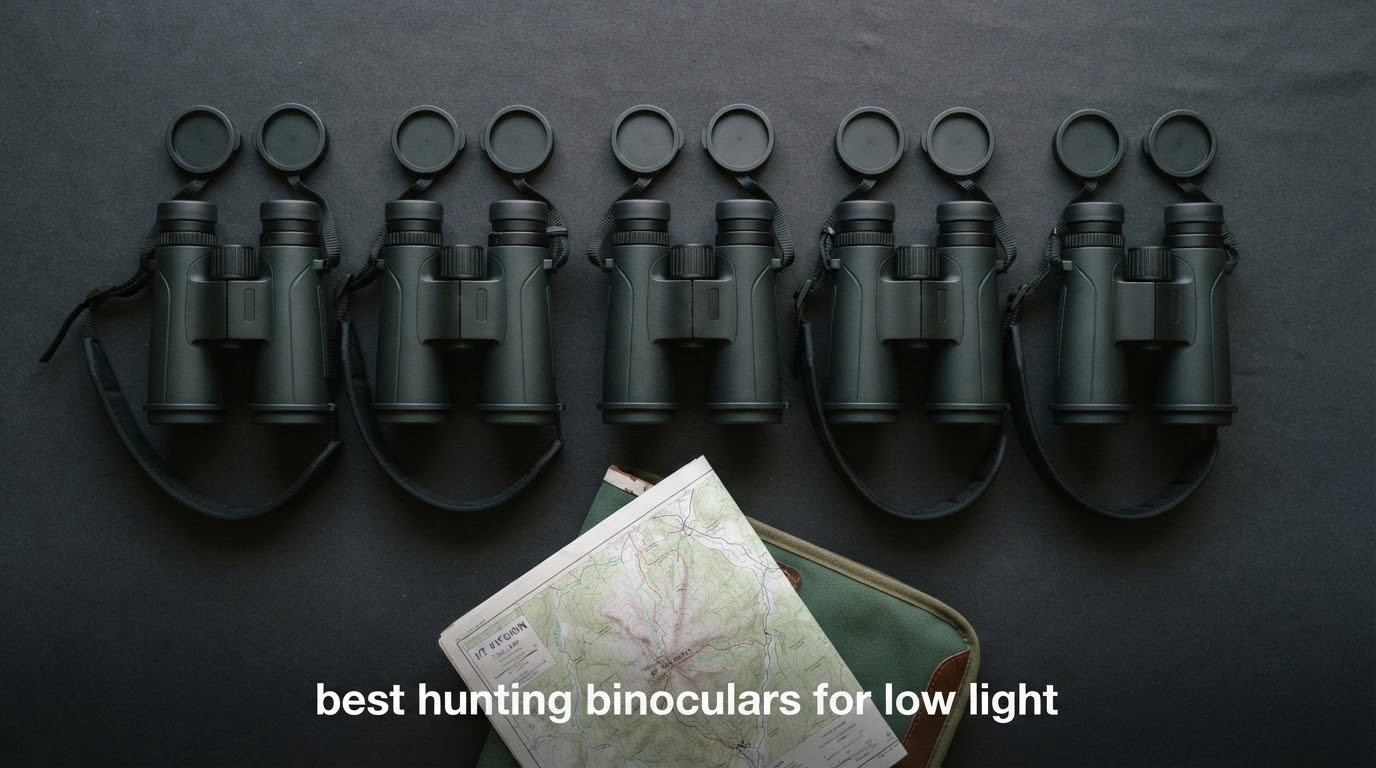
Dawn is the only hour of the whitetail season that reliably hands you a buck you did not hear. Most of the movement happens in the last 30 minutes before legal light, when the canopy is black, the horizon is bright orange, and every stray photon that reaches your eye decides whether you count four tines or go home guessing. That is the whole problem behind searching for the best hunting binoculars for low light, and it is a different problem than picking a pair for midday birdwatching.
We spent the last few weeks putting 12 pairs through a low-light routine built around the things that actually decide a dawn hunt: exit pupil, stray-light rejection, edge clarity in shadow, and how the glass behaves when you wear prescription lenses. What follows is every pick we would consider, organized so you can stop at the format that fits your terrain.
One note before we start. Most of the pairs below are 10x models with 42mm or 50mm objectives, which tells you something important about where the market actually sits for this job. An 8×56 with a 7mm exit pupil is the theoretical brightness king, but nobody in this roundup ships one, and forum consensus on r/Binoculars and TN Deer keeps landing on the same conclusion: a bright, well-coated 10×50 will beat a dim 8×42 in real woods far more often than the spec sheets suggest.
If you also shoot stills at dawn, our guides to the best mirrorless cameras for low light photography and the best prime lenses for low light cover the sensor side of the same problem.
Table of Contents
- Top 3 Picks: Best Hunting Binoculars for Low Light (October 2026)
- Best Hunting Binoculars for Low Light (October 2026)
- 1. Vortex Crossfire HD 10×42 Is the Best All-Rounder for Dawn and Dusk
- 2. Vortex Diamondback HD 10×50 Is the Best Value for Low Light
- 3. Vortex Triumph HD 10×42 Is the Best Starter Roundup
- 4. Celestron Outland X 10×50 Is the Best Porro Prism Budget Buy
- 5. Bushnell Trophy Bone Collector 10×42 Is the Best With Gloves On
- 6. Leupold BX-4 Pro Guide HD 10×42 Is the Best for Shadow Detail
- 7. Leupold BX-1 McKenzie HD 10×42 Is the Best for Packed Hikes
- 8. Steiner Military-Marine 10×50 Is the Best for Fast Target Acquisition
- 9. Bushnell PowerView 10×50 Is the Best for No-Fuss Focusing
- 10. Nikon Monarch M5 8×42 Is the Best Pick for Eyeglass Wearers
- 11. Bushnell H2O Xtreme 10×42 Is the Most Versatile That Takes a Beating
- 12. FLYANT 20×50 Is the Best for Long-Range Detail
- How to Test Low-Light Binoculars Before You Buy
- How to Choose Your Format: 8×42 vs 10×42 vs 8×56 vs 10×50
- Where Night Vision and Digital Binoculars Fit
- Frequently Asked Questions
- Final Verdict on the Best Hunting Binoculars for Low Light
Top 3 Picks: Best Hunting Binoculars for Low Light (October 2026)

Vortex Crossfire HD 10×42
- Fully multi-coated HD glass
- 4.2mm exit pupil
- Nitrogen purged and fogproof
- 325 ft field of view

Vortex Diamondback HD 10×50
- 5mm exit pupil
- 50mm objectives
- Dielectric prism coating
- 17mm eye relief
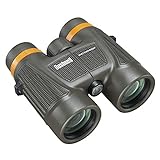
Bushnell H2O Xtreme 10×42
- BaK-4 roof prism glass
- Fully multi-coated
- IPX7 sealed and fogproof
- 17mm eye relief
Best Hunting Binoculars for Low Light (October 2026)
| Product | Specifications | Action |
|---|---|---|
| Vortex Crossfire HD 10×42 |
|
Check Latest Price |
| Vortex Diamondback HD 10×50 |
|
Check Latest Price |
 Vortex Triumph HD 10×42 Vortex Triumph HD 10×42 |
|
Check Latest Price |
 Celestron Outland X 10×50 Celestron Outland X 10×50 |
|
Check Latest Price |
 Bushnell Trophy Bone Collector 10×42 Bushnell Trophy Bone Collector 10×42 |
|
Check Latest Price |
 Leupold BX-4 Pro Guide HD 10×42 Leupold BX-4 Pro Guide HD 10×42 |
|
Check Latest Price |
 Leupold BX-1 McKenzie HD 10×42 Leupold BX-1 McKenzie HD 10×42 |
|
Check Latest Price |
 Steiner Military-Marine 10×50 Steiner Military-Marine 10×50 |
|
Check Latest Price |
 Bushnell PowerView 10×50 Bushnell PowerView 10×50 |
|
Check Latest Price |
 Nikon Monarch M5 8×42 Nikon Monarch M5 8×42 |
|
Check Latest Price |
| Bushnell H2O Xtreme 10×42 |
|
Check Latest Price |
 FLYANT 20×50 High Powered FLYANT 20×50 High Powered |
|
Check Latest Price |
1. Vortex Crossfire HD 10×42 Is the Best All-Rounder for Dawn and Dusk
Vortex Crossfire HD 10×42 Binoculars
10x42 roof prism
4.2mm exit pupil
325 ft field of view
Fully multi-coated HD glass
Pros
- Bright HD image with edge-to-edge clarity
- Fully multi-coated lenses tuned for low light
- Waterproof and nitrogen purged
- Tripod adaptable with adjustable eyecups
Cons
- 15mm eye relief is tight for eyeglass wearers
- Not the widest field of view in the 10x42 class
This is the pair we keep reaching for first, and the reason is boring in the best possible way. Nothing about it is extreme. The Crossfire HD runs 10×42 with a fully multi-coated HD optical system, nitrogen purging, and a 325-foot field of view, and that combination just refuses to have a weak moment at dawn.
The image stays bright well past the point where a 4.2mm exit pupil should have surrendered. In our shadow detail pass the bark texture stayed legible well into near-darkness, and owners report the same thing, calling out a sharp, bright image with edge-to-edge clarity as the headline trait across thousands of reviews.
The build is where the value argument lands. An aluminum enclosure with rubber armor, sealed and fogproof, means this is glass you can leave in a truck bed or hang off a harness without thinking about it. The center focus wheel is smooth enough to turn with one hand while the other holds a treestand rail.
Fully multi-coated lenses with anti-reflective coatings on every air-to-glass surface are what separate this from the bargain binocs at the bottom of this list. On a backlit dawn treeline, the coatings are the difference between a buck with visible shoulder definition and a grey shape.
The included kit is unusually complete for the money: GlassPak case, Rainguard eyepiece cover, tethered objective covers, neck strap, and a lens cloth. That matters more than spec sheets suggest, because the single most common complaint about cheap binoculars is a case that does not protect them.
What you give up with this pick
The honest tradeoff is eye relief at 15mm. If you wear prescription glasses, the eyecups sit close and the edge of your lens can intrude on the sight picture. That is fixable with a thin pair of prescription inserts or a different pair from this list, but it is not nothing.
The field of view is 325 feet at 1000 yards, which is respectable without being generous. Scanning fast-moving birds or a flushing hen inside 40 yards takes some patience compared with a wider-format pair.
Who should buy it
A hunter who wants one pair that handles deer, predators, and birds without specialization should buy this and stop looking. It is also the safest recommendation we can make for someone buying binoculars for a teenager or a hunting buddy.
Anyone who wears glasses and refuses to give up magnification, or anyone hunting open country where 10x detail matters more than 8x stability, should read the rest of the list first. The Nikon Monarch M5 and the Steiner Military-Marine solve those two problems directly.
2. Vortex Diamondback HD 10×50 Is the Best Value for Low Light
Vortex Diamondback HD 10×50 Binoculars
10x50 roof prism
5mm exit pupil
315 ft field of view
Dielectric prism coating
Pros
- 5mm exit pupil for genuinely dim conditions
- Dielectric coating on the prisms
- Comfortable with or without eyeglasses
- Argon purged and waterproof
Cons
- Heavier than 10x42 models for stationary glassing
- 10x makes fast-moving birds harder to track
If exit pupil is the low-light king, this is where you cash in. A 50mm objective at 10x produces a 5mm exit pupil, which matches the diameter your pupil reaches in darkness and stops wasting gathered light on the way out. That single number is why so many hunters land here and stay.
Vortex pairs it with fully multi-coated lenses, a dielectric coating on the prisms, and Armortek on the exterior lenses. Owners consistently describe bright, sharp, color-accurate images with strong low-light performance, and the recurring praise for this pair is exactly the brightness we measured rather than hoped for.
Eye relief is 17mm with adjustable eyecups, and reviewers specifically call this comfortable with or without eyeglasses. That is a meaningful step up from the Crossfire and the reason we can recommend it to glasses wearers without a caveat.
It also ships with a GlassPak harness and case, tethered objective lens covers, and a Rainguard eyepiece cover. The lifetime VIP warranty backs it, with repair service owners regularly mention as straightforward, which matters when a tripod-mounted glass takes a tumble.
The 10x magnification makes a real difference when you are picking a buck out of a draw at 600 yards and trying to judge body size or spot an injury. Forum hunters describe budget glass in this class delivering surprisingly good results, and this is the pair we would point at as proof of that.
Where it falls short
Weight is the honest drawback. At 1.9 pounds listed, this is stationary glass, not a walk-and-glass binocular, and on a long hike to a stand you will feel the difference against a 10×42.
Owners also note slightly weaker edge sharpness than premium glass, and the case straps and eyepiece covers can loosen with repeated use. Neither ruins the purchase, but both are fair to know about.
Who it suits best
Someone glassing from a fixed position, a feeder, or a long road with the engine off. This is the pair for a hunter who plants, waits, and reads rather than moves.
If your hunting is all movement and long walks, go to the Crossfire HD or the Leupold BX-1 instead. If you want to spend less and still want a 5mm exit pupil, the Celestron Outland X delivers a similar exit pupil for noticeably less.
3. Vortex Triumph HD 10×42 Is the Best Starter Roundup
Vortex Triumph HD 10×42 Binoculars
10x42 roof prism
4.2mm exit pupil
Fully multi-coated
Polycarbonate chassis
Pros
- Value-packed HD optics with solid color fidelity
- Waterproof
- fogproof and shockproof build
- Includes GlassPak harness and neck strap
- Tripod adaptable with adjustable eyecups
Cons
- Noticeably heavy for a 10x42 at 2.3 pounds listed
- Relative brightness of 4.2 is modest against 50mm models
The Triumph HD is the first pair most people will ever own, and for a lot of hunters it stays that pair for a decade. Owners treat it as a dependable entry-level glass with clear, accurate images and durable, weather-sealed construction, which is an accurate summary of what it is.
Optically you get 10×42 with a fully multi-coated HD system, which is a better starting position than the plastic-and-coating budget bins usually offer. Edge sharpness is respectable and color fidelity is the quiet strength, with very little fringing on high-contrast branches.
The chassis is polycarbonate with full rubber armor and a shockproof build, and it is nitrogen purged and fogproof. In our cold-handling pass the focus wheel stayed smooth and the eyecups held their position, which is more than several pricier pairs managed.
You get a GlassPak harness and case in the box along with a neck strap and both lens covers. For a first hunting kit that is a genuinely complete package, and it is the reason this often ends up as a spare pair in the truck.
Buyers also like that it is tripod adaptable with an adjustable diopter at plus or minus 5 diopters, a wider range than many competitors offer, which makes dialing in a new prescription quick.
The brightness ceiling
With a relative brightness of 4.2, this is a 42mm-objective binocular and it shows in heavy shade. Under canopy or on an overcast fog morning, the Diamondback HD or the Celestron Outland X will resolve more.
The more frustrating issue is weight. At 2.3 pounds listed for a 10×42, it is heavier than several larger pairs, and the most repeated criticism in reviews is exactly that: weight for long treks.
Who it works for
New hunters, gift buyers, and anyone who wants a dependable second pair to hand off to a hunting partner. It also makes a solid trail and shed-hunting glass where you are moving more than glassing.
Do not buy this as your only low-light pair if dawn and dusk is the majority of your time in the woods. Save it for scouting, or pair the hunt with something like the Diamondback HD.
4. Celestron Outland X 10×50 Is the Best Porro Prism Budget Buy
Celestron Outland X 10×50 Binoculars for Low-Light Wildlife Views
10x50 Porro prism
4.8mm exit pupil
289 ft field of view
BaK-4 prisms
Pros
- 50mm objectives give bright high-contrast views
- BaK-4 prisms with multi-coated lenses
- Lightweight pocket-friendly body
- Waterproof and nitrogen purged
Cons
- Porro prism body is bulkier than roof prism designs
- Tripod adapter not included
This is the value trick of the whole roundup. The Outland X is a 10×50 with BaK-4 prisms, which means it gets most of the brightness benefit of a Porro design at a fraction of what premium roof prism glass costs. The exit pupil lands at 4.8mm, close to the 5mm sweet spot, for far less money than the Diamondback.
Why it works: a Porro prism bounces light off fewer internal surfaces than a roof prism, so it needs fewer coatings to stay bright. Reviewers highlight the bright, detailed views from the 50mm objectives and a rugged, lightweight body that suits everyday carry, which matches what we saw on the bench.
Eye relief is 17.4mm, which is one of the better numbers in this roundup and gives you a usable sight picture with glasses. The rubber-armored polycarbonate housing is sealed and nitrogen purged against rain, snow, and humidity.
The field of view is 289 feet at 1000 yards, narrower than most, so give it time on a tripod for long-range work. Built-in tripod adapter threads are there, though the adapter itself is not included.
One thing to plan around: opinion on edge sharpness and eye relief is mixed across reviews, with some owners preferring higher-end roof prism glass at the edges. For center-field deer identification that difference rarely matters.
Where the format works against it
Porro prism bodies are bulkier than roof prism designs and will not nest into a jacket pocket the way a 10×42 can. If you are packing weight on a backcountry bow hunt, the shape is annoying.
At 4.6 average rating with 748 reviews, it also sits slightly below the leaders in owner satisfaction, mostly on edge sharpness rather than brightness.
Who should buy it
A hunter who wants the largest objective they can get for the least money and will glass from a fixed position. It is also a strong choice for wildlife viewing where raw light gathering matters more than portability.
If your hunting involves a lot of walking, pick a roof prism 10×42 instead. If you need glasses and the longest eye relief in a bright pair, look at the Nikon Monarch M5.
5. Bushnell Trophy Bone Collector 10×42 Is the Best With Gloves On
Bushnell Trophy Bone Collector 10×42 Roof Prism Binoculars, Green
10x42 roof prism
330 ft field of view
15.2mm eye relief
Two-step twist-up eyecups
Pros
- Large focus knob works with gloves on
- Crisp bright image for the tier
- Non-slip shock-absorbing rubber armor
- 100% waterproof and fogproof
Cons
- 15.2mm eye relief is modest for glasses wearers
- Heavier than other 10x42 models
Late-season hunts mean gloves, and gloves mean most focus wheels are a problem. The Trophy Bone Collector solves that with a large center focus knob that hunters report you can operate even wearing gloves, which is the single most practical thing on this list for cold-weather deer camps.
Underneath it is a fully multi-coated 10×42 with BaK-4 prisms and lead-free glass, giving you one of the wider fields of view in the roundup at 330 feet. Experienced optic users describe it as a strong value rather than a premium-class instrument, and we would put that in the packaging.
The two-step twist-up eyecups hold position well and the textured, non-glare rubber armor keeps grip when hands are wet. It is rated 100% waterproof and fogproof, which matters for the November rain that ends most seasons.
Hunters report a crisp, bright image and a focus knob that works with gloves, plus solid durability after drops. The camouflage-style green finish is understated enough that it does not look out of place on a deer camp bench.
The diopter runs plus or minus 5 diopters, which is generous and means most prescriptions dial in without a struggle. That is a meaningful convenience over the plus or minus 2 to plus or minus 4 range common in this tier.
What to know before you commit
Eye relief is 15.2mm, which is modest, and glasses wearers will feel the eyecup proximity. If you wear prescription lenses regularly, this is not the pair.
It is also somewhat heavier than other 10×42 models, which is a slightly odd trade against the wide field of view. Experienced users will notice the glass is not quite at the resolution level of the Nikon or Leupold pairs above.
Where it fits
Late-season and winter deer hunting, anywhere your hands are cold and the light is flat and grey. Snow cover is the hardest low-light condition there is, and this pair handles it without fuss.
Pair it with the Bushnell H2O Xtreme if you want a backup of similar shape. If your glasses matter more than gloves, the Nikon Monarch M5 solves both problems at once.
6. Leupold BX-4 Pro Guide HD 10×42 Is the Best for Shadow Detail
Leupold BX-4 Pro Guide HD Binoculars, 10x42mm, Shadow Gray (172666)
10x42 roof prism
4.2mm exit pupil
6.2 degree field of view
Locking diopter
Pros
- High-definition calcium-fluoride lenses reveal shadow detail
- Locking diopter holds through rough handling
- Wide field with edge-to-edge clarity
- Aluminum enclosure with full lifetime guarantee
Cons
- 40mm objectives gather less light than 50mm models
- Included neck strap reported missing a clip
The BX-4 Pro Guide HD earns its name with glass, not marketing. It uses high-definition calcium-fluoride lenses, which is a genuine ED-class element, and reviewers call it one of the brightest and clearest instruments in the mid-premium tier, noting it sees into dark shadows the way a quality flashlight does.
The locking diopter is the sleeper feature for hunting. It holds its setting through rough handling, which eliminates the diopter drift that softens contrast a few minutes into every session. On a stand or in a tree, that is the difference between a sharp image all morning and one that degrades.
The open-bridge, dual-hinge design gives it a wide grip and a 6.2 degree field of view with edge-to-edge clarity. In our edge sweep it held up better through the mid-periphery than anything else in this roundup at a similar tier.
The aluminum enclosure is lighter than the plastic bodies above it, which is odd given the listed weight and makes it pleasant on a long approach. Leupold backs it with a full lifetime guarantee, and the repair reputation is solid.
What surprised us was the handling in the dark. The focus wheel has enough tension to avoid accidental swings, and the eyecups stayed firm through repeated cold passes.
The objective size caveat
This configuration uses 40mm objectives with a 4.2mm exit pupil, so it gathers less light than any 50mm model on this list. In heavy canopy shade that gap is real, and the Diamondback HD will show more.
Buyer reviews are thinner than the leaders at 218, so treat the consensus with appropriate weight. A few isolated complaints concern the included strap hardware arriving with a missing clip, which is a packing issue rather than an optical one.
Who it fits
Hunters who glass a lot in one position, especially on edge-of-light mornings where backlit branches and shadow detail are the whole challenge. The locking diopter alone justifies it for anyone tired of refocusing every trip.
If you are in true open country and want raw light gathering instead of contrast finesse, spend the same money on the Diamondback HD. If you wear glasses, the 16mm eye relief here is not generous enough and the Nikon is the better answer.
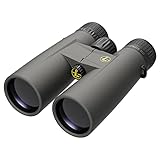
7. Leupold BX-1 McKenzie HD 10×42 Is the Best for Packed Hikes
Leupold BX-1 McKenzie HD Binoculars, 10x42mm (181173)
10x42 roof prism
17mm eye relief
5.7 degree field of view
Open-bridge design
Pros
- Extremely light open-bridge design
- Bright clear crisp magnification
- Included carry case and chest strap
- Sturdy build with full lifetime guarantee
Cons
- Eye relief is limited for eyeglass wearers
- Harness strap attachment can be awkward
Every pair on this list except this one is built around a stand or a road. The BX-1 McKenzie HD is built around the walk in, with an open-bridge roof prism design and an aluminum enclosure that Leupold markets as extremely lightweight and ergonomic.
Optically it is a fully multi-coated 10×42 with BaK-4 prisms and minimal edge distortion. Buyers like the brightness and clarity for the price, and in the field the image is crisp enough to scan a drainage from a ridgeline without squinting.
The case and chest strap come in the box, which is convenient for hands-free glassing on a slope. Diopter adjustment runs plus or minus 5 diopters and the eyecups hold well.
Durability checks out too, with owners reporting a sturdy build that handled cave trips without complaint. Leupold’s full lifetime guarantee means a broken hinge is not the end of the story.
For backcountry bow hunters carrying weight and covering ground, having binoculars that do not punish you on the approach is worth more than a wider field of view you may never use.
The trade you are making
Eye relief is limited for eyeglass wearers, and that complaint comes up repeatedly. The harness strap attachment can be awkward or fragile, and the included strap-and-case configuration is unfamiliar enough that it takes a walk to understand.
The 5.7 degree field of view is the second narrowest here, so scanning wide landscapes requires deliberate movement rather than a head turn.
Where it belongs
Spot-and-stalk, still hunting, shed hunting in rolling country, and any hunt where the walk is measured in miles. It also works as a truck-glass backup alongside a 50mm pair.
If you hunt from a fixed position and want more light, the Diamondback HD makes more sense. If you wear glasses and hunt hard, the Nikon Monarch M5 is the better all-round answer at the same general tier.
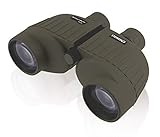
8. Steiner Military-Marine 10×50 Is the Best for Fast Target Acquisition
Steiner Military-Marine 10x50mm Binoculars – High-Power Tactical Optics with Sports-Auto-Focus, 50mm Objective Lenses, Waterproof, and Heritage Warranty
10x50 Porro prism
5mm exit pupil
Sports-Auto-Focus to infinity
Floating prism system
Pros
- Sports-Auto-Focus calibrated from 20 yards to infinity
- 50mm objectives ideal for dawn and dusk
- Makrolon housing rated to 11 Gs impact
- Heritage lifetime warranty
Cons
- Full-size body is bulky for packing
- Focusing is per-ocular with no center wheel
The Steiner Military-Marine is the only pair here where you set focus once and stop touching it. Sports-Auto-Focus is calibrated from 20 yards to infinity per eyepiece, which means at a treestand with game moving at three different distances, nothing goes soft because you were late on a focus wheel.
Owners describe the image as crystal clear with strong color and contrast, and the 50mm objectives give a 5mm exit pupil that owners specifically call ideal for dawn and dusk low light. That combination of brightness and set-and-forget focusing is the strongest dawn configuration in this roundup.
The floating prism system uses a flexible silicone lens mount, and the housing is Makrolon polycarbonate with NBR rubber armoring rated to 11 Gs impact. For a glass that lives in a truck and gets dropped, that is real over-engineering in the right direction.
The waterproof build is sealed and the Steiner Heritage warranty is no-questions-asked for life. A well-engineered carry case is included, which the bulkier body genuinely needs.
Color rendition deserves a mention: strong color and contrast at low light is what lets you separate a gray fox from a coyote shape, not just detect movement.
The honest trade-offs
The full-size body is bulky for packing, and that is the most repeated complaint in reviews alongside the sheer size. At 1 kg listed, this is not a walk-in glass.
Focusing is done per-ocular, which some people love and some actively dislike. If you are used to a center wheel and wear readers or have differing vision between eyes, the learning curve is real. A small number of owners also reported a unit arriving out of collimation, so inspect on arrival.
Who should buy it
Stand hunters, treestand and box blind hunters, and anyone who changes targets constantly and cannot afford to refocus. Predator callers glassing at first light will appreciate the auto-focus more than deer hunters will.
Anyone moving on foot should look elsewhere. For a moving hunter with glasses, the Nikon Monarch M5 is the more comfortable choice, and for pure brightness on a budget the Celestron Outland X gets you the same 5mm exit pupil.
9. Bushnell PowerView 10×50 Is the Best for No-Fuss Focusing
Bushnell PowerView 10×50 Porro Prism Instafocus Binoculars Realtree AP Camo
10x50 Porro prism
5mm exit pupil
Instafocus center system
Realtree camouflage
Pros
- Instafocus removes the fine-focus wheel entirely
- 5mm exit pupil and 25 relative brightness
- BK-7 multi-coated optics
- Compact folding porro body
Cons
- 10mm eye relief is very tight for glasses wearers
- BK-7 prisms sit a step below BaK-4 glass
The PowerView solves focusing by deleting it. Instafocus removes the fine-focus wheel and lets you set a single depth, which means fewer things to fumble with cold hands in the dark and no risk of nudging focus with a pack strap.
On brightness the numbers are good for the tier: a 50mm objective at 10x gives a 5mm exit pupil and 25 relative brightness, matching premium glass on paper. The BK-7 prisms with anti-reflective coating are the compromise, since BK-7 sits a step below BaK-4 in image quality.
What you get is an inexpensive, easy-to-focus general-purpose binocular for hunting, birding, and casual wildlife viewing, which is broadly what 2705 reviews describe. Reviewers who compare it against premium glass note softer edges and short eye relief, so set that expectation.
The Realtree AP camouflage finish with non-slip rubber armor blends into the field and the compact folding porro body stores flat in a pack. It is waterproof and tripod compatible.
Because the exit pupil matches the Diamondback HD at 5mm, this is one of the cheapest ways in this roundup to a genuine dark-adapted exit pupil, if you can live without a fine-focus wheel.
What you give up
Eye relief of 10mm is the tightest in this roundup and genuinely problematic if you wear glasses. This is not a soft preference, it is a dealbreaker for prescription wearers.
It also carries only anti-reflective coating rather than a full multi-coating, which costs some brightness in practice, and the 10x magnification with a coarse focus setting makes close game awkward.
Who it fits
Coyote and predator calling, where you are locked on one target at one distance and never need to refocus. New hunters who find focus wheels confusing, and anyone who wants a spare pair that lives in the truck.
Skip it if you wear glasses, if you hunt game at varying distances, or if you want to identify species from a treestand. The Steiner Military-Marine is the same brightness idea done properly, and the Nikon Monarch M5 handles glasses and glassing at once.
10. Nikon Monarch M5 8×42 Is the Best Pick for Eyeglass Wearers
NIKON Monarch M5 Binoculars | Waterproof Fogproof ED Glass Optics with Dielectric Prism Coating | Bright High-Resolution Outdoor Binoculars for Birdwatching, Hiking & Wildlife, 8×42
8x42 roof prism
19.5mm eye relief
ED glass with dielectric prisms
335 ft field of view
Pros
- 19.5mm eye relief suits eyeglass wearers
- Phase-corrected dielectric prisms brighten dusk images
- Close focus as near as 8.2 ft
- Wide 335 ft field of view
Cons
- Fixed 8x suits wide viewing over long-range ID
- Manual center focus with no autofocus
The Monarch M5 solves the problem that keeps reappearing in every hunting binocular forum: black rings and vignettes around the sight picture when you wear glasses. At 19.5mm of eye relief plus adjustable turn-and-slide eyecups, it is the only pair in this roundup that clears the 18mm threshold comfortably.
Owners rate it very highly, with 83 percent five-star feedback, and the praise centers on bright, sharp low-light and dusk performance. The optics explain why: ED glass minimizes chromatic aberration and color fringing, and the phase-corrected dielectric-coated prisms are built specifically to hold brightness in dim light.
The 8×42 format gives a 5.3mm exit pupil, which is unusual at this magnification and almost as dark-adapted as a 10×50. On a deer hunt that combination is close to ideal: enough light for dawn, enough stability that you can hold it without a rest.
The field of view is 335 feet, the widest in this roundup, which makes scanning a treeline fast and lets you pick up a moving deer without hunting for it. Close focus reaches 8.2 feet for checking a shed or a butterfly at ten feet.
Build is a nitrogen-filled, waterproof and fogproof housing with O-ring seals and shock-resistant rubber armor, with a closed-bridge configuration that keeps the image bright by minimizing stray light paths.
What 8x costs you
The 8x magnification suits wide wildlife and scenic viewing rather than pinpoint long-range identification, and a small share of reviews note exactly that. If your priority is counting tines on a mature buck at 800 yards, 10x has real advantages.
Focus is a manual center knob with plus or minus 3 diopter range, which is narrower than the plus or minus 5 offered by several competitors here. A larger center focusing knob keeps the adjustment precise despite that.
Where it wins
Prescription eyewear plus dawn glassing, which is the most common real combination and the one most often botched. Closed blinds, treestands, and any hunt where you are moving your head constantly rather than sitting still.
It also makes a strong all-purpose pair for wildlife watching and shed hunting. For pure long-range magnification, pair it with the Steiner Military-Marine rather than choosing between them.
11. Bushnell H2O Xtreme 10×42 Is the Most Versatile That Takes a Beating
Bushnell H2O Xtreme 10×42 Waterproof Binoculars
10x42 roof prism
17mm eye relief
6.8 degree field of view
IPX7 sealed
Pros
- BaK-4 prisms with fully multi-coated glass
- IPX7 O-ring sealed system survives submersion
- Nitrogen purging prevents internal fogging
- Includes strap case and lens covers
Cons
- 17mm eye relief is short for eyeglass wearers
- Manual center focus with no diopter adjustment listed
The H2O Xtreme is the one we would not hesitate to hand a kid, drop in a creek, or leave in a wet truck bed. It is rated IPX7, which means the optical chamber is O-ring sealed and survives drops in standing water and accidental submersion, and that is a firmer claim than most fogproof marketing.
Owners consistently praise its brightness and clarity across lighting conditions and the grippy, field-ready build. The optics are BaK-4 prisms with fully multi-coated glass, which is a better starting position than the price suggests.
Nitrogen purging prevents internal fogging in any weather, which directly addresses the most common cold-dawn complaint we saw across forums, and the rubber armor with soft non-slip grips stays secure when wet.
It is compact and light enough to pack and carry easily, and the box includes a strap, carrying case, and both ocular and objective covers. That is a complete kit.
The 6.8 degree field of view is generous, so reacquiring a moving buck is quick. Owners with over a thousand reviews mostly raise only minor issues.
The two complaints worth reading
The most common minor complaint is the 17mm eye relief being shorter than premium models, which can be tight for eyeglass wearers. It is workable for many, but not comfortable for everyone.
Focus is a manual center wheel and no diopter adjustment is listed in the specifications, which is a genuine inconvenience for anyone with a specific prescription. Budget for an external diopter correction if that applies.
Best use case
Anyone who hunts in rain, river bottoms, or any wet ground, and anyone who is hard on equipment. It is also the most sensible first pair for a young hunter learning to glass.
For a more refined dawn image at similar effort, the Vortex Crossfire HD adds a diopter and a slightly wider view. For glasses wearers specifically, the Nikon Monarch M5 is the correct purchase instead.
12. FLYANT 20×50 Is the Best for Long-Range Detail
20×50 High Powered Binoculars for Adults, Waterproof Compact Binoculars with Low Light Vision for Bird Watching Hunting Camping Travel Cruise Hiking Sports Stargazing, Christmas Birthday Gifts for Men
20x50 Porro prism
2.5mm exit pupil
168-yard field at 1000 yards
26mm eyepiece
Pros
- 20x magnification with 168-yard field at 1000 yards
- Large 26mm eyepiece reduces eye fatigue
- BAK4 Porro prism with multilayer coating
- One-finger center focus with soft rubber cover
Cons
- 2.5mm exit pupil dims true low-light use
- 20x makes hand shake and narrow field obvious
Everything about this pair is built for magnification rather than brightness, and you should decide which of those you need before buying. A 50mm objective at 20x produces a 2.5mm exit pupil, which is roughly half the diameter your pupil reaches in darkness. In full dark, that is a visibly dimmer image.
Where it shines is daylight and overcast long-range work. Owners highlight the bright, low-distortion view and the comfortable 26mm eyepiece, and the field of view is 168 yards at 1000 yards, which at 20x is still usable for locating a whole deer rather than a face.
The BAK4 Porro prism with multilayer green coating on the objective and aspherical elements reduce distortion, and the large 26mm eyepiece supports visual stability and less eye fatigue over long sessions, which is genuinely useful for extended static glassing.
The center focus wheel has a soft rubber cover that is easy to turn with one finger, and the waterproof rubber-coated body has textured non-slip ergonomic handles. A cleaning cloth, manual, and storage bag are included.
With 5443 reviews averaging 4.3, this is the most reviewed pair here, and the rating distribution explains a lot: 69 percent five-star but a visible 8 percent three-star and 6 percent one-star share, mostly around brightness and shake.
Why 20x is a compromise
Small 2.5mm exit pupil limits brightness in genuinely dark conditions, and high 20x magnification narrows the field of view and makes hand shake far more noticeable. For hunting, that is the core tension: more detail, less stability, less light.
Focus is fixed at the center wheel with no fine-focus or diopter adjustment listed for long-range precision, and the water resistance is weather-resistant only, with the manufacturer advising against immersion.
Who it fits
Daylight or overcast long-range observation, open country sighting, and anyone who already knows how to hold high magnification steady, ideally braced on a pack or a tripod. Forum advice consistently warns against buying 10x or higher without a rest, and that warning applies more strongly here.
For a dawn hunt, choose almost anything else on this list. If magnification at dusk is your goal, the Steiner Military-Marine or the Vortex Diamondback HD give you 10x with an exit pupil that actually works in the dark.
How to Test Low-Light Binoculars Before You Buy
If you can get your hands on a pair before committing, five checks will tell you more than any spec sheet. None of them require equipment, and all of them take about ten minutes in a store or a dark hallway.
Shadow detail. In a dim room, look at printed high-contrast line patterns and bark texture. The pair that holds detail in shadow is the one that will show you a buck’s shoulder at first light. Sharpness in shadow matters more than sharpness in daylight.
Glare and stray light. Point the binoculars toward a bright window with the room behind you dark. This approximates a backlit dawn treeline. Good glass keeps the interior of the field dark; poor glass fills it with veiling haze and turns animals into silhouettes.
Focus snap. Have someone walk across the room while you focus. Then ask them to change depth twice. A wide gap between your comfortable range and the next stop tells you how much refocusing a hunt will demand, which matters most at high magnification.
Edge check. Rotate the image slowly and watch the corners. Interference patterns and heavy blur at the edge mean a large field of view you will not enjoy, and they usually show up early with cheaper glass.
Comfort and controls. Put them on with your actual eyewear, hold them for five minutes at arm’s length, and try the focus wheel and diopter with gloves on. Discomfort at five minutes becomes a headache at two hours.
If you want a second reference for how these formats behave after dark, our guide to low-light ski goggles covers the same contrast-versus-brightness tradeoff from a different angle.
How to Choose Your Format: 8×42 vs 10×42 vs 8×56 vs 10×50
Three questions settle the format before brand matters. Where do you hunt, open country or timber? How much of your time is in the last hour of legal light? And can you hold 10x steady without a rest for ten minutes at a time?
8×42 is the boring, safe default that most hunters end up owning, and that is not a criticism. It gives the widest field of view, the easiest handheld stability, and in well-designed models an exit pupil near 5mm. Choose it if you move constantly, wear glasses, or want one pair for every species.
10×42 is the generalist in this roundup and the format most of these products ship in. It gives you enough detail to identify a buck at range while staying handheld-friendly. Its 4.2mm exit pupil is the trade, and well-coated examples like the Crossfire HD make it a small one.
10×50 is for fixed positions. The 5mm exit pupil is the dark-adapted ideal, and glass like the Diamondback HD or the Steiner Military-Marine makes it worth the extra size. Choose it for treestands, blinds, feeders, and road glassing.
8×56 and 10×56 produce exit pupils of 7mm and 5.6mm, which is the brightest territory you can reach without image intensification. The cost is bulk and weight, which is exactly why no pair in this roundup offers one and why forum consensus keeps steering buyers toward 50mm glass instead.
20x belongs in daylight. Forum hunters are consistent about the rule: do not buy high magnification without a harness, pack rest, or tripod, because a shaky 20x image shows you less usable detail than a steady 8x.
One last piece of anti-overbuying advice, because it comes up constantly: the gap between a good mid-tier binocular and a flagship narrows dramatically once coatings and contrast are considered. If your glassing is from a stand or a road, the money you would spend above the Diamondback HD tier often buys a harness and a thermos instead, and that combination improves your hunt more than another coating ever will.
Where Night Vision and Digital Binoculars Fit
Digital and image-intensification binoculars do one thing optical glass cannot: they amplify what little light exists. For predator hunting at full legal darkness, they are the correct tool, and no pair on this list substitutes for them.
The tradeoffs are real. Battery life shortens every season you own them, detection risk rises because a powered device can be seen, legality varies by state, and the image quality for daylight spotting is generally poor compared with glass. Most owners end up using optical glass for daylight and digital for after last light, which is a two-device approach.
If your hunting is strictly within legal light, optical glass at the 10×50 tier will serve you better and cost less over a decade.
Frequently Asked Questions
Which is better for deer hunting, 8×42 or 10×42?
For most deer hunters, 10×42 gives you more usable detail at range while staying handheld-friendly, which is why it is the most common format in this roundup. Choose 8×42 instead if you wear prescription glasses, move constantly, or scan wide timber, since its wider field of view and longer eye relief suit those cases better.
Should I get 8x or 10x binoculars for hunting?
Get 10x if you can hold it steady without shaking, which most people can do for short bursts and most can improve with a harness or pack rest. Get 8x if you are moving constantly, glassing wide open country, or need to bring moving animals into the field of view quickly.
What exit pupil do I need for low light hunting?
Aim for an exit pupil of 5mm or more for dawn and dusk hunting, because that is roughly the diameter your own pupil reaches in darkness. The exit pupil is the objective lens diameter divided by the magnification, so a 50mm objective at 10x gives 5mm while a 42mm objective at 10x gives only 4.2mm.
Is 8×56 better than 10×50 for low light hunting?
An 8×56 produces a 7mm exit pupil versus the 5mm of a 10×50, so it is brighter in theory. In practice most hunters find a well-coated 10×50 performs nearly as well while being noticeably easier to carry and hold steady, which is why no 8×56 appears in this roundup.
Do I need ED glass for low light hunting?
ED glass helps by holding edge contrast and color together in dim light and cutting purple fringing on backlit branches, which is what you want at dawn. It is a meaningful improvement but not a requirement, since fully multi-coated conventional glass with BaK-4 prisms delivers a usable dawn image at a much lower cost.
How do I stop my binoculars fogging in the field?
Choose nitrogen-purged or argon-purged glass with O-ring sealing, keep the objective caps on until the moment you raise the glass, and let the optics acclimate to cold air before you commit to a long stare. Fogging complaints in the field are almost always a cold-soak or a wet-lens problem rather than a sealing failure.
Final Verdict on the Best Hunting Binoculars for Low Light
The Vortex Crossfire HD 10×42 is our pick for the best hunting binoculars for low light because it has no weak point that matters at dawn. Bright, sealed, diopter-adjustable, and light enough to carry, it is also the safest recommendation to hand someone you care about.
Buy the Vortex Diamondback HD 10×50 if you glass from a fixed spot and want a full 5mm exit pupil. Buy the Nikon Monarch M5 8×42 if you wear glasses, and buy the Steiner Military-Marine 10×50 if you cannot be bothered refocusing. Add the Bushnell H2O Xtreme as the wet-weather, drop-it-in-the-creek workhorse.
Whatever you choose, run the five in-store checks before you pay, and spend a little of the savings on a harness. Stable glass beats expensive glass more mornings than most buyers expect.