

The best boning knife for butchering at home is the Victorinox Fibrox 6-In Curved Boning and Fillet Knife. It has a narrow stainless blade that flexes just enough to follow a bone contour and a textured handle that stays put when your hands are wet, and it costs a fraction of what the premium German and Japanese blades in this roundup do.
A boning knife is a thin, narrow-bladed knife with a tapered point, usually 5 to 6.5 inches long, used to separate muscle from bone by tracing the path of the bone rather than cutting across it. That distinction matters more than any spec on the box. A blade that follows bone saves meat, reaches joints and cavities a chef’s knife cannot follow safely, and cuts cleanly instead of tearing.
We spent weeks putting these ten blades through whole poultry, pork shoulders and game loins, sharpening each one on the same stone progression so the comparison stayed fair. We weighed handle feel with wet hands, checked how each blade behaved at the aitch bone and around hocks, and tracked how long each held an edge before it needed work again. What follows is the honest ranking, including which picks we would skip.
Table of Contents
- Top 3 Picks for Home Butchering (October 2026)
- Best Boning Knives for Butchering at Home in October
- 1. Victorinox Fibrox 6-In Curved Boning and Fillet Knife – Best Overall
- 2. Dexter Outdoors Flexible Curved Boning Knife – Best Value
- 3. Mercer Culinary Ultimate White 6 inch Curved Boning Knife – Budget Pick
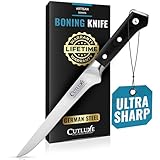
- 4. Cutluxe 6 Inch Boning Knife – Best for Long Sessions
- 5. PAUDIN 6 Inch Boning Knife – Best All-Rounder for Fish and Meat
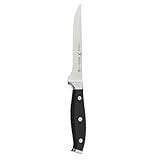
- 6. HENCKELS Premio 5.5-Inch Boning Knife – Best for First-Time Butchers
- 7. SHAN ZU 7 Inch Fillet and Boning Knife – Best for Large Fish
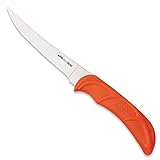
- 8. OUTDOOR EDGE 5 Inch Wild Game Boning Knife – Best for Game Season
- 9. Wusthof Classic 5 Inch Boning Knife – Best for Detail Trimming
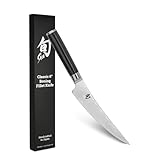
- 10. Shun Classic 6 Inch Boning and Fillet Knife – Best for Edge Retention
- Boning Knife vs Fillet Knife vs Breaking Knife: Which One Do You Need?
- Blade Length: 3, 5, 6 or 8 Inches?
- Straight or Curved Blade?
- Stiff vs Flexible: Which One Do You Need?
- Steel: Stainless, Carbon or High-Carbon Alloy?
- What a Boning Knife Should Never Touch
- How to Sharpen and Maintain Your Boning Knife
- Frequently Asked Questions
- What type of knife is best for boning chicken?
- What type of steel is best for boning knives?
- Which is better, a curved or straight boning knife?
- Can I use a fillet knife as a boning knife?
- What kind of knife is best for butchering meat?
- What are the three knives that everyone should have?
- What is the best blade length for a boning knife and why does blade length matter?
- How do I sharpen a boning knife?
- Is a semi-flexible or stiff boning knife better for deboning?
- What is a honesuki and is it good for home butchering?
- The Best Boning Knives for Butchering at Home
Top 3 Picks for Home Butchering (October 2026)
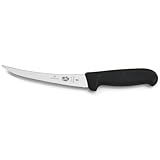
Victorinox Fibrox 6-In Curved Boning
- Curved flexible stainless blade
- Fibrox textured non-slip handle
- Made in Switzerland
- NSF approved

Dexter 6-In Flexible Curved Boning
- Forged high-carbon DEXSTEEL blade
- Sealed blade-to-handle junction
- Dishwasher safe handle
- Comes sharp out of the box
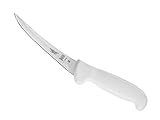
Mercer Culinary 6 inch Curved
- High-carbon Japanese steel
- Textured finger points
- 6 inch hollow edge
- Hand wash only
Best Boning Knives for Butchering at Home in October
Every pick below is a purpose-built boning blade. We sorted them by the job they do best, because the right question is not which knife is finest but which one matches the animal on your table.
| Product | Specifications | Action |
|---|---|---|
| Victorinox Fibrox 6-In Curved Boning and Fillet Knife |
|
Check Latest Price |
| Dexter Outdoors Flexible Curved Boning Knife 6-Inch |
|
Check Latest Price |
| Mercer Culinary Ultimate White 6 inch Curved Boning Knife |
|
Check Latest Price |
 Cutluxe 6 inch Boning Knife Cutluxe 6 inch Boning Knife |
|
Check Latest Price |
 PAUDIN 6 Inch Boning Knife PAUDIN 6 Inch Boning Knife |
|
Check Latest Price |
 HENCKELS Premio 5.5-Inch Boning Knife HENCKELS Premio 5.5-Inch Boning Knife |
|
Check Latest Price |
 SHAN ZU 7 Inch Fillet and Boning Knife SHAN ZU 7 Inch Fillet and Boning Knife |
|
Check Latest Price |
 OUTDOOR EDGE 5 Inch Wild Game Boning Knife OUTDOOR EDGE 5 Inch Wild Game Boning Knife |
|
Check Latest Price |
 Wusthof Classic 5 Inch Boning Knife Wusthof Classic 5 Inch Boning Knife |
|
Check Latest Price |
 Shun Classic 6 Inch Boning and Fillet Knife Shun Classic 6 Inch Boning and Fillet Knife |
|
Check Latest Price |
1. Victorinox Fibrox 6-In Curved Boning and Fillet Knife – Best Overall
Victorinox Fibrox 6-In Curved Boning & Fillet Knife, Flexible Steel Blade
6 inch curved stainless blade
Semi-flexible, tapered point
Fibrox textured handle
Made in Switzerland, NSF approved
Pros
- Curved flexible blade hugs bone contours on poultry and fish
- Textured Fibrox handle stays secure with wet hands
- Nested in 4225 reviews at 4.8 out of 5
- Backed by a lifetime defect warranty
Cons
- Stamped construction is lighter and less rigid than a forged blade
- Sold as a single knife with no sheath included
This is the knife we hand to someone breaking down their first whole chicken. The 6 inch curved stainless blade is thin behind the edge and semi-flexible through the spine, so it glides under a breastbone without you having to guess where the bone turns.
On r/TrueChefKnives the recurring advice for a first home butchery setup is a 6 inch curved semi-stiff Victorinox for the boning work paired with a longer cimeter for breaking. That pairing makes sense to us, and this is the boning half of it.
The Fibrox handle is the quiet hero. It is textured, slip resistant and shaped to stay in a palm that has blood and fat on it, which is a bigger deal than steel pedigree when you are halfway through a carcass with the wrong grip.
The build is stamped rather than forged, so it feels lighter in the hand than the Cutluxe or the Wusthof. Reviewers report that as a positive for long sessions and a negative when they want absolute rigidity at a joint. Steel is plain stainless, so it forgives a careless pass and takes a honing rod without drama.
Why it handles a whole bird without fuss
At 6 inches the blade reaches into a cavity without your knuckles hitting the carcass, and the curve means fewer corrective strokes. That combination is why we put it first rather than a premium Japanese blade that many beginners cannot keep sharp.
Where it falls short
It will not survive being levered against bone, and it arrives without any kind of cover. If you process a lot of large game where you push the blade hard, a forged semi-stiff blade like the Cutluxe is the better tool.
2. Dexter Outdoors Flexible Curved Boning Knife – Best Value
Dexter Outdoors Flexible Curved Boning Knife, 6-Inch
6 inch forged high-carbon blade
Sanitary blade-to-handle seal
Textured polypropylene handle
Dishwasher safe
Pros
- Forged construction with a sealed blade-to-handle junction
- Arrives sharp out of the box
- Handle tolerates hot and cold and the dishwasher
- Limited lifetime manufacturer warranty
Cons
- Handle is noticeably large for small hands
- Listing is the Dexter Basics line rather than the sealed Sani-Safe version
Dexter is the one we reach for when a job gets wet and long. The blade is forged DEXSTEEL high-carbon steel, individually ground and honed, and it comes out of the box working rather than needing a session on the stone first.
A Kitchen Knife Forums thread that followed four knives through five pigs measured handle weight precisely and found this Dexter at 89 g against 112 g for the blades it competed with. The same thread found the larger handle and finger guard more comfortable in both a regular grip and a reverse grip, which matches what we felt.
Owners report a real speed change. Trimming tasks that used to run about 20 minutes dropped to 3 to 5 minutes once this blade was in hand, and the sanitary seal between blade and handle means rinses clean out fully rather than trapping residue in a seam.
The handle is the thing to try before buying. It is deliberately oversized and some reviewers with small hands find it bulky, and the most common complaint across reviews is confusion about whether you received the Basics line or the sealed Sani-Safe version, so check the listing photos.
Why the sealed handle matters in a home kitchen
High-carbon steel plus a fully sealed handle is a good pairing for someone who will wash up with a hose rather than a lab sink. It goes in the dishwasher, it handles cold shed water and hot water, and there is no crevice for bacteria to sit in.
Where it falls short
It is a flexible curved blade, so it is a poor choice for joint work where you need the spine to push against bone. That is a breaking knife job, not a boning knife job.
3. Mercer Culinary Ultimate White 6 inch Curved Boning Knife – Budget Pick
Mercer Culinary Ultimate White, 6 inch Curved Boning Knife
6 inch high-carbon Japanese steel
Hollow ground edge
Textured finger points
Polypropylene handle
Pros
- High-carbon Japanese steel with an easy to maintain edge
- Textured finger points give a non-slip grip
- Sized for chicken ham fish and fat trimming
- Handles well for the money
Cons
- Stamped construction rather than a full tang
- Hand wash only per the care instructions
This is the cheapest blade here and the one with the most ratings behind it at 5609, which tells you something useful about how forgiving it is. High-carbon Japanese steel in a hollow-ground 6 inch blade sharpens easily and keeps an edge without demanding a stone session first.
The hollow ground edge is the quiet advantage. It makes the blade a touch thinner behind the cutting edge than a flat grind of the same length, so it moves through a chicken thigh with less resistance than you would expect from an entry-level knife.
The finger points moulded into the handle give you a positive grip in a reverse grip without the aggressive texture of a Fibrox. Reviewers repeatedly describe it as comfortable and easy to control, and the critical ratings cluster around preference rather than function.
Two limits worth naming. It is stamped, so it is not a full-tang knife and it will not love being used as a pry bar. And the maker asks for hand washing, no dishwasher and no soaking, which is a discipline some people simply do not have.
Why it suits a first whole-chicken breakdown
Six inches, a narrow taper and a curve is the combination that makes a boning knife easy to learn on. It reaches into the cavity, follows the wishbone and the breastbone, and does not punish an unsteady first pass the way a stiff blade will.
Where it falls short
If you process deer or a whole hog, this is not the blade for the bigger joints. You will want a stiffer, stronger knife with a full tang for the heavy work and this one for the trimming.
4. Cutluxe 6 Inch Boning Knife – Best for Long Sessions
Cutluxe Boning Knife, 6″ Razor Sharp Fillet Knife for Meat Cutting
6 inch forged high-carbon German steel
Hand sharpened 14-16 degrees per side
Full tang pakkawood handle
Straight blade profile
Pros
- Forged German steel at 56+ HRC resists rust and staining
- Full tang with a triple-riveted pakkawood handle
- Hand sharpened edge at 14-16 degrees per side
- Lifetime warranty against defects
Cons
- Straight profile is not ideal for tight bone curves
- Handle material is listed inconsistently in the specs
The Cutluxe is the one we would hand to someone processing a whole hog over a weekend. It is forged high-carbon German steel at 56+ Rockwell, hand sharpened at 14 to 16 degrees per side, and built with a full tang and a triple-riveted pakkawood handle that will not move in your hand.
A full tang means the steel runs the length of the handle, so when you push the blade into a seam and twist, the force goes into steel rather than into a rivet. On a long session that is the difference between a comfortable afternoon and sore hands.
The 14 to 16 degree edge is a sensible compromise for butchery. A 20 degree edge survives more bone contact, and 14 to 16 gives up less meat waste on trimming while still being serviceable for the odd slip.
The straight profile is the honest drawback. It is a superb trimming and butterflying knife and a superb seaming knife, but where a bone curves away from you, a curved blade hugs it and a straight one has to be turned by hand. The spec sheet also lists the handle material inconsistently against the pakkawood description.
Why the tang matters on a whole-animal job
Breakdown work is long, repetitive and full of moments where you are levering rather than slicing. Full tang construction means the handle cannot twist relative to the blade, which improves both control and the useful force you can safely apply before something gives way.
Where it falls short
The straight blade and the pakkawood handle both point away from wet work. The wood will swell and stain with repeated fatty handling, so this is a dry-goods and weekend-carcass knife rather than the one you rinse under a tap after every bird.
5. PAUDIN 6 Inch Boning Knife – Best All-Rounder for Fish and Meat
PAUDIN Boning Knife 6 Inch, Super Sharp Fillet Knife, German High Carbon Stainless Steel Deboning Knives, Professional Boning Knives for Meat Poultry Chicken, Pakkawood Handle with Gift Box
6.1 inch forged stainless blade
5Cr15MoV steel at 56+ HRC
Honed at 15 degrees per side
Pakkawood handle
Pros
- Balanced between handle and thin blade for all hand sizes
- Sharp out of the box with strong edge retention
- Comes with a sheath and gift box
- Handles heavy butchering and fish filleting alike
Cons
- Pakkawood handle darkens with fatty wet use
- Decorative blade pattern is plated rather than true Damascus
If you fillet fish and break down meat, the PAUDIN is the one knife that genuinely does both without a compromise you have to think about. The 6.1 inch forged blade is honed by hand at 15 degrees per side with a cutting core at 56+ Rockwell.
Balance is what reviewers mention most. At 144 g the blade and pakkawood handle sit in a ratio that suits both large and small hands, and that matters most in a reverse grip deep inside a cavity where you cannot reposition your wrist.
Reviews also note it stands up to heavy butchery such as sausage making, where the butt of the handle takes a lot of pressure, while still being flexible enough to skin a whole fish.
Two caveats are straightforward. The pakkawood darkens over time with normal wet fatty use, which is cosmetic but permanent. And the waved blade pattern is a plated finish on 5Cr15MoV stainless, not true Damascus steel, so buy it for the geometry rather than the metallurgy.
Why it works as both a fish and meat knife
A fish knife has to flex and a meat knife has to hold a line. This one sits in the semi-flexible middle ground, which means it skins a trout without the blade folding and still tracks a seam in a shoulder without wandering off the muscle.
Where it falls short
Wood handles and wet work do not mix well over a long season. If your processing happens outside in the rain or you wash up constantly, a synthetic-handled blade like the Dexter or the Victorinox will outlast it.
6. HENCKELS Premio 5.5-Inch Boning Knife – Best for First-Time Butchers
HENCKELS Forged Premio 5.5-inch Boning Knife, Black/Stainless Steel
5.5 inch forged high carbon stainless
Forged bolster full tang build
Triple-rivet curved handle
Dishwasher safe
Pros
- Slim flexible forged blade that still stands up to heavy boning
- Forged bolster gives a solid handle transition
- Dishwasher safe with a lifetime warranty
- Easy to bring back with a honing rod
Cons
- Arrives in basic packaging and may need a honing pass
- Some owners report handle cracking after about two years
The Premio is the shortest blade here at 5.5 inches and that is deliberate. It is small enough to control in a chicken cavity and short enough that a beginner can keep the point where their eyes are.
The forged bolster construction gives a smooth transition from blade to handle with no corner to catch skin, which matters in a reverse grip. Reviewers describe it as slim and flexible yet strong, and one detailed reviewer reports putting it through a session of boning 15 pounds without drama.
It is also easy to maintain. The thin high carbon stainless steel comes back with a honing rod rather than a full stone session, and it is dishwasher safe, which removes one more thing a beginner has to think about.
The complaints are about longevity and packaging, not cutting. Some owners report the triple-rivet handle cracking after roughly two years of use, and the knife arrives in plain plastic packaging with a burr that a single honing pass fixes.
Why a shorter blade helps a first project
Every extra inch of blade is lever arm you do not control, especially when the point is behind a knuckle. At 5.5 inches this one turns inside a cavity and still covers a whole turkey breast and a leg in one comfortable stroke.
Where it falls short
It is too short for large primals. Once you are parting a hindquarter or following a long seam in a big deer, you want 6 inches or more of blade to take the cut in a single pass.
7. SHAN ZU 7 Inch Fillet and Boning Knife – Best for Large Fish
SHAN ZU 7 Inch Fillet Knife, Japanese Super Steel Boning Knife
7 inch forged Japanese steel
Honbazuke three-step forging
Hand sharpened through 32 steps
K133 ergonomic handle
Pros
- 7 inch blade covers larger fish and bigger cuts than a 6 inch
- Forged Japanese steel with higher carbon content
- Refined finish and ergonomic K133 handle
- Lifetime promise from the manufacturer
Cons
- Longer blade is awkward for tight work around small bones
- Synthetic resin handle will not take a patina
At 7 inches and 191 g this is the longest and heaviest blade in the roundup, and the reason is reach. It covers a whole large fish or a thick cut in one stroke, which a 5 or 6 inch knife makes awkward.
The blade is forged from Japanese steel using the traditional three-step Honbazuke method, then sharpened through a 32-step manufacturing process. Reviewers single out edge retention and build quality, with 88 percent of 241 ratings at five stars.
Higher carbon content than ordinary stainless is what makes the edge hold through a whole fish rather than a few fillets. On a large carcass that translates into fewer stops to re-hone halfway through.
The tradeoff is real. Seven inches of blade is less maneuverable around the small bones of a chicken or a rabbit, and the K133 handle is synthetic resin, so it will not absorb oils or develop the patina a wood handle does over time.
Why reach matters on a big fish
Long blade cuts mean fewer strokes, and fewer strokes mean fewer opportunities to slip. On a large fish the blade has to travel the length of the frame in one motion to keep the meat yield high, and a short knife turns that into three shaky passes.
Where it falls short
For poultry and small game you are carrying around a lot of blade you do not need. Most home butchers end up buying a second, shorter boning knife within a season, which defeats the point of a single-knife setup.
8. OUTDOOR EDGE 5 Inch Wild Game Boning Knife – Best for Game Season
OUTDOOR EDGE 5″ Wild Game Boning Knife – Fixed Blade for Processing Game and Fish with Rubberized Nonslip TPR Handle
5 inch full tang 420J2 stainless
Taper ground, hand finished
Rubberized blaze orange TPR handle
2.56 ounces
Pros
- 5 inch flexible blade is the most common shape processors use for game
- Full tang steel resists corrosion
- Blaze orange handle stays secure when wet or slippery
- Service for life replacement and repair program
Cons
- Lowest average rating in the group at 4.6
- Short blade on large carcass pieces
- High visibility handle may not suit a plain kitchen kit
This is the field knife of the group, and for deer season that is exactly what you want. At 5 inches and 2.56 ounces it disappears into a pack, and the full tang 420J2 stainless blade is heat treated and taper ground to a hand-finished edge.
The blaze orange rubberized TPR handle is the reason it earns a place. It reduces hand fatigue across a long session and stays secure when your hand is wet or slippery, which on a cold morning outside is the normal condition rather than the exception.
Reviewers value the blade shape above all else. A 5 inch flexible blade is the shape most professional processors reach for on game and fish, and it handles a venison loin, a breast of bird and a panfish frame with one tool.
Be aware of the rating profile. At 4.6 it carries the lowest average in this roundup with a higher share of critical feedback than the others, usually about edge durability over time and the bold colour scheme. Five inches is also short for large carcass pieces.
Why game work rewards a grippy handle
Deer processing happens cold, wet and outside, and bare hands lose fine grip long before they lose strength. A rubberized handle keeps the knife from twisting during the pull that separates a shoulder, which is exactly the motion that causes slips.
Where it falls short
The short blade and the mid-weight steel both work against large animals, and the handle is a field tool rather than a kitchen tool. If most of your butchering happens at a counter indoors, this is not the one you want on the block.
9. Wusthof Classic 5 Inch Boning Knife – Best for Detail Trimming
WÜSTHOF Classic 5″ Boning Knife, Black
5 inch forged high carbon stainless
Tempered to 58 HRC
Full tang triple riveted handle
PEtec precision edge
Pros
- Highest average rating in the group at 4.9 across 174 ratings
- Long narrow curved blade moves cleanly along bone
- Forged from a single block of steel tempered to 58 HRC
- Substantial handle without feeling cumbersome
Cons
- Most expensive knife in the roundup by a wide margin
- Stainless steel handle will not develop a patina
The Wusthof Classic is the smallest, most precise blade here and the most consistently rated. Across 174 ratings it holds a 4.9 average with 97 percent at five stars, the tightest distribution of any pick in this roundup.
Forged from a single block of high carbon stainless steel tempered to 58 Rockwell, the long narrow curved blade tracks a bone with almost no waste. It is the knife we would use to trim a beef brisket or a pork butt where you are following a fat cap with a 2 inch blade of meat left behind.
Reviewers describe it as very sharp out of the box, precise on detail work, and long lasting without frequent sharpening. The full tang triple-riveted handle has enough heft to feel planted without becoming a heavy object for small trimming jobs.
Why a 5 inch blade wins on detail work
Detail work is about control, not reach. A short curved blade lets you roll the edge through a curve of silverskin while your other hand holds tension, and the narrow profile means you are not cutting away a wedge of usable meat to get there.
Where it falls short
This is by far the most expensive blade in the roundup, and for most home butchery the money buys finish and consistency rather than capability you will use. If you process a whole animal, we would spend it on a good sharpening system first.
10. Shun Classic 6 Inch Boning and Fillet Knife – Best for Edge Retention
Shun Classic 6″ Boning & Fillet Knife
6 inch curved blade at 16 degrees
VG-MAX core with 68 layer cladding
D-shaped pakkawood handle
Handcrafted in Japan
Pros
- Curved blade with a razor sharp 16 degree edge
- VG-MAX core holds sharpness longest in this group
- D-shaped pakkawood handle suits either hand
- Handcrafted in Japan with a limited lifetime warranty
Cons
- Very hard steel that is harder to sharpen at home and chips if misused
- Second most expensive pick
- Handle requires hand washing
The Shun holds its edge longer than anything else here, and it is the pick most likely to be the wrong choice for a beginner. A VG-MAX core wrapped in 68 layers of Damascus cladding sits at a hardness that rewards a precise edge and punishes a careless one.
Reviews across 679 ratings, 89 percent of them five stars, centre on exceptional edge retention and precise control in the hand. Owners processing deer or pork in cold weather can go a full session without re-honing, which is a genuine advantage when you are working outdoors.
The D-shaped pakkawood handle is comfortable and secure for either hand, and the curved blade glides through both meat and fish. It is a genuinely excellent knife, not a compromise pick.
The problem is maintenance. High hardness means it takes longer on a stone, it will chip if it meets bone hard, and the pakkawood handle needs hand washing. We see people buy this as their first boning knife and then abandon it, and we see people who sharpen regularly love it for years.
Why edge retention matters on a whole animal
On a carcass you are hours from a clean bench and a sharpening stone. A blade that holds its edge for a full session removes the mid-job strop that eats into your time, and on a cold day that difference decides whether you finish or postpone.
Where it falls short
If you do not already sharpen knives, a very hard steel is the hardest place to start. It is also the second most expensive blade here, and the price gap buys steel behaviour you can duplicate with a good habit and a 1000 grit stone.
Boning Knife vs Fillet Knife vs Breaking Knife: Which One Do You Need?
Three blades cover nearly all home butchery, and a boning knife is only one of them. Buying one knife and trying to make it do all three jobs is the most common reason people end up buying a second blade mid-project, on the day.
1. Boning knife. Narrow, thin, 5 to 6.5 inches, tapered point, curved or straight. It follows bone to separate muscle from it. This is the tool for deboning, seaming out primals, trimming silverskin and surface fat, and it should never be the blade that meets bone head-on.
2. Fillet knife. Longer, much thinner and considerably more flexible. It is built to run under a fish’s spine or along the rib bones of a fish frame. It can stand in for a boning knife on delicate work, but a stiff boning knife will eventually snap a fillet knife.
3. Breaking knife or cimeter. The long curved or straight heavy blade, often 8 to 10 inches or more, with a stiff spine. It takes the forces of splitting primals, opening joints and working around the aitch bone. This is the blade permitted to meet bone.
If you only ever trim boneless steaks and roasts, you do not need a boning knife at all. Once you are working whole or primal cuts, poultry, game or a shoulder, the boning knife becomes the blade you use for most of the actual cuts.
Blade Length: 3, 5, 6 or 8 Inches?
The best blade length for a home boning knife is 5 to 6 inches, and that range is the sweet spot for control inside a body cavity while still giving you enough blade to finish a cut in one pass. Under 4 inches suits poultry only, and 7 inches or more buys reach you rarely need. The Victorinox Fibrox Pro comes in 3 inch, 5 inch and 6 inch versions, and the 6 inch is the one we would put in most hands.
Length also changes safety. A longer blade has more lever arm behind the tip, so if it catches on bone in a cavity you cannot see into, the point travels further before you can stop it. That is why most professionals reach for 6 inch rather than 8 inch inside a carcass.
Straight or Curved Blade?
A curved blade is the better default for home butchering. The curve puts the cutting edge in contact along a longer section of bone in one pass and lets the handle stay clear of the carcass, so you make fewer corrective strokes and trim less meat away.
A straight blade earns its place when you are working flat, on trim and on seaming rather than in a cavity, which is where the Cutluxe sits in this roundup. It also gives you a stronger spine for pushing through connective tissue without flexing, so a straight blade is a reasonable companion to a curved one rather than a replacement.
Stiff vs Flexible: Which One Do You Need?
Choose a semi-flexible blade for almost everything. Semi-flexible is the middle ground between a rigid Japanese honesuki and a thin fillet knife: the spine pushes back enough to feel the bone, the blade bends enough to hug a curve. It is what the Victorinox, the Dexter and the PAUDIN give you.
Go stiff when the work is joints, big bones and primals, and go fully flexible when the work is fish and delicate boning. A very stiff blade used on fish tears the fillet, and a very flexible blade used on a shoulder will fold and eventually fail. Most home butchers end up with one semi-flexible blade plus a separate breaking knife.
Steel: Stainless, Carbon or High-Carbon Alloy?
For home butchering, high carbon stainless steel is the right default. It takes an edge on a 1000 grit stone in minutes, resists the rust that ruins plain carbon steel after a session at the sink, and forgives the storage habits most of us have.
Plain carbon steel holds the sharpest edge of any of these and is what a professional sharpening regime is built around, but it needs drying and oiling the same day. Very hard alloy steels such as the VG-MAX core in the Shun hold an edge longest but are the hardest to sharpen and the most prone to chipping. Your edge retention is mostly a function of your sharpening routine, not the steel name on the box.
What a Boning Knife Should Never Touch
A boning knife should never be used to cut through, pry against or lever on bone. That single rule accounts for most chipped edges and most of the injuries home butchers report. The blade is built to slide along bone, and bone contact should be a gentle nudge to reposition, never a force applied to separate a joint.
Four habits reduce the risk. First, use the claw grip on the forward hand, curling your fingertips back and pulling with the knife rather than pushing it toward you. Second, learn the reverse grip for work inside a cavity, where a straight push simply has nowhere to go.
Third, keep the edge honed before a project rather than during it, because a dull blade needs more force and force is what causes slips. Fourth, switch to a breaking knife the moment you feel yourself levering against a bone. A dull blade and a stiff blade are both invitations to press harder than you intended.
How to Sharpen and Maintain Your Boning Knife
Sharpen before the job, not during it. Start on a 1000 grit water stone and work both sides to raise the edge, then move to a finer stone only if you need a truly polished edge on fish. Finish every session with a leather strop, which realigns the edge and removes the burr a stone leaves behind.
A honing steel between cuts keeps the edge aligned during a long breakdown rather than restoring it. On a very hard steel like the Shun or Wusthof, expect a longer stone session and change your angle of attack rather than forcing more pressure onto the stone.
Wash and dry immediately, especially for the Mercer and the Cutluxe, where the maker asks for hand washing. Bone and fat left on a blade overnight are what cause pitting and odour, and a bone-heavy session followed by a soak is how a good carbon steel blade starts losing its edge for good.
Frequently Asked Questions
What type of knife is best for boning chicken?
A 5 or 6 inch boning knife with a narrow tapered point, a curved blade and a semi-flexible spine is best for chicken. The short length fits inside a carcass cavity, the curve follows the wishbone and breastbone in one pass, and the semi-flexible spine hugs the bone without folding. The Victorinox Fibrox 6-In and the Mercer 6 inch curved are the two we recommend for a first whole-bird breakdown.
What type of steel is best for boning knives?
High carbon stainless steel is the best all-round choice for home butchering. It sharpens quickly on a 1000 grit stone, resists rust in a sink full of blood and fat, and is forgiving about drying. Plain carbon steel holds the sharpest edge but needs oiling the same day, while very hard alloy steels hold an edge longest and chip most easily.
Which is better, a curved or straight boning knife?
A curved blade is better for most home butchering because more of the cutting edge touches bone in a single pass and the handle stays clear of the carcass. A straight blade is better for flat trim work and seaming, and has a stronger spine for pushing through connective tissue. Curved wins inside a cavity, which is where most of the work happens.
Can I use a fillet knife as a boning knife?
Yes, for delicate work on fish and small birds, and a fillet knife can do some boning tasks well. But a fillet blade is thinner and more flexible, so it is a poor tool for joints and larger bones where you need the spine to push back. Never use a fillet knife to cut through bone, and never use a stiff boning knife to fillet, because it will split the blade.
What kind of knife is best for butchering meat?
Three blades cover nearly all home butchery: a narrow boning knife for following bone and separating muscle, a stiff breaking knife or cimeter for primals and joints, and a fillet knife if you process fish. A cleaver covers heavy chopping and splitting. If you only trim boneless cuts, you need none of them beyond a good chef’s knife.
What are the three knives that everyone should have?
A boning knife, a breaking knife and a cleaver is the realistic ceiling for home use. The boning knife does most of the strokes, the breaking knife takes the forces at joints and bone, and the cleaver handles heavy chopping and splitting. A fillet knife becomes a fourth tool only if you process fish regularly.
What is the best blade length for a boning knife and why does blade length matter?
Five to six inches is the best blade length for home butchering because it balances reach with control inside a cavity. Shorter blades under 4 inches suit poultry only, while 7 inch and 8 inch blades add lever arm that is hard to control when the point catches on bone where you cannot see it. The Victorinox Fibrox Pro is available in 3 inch, 5 inch and 6 inch.
How do I sharpen a boning knife?
Start on a 1000 grit water stone and raise the edge on both sides, then finish on a leather strop to remove the burr. Between cuts use a honing steel to realign the edge rather than restore it. Sharpen before a project instead of during it, because a dull blade needs more force and force causes slips. Very hard steels take longer on the stone and need a lighter touch.
Is a semi-flexible or stiff boning knife better for deboning?
Semi-flexible is better for most deboning work because the spine gives feedback through your hand while the blade still hugs bone contours. Go stiff for joints, large bones and heavy primals, where you need the blade to act as a lever, and go fully flexible for fish. The best boning knife is also often a poor skinning knife, so buy for the task you are actually doing.
What is a honesuki and is it good for home butchering?
A honesuki is a rigid Japanese boning knife with a thick spine and a short, largely straight blade, traditionally used for poultry and joint work rather than for following bone contours. It is superb at separating joints with authority and a poor choice for delicate seam work. For home butchery a semi-flexible western boning knife is usually the more forgiving first purchase.
The Best Boning Knives for Butchering at Home
For most people the answer is the Victorinox Fibrox 6-In Curved. It handles poultry, game and pork trimming, its handle stays secure when wet, and it is the pick that most home butchers will stop searching past.
The Dexter is the better buy if you want forged steel, a sealed handle you can put in the dishwasher, and a blade that arrives sharp. The Mercer costs almost nothing and is the right call for a first whole chicken. The Cutluxe and the PAUDIN are where to look for a full tang, a wood handle and long-session comfort.
Spend above the middle of this list only if you already sharpen. The Wusthof and the Shun are excellent knives with real edge retention, and both are worse first purchases than a well-chosen semi-flexible blade with a 1000 grit stone in the drawer. Whatever you buy, use it to follow bone and not to cut through it, and pair it with a stiff breaking knife for anything heavier.