
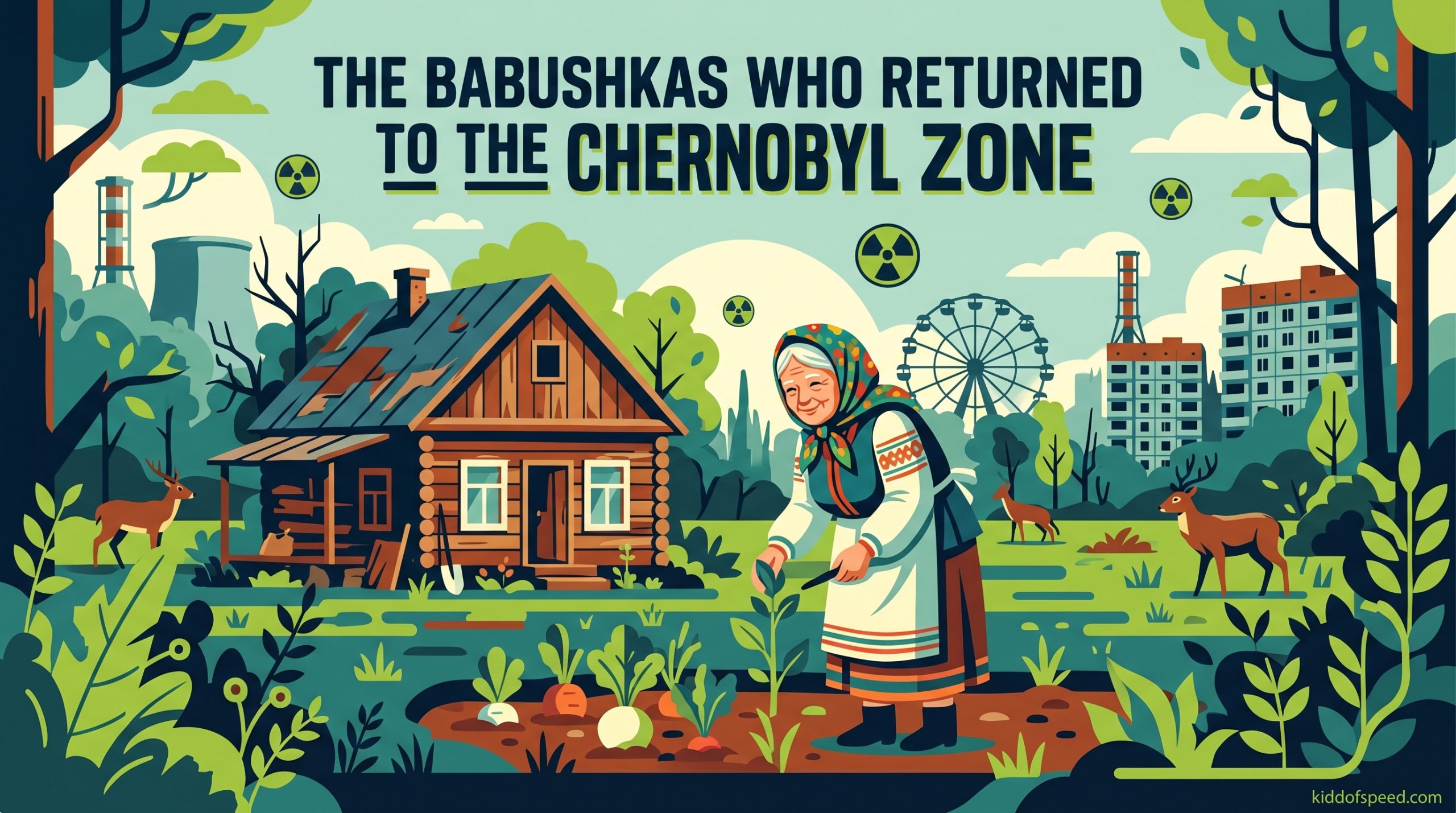
In the documentary that captivated audiences worldwide, three unlikely heroines emerge from the most toxic place on Earth. They are the babushkas of Chernobyl, elderly women who defied evacuation orders and returned to live in the radioactive exclusion zone after the 1986 nuclear disaster. These self-settlers, known as samosely in Ukrainian, chose their ancestral homeland over safety, facing radiation rather than abandoning the land they called home for decades.
Their story is not just about survival in a contaminated environment. It is about the unbreakable human connection to place, the trauma of displacement, and a generation that survived Stalin’s enforced famine and Nazi occupation only to face the invisible threat of radiation. Their choice challenges everything we think we know about risk, home, and what it means to truly live.
Table of Contents
- The 1986 Disaster That Changed Everything
- The Defiant Return – How the Samosely Came Home
- Why the Babushkas Returned to the Radioactive Zone
- Daily Life in the Chernobyl Exclusion Zone
- Health, Radiation, and the Surprising Truth
- Faces of Defiance – Stories of Individual Babushkas
- The Babushkas of Chernobyl in 2026 – Current Status
- Legacy and the Documentary
- Frequently Asked Questions
- The Enduring Spirit of the Babushkas Who Returned to the Chernobyl Zone
The 1986 Disaster That Changed Everything
The Chernobyl disaster began in the early hours of April 26, 1986. Reactor No. 4 at the Chernobyl Nuclear Power Plant exploded during a safety test, releasing massive amounts of radioactive material into the atmosphere. The explosion sent a plume of radiation across Europe, contaminating vast areas of Ukraine, Belarus, and Russia.
The Soviet authorities waited 36 hours before beginning evacuation procedures. During that critical window, residents of nearby towns and villages continued their daily lives, unaware that invisible radioactive particles were settling on their homes, gardens, and livestock. When evacuation finally began, approximately 116,000 people were forcibly removed from their homes in the Chernobyl region and surrounding areas.
April 26, 1986 – The Explosion at Reactor No. 4
The explosion at Reactor No. 4 released approximately 400 times more radioactive material than the atomic bombing of Hiroshima. The radioactive cloud contained isotopes including cesium-137, strontium-90, and americium that would contaminate the soil for generations. Firefighters and plant workers, unaware of the full extent of the danger, battled the blaze while receiving lethal doses of radiation.
Residents of Pripyat, the purpose-built city housing power plant workers, reported seeing a strange glow in the sky and feeling an unusual taste in the air. Some described it as a metallic sensation. Children played outside that morning while their parents went to work, completely unaware that everything had changed overnight. The full evacuation of Pripyat would not begin until the following day.
The Evacuation – 36 Hours Later
When Soviet authorities finally gave the evacuation order, they told residents it was temporary. They would be gone for only a few days, they were told. Just bring essentials. Pack light. This false promise meant people left photo albums, family heirlooms, and precious mementos behind. They left food on tables and clothes in wardrobes, expecting to return before the week was out.
Instead, they were relocated to apartment blocks in distant cities, often separated from extended family and neighbors who had formed their social network for decades. The trauma of this forced relocation would haunt them for the rest of their lives. Many never adjusted to their new surroundings, and the psychological toll of displacement began immediately.
The evacuated areas were designated the Chernobyl Exclusion Zone, a 30-kilometer radius around the damaged reactor where permanent habitation was officially forbidden. The zone would eventually expand to cover approximately 2,600 square kilometers of contaminated territory. For most evacuees, this marked the end of their connection to their ancestral land. But for a defiant few, it was only the beginning of their story.
The Defiant Return – How the Samosely Came Home
Between 1987 and 1990, approximately 1,200 people returned to the Chernobyl Exclusion Zone illegally. These self-settlers, or samosely as they are called in Ukrainian, were primarily elderly women who could not bear life away from their homeland. They walked back through forests, bribed guards, or found other ways to bypass the checkpoints that had been established to prevent entry into the contaminated territory.
Some obtained jobs within the zone, working as cooks, cleaners, or support staff for the scientists and liquidators who remained to manage the disaster aftermath. These jobs provided legal cover for their presence, allowing them to live in their home villages while technically being employed by the state. Others simply refused to leave when the evacuation teams came, hiding in cellars or barns until the authorities gave up and moved on.
The First Wave of Returnees (1987-1990)
The first returnees faced a landscape transformed by abandonment. Their gardens had grown wild, their livestock had scattered, and their homes showed signs of neglect. But to these women, the contaminated soil was still their soil. The overgrown gardens were still the plots they had tended for decades. The risk of radiation seemed abstract compared to the immediate pain of separation from everything they knew.
The government initially tried to force them out, sending police and military personnel to remove them from the zone. But the elderly women proved surprisingly stubborn. They knew the terrain intimately, having lived there their entire lives, and they used this knowledge to evade authorities. Some simply returned again after being forcibly removed, walking days through forest paths to reach their villages. Eventually, the authorities gave up, and the samosely were allowed to remain.
Who Are the Samosely?
The samosely are a unique population defined by their defiance and resilience. The term means self-settlers in Ukrainian, and it distinguishes them from both the original evacuees and the scientists, guards, and support staff who work in the zone on rotation. Unlike the workers, the samosely have no plans to leave. This is their permanent home, contamination notwithstanding.
The vast majority are elderly women, with an average age between 75 and 80 years old as of 2026. These are babushkas in the traditional Ukrainian sense, grandmothers who have lived through the worst chapters of twentieth-century Eastern European history. Most were born before or during World War II, and all of them survived the collective trauma of Soviet rule. Their advanced age when they returned meant they were essentially choosing to spend their final years on their ancestral land, regardless of the radiation risk.
Why the Babushkas Returned to the Radioactive Zone
The decision to return to a radioactive exclusion zone seems incomprehensible to many outsiders. Why would anyone choose to live in a contaminated area, consuming potentially radioactive food and breathing potentially radioactive air? The answer lies in a complex web of cultural, historical, and psychological factors that only make sense when viewed through the lens of the babushkas’ lived experience.
Their return was not driven by ignorance of the risks. These women understood what radiation could do to their bodies. They had seen the effects on liquidators and knew about the elevated cancer rates in contaminated regions. But they also knew something that the authorities and safety experts seemed to overlook. They knew that leaving their homeland could be just as deadly as the radiation they would face by staying.
The Call of the Ancestral Homeland
For the babushkas, the concept of the Motherland is not an abstract patriotic notion. It is the specific patch of earth where they were born, where their parents and grandparents are buried, and where they raised their own children. It is the garden they have tended for fifty years and the church where they were baptized, married, and where they pray for their deceased relatives. To abandon this land is to abandon their identity.
As one of the babushkas famously stated, starvation is what scares me, not radiation. This quote, often attributed to Hanna Zavorotyna, encapsulates their worldview. They had survived the Holodomor, Stalin’s man-made famine that killed millions of Ukrainians in the 1930s. They had survived Nazi occupation during World War II. Radiation was just another threat in a lifetime filled with threats, and they were not about to let it drive them from their homes.
The graves of their ancestors hold particular significance. In Orthodox tradition, maintaining connection with deceased family members is an important spiritual practice. The babushkas believed that leaving their ancestral villages would mean abandoning not just their living relatives but the spirits of their parents and grandparents. This religious and cultural connection to the land proved stronger than any warning about radiation levels.
Surviving Stalin and the Nazis – Historical Context
To understand the babushkas’ decision, one must understand what they had already survived. The generation that returned to Chernobyl was born into a Ukraine ravaged by Stalin’s enforced famine, known as the Holodomor, which killed an estimated 3.9 million people between 1932 and 1933. This genocide-by-famine, caused by Soviet grain requisition policies, left an indelible mark on the survivors.
Those who lived through the Holodomor as children learned that starvation was a more immediate and terrifying threat than any abstract danger. They watched family members and neighbors die from hunger while Soviet authorities exported Ukrainian grain to support industrialization. This trauma shaped their worldview, making them deeply skeptical of official warnings while prioritizing tangible needs like food and shelter.
Then came World War II and the Nazi occupation of Ukraine. The babushkas lived through occupation, warfare, displacement, and liberation. Many lost family members to the fighting or to Nazi atrocities. By the time of the Chernobyl disaster, these women had survived the two greatest horrors of the twentieth century. A silent, invisible threat like radiation seemed manageable compared to the traumas they had already endured.
The Trauma of Relocation
One of the most powerful factors driving the return was the simple observation that many of those who evacuated seemed to die faster than those who stayed. The babushkas noticed that their friends and neighbors who moved to distant cities often succumbed to illness, depression, and despair within months or years of relocation. The trauma of leaving their homeland appeared to be more immediately deadly than the radiation exposure.
The phrase if you leave, you die became common among the babushkas. It reflected their observation that the stress of displacement, the breakdown of family connections, and the loss of community support systems took a severe toll on elderly evacuees. Those who moved to cities found themselves isolated in apartment blocks, separated from the extended family networks that had sustained them throughout their lives.
The babushkas who stayed, by contrast, maintained their social connections and daily routines. They visited each other, attended church together, and supported one another through the difficulties of life in the exclusion zone. This community support, combined with the psychological comfort of remaining on familiar land, seemed to provide a protective effect that offset some of the radiation risks. The babushkas were not just surviving in the zone. They were living with purpose and connection.
Daily Life in the Chernobyl Exclusion Zone
Life inside the Chernobyl Exclusion Zone is unlike anywhere else on Earth. The babushkas live in villages that have been officially abandoned for nearly four decades, maintaining a way of life that has largely disappeared from modern Ukraine. Their daily routines combine traditional subsistence agriculture with modern government support, creating a unique hybrid existence.
The villages where the samosely live are time capsules of Soviet rural life. The babushkas grow their own food, raise livestock, forage in the surrounding forests, and live without many of the conveniences that urban Ukrainians take for granted. Yet they also receive government pensions and occasional support from the state, creating a strange juxtaposition of self-sufficiency and dependence.
Self-Sufficient Living
The babushkas grow vegetables in gardens that have been in their families for generations. They plant potatoes, carrots, beets, cabbage, and onions, the staples of the traditional Ukrainian diet. These vegetables, grown in soil that remains contaminated with radioactive isotopes, form the basis of their daily meals. While authorities discourage consumption of locally grown food, the babushkas point out that they have been eating it for decades without apparent ill effects.
They raise domestic animals including pigs, cows, chickens, and goats, maintaining the mixed farming practices that sustained rural Ukraine for centuries. The animals graze on contaminated grasslands and drink from streams that carry radioactive particles. The babushkas consume the meat, milk, and eggs these animals produce, again defying official warnings about the risks of eating contaminated food.
Foraging in the surrounding forests provides additional sustenance. The babushkas gather berries, mushrooms, and herbs from the woods, just as their ancestors did for generations. These forest products are particularly problematic from a radiation safety perspective, as mushrooms and berries are known to concentrate radioactive isotopes. Yet the babushkas continue to harvest and consume these traditional foods, trusting their bodies’ resilience over official guidelines.
Many also produce homemade moonshine, known as samogon, using traditional distillation methods. This strong alcoholic beverage serves both social and medicinal purposes in the community. The babushkas share it during gatherings and use it for everything from disinfecting wounds to warding off the cold during harsh Ukrainian winters.
Community and Faith
The Church of Saint Elias in Chernobyl town serves as the spiritual center for the samosely community. Despite the official abandonment of the zone, the church continues to hold services, and the babushkas gather there for religious observances and social connection. Their Orthodox faith provides a framework for understanding their situation and finding meaning in their continued presence on the land.
Once per week, a grocery van makes deliveries to the villages where babushkas live, bringing supplies from outside the exclusion zone. This van carries bread, packaged goods, and other items that the women cannot produce themselves. The grocery van also serves as an important social event, as it brings news from the outside world and allows the isolated residents to interact with someone from beyond the zone.
The babushkas receive government pensions of approximately 70 euros per month, which provides them with a basic income to purchase supplies they cannot produce themselves. This pension, while modest by European standards, is sufficient to cover their basic needs given their self-sufficient lifestyle. Some also receive occasional support from relatives who live outside the zone, though many have outlived their children and siblings.
Their social connections remain strong despite the small population. The babushkas visit each other daily, sharing food, conversation, and mutual support. They celebrate birthdays, religious holidays, and other occasions together, maintaining the tight-knit community structure that characterized rural Ukrainian life before the disaster. This social support network is crucial to their psychological wellbeing and may contribute to their surprising longevity.
Health, Radiation, and the Surprising Truth
The health of the babushkas presents a paradox that continues to puzzle medical researchers and radiation experts. Despite living in a contaminated environment, eating radioactive food, and breathing radioactive air, many of these women have lived into their eighties and nineties. Their life expectancy appears to be at least as long as that of evacuees who moved to clean environments, and possibly longer.
This does not mean that radiation is harmless. The babushkas are undoubtedly receiving elevated doses of radiation compared to the general population, and this exposure carries real health risks. Thyroid cancers, in particular, are elevated among those who were exposed to radioactive iodine in the immediate aftermath of the disaster. But the overall health outcomes have been less catastrophic than many predicted.
The Health Paradox
World Health Organisation studies have documented elevated rates of thyroid cancer among those exposed to Chernobyl fallout as children, and there are documented cases of radiation-induced illness among liquidators who worked directly at the reactor site. However, the babushkas who returned to the zone as adults have shown surprising resilience. Many have reached advanced ages despite decades of continuous low-level radiation exposure.
Researchers have proposed several explanations for this paradox. Some suggest that the psychological stress of displacement may be more harmful than the radiation itself, meaning that the babushkas who stayed actually avoided the more serious health threat. Others point to the selection effect, noting that only the healthiest individuals were capable of returning and surviving the harsh conditions of the exclusion zone.
The babushkas themselves offer a simpler explanation. They attribute their longevity to their clean air, physical labor, natural diet, and freedom from the stress of urban life. They point out that they breathe fresh forest air rather than city pollution, eat food they have grown themselves rather than processed products, and maintain active lifestyles through daily farming work. Whether or not these factors actually offset the radiation risks, the babushkas believe they do, and this belief may contribute to their psychological wellbeing.
Their stories challenge conventional risk assessment models that focus solely on radiation exposure while ignoring psychological, social, and cultural factors. The babushkas demonstrate that health is not just a matter of physical safety but involves complex interactions between environment, community, and individual resilience. Their continued survival in the face of both radiation and predictions of their imminent demise stands as a testament to the limits of scientific certainty.
Faces of Defiance – Stories of Individual Babushkas
Behind the statistics and generalizations about the samosely are individual women with unique stories, personalities, and reasons for returning to the exclusion zone. The documentary film The Babushkas of Chernobyl focuses on three of these women, providing intimate portraits of their daily lives and personal philosophies. Their stories reveal the human depth behind the phenomenon of the self-settlers.
Each woman represents a different aspect of the samosely experience. Hanna Zavorotyna embodies the matriarchal strength that has sustained the community. Maria Shovkuta demonstrates the practical resilience required to farm contaminated land. Valentyna Ivanivna represents the spiritual and cultural connection to place that drives their defiance. Together, they offer a window into a world that most viewers could never imagine inhabiting.
Hanna Zavorotyna – The Matriarch
Hanna Zavorotyna, often called Baba Hanna, stands as one of the most prominent figures among the samosely. Her strong personality and unwavering commitment to her land made her a natural leader in the community. When authorities tried to remove her from her village, she refused with a determination that eventually convinced them to let her stay. Her home became a gathering place for other babushkas, and her opinions carried weight among the self-settlers.
Hanna’s connection to her land was visceral and absolute. She spoke of the soil as a living thing that needed her care, and she viewed her continued presence in the zone as a duty rather than a choice. The land had sustained her family for generations, and she would not abandon it simply because it had become contaminated. Her defiance was not born of ignorance but of a profound conviction that she belonged on her ancestral territory regardless of the risks.
She was known for her practical wisdom and her willingness to speak plainly about the situation. When asked about the radiation, she would acknowledge its dangers while simultaneously dismissing them as secondary to the need to remain on her land. Her famous quote about starvation being more frightening than radiation encapsulates the worldview of her generation. She had survived the worst that the twentieth century could offer, and she was not about to let an invisible threat drive her from her home.
Maria Shovkuta – The Resilient
Maria Shovkuta represents the practical resilience that characterizes the samosely. Her daily routine involved the hard physical labor of farming, caring for animals, and maintaining her home in a village without regular electricity or modern amenities. She rose early each morning to tend her garden and livestock, working until evening with the strength of someone half her age.
Maria’s story highlights the self-sufficiency that defines life in the exclusion zone. She grew the majority of her own food, preserved vegetables for winter, slaughtered her own pigs, and produced dairy products from her cows. This level of self-reliance was common among rural Ukrainians of her generation but has become rare in modern Ukraine. In the exclusion zone, these traditional skills were not just practical necessities but survival tools.
Her relationship with the contaminated environment was complex. She followed certain safety protocols, such as avoiding obviously hot spots with elevated radiation levels, while ignoring others, such as the prohibition on eating locally grown food. This selective approach to safety reflects the babushkas’ general attitude toward radiation risk. They managed the dangers they could see and measure while accepting those they could not control, focusing instead on maintaining their way of life.
Valentyna Ivanivna – The Spirit of Chernobyl
Valentyna Ivanivna embodied the spiritual and cultural dimensions of the samosely experience. Her deep Orthodox faith provided the framework through which she understood her presence in the exclusion zone. She viewed her continued residence not just as a personal choice but as a spiritual calling, a way of maintaining connection with her ancestors and fulfilling her religious duty to care for the land.
Her participation in church services at the Church of Saint Elias was central to her life in the zone. Despite the small congregation and the isolation of the exclusion zone, she maintained her religious observances with devotion. The church provided not just spiritual sustenance but social connection, linking her to the broader community of samosely who shared her faith and her circumstances.
Valentyna’s personal history included the traumas that shaped her generation. She had survived the Holodomor as a child, lived through the Nazi occupation, and experienced the Soviet era. These experiences gave her a perspective on the Chernobyl disaster that younger people could not share. She had seen worse things than radiation, and she had learned that survival depended on resilience, community, and faith. Her presence in the exclusion zone was the final expression of a lifetime of defiance against forces that sought to uproot and destroy her way of life.
The Babushkas of Chernobyl in 2026 – Current Status
As of 2026, the population of samosely in the Chernobyl Exclusion Zone has declined dramatically from its peak of approximately 1,200 returnees in the late 1980s. Current estimates suggest that only about 100 to 150 self-settlers remain alive in the zone. This decline is primarily attributable to natural causes, specifically the advanced age of the babushkas, rather than radiation-related deaths.
The average age of remaining samosely is now between 75 and 80 years old, with many in their eighties and nineties. These are the last survivors of the generation that returned to the zone, and their numbers continue to dwindle as time takes its inevitable toll. When the last of the babushkas passes away, a unique chapter of human history will come to an end, leaving the exclusion zone truly abandoned.
Recent years have seen increased interest in the samosely from researchers, journalists, and tourists. The documentary film brought their story to international attention, and some organizations have worked to provide support and document their experiences while there is still time. However, the isolation of the exclusion zone and the declining health of the remaining babushkas make it increasingly difficult to reach them or verify their current status.
The legacy of the samosely extends beyond their individual lives. They have demonstrated that human beings can survive and even thrive in conditions that experts deemed uninhabitable. They have challenged assumptions about risk, displacement, and the relationship between people and place. And they have preserved a way of life that would otherwise have disappeared entirely from the Chernobyl region. As we move further into the 2026s, their story remains relevant to discussions about environmental displacement, nuclear safety, and human resilience.
For readers interested in more Chernobyl history, our Chernobyl Revisited series provides additional context about this unique region.
Legacy and the Documentary
The 2015 documentary The Babushkas of Chernobyl, directed by Holly Morris and Anne Bogart, brought international attention to the self-settlers and their remarkable story. The film followed Hanna, Maria, and Valentyna through their daily lives, capturing their personalities, their struggles, and their unwavering commitment to their homeland. It screened at film festivals worldwide and received critical acclaim for its intimate portrayal of these unlikely heroines.
Morris first encountered the babushkas while working on a different story about the Chernobyl zone. She recognized immediately that their experience deserved dedicated attention and spent years building the trust necessary to film their daily lives. The result was a documentary that neither romanticized their situation nor condemned their choices, instead presenting their story with the complexity and nuance it deserved.
The film’s success sparked renewed interest in the Chernobyl disaster and its long-term human consequences. It challenged viewers to reconsider their assumptions about risk and safety, asking whether the psychological trauma of displacement might be more harmful than the physical risks of radiation. It also highlighted the human cost of the disaster beyond the immediate casualties, showing how the evacuation continued to affect lives decades later.
The babushkas’ story has since been featured in numerous articles, books, and academic studies. They have become symbols of Ukrainian resilience and defiance, representing a generation that survived the worst of the twentieth century and refused to be broken by its final catastrophe. Their legacy lives on in the documentary footage, the photographs taken by journalists, and the memories of those who had the privilege of meeting them.
Frequently Asked Questions
What happened to the babushkas of Chernobyl?
The babushkas of Chernobyl were approximately 1,200 people, mostly elderly women, who defied evacuation orders and returned to their homes in the Chernobyl Exclusion Zone after the 1986 nuclear disaster. As of 2026, only about 100-150 of these self-settlers (known as samosely) remain alive, living independently on their ancestral land despite the radiation risks.
How many babushkas are left in Chernobyl?
As of 2026, approximately 100-150 self-settlers (samosely) remain in the Chernobyl Exclusion Zone. This is a significant decline from the original 1,200 who returned after the disaster, with the population decreasing primarily due to old age rather than radiation-related causes. The average age of remaining babushkas is 75-80 years old.
Why did the babushkas return to Chernobyl?
The babushkas returned to Chernobyl for several reasons: 1) Deep connection to their ancestral land and Motherland, 2) Historical trauma from surviving Stalin’s Holodomor and Nazi occupation made radiation less frightening, 3) Difficulty adapting to evacuation locations with different climates and conditions, 4) Breakdown of family and community ties in new locations, 5) Belief that if you leave you die from the trauma of displacement.
Has anyone returned to Chernobyl?
Yes, approximately 1,200 people returned to the Chernobyl Exclusion Zone after the 1986 disaster, defying evacuation orders. These self-settlers, known as samosely, were mostly elderly women (babushkas) who snuck back or obtained jobs to legally return. They chose to face radiation risks rather than abandon their ancestral homeland.
The Enduring Spirit of the Babushkas Who Returned to the Chernobyl Zone
The story of the babushkas who returned to the Chernobyl Zone stands as one of the most remarkable examples of human resilience in modern history. These elderly women defied authorities, ignored safety warnings, and chose to live in the most toxic place on Earth rather than abandon their ancestral homeland. Their decision was not born of ignorance but of a profound understanding that home is more than a safe location. It is the land where generations of their families lived, worked, prayed, and died.
As the last of the samosely approach the end of their lives, their legacy becomes increasingly important to preserve. They demonstrated that human beings can survive conditions that experts deemed uninhabitable. They showed that the trauma of displacement can be more deadly than radiation. And they proved that the connection between people and place is stronger than any physical threat. The babushkas of Chernobyl were unlikely heroines who chose their own path, and their story will continue to inspire and challenge us long after the last of them has left the zone.