
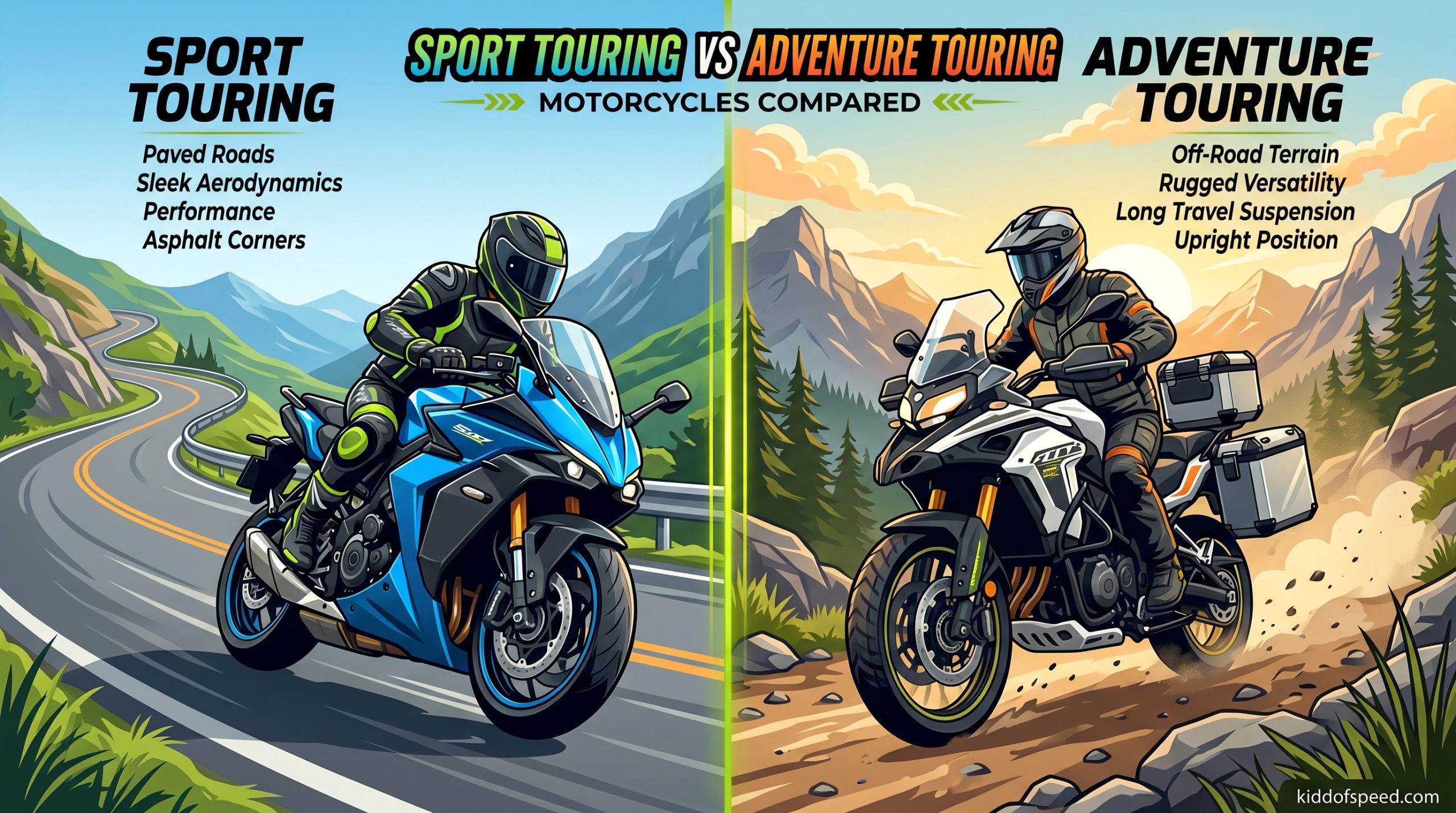
You are staring at two very different machines in the showroom. One looks ready to carve canyons. The other looks ready to cross continents and climb mountains. Both promise long-distance comfort. Both have loyal followings. But choosing between a sport touring and adventure touring motorcycle will define every ride you take for the next several years.
I have spent over 15 years riding both types across North America and Europe. I have logged 500-mile days on sport tourers down the Pacific Coast Highway and taken ADV bikes through the Alpine passes of the Dolomites. The differences are not just cosmetic. They fundamentally change how you interact with the road, where you can explore, and how your body feels after a full day in the saddle.
This guide breaks down the sport touring vs adventure touring decision into clear, practical terms. You will learn the technical differences, the real-world riding experience gaps, and how to choose based on your actual needs rather than marketing hype.
Table of Contents
- What Is a Sport Touring Motorcycle?
- What Is an Adventure Touring Motorcycle?
- Sport Touring vs Adventure Touring: Key Differences
- Pros and Cons of Each Motorcycle Type
- How to Choose: Sport Touring vs Adventure Touring
- Frequently Asked Questions
- What is the difference between sport touring and adventure touring motorcycles?
- Which is better for long distance touring: sport tourer or adventure bike?
- Can adventure bikes be used for highway touring?
- What are the pros and cons of ADV bikes vs sport tourers?
- Are sport touring motorcycles good for beginners?
- Sport Touring vs Adventure Touring: Making Your Decision
What Is a Sport Touring Motorcycle?
A sport touring motorcycle is essentially a sport bike that has been adapted for long-distance comfort without sacrificing on-road performance. These machines take the engine and chassis architecture of performance street bikes and add wind protection, ergonomic adjustments, and luggage capacity.
The defining characteristic of sport tourers is their unwavering focus on paved road excellence. They roll on 17-inch cast wheels wrapped in high-performance street tires. This wheel setup maximizes contact patch and grip for aggressive cornering on twisty mountain roads. The suspension is tuned for asphalt feedback rather than dirt absorption.
Sport touring bikes position the rider in a semi-forward lean. You are more upright than a pure sport bike, but still angled enough to tuck behind the windscreen at highway speeds. The handlebars are typically wider and higher than sport bike clip-ons, reducing wrist strain during all-day rides.
Engine displacement on sport tourers generally ranges from 900cc to 1400cc. These are tuned for smooth power delivery across the mid-range where touring happens, rather than the top-end rush of track-focused machines. Expect six-speed transmissions with tall overdrive gears for relaxed highway cruising.
Popular examples include the Yamaha Tracer 9 GT, Kawasaki Ninja 1000SX, and BMW R 1250 RS. These bikes represent the modern sport touring formula: enough performance to embarrass pure sport bikes on a twisty road, combined with the comfort to devour interstate miles.
What Is an Adventure Touring Motorcycle?
An adventure touring motorcycle, commonly called an ADV bike, is designed to handle both paved highways and unpaved terrain with equal competence. These machines draw inspiration from rally raid racing and dual-sport motorcycles, but scaled up for long-distance travel.
The most visible difference between ADV bikes and sport tourers is the wheel configuration. Adventure motorcycles typically feature a 19-inch or 21-inch front wheel paired with a 17-inch rear, both running on spoked rims rather than cast wheels. This setup allows the use of dual-sport or knobby tires that can grip gravel, dirt, and pavement. The larger front wheel rolls over obstacles more easily when you leave the asphalt.
Suspension travel on adventure bikes ranges from 6 to 9 inches, compared to 4 to 6 inches on sport tourers. This extra travel absorbs the impacts of rocky trails and potholed backroads. The trade-off is slightly less stability at extreme lean angles on perfect pavement, though modern ADV bikes have narrowed this gap significantly.
The riding position on adventure motorcycles is completely upright with wide handlebars. This neutral stance puts minimal strain on your wrists, back, and neck during multi-day trips. The seat height is notably taller, often ranging from 32 to 35 inches, which gives you better visibility in traffic but can challenge shorter riders at stops.
Icons of the category include the BMW R 1250 GS, Honda Africa Twin, and Yamaha Tenere 700. The GS in particular has dominated the segment since the 1980s and remains the benchmark against which all other ADV bikes are measured.
Sport Touring vs Adventure Touring: Key Differences
Understanding the technical differences between these motorcycle types helps explain why they feel so different to ride. Here is a direct comparison of the key specifications and features.
| Feature | Sport Touring | Adventure Touring |
|---|---|---|
| Front Wheel | 17-inch cast | 19-21 inch spoked |
| Tire Type | Street/sport | Dual-sport/knobby |
| Suspension Travel | 4.5-6 inches | 6-9 inches |
| Ground Clearance | 5-6 inches | 8-10 inches |
| Seat Height | 30-32 inches | 32-35 inches |
| Riding Position | Sport-forward lean | Completely upright |
| Wind Protection | Full fairing | Tall windscreen, minimal bodywork |
| Fuel Capacity | 5-6 gallons | 5-8 gallons |
| Weight | 500-650 lbs | 450-600 lbs |
| Off-Road Capability | Limited to gravel roads | Single-track trails possible |
These specifications translate directly to riding experience differences. The sport tourer’s 17-inch wheels and sticky tires provide confidence-inspiring grip when you are leaned over in a canyon. The ADV bike’s tall suspension soaks up frost heaves and railroad crossings that would jolt a sport tourer rider out of the seat.
On the highway, sport tourers generally offer superior wind protection. The full fairings envelope the rider in still air, reducing fatigue over long distances. ADV bikes rely on tall adjustable windscreens that often create turbulence around the helmet, though aftermarket solutions can improve this significantly.
Storage capacity favors adventure motorcycles in terms of ruggedness. ADV bikes typically come with mounting points for aluminum panniers that can survive crashes on rough terrain. Sport tourers often use plastic luggage systems optimized for aerodynamics on pavement. Both can carry enough for weeks of travel.
Pros and Cons of Each Motorcycle Type
No motorcycle is perfect for every situation. Here is an honest assessment of what each type does well and where it falls short.
Sport Touring Motorcycles: Pros and Cons
Superior On-Road Handling
Sport tourers corner with precision that ADV bikes cannot match on pavement. The lower center of gravity, sticky tires, and steeper rake angles make these motorcycles feel telepathic on twisty roads. You can carry more speed through corners with greater confidence.
Better Wind Protection
Full fairings block wind, rain, and debris more effectively than ADV windscreens. After a 10-hour day on the interstate, this difference is felt in your neck muscles and overall energy level.
Lower Seat Height
Most riders can flat-foot a sport tourer at stops. This builds confidence in low-speed maneuvering and makes the bike feel more manageable in parking lots and traffic.
More Power on Tap
Sport touring engines typically produce more peak horsepower than similarly-sized ADV engines. Passing slower traffic or accelerating out of corners happens with less effort.
Limited Off-Road Ability
Gravel roads are the limit for most sport tourers. The cast wheels can crack on impacts, and the street tires provide minimal grip on loose surfaces. You will not be exploring fire roads or Jeep trails on these machines.
Less Ground Clearance
Speed bumps, steep driveway transitions, and rough pavement can cause the belly pan or exhaust to scrape. This limits where you can confidently ride.
Adventure Touring Motorcycles: Pros and Cons
Versatile Terrain Capability
ADV bikes genuinely handle both pavement and dirt. You can ride 500 miles of interstate, then turn onto a forest service road without changing anything. This opens up exploration possibilities that sport tourers simply cannot access.
Comfortable Upright Ergonomics
The neutral riding position puts minimal strain on your body. Riders with back, wrist, or neck issues often find ADV ergonomics far more tolerable than the forward lean of sport bikes. Many riders switch to ADV bikes specifically after developing knee or back problems.
Long Fuel Range
Large fuel tanks mean 250-300 miles between stops. In remote areas where gas stations are scarce, this range provides genuine peace of mind. It also means fewer interruptions on long travel days.
Tall Seat Height Challenges
Shorter riders struggle with ADV seat heights. At 33-35 inches, many riders cannot touch both feet flat at stops. This creates anxiety in technical terrain and makes slow-speed maneuvering more difficult. Lowering kits and low seat options help, but cannot fully solve the problem.
Highway Wind Buffeting
The upright position and tall windscreen create turbulent air around the helmet at interstate speeds. After several hours, this constant buffeting causes fatigue and can even trigger headaches. Aftermarket windscreens and deflectors help but rarely match the still air of a full fairing.
Boxy Luggage Catches Wind
The aluminum panniers that ADV bikes wear like badges of honor act like sails in crosswinds. On gusty highways, you will feel the bike being pushed around more than a sleek sport tourer.
How to Choose: Sport Touring vs Adventure Touring
The decision between these motorcycle types should be driven by honest assessment of your riding reality, not fantasy. Here is a practical framework for making the right choice.
Consider Your Primary Riding Surface
If 95% of your miles will be on paved roads, the sport touring motorcycle is the logical choice. The superior handling, better wind protection, and more comfortable power delivery make every paved mile more enjoyable. You are not giving up capability you need.
If you regularly encounter unpaved roads, or if the ability to explore gravel forest service roads excites you, the adventure touring motorcycle makes sense. The versatility justifies the compromises in on-road refinement.
Evaluate Your Physical Needs
Height is a practical constraint. If you are under 5’8″, many full-size ADV bikes will be challenging to manage at stops. While lowering kits exist, they reduce ground clearance and suspension travel that you paid for. Sport tourers offer a more inclusive fit range.
Body comfort matters on long rides. Riders with knee, back, or wrist issues often find ADV ergonomics significantly more comfortable for multi-day trips. The upright position reduces strain on joints and allows easier weight shifting.
Factor in Two-Up Touring
If you ride with a passenger regularly, consider their experience too. Sport tourers often provide better passenger wind protection and a more secure seating position with grab rails integrated into the tail section. ADV bikes can be comfortable for passengers, but the tall seat height and exposed position intimidate some riders.
Assess Your Adventure Reality
Be honest about your off-road intentions. Many ADV bike owners never venture beyond paved roads. The rugged looks and touring capability are enough justification for their purchase. But if you know you will never ride dirt, you are carrying extra weight, height, and suspension you do not need.
Conversely, some sport touring owners find themselves avoiding interesting backroads because their bike is not suited for rough surfaces. If you know you want to explore beyond the pavement, do not buy a motorcycle that limits your options.
Calculate Total Cost of Ownership
Both motorcycle types have similar purchase prices in comparable displacement classes. However, operating costs differ. ADV bike tires, particularly dual-sport or knobby varieties, wear faster on pavement and cost more than pure street tires. The larger fuel tanks on ADV bikes increase gas costs but extend range.
Insurance costs vary by model and your location. High-value ADV bikes like the BMW R 1250 GS sometimes carry higher premiums than comparable sport tourers. Maintenance intervals and costs are roughly equivalent for both types.
Frequently Asked Questions
What is the difference between sport touring and adventure touring motorcycles?
Sport touring motorcycles are road-focused machines built for paved surface performance with 17-inch cast wheels, lower seat heights, and full fairings for wind protection. Adventure touring motorcycles are designed for both on-road and off-road use with 19-21 inch spoked wheels, taller suspension travel, and upright ergonomics for all-day comfort.
Which is better for long distance touring: sport tourer or adventure bike?
For purely paved long-distance touring, sport tourers generally provide better wind protection, more comfortable power delivery, and superior high-speed stability. However, adventure bikes excel when touring includes unpaved roads or when the upright riding position is more comfortable for the rider’s body. The best choice depends on your route and physical needs.
Can adventure bikes be used for highway touring?
Yes, adventure bikes handle highway touring competently. They offer long fuel range, comfortable upright ergonomics, and sufficient power for interstate speeds. The compromises are increased wind buffeting compared to sport tourers, and the boxy luggage can catch crosswinds. Many riders complete cross-country tours on ADV bikes without issues.
What are the pros and cons of ADV bikes vs sport tourers?
ADV bikes offer versatility for off-road exploration, comfortable upright ergonomics, and long fuel range, but have tall seat heights and more wind buffeting on highways. Sport tourers provide superior on-road handling, better wind protection, and lower seat heights, but are limited to paved surfaces and have forward-leaning ergonomics that strain some riders.
Are sport touring motorcycles good for beginners?
Sport touring motorcycles can be suitable for beginners who have completed training courses, but their heavier weight and sporty power delivery require respect. The lower seat heights help with confidence at stops. Beginners should start with smaller displacement models in the 650-900cc range and avoid high-performance 1400cc machines until gaining experience.
Sport Touring vs Adventure Touring: Making Your Decision
Choosing between sport touring and adventure touring motorcycles comes down to honest self-assessment. The sport touring motorcycle rewards riders who prioritize on-road performance and spend their time on pavement. The adventure touring motorcycle liberates riders who want the freedom to explore beyond the asphalt.
Consider your actual riding patterns, not your aspirational ones. If you dream of remote mountain passes but spend 99% of your time commuting and weekend canyon carving, the sport tourer will serve you better. If you genuinely plan to explore fire roads and gravel tracks, or if the upright ergonomics solve physical comfort issues, the ADV bike is worth the highway compromises.
Both motorcycle types have evolved dramatically in 2026. Modern sport tourers offer surprising comfort, and modern ADV bikes handle paved corners with competence that would have seemed impossible a decade ago. Test ride examples of each type before committing. Spend at least 30 minutes on each, including highway stretches and slow-speed maneuvering.
The right motorcycle is the one that fits your reality and inspires you to ride more miles. Whether you choose the pavement-carving precision of sport touring or the go-anywhere versatility of adventure touring, the goal is the same: more time on two wheels, exploring the world at your own pace.