
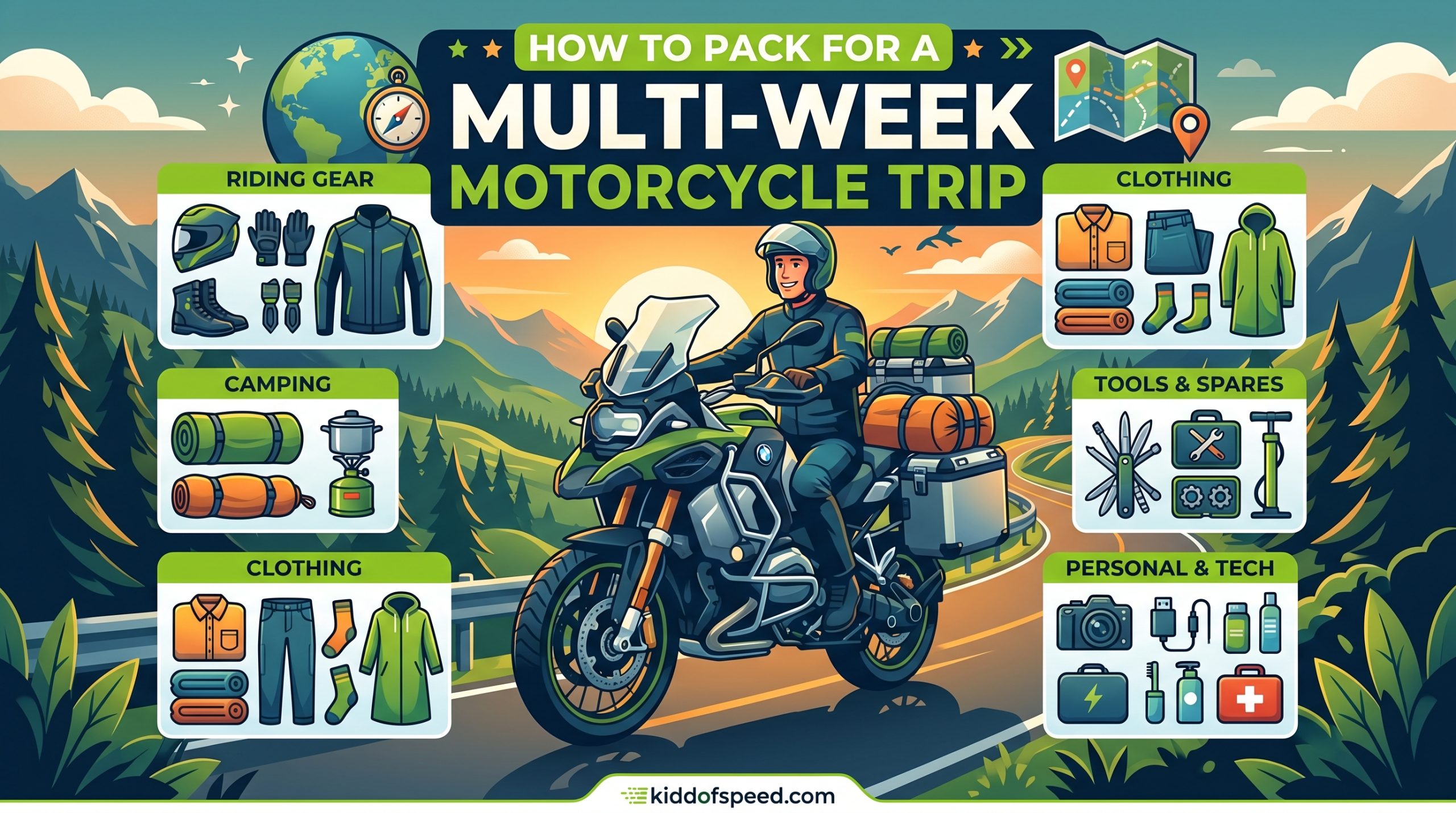
Packing for a multi-week motorcycle trip is both an art and a science. The five items you absolutely cannot forget are: rain gear, a tire repair kit, a spare key, heated gear for cold weather, and quick-dry clothing. Get these right, and everything else becomes manageable.
I have spent over a decade riding long distances, from weekend escapes to month-long adventures across multiple states. In that time, I have learned that how you pack directly affects your safety, comfort, and enjoyment on the road. A poorly balanced load can make handling unpredictable. Forgetting a critical item can turn a dream trip into a costly detour.
This guide will show you exactly how to pack for a multi week motorcycle trip. We will cover everything from the core principles of minimalist packing to the specific gear that keeps you safe and comfortable. Whether you are planning your first extended ride or looking to refine your approach, these strategies come from real miles and real mistakes.
Table of Contents
- How to Pack for a Multi Week Motorcycle Trip: Core Principles
- Riding Gear Essentials
- Clothing Strategy for Extended Trips
- Tools and Repair Essentials
- Camping Gear for Motorcycle Touring
- Luggage and Storage Systems
- Tech and Electronics
- Toiletries and Personal Hygiene
- Food and Water Planning
- Documentation and Safety Items
- Common Packing Mistakes to Avoid
- Budget Planning for Multi-Week Trips
- Weather Planning Across Climate Zones
- Complete Multi-Week Motorcycle Trip Packing Checklist
- Final Thoughts on How to Pack for a Multi Week Motorcycle Trip
How to Pack for a Multi Week Motorcycle Trip: Core Principles
The single most effective packing strategy is what I call the “one of everything” rule. Pack one set of riding gear, one set of casual clothes, and one of each essential item. Wash your clothes every evening, dry them overnight, and wear them again the next day. This approach seems radical at first, but it works.
I learned this from a veteran rider on the BMW MOA forum who had crossed the country seven times. He explained that every extra item you pack adds weight, complexity, and decision fatigue. When you only have one of each thing, you never waste time choosing what to wear.
Weight distribution is equally important. Heavy items belong low and centered on the motorcycle. Place tools, spare parts, and dense gear in your panniers or saddlebags, keeping them as close to the bike’s center of gravity as possible. Light items like clothing and sleeping bags can go higher or further back. Never exceed your bike’s load capacity, which you can find in your owner’s manual.
Riding Gear Essentials
Your riding gear is non-negotiable safety equipment. Start with a quality helmet that fits properly and meets DOT or ECE safety standards. Bring your primary helmet and consider whether you need a second option for different conditions. Many long-distance riders pack a full-face helmet for highway days and an open-face option for slow-speed exploration.
A proper riding jacket with CE-rated armor protects you from impacts and abrasion. Choose a jacket with good ventilation for hot days and a removable thermal liner for cold mornings. Your riding pants should offer the same protection level. Jeans are not sufficient for highway speeds.
Gloves and boots complete your protection. Pack two pairs of gloves: a waterproof pair for wet weather and a ventilated pair for hot days. Your boots should cover your ankles and have oil-resistant soles for grip on pegs and pavement.
Rain gear deserves special attention because it is the most commonly forgotten item that riders regret leaving behind. Pack a full two-piece rain suit that packs small. Even if the forecast looks clear, mountain weather changes fast. I have been caught in unexpected downpours that lasted hours, and quality rain gear made the difference between misery and comfort.
Heated gear is a game-changer for cold weather touring. A heated jacket liner or heated gloves plugs into your bike’s electrical system and extends your comfortable riding range into freezing temperatures. Forum riders consistently mention this as their best cold-weather investment.
Clothing Strategy for Extended Trips
Successful motorcycle packing relies on a minimalist clothing strategy. The three-set rule works well for multi-week trips: three sets of shirts, three sets of underwear, and three pairs of socks. This gives you one to wear, one clean in your bag, and one drying from the previous night’s wash.
Merino wool is the ideal fabric for motorcycle travel. It resists odor, dries quickly, and regulates temperature across a wide range. A merino base layer keeps you warm in the morning and cool in afternoon heat. Synthetic fabrics work well too, but avoid cotton because it stays wet and heavy.
Pack one pair of casual pants or shorts for off-bike time. Include a light fleece or sweater for layering. A compact down jacket packs small and provides significant warmth when temperatures drop. Bring one set of sleepwear or use a base layer that doubles as pajamas.
Your washing routine becomes part of your daily rhythm. Each evening, wash the clothes you wore that day in a sink or with a travel wash bag. Hang them to dry overnight using the bike’s warmth or a portable clothesline. By morning, most synthetic or wool items will be ready to wear.
Tools and Repair Essentials
A tire repair kit is the most critical tool for any long-distance rider. Flats happen hundreds of miles from the nearest service station, and waiting for a tow truck ruins your schedule. Pack a quality tire plug kit, tire levers, a small air compressor or CO2 inflator, and the specific tools needed to remove your wheels if necessary.
Know whether your bike uses tube or tubeless tires. Tubeless tires can usually be repaired with plugs on the roadside. Tubed tires require more work and spare tubes. Check your owner’s manual before you leave.
Your basic tool kit should include:
- Hex head set matching your bike’s fasteners
- Socket set with your most common sizes
- Screwdrivers (flathead and Phillips)
- Pliers and adjustable wrench
- Vise grips for stubborn bolts
- Electrical tape and cable ties
- Gaffer tape for temporary repairs
- Ratchet straps for securing loose luggage
Carry spare parts specific to your bike: fuses, bulbs, clutch and brake cables if applicable, and any known weak points. A tube of silicone sealant and some epoxy putty can patch small leaks or cracks temporarily.
Jump leads or a portable jump pack solve dead battery problems. Modern bikes with alarms and heated grips can drain batteries faster than you expect.
Camping Gear for Motorcycle Touring
If you plan to camp during your multi-week trip, choose gear designed for backpacking rather than car camping. Weight and pack size matter enormously on a motorcycle. Your tent should weigh under four pounds and pack smaller than a football.
A quality sleeping bag rated for the coldest temperatures you expect keeps you comfortable. Down bags pack smaller than synthetic but lose insulation if wet. Bring a sleeping pad with an R-value appropriate for your conditions. The pad insulates you from ground cold and makes a significant comfort difference.
Consider a camping hammock as an alternative to a tent. Hammocks pack tiny, set up fast, and keep you off wet or rocky ground. You need trees at your campsite, so research your route ahead.
Your camp kitchen can be minimal. A small backpacking stove, a single pot, and a spork handle most meal needs. Collapsible silicone bowls save space. Pack a small supply of instant coffee or tea bags for morning morale.
Include a compact camp chair if you have space. After eight hours in the saddle, sitting on the ground gets old. A lightweight chair that straps to your luggage makes evenings much more comfortable.
Luggage and Storage Systems
Choosing the right luggage system changes how you pack. Soft panniers like the Wolfman or Giant Loop systems are lighter, more flexible, and often cheaper. They work well for off-road and adventure riding where crashes are more likely. Hard panniers like aluminum boxes offer better security and weather protection but add weight and width.
A tank bag keeps small items accessible while riding: phone, wallet, toll money, camera. Choose one with a clear top pocket for phone navigation. Many tank bags convert to backpacks for off-bike exploring.
Waterproof dry bags inside your luggage protect clothing and electronics. Even “waterproof” panniers can leak in sustained rain or if submerged. Compression sacks reduce clothing volume by half. Packing cubes organize smaller items and make finding things easier.
ROK Straps or similar cargo nets secure external items. You might strap a sleeping bag, camp chair, or extra fuel to the rear seat. Always secure loose straps so they cannot tangle in the rear wheel.
Keep your load balanced side-to-side. An unbalanced motorcycle handles strangely and wears tires unevenly. Weigh your packed bags on a bathroom scale if possible, aiming for equal weight distribution.
Tech and Electronics
Modern motorcycle touring relies on electronics for navigation, communication, and documentation. Your phone serves as GPS, camera, and emergency communication device. Protect it with a waterproof case and keep it charged.
A USB charging port wired to your bike’s battery keeps devices powered on long riding days. Many riders install a dedicated charging circuit with an SAE connector. Portable battery packs provide backup power when you stop for meals or camping without electricity.
Consider a Bluetooth communication system for helmet audio. These systems let you hear GPS directions, take calls hands-free, and communicate with other riders. Cardo and Sena are the dominant brands with proven reliability.
Camera gear is optional but worth considering. Action cameras like GoPro capture riding footage. A compact point-and-shoot or mirrorless camera takes better photos than your phone. Bring extra memory cards and a way to back up photos in case cards fail or get lost.
Satellite communicators like Garmin inReach provide emergency communication in areas without cell coverage. For remote routes, this is worth the subscription cost.
Toiletries and Personal Hygiene
Pack toiletries in travel-sized containers. A three-ounce bottle of shampoo lasts weeks when you only use a small amount daily. Solid toiletries like bar soap and shampoo bars eliminate liquid restrictions and pack smaller.
Bring a quick-dry microfiber travel towel. These pack tiny and dry fast compared to cotton towels. A travel-sized toothbrush and small tube of toothpaste handle dental care. Include deodorant, sunscreen, and lip balm with SPF.
A basic first aid kit addresses minor injuries and ailments. Include bandages, antiseptic wipes, pain relievers, antihistamines, and any personal medications. Add moleskin for blisters, which can develop from riding boots or walking in motorcycle gear.
Toilet paper is surprisingly easy to forget and surprisingly important when you need it. Pack a partial roll in a ziplock bag. Hand sanitizer handles situations without running water.
Mosquito repellent matters if you camp in summer. A small headlamp or flashlight helps around camp and in emergencies. Earplugs improve sleep quality when camping near highways or in noisy campgrounds.
Food and Water Planning
Hydration is critical on the road. Dehydration affects concentration and reaction times. Carry at least two liters of water and drink regularly, even if you do not feel thirsty. A hydration bladder in your tank bag lets you sip while riding.
Plan your food strategy based on your accommodations. If you camp, you need cooking gear and food supplies. If you stay in hotels, you can rely more on restaurants and convenience stores.
Pack high-calorie snacks for riding days. Nuts, jerky, energy bars, and dried fruit keep you fueled between meals. Riding burns more calories than driving, and hunger impairs judgment.
A water purification method helps if you camp in areas without potable water. Water filter bottles or purification tablets weigh almost nothing and provide peace of mind.
Documentation and Safety Items
Your documentation packet keeps you legal and helps in emergencies. Carry your driver’s license, motorcycle endorsement, vehicle registration, and proof of insurance. If traveling internationally or to certain states, an International Driving Permit provides additional legitimacy.
A spare key is essential and frequently forgotten. Hide one in your wallet or luggage, separate from your main key. Losing your only key hundreds of miles from home creates serious problems.
Emergency contact information written on paper helps if your phone dies or breaks. Include your name, blood type, allergies, and contacts to call.
Cash handles situations where cards do not work. Carry a mix of small bills and larger denominations. Some rural gas stations still do not accept cards.
A photocopy of important documents stored separately from the originals helps if your wallet is stolen. Cloud backups of documents provide another layer of security.
Common Packing Mistakes to Avoid
Overpacking is the most common error for new touring riders. Every pound you add makes the bike harder to handle, slower to accelerate, and more work to stop. Be ruthless about eliminating non-essentials. If you are unsure about an item, leave it home. You can buy almost anything on the road if you truly need it.
Based on Reddit discussions and forum threads, riders consistently mention these items they wish they had packed:
- Better rain gear (waterproof boots and gloves, not just a jacket)
- A tire repair kit and the knowledge to use it
- Heated gear for unexpectedly cold mountain passes
- A spare key (surprisingly often forgotten)
- More cash for places that do not take cards
- Quick-dry underwear and socks for the wash-and-wear cycle
Another frequent mistake is poor weight distribution. Heavy items placed high or far back make the motorcycle feel unstable at speed and in corners. Keep weight low and centered. Test your loaded bike in a safe area before heading into traffic.
Packing too tight leaves no room for souvenirs or supplies you pick up along the way. Leave some empty space in your luggage for flexibility. You will appreciate it when you find that perfect roadside diner with amazing pie to take with you.
Budget Planning for Multi-Week Trips
Multi-week motorcycle trips require careful budget planning. Daily costs vary dramatically based on your choices, but a reasonable estimate ranges from $75 to $200 per day for most riders in the United States.
Accommodation typically represents your largest expense. Camping costs $10 to $30 per night at most campgrounds. Budget motels run $60 to $100. Mid-range hotels cost $100 to $200. Mixing camping with occasional hotel stays balances cost and comfort.
Food costs depend on your approach. Cooking your own meals keeps daily food costs under $20. Restaurant meals average $30 to $50 per day. Gas station food saves money but gets repetitive.
Fuel costs add up quickly on a motorcycle. Plan for 40 to 60 miles per gallon depending on your bike and riding style. At current prices, budget $25 to $50 per day in fuel for typical touring distances of 200 to 400 miles.
Build an emergency fund of at least $500 for unexpected repairs, medical issues, or transportation home if your bike fails. Mechanical problems happen, and rural mechanics often require cash payment.
Weather Planning Across Climate Zones
Multi-week trips often span multiple climate zones. A route from the plains to the mountains can take you from 90-degree heat to near-freezing temperatures. Pack layers that adapt to changing conditions.
Check long-range forecasts for your entire route before departure, but expect surprises. Mountain weather changes hourly. Desert temperatures swing dramatically between day and night. Coastal areas bring fog and moisture.
Plan your gear for the coldest conditions you might encounter. It is easier to ventilate when hot than to warm up when you are underdressed. Pack hand warmers as backup for unexpectedly cold mornings.
Rain plans matter. Know which gear stays accessible during storms. Practice putting on rain gear quickly before your trip. In a sudden downpour, you want muscle memory, not a learning experience.
Complete Multi-Week Motorcycle Trip Packing Checklist
Use this comprehensive checklist as your final packing guide. Check off each item as you pack it.
Riding Gear
- Helmet
- Riding jacket with armor
- Riding pants
- Riding gloves (2 pairs: wet and dry)
- Riding boots
- Rain suit (jacket and pants)
- Heated gear liner (optional but recommended)
- Neck gaiter or buff
Clothing
- Base layer shirts (3 merino or synthetic)
- Underwear (3 quick-dry pairs)
- Socks (3 riding pairs, 1 casual)
- Casual pants or shorts
- Light sweater or fleece
- Down jacket or warm layer
- Sleepwear or base layer alternative
Camping (if applicable)
- Tent or hammock with tarp
- Sleeping bag rated for expected temperatures
- Sleeping pad
- Camp pillow or clothes bag
- Stove and fuel
- Cook pot and spork
- Headlamp and backup light
- Camp chair (if space allows)
Tools and Repair
- Tire repair kit
- Tire levers
- Air compressor or CO2 inflator
- Tool kit with hex keys and sockets
- Spare tubes (if tubed tires)
- Spare fuses and bulbs
- Electrical tape and cable ties
- Jump leads or portable jump pack
Tech and Electronics
- Phone with waterproof case
- Charging cables
- USB power port or battery pack
- Bluetooth helmet communicator
- Camera or action cam
- Memory cards
Toiletries and Health
- Toothbrush and toothpaste
- Soap and shampoo
- Deodorant
- Sunscreen and lip balm
- Quick-dry towel
- Toilet paper
- Hand sanitizer
- First aid kit
- Personal medications
- Insect repellent
- Earplugs
Food and Water
- Water bottles or hydration system
- Water purification method
- Snacks and energy food
- Cooking supplies (if camping)
Documents and Safety
- Driver’s license and motorcycle endorsement
- Registration and insurance
- Spare key
- Emergency contact information
- Cash ($200 to $500 recommended)
- Credit cards
- Photocopies of documents
Luggage Organization
- Panniers or saddlebags
- Tank bag
- Dry bags
- Packing cubes
- Compression sacks
- ROK Straps or cargo net
What do you wish you had packed for your first multi-day motorcycle trip?
Based on extensive forum discussions, riders most commonly wish they had packed better rain gear (especially waterproof gloves and boots), a tire repair kit with the knowledge to use it, heated gear for cold mountain passes, and a spare key. Many also mention wishing they had brought more cash for rural areas that do not accept cards, and quick-dry clothing to make the wash-and-wear cycle easier.
What are the essential items to pack for a long motorcycle trip?
The essential items are: quality riding gear (helmet, jacket, gloves, boots), rain gear, a tire repair kit, basic tools, a spare key, proper documentation, and a phone with charging capability. For camping trips, add a tent, sleeping bag, and camp stove. The one-of-everything clothing strategy with merino wool or synthetic fabrics keeps packing minimal while ensuring comfort.
How much do you pack on a week-long trip?
For a week-long trip, follow the three-set rule: three shirts, three pairs of underwear, and three pairs of socks. Wear one set, keep one clean in your bag, and wash the third each evening. This applies equally to two-week or multi-week trips. The key is the wash-and-rewear strategy rather than packing more clothes. Bring one pair of casual pants for off-bike time.
What to pack for a 2 week motorcycle trip?
A two-week motorcycle trip requires the same core gear as any multi-week trip: riding protection, rain gear, tire repair tools, camping equipment if needed, and the three-set clothing system. Focus on weight distribution, keeping heavy items low and centered. Budget $75 to $200 per day depending on accommodation choices. The difference between one week and two weeks is not more gear, but better planning for laundry stops and weather variations.
Final Thoughts on How to Pack for a Multi Week Motorcycle Trip
Learning how to pack for a multi week motorcycle trip comes down to balancing preparation with restraint. The riders who enjoy their journeys most are those who pack light, pack smart, and focus on experiences over possessions.
Remember the core principles: one of everything, wash and rewear, keep weight low and centered. Invest in quality rain gear and a tire repair kit. Plan your budget and route with weather in mind. Most importantly, leave room for the unexpected discoveries that make motorcycle travel special.
Your first multi-week trip will teach you more than any guide can. You will discover what you actually use and what sits untouched in your panniers. You will develop your own rhythms for washing clothes, setting up camp, and navigating new roads. Use this guide as your starting point, then adapt it based on your bike, your style, and your destinations.
The open road rewards the prepared. Pack well, ride safe, and enjoy the freedom that comes from carrying everything you need and nothing you do not.