
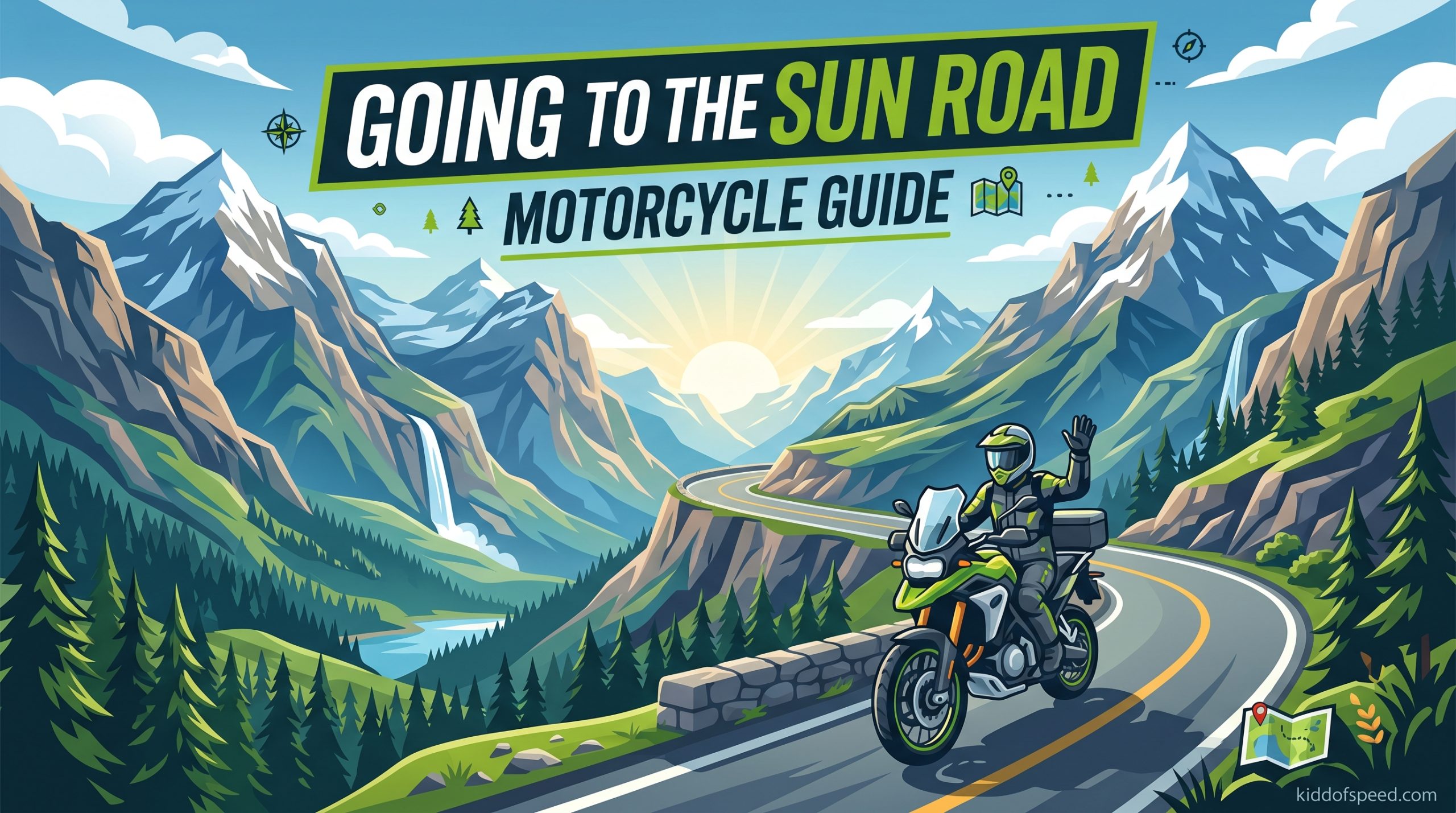
There are few roads in America that demand to be ridden at least once in your lifetime. The Going to the Sun Road in Glacier National Park is one of them. This 50-mile stretch of asphalt carves through the heart of the Rocky Mountains, crossing the Continental Divide at 6,466 feet and offering views that will make you forget to breathe. The combination of hairpin turns, steep drop-offs, glacial lakes, and alpine meadows creates an experience that feels less like driving and more like a pilgrimage for motorcyclists.
As a rider who has logged thousands of miles on scenic highways across the country, I can tell you this route stands apart from even the most celebrated motorcycle destinations. Whether you are on a cruiser, a sportbike, an adventure motorcycle, or a touring machine, the Going to the Sun Road has something extraordinary to offer. The road rewards patience and preparation, punishing carelessness with the kind of consequences that no rider wants to experience. But for those who approach it with respect and proper planning, the rewards are beyond measure.
In this guide, I will walk you through everything you need to know to plan your Going to the Sun Road motorcycle adventure. From understanding the reservation system to mastering the switchbacks, from the best stops to the timing strategies that will help you beat the crowds, we will cover it all. By the end, you will have a clear roadmap for making the most of this incredible journey on two wheels.
Table of Contents
- What Is Going to the Sun Road?
- Planning Your Ride: Essential Information
- Best Time to Ride the Going to the Sun Road
- Must-See Stops Along the Going to the Sun Road
- Safety Tips for Riding the Going to the Sun Road
- What to Pack for Your Going to the Sun Road Motorcycle Trip
- Post-Ride Motorcycle Maintenance
- Insider Tips for Making the Most of Your Ride
- FAQ: Frequently Asked Questions
- Can you ride a motorcycle on Going-to-the-Sun Road?
- How long does it take to ride Going-to-the-Sun Road?
- Do I need a reservation to ride Going-to-the-Sun Road by motorcycle?
- Is Going-to-the-Sun Road dangerous for motorcycles?
- Can beginners ride Going-to-the-Sun Road?
- What is the best time to ride Going-to-the-Sun Road?
- What is the elevation of Logan Pass?
- Are there gas stations on Going-to-the-Sun Road?
- Final Thoughts on Your Going to the Sun Road Motorcycle Journey
What Is Going to the Sun Road?
The Going to the Sun Road is a National Historic Civil Engineering Landmark that stretches 50 miles through Glacier National Park in northwestern Montana. Construction began in 1921 and took nearly 30 years to complete, with workers using dynamite, pickaxes, wheelbarrows, and sheer determination to carve this engineering marvel into the mountainside. The road officially opened in 1932, though final touches and paving continued for years afterward. It represents one of the most ambitious road-building projects in American history, a testament to human ingenuity and perseverance in the face of overwhelming natural obstacles.
Today, the road connects the west side of the park near the town of West Glacier to the east side near St. Mary, Montana. It features over 30 hairpin turns, steep grades reaching six percent, and some of the narrowest lanes you will ever encounter on a major thoroughfare. Stone guardwalls line the edges of the cliff sections, barely wide enough for two vehicles to pass in places, with sheer drop-offs that will get your attention if you let your focus slip. That is all part of the charm and the challenge that makes this route so special for motorcyclists who seek something beyond the ordinary.
The road crosses the Continental Divide at Logan Pass, which sits at 6,466 feet above sea level. From that high point, the route descends sharply on both sides, with the western approach offering stunning views of Lake McDonald and the eastern side revealing the vastness of the St. Mary basin. Wildflowers bloom in the alpine meadows during summer, mountain goats wander near the road seemingly unafraid of traffic, and on clear days, you can see glaciers clinging to the peaks in the distance, a reminder that you are riding through one of the most pristine environments in the lower 48 states.
The engineering behind the road is remarkable by any standard. Workers carved tunnels directly through rock faces, built retaining walls from locally sourced stone, and engineered a route that minimized environmental impact while maximizing scenic access. The Road is considered a masterpiece of civil engineering, and in 1985, it was added to the National Register of Historic Places, recognizing its significance as both a transportation route and a cultural artifact.
Planning Your Ride: Essential Information
Proper planning can make or break your Going to the Sun Road experience, and I cannot stress this enough. The National Park Service implemented a vehicle reservation system in 2022 that remains in place, requiring all vehicles including motorcycles to have a reservation during peak summer months to access certain sections of the road. This system transformed how riders need to approach this trip, making advance planning not just helpful but essential to a successful journey.
As of 2026, the reservation system runs from May through September, with specific entry windows that vary by date. During the peak months of July and August, you cannot enter the road without a reservation during designated hours. The morning entry window typically runs from 6am until noon, and the afternoon window from noon until 4pm or 6pm depending on the day. Outside of these windows, access is generally available without reservation for vehicles entering before 6am or after the afternoon cutoff.
Reservations can be made through recreation.gov up to 60 days in advance, and they fill quickly for the summer months. The cost is $30 per motorcycle for a seven-day park entrance pass, which covers your entry into Glacier National Park for the week. If you show up without a reservation during the peak season, you will be turned away at the park entrance and redirected to other parts of the park that do not require reservations. I learned this lesson on my first attempt years ago, arriving confident that I could ride the road without planning ahead, and the experience taught me that this is not a trip you can wing on the day of.
My recommendation based on extensive forum research and personal experience aligns with what countless riders have shared online: either book your reservation months in advance, or plan to enter the park before 6am when the reservation system has not yet begun enforcing daily entry windows. Many riders report that arriving before dawn means you can enter without a reservation and then spend the morning enjoying the road before the tourist traffic builds up and the lots fill at popular stops like Logan Pass.
Fuel is available at the west entrance in West Glacier and at St. Mary on the east side of the park, but once you are on the Going to the Sun Road, there are absolutely no fuel stations. Make sure your tank is full before you enter and plan your route accordingly. A motorcycle with a 150-mile range should be fine, but if you are riding something less fuel-efficient or carrying heavy loads, calculate your range before committing to the route. Running out of fuel on the Going to the Sun Road would be a catastrophic way to end your adventure.
Food options inside the park are limited to a few lodges and a small cafe near Logan Pass, so bring snacks, water, and lunch for the journey. The Lake McDonald Lodge offers full restaurant service, but it can get crowded during peak season, and parking there during the day is challenging. Pack supplies that allow you to refuel and hydrate without depending on these limited options.
Best Time to Ride the Going to the Sun Road
The Going to the Sun Road is only accessible during summer months, typically from mid-June through mid-September, though the exact dates vary significantly based on snow conditions in the high country. The road often does not fully open until late June or even early July due to heavy snowpack at Logan Pass and the numerous avalanche paths that characterize the route. I have heard too many stories from riders who arrived in May full of anticipation only to find the gates still closed, their entire trip derailed by timing that seemed reasonable but was not.
July and August offer the most reliable access and the warmest weather, but they also bring the heaviest crowds of the year. If you choose to ride in July, you need to expect traffic. Forum discussions are filled with complaints about slow-moving RVs, drivers who are completely unfamiliar with mountain roads, and stop-and-go conditions near every popular vista point. One rider described it memorably as experiencing bumper-to-bumper traffic with foreign tourists driving in ways that made no sense, and while that description is dramatic, the underlying sentiment resonates with everyone who has visited during peak season.
The shoulder months of June and September present a different calculus. June often means snow walls still lining the road and occasional closures for avalanche control, but it also means thinner crowds and a sense of isolation that is harder to find in July and August. September can be magical, with the crowds thinning significantly, the aspen trees beginning to turn golden in the lower elevations, and the weather remaining comfortable for riding in most years. The risks in September include early snowstorms at the higher elevations, the possibility that the road might close unexpectedly for weather, and shorter days that limit your riding time.
Weather in the mountains is fundamentally unpredictable. Even in August, I have encountered temperatures near freezing at Logan Pass after clear mornings at the lower elevations. Weather systems can move in rapidly, bringing fog, rain, or even snow to the high country with minimal warning. The official NPS guidance is to be prepared for conditions at any elevation that may differ dramatically from what you left with at the trailhead. If you encounter deteriorating weather, the safest choice is always to pull over at a safe viewpoint and wait rather than pushing forward through conditions that exceed your comfort level or skill set.
Must-See Stops Along the Going to the Sun Road
The Going to the Sun Road is not just about the drive; it is about the stops along the way, the moments where you step off your motorcycle and experience the landscape in a way that no amount of driving can capture. Here are the locations that should be on your must-see list, whether you are traveling west to east or vice versa. Forum members consistently recommend driving all the way to the far end of the road first before beginning your exploration, making your stops on the return trip when you have already seen the major attractions and can take your time without feeling rushed.
Lake McDonald
Start your journey at Lake McDonald if you are entering from the west side of the park. This lake stretches for 10 miles and features crystal-clear turquoise waters that reflect the surrounding peaks like a mirror on calm mornings. There is a historic lodge where you can grab coffee and use the facilities before continuing your ride. The first few miles of the road from the west entrance offer views of the lake that will set the tone for the rest of your journey, so do not rush this section. Let the scenery sink in before you tackle the challenging switchbacks ahead.
The Lake McDonald Lodge itself is worth exploring if you have time, a Swiss chalet-style building constructed in 1913 that offers a glimpse into the early days of national park tourism. Grab a coffee, use the restrooms, and talk to other riders who are starting their own journey. The sense of community among motorcyclists on this road is palpable, and sharing tips and stories with fellow riders adds to the experience in ways that make the journey more meaningful.
The Weeping Wall
About halfway up the west side of the climb toward Logan Pass, you will encounter the Weeping Wall, a section of rock face where water literally weeps down across the road surface. During late summer and early fall, the water flow is moderate enough that you can ride through it safely, and the spray is incredibly refreshing on a warm day after a long climb. Riders in our community consistently rank this stop as one of their favorites, and for good reason. There is something magical about riding through a natural waterfall on a mountain road, the spray cooling your skin and the sound of water enveloping your helmet.
The Weeping Wall forms as snowmelt and groundwater percolate through the limestone cliffs above the road, emerging at various points to create a series of small waterfalls that cascade directly onto the pavement. When the water flow is heavy, which is typically in June and early July, you will get thoroughly wet as you pass through. Consider timing your passage for the middle of the day when the sun is strongest and temperatures are warmest if you want to avoid hypothermia from the cold spray.
Logan Pass and the Visitor Center
Reaching Logan Pass is the high point of the journey in every sense of the word. At 6,466 feet, you will be above the tree line, surrounded by alpine meadows that explode with wildflowers in July and August, painting the landscape with color that seems almost unreal in its intensity. The Logan Pass Visitor Center offers restrooms, exhibits about the park geology and wildlife, and rangers who can answer your questions about current conditions and trail information.
Parking at Logan Pass is extremely limited, and during peak season, the lot fills by 9 or 10am on most days. If seeing the pass is important to you, arriving early is non-negotiable. One strategy that works well is combining your Logan Pass visit with an early start that allows you to reach the pass before the lots fill, then continuing east before turning around and making your return stops. Another approach is to save Logan Pass for the end of your ride, after you have already driven to St. Mary and are returning west, but this risks running into weather or road closure if conditions deteriorate during your day.
From Logan Pass, you can often see mountain goats and bighorn sheep grazing in the meadows. These animals have adapted to the harsh alpine environment and show little fear of humans or vehicles, though they can become aggressive if cornered or if you approach them too closely. One rider in our forums recounted a terrifying experience where a mountain goat became aggressive when people got too close, chasing them back to their car and demonstrating just how unpredictable wildlife encounters can be. The rule is simple: stay at least 100 yards from wildlife, use telephoto lenses for photos, and never put yourself in a position where an animal feels threatened.
Jackson Glacier Overlook
On the east side of Logan Pass, the Jackson Glacier Overlook offers one of the best views of a glacier in the entire park. Seven glaciers remain in Glacier National Park today, down from the 35 documented in the 1800s when the park was established. Seeing one of these remaining glaciers from the overlook is a powerful reminder of what is at stake in our changing climate, and the experience of looking at a body of ice that has existed for thousands of years puts your own life into perspective.
The overlook is located on the north side of the road as you descend from Logan Pass, and on clear mornings, the glacier catches the first light of day in a way that makes the ice glow blue-white against the darker rock of the surrounding mountains. Photography here is challenging due to the angle and the contrast between the snow and shadow, but the rewards for those who capture the moment well are images that will hang on your wall for decades.
Big Bend
Not far from Logan Pass on the eastern descent, Big Bend offers a sweeping panoramic view of the St. Mary basin and the mountains that stretch away toward the horizon in every direction. This stop is significantly less crowded than Logan Pass, and it provides excellent photo opportunities that are easier to capture because you do not have to compete with dozens of other visitors for the best viewpoint.
Several riders have recommended this location specifically for sunset viewing, noting that the western-facing orientation captures the golden light beautifully as the sun descends behind the mountains. If you are riding from west to east, timing your passage through Big Bend in the late afternoon can reward you with light that transforms the landscape into something that looks edited but is completely natural. The area also offers a short walk to a viewpoint that is worth the few minutes it takes from your journey.
Wild Goose Island Overlook
As you continue your descent toward St. Mary on the east side, keep an eye out for the Wild Goose Island Overlook. This small pullout offers a classic view of a small island on St. Mary Lake, framed by mountains in the background in a composition that has become one of the most photographed scenes in Glacier National Park. It is a quick stop but a memorable one, and the short walk to the viewpoint is worth the few minutes it takes from your journey.
The island itself is tiny, perhaps a few hundred feet across, and sits in water that is remarkably clear and colored in shades of blue and green that seem unnatural until you realize they result from glacial flour suspended in the water, particles so fine they remain suspended indefinitely and scatter light in ways that create these striking colors.
St. Mary Lake and the Eastern Approach
The eastern section of the Going to the Sun Road offers a different character than the west, with wider vistas, different rock formations, and a sense of exposed grandeur that contrasts with the forest-enclosed feeling of the western approach. St. Mary Lake stretches for nearly 10 miles and offers numerous pullouts where you can stop and appreciate the scale of the landscape. The road follows the lake’s edge for several miles, providing continuous views that most riders find themselves pulling over for repeatedly.
Safety Tips for Riding the Going to the Sun Road
Let me be direct with you about something important: the Going to the Sun Road is not a beginner-friendly route, and I say this not to discourage you but to keep you safe. The combination of narrow lanes, steep drop-offs, hairpin turns, heavy traffic, and rapidly changing weather creates challenges that require experience, confidence, and sound judgment. If you are relatively new to motorcycling or uncomfortable with technical mountain roads, this might not be the right adventure for you yet, and that is perfectly fine. There is no shame in building skills on less challenging routes before attempting something of this magnitude.
That said, thousands of riders complete this route safely every year, and with proper preparation and mindset, you can too. The key is understanding your limits and operating well within them, choosing caution over bravado, and recognizing that the goal is not to prove anything but to enjoy an incredible experience safely.
One concept that comes up frequently in motorcycle safety discussions and is particularly relevant here is the 12-second rule. This guideline suggests that you should be able to see 12 seconds ahead of your current position at all times, giving you enough reaction time to identify hazards and execute a safe response. On a road with as many blind corners, switchbacks, and limited sightlines as the Going to the Sun Road, maintaining that sightline is challenging but essential. Slow down to a speed that allows you to stop safely if a car stops in front of you, if a rock falls onto the road, or if wildlife appears around the next bend.
Defensive riding is non-negotiable on this road. Assume every vehicle you encounter might do something unexpected, because on a road with this many tourists and unfamiliar drivers, you will encounter unpredictable behavior regularly. RVs may drift across the center line on corners, tourists may stop suddenly to take photos without warning, and other motorcycles may be in your blind spot as you navigate the curves. Give yourself escape routes, position yourself where you can be seen, and use your horn liberally to announce your presence on blind corners.
Weather awareness is critical in this environment. I have already mentioned the temperature swings, but fog is also common near Logan Pass, appearing within minutes and reducing visibility to the point where you cannot see the vehicle in front of you. Rain can appear with little warning, and when it does, the road surface becomes slippery, particularly on the painted center lines and at the edges of the pavement where loose gravel accumulates. If you encounter rain, slow down and increase your following distance significantly. If visibility drops to a level that concerns you, the safest choice is to pull over at one of the many pullouts and wait for conditions to improve.
Wildlife safety deserves its own section in any discussion of this route. The number one cause of death in Glacier National Park is wildlife-vehicle collisions, and while that statistic is not specific to motorcycles, the risk is real and significant for anyone on two wheels. If you see an animal on the road, do not assume it will stay put until you pass. Moose, deer, and bears can bolt unexpectedly across your path, and a collision at speed on a narrow road with a steep drop-off is a worst-case scenario that no rider should face. Give wildlife a wide berth whenever possible and be prepared to stop if an animal’s behavior suggests it might move into your path.
Fatigue management is another factor that many riders overlook. The Going to the Sun Road is demanding, with constant attention required to navigate the curves and maintain awareness of traffic, weather, and road conditions. By the time you reach the far end of the road and begin your return trip, you may have been riding for several hours with minimal rest. Build breaks into your plan, stop at pullouts periodically to rest and hydrate, and do not push through fatigue on a route this demanding. Mental endurance is as important as physical endurance on this journey.
What to Pack for Your Going to the Sun Road Motorcycle Trip
Packing the right gear can make the difference between an enjoyable ride and a miserable experience, and on a route as demanding as this one, the difference is magnified significantly. The Going to the Sun Road takes you through dramatically different environments over the course of your journey, from the dense forests of the lower elevations to the exposed alpine tundra at the pass, and conditions can vary widely within minutes and across a few thousand feet of elevation change.
Layered clothing is absolutely essential for this ride. I recommend a moisture-wicking base layer that keeps sweat off your skin, an insulating mid-layer that retains warmth when temperatures drop at the pass, and a waterproof outer shell that protects you from rain and spray from the Weeping Wall. Even in August, when temperatures at lower elevations push into the 80s, the temperature at Logan Pass can drop to the 40s, and wind chill on a motorcycle amplifies the cold dramatically. A heated vest or jacket liner can be a lifesaver on cold mornings, allowing you to adjust your warmth level without stopping.
For your lower body, consider zip-off pants that can convert to shorts when you stop, giving you flexibility to adapt to conditions throughout the day. The key is having options that allow you to add or remove insulation as conditions change, rather than being locked into a single configuration that might be perfect at one moment and completely wrong an hour later when the weather shifts.
A DOT-approved helmet is required, and I strongly recommend a full-face model for this ride. The road throws pebbles, dust, and debris that can be distracting and potentially damaging to your vision if you are wearing an open-face helmet. The temperature at the pass can be numbingly cold even in summer, and a good helmet with adjustable ventilation that you can close off as needed will keep you comfortable and protected throughout the entire journey.
Essential tools and supplies include a basic toolkit appropriate for your motorcycle, tire repair supplies including a plug kit and compressed air inflator, and a portable cell phone charger or power bank. Cell service is nonexistent for most of the route, so do not rely on your phone for navigation unless you have downloaded offline maps in advance. Apps like GyPSy Guide offer audio tours that work completely offline, providing narration about points of interest as you ride and alerting you to upcoming features without requiring any data connection.
Consider a satellite communicator like a Garmin inReach for emergencies, especially if you are riding solo. This device allows you to send messages and share your location via satellite even when cell service is unavailable, and in the case of a breakdown or accident in a remote section of the road, that capability can be genuinely life-saving. Many riders who traverse this route regularly consider a satellite communicator essential equipment rather than optional gear.
Rain gear is non-negotiable in my experience. Even if the forecast looks clear when you start, weather in the mountains can change within minutes, and I have been caught in significant downpours on this road with no warning. Being wet and cold on a motorcycle at 6,000 feet elevation is miserable and potentially dangerous, as it leads to hypothermia and reduced concentration. Pack waterproof gloves, a quality rain jacket, and assume you will use them at some point during your ride regardless of what the forecast suggests.
Post-Ride Motorcycle Maintenance
After completing the Going to the Sun Road, take time to properly maintain your motorcycle before continuing your journey. The road deposits a fine grit on every surface of your motorcycle, a combination of stone dust from the historic guardwalls, sand and salt from the roadbed, and organic matter from the alpine environment. This mixture is corrosive to your chain, abrasive to your brake pads, and generally detrimental to the longevity of your components if left uncleaned.
Rinse your entire motorcycle thoroughly, paying special attention to the chain, swingarm, rear sprocket, and brake components where grit accumulates most aggressively. Use a gentle stream of water rather than a high-pressure washer, which can force grit into sealed bearings and cause more harm than good. A pressure washer might feel efficient, but it is an excellent way to introduce particles into places they should not be.
Once rinsed, dry the bike completely and apply appropriate lubricants to the chain and any pivot points that may have been affected by the cleaning process. Check your brake pads and rotors for embedded particles that could cause squealing, reduced braking performance, or premature wear. Inspect your tires for any stones or debris that may have become lodged in the tread during your ride, and look for unusual wear patterns that might indicate alignment issues after the high-stress miles of the switchbacks.
This maintenance process takes maybe 30 minutes and can prevent more serious issues from developing. The salt and grit from the Going to the Sun Road accelerates corrosion on any exposed metal, so addressing it promptly after your ride will extend the life of your components significantly and ensure your motorcycle is ready for whatever the next leg of your journey demands.
Insider Tips for Making the Most of Your Ride
After researching countless forum posts and talking to riders who have completed this route multiple times, several patterns emerge that separate the riders who have the best experiences from those who struggle. These insider tips can make a significant difference in the quality of your journey.
The first is the reverse commute strategy. Instead of starting at the west entrance and riding to St. Mary, consider entering from the east side and riding to the west, then turning around and making your stops on the return trip. This approach means you see Logan Pass first, which is the highlight for most riders, and then you have the rest of the day to make stops without the pressure of knowing you still have the best views ahead of you. The traffic patterns on this road tend to be heaviest in the morning from west to east, so entering from the east can mean riding against the flow of the majority of vehicles.
The second is timing your arrival for before 6am if you cannot get a reservation. The reservation system does not enforce entry until 6am, which means riders who arrive before that time can enter without reservations and have several hours of relatively light traffic before the enforcement window begins. Many riders who use this strategy report that the early morning ride with minimal traffic and soft light is their favorite part of the entire experience.
The third is bringing more fuel than you think you need. With no fuel available on the road itself, running low is a real risk, and the anxiety of watching your fuel gauge while climbing steep grades can detract from the experience. Start with a full tank and consider carrying a small backup container if your motorcycle has the range to accommodate it safely.
The fourth is preparing for the Weeping Wall intentionally. If you want to ride through the waterfall spray without getting hypothermic, plan your passage for the warmest part of the day, typically early afternoon in July and August. The combination of sun angle and air temperature at that point provides the best conditions for handling the soaking you will receive.
FAQ: Frequently Asked Questions
Can you ride a motorcycle on Going-to-the-Sun Road?
Yes, motorcycles are absolutely permitted on Going-to-the-Sun Road. The road typically opens for the season in mid-June through mid-September, depending on snow conditions at higher elevations. All motorcycles must pay a park entrance fee of $30 per vehicle and may need a vehicle reservation during peak summer months from May through September.
How long does it take to ride Going-to-the-Sun Road?
Most riders take 2 to 4 hours to complete the 50-mile Going-to-the-Sun Road when driving without stops. However, if you plan to stop at the major viewpoints like Logan Pass, Lake McDonald, Weeping Wall, and the Jackson Glacier Overlook, you should budget 4 to 6 hours for a relaxed pace that allows you to enjoy the experience rather than just survive it.
Do I need a reservation to ride Going-to-the-Sun Road by motorcycle?
Yes, the National Park Service requires vehicle reservations from May through September. You can book reservations up to 60 days in advance at recreation.gov for a fee of $30 per motorcycle. However, riders who enter the park before 6am may be able to access the road without a reservation depending on daily enforcement levels, making early arrival a popular strategy.
Is Going-to-the-Sun Road dangerous for motorcycles?
The road presents real challenges including narrow lanes, steep grades reaching six percent, numerous hairpin turns, heavy traffic during peak season, and rapidly changing weather conditions at high elevation. With proper precautions, defensive riding techniques, appropriate speed selection, and appropriate gear, the road is manageable for experienced motorcyclists. Beginners should build skills on less challenging routes first.
Can beginners ride Going-to-the-Sun Road?
Going-to-the-Sun Road is generally not recommended for novice motorcyclists. The combination of technical turns, steep drop-offs, limited sightlines, unpredictable traffic, and weather variability requires intermediate to advanced skills and experience. Building mileage and confidence on less challenging mountain roads before attempting this route is the path most experienced riders recommend.
What is the best time to ride Going-to-the-Sun Road?
Late June through early September offers the most reliable road access and the warmest temperatures. July and August have the best weather but heaviest crowds. September provides thinner crowds and beautiful fall colors in the lower elevations but risks early snowstorms at higher elevations like Logan Pass. Arriving early in the day helps you avoid traffic and secure parking at popular stops.
What is the elevation of Logan Pass?
Logan Pass sits at 6,466 feet above sea level, making it the highest point on the Going-to-the-Sun Road. The elevation creates dramatically different conditions than the park entrances, with temperatures that can be 20 to 30 degrees colder than at lower elevations, strong winds, and limited vegetation. Riders should be prepared for these conditions regardless of the temperature at the trailhead.
Are there gas stations on Going-to-the-Sun Road?
No, there are no gas stations or any services of any kind located on the Going-to-the-Sun Road itself. Fuel is available in West Glacier on the west side and in St. Mary on the east side, both outside the road itself. Before entering the road, ensure your tank is full and your range is adequate for the 100-mile round trip, accounting for climbing and the increased fuel consumption that accompanies aggressive mountain riding.
Final Thoughts on Your Going to the Sun Road Motorcycle Journey
The Going to the Sun Road is more than just a motorcycle route; it is an experience that stays with you long after you have left the mountains behind and returned to whatever life calls you back to. The combination of engineering achievement, natural beauty, wildlife encounters, and the physical challenge of navigating the route creates something that transcends the typical road trip and enters the territory of genuine adventure. Riders who have completed this journey often describe it as a pilgrimage, a bucket-list ride that redefined what they thought was possible on two wheels and left them hungry for more.
Is the Going to the Sun Road perfect? No, and anyone who tells you otherwise is either lying or has incredibly low standards. The traffic can be maddening on busy days, the weather can be unpredictable in ways that derail carefully laid plans, and the crowds at popular stops can test your patience severely. But those challenges are part of what makes the journey meaningful, filtering out those who want it badly enough to put up with the difficulties and rewarding those who persist with views and experiences that cannot be found anywhere else.
If you have been dreaming about riding the Going to the Sun Road, make it happen. Plan ahead, prepare your motorcycle, pack the right gear, and give yourself plenty of time to savor the experience rather than rushing through it. This is one of those rides that you will tell stories about for decades, and every story will start with the moment you crested Logan Pass and saw the mountains stretch out before you in every direction, glaciers glinting in the distance and alpine meadows painted with wildflowers extending to the horizon.
The road is waiting. Your motorcycle is ready. Take the leap and see for yourself why this route has captured the imagination of riders for nearly a century, why riders line up before dawn to secure their place on its asphalt ribbon, and why those who have completed it once start planning their return visit before they have even reached home. The Going to the Sun Road is calling, and the answer should be yes.