

A Japanese knife sits in a drawer looking fine and goes dull quietly. Nothing breaks, nothing chips, the edge just stops cutting the way it did six months ago, and the pull-through sharpener in the drawer makes it worse. The fix is a water stone, and picking the right one is easier than most shopping guides make it sound.
I have sharpened knives on stones from King, Naniwa, Shapton and a handful of budget imports, and I keep coming back to the same short list. The best water stones for Japanese knives are not exotic. They are synthetic stones with a grit number, a base to stop them sliding, and a grit range that lets you go from a dull-but-usable edge to something that parts paper.
Two decisions do most of the work. First, decide whether you are buying one stone or a progression, because a single 1000 grit stone will get you a functional edge but never a genuinely fine one. Second, decide between a soaking stone and a splash-and-go one, and that choice is really about your kitchen, not your sharpening ability. If you have not settled on a knife yet, start with our premium Japanese knife set guide so the stone you buy matches what you actually own.
Table of Contents
- Top 3 Picks for Japanese Knives (October 2026)
- Best Water Stones for Japanese Knives in 2026
- 1. Shapton Glass 1000 – The One to Buy First
- 2. King KW65 1000/6000 – Two Stages in One Stone
- 3. King 1000 Medium – The Most Forgiving Stone to Learn On
- 4. Naniwa Chosera 400 – For Chips and Deep Damage
- 5. Kota Japan 1000/6000 – Best for Someone Who Has Never Sharpened
- 6. Naniwa Super Ceramic 1000 – Fast Cuts on Hard Steel
- 7. Naniwa Chosera 3000 – The Premium Finishing Step
- 8. Shapton 5000 – The Polishing Stage
- 9. Mitsumoto Sakari 1000/3000 – Compact for Small Kitchens
- 10. Norton 4000/8000 – A Large Bench Face for Straight Razor Work
- 11. HOSHANHO 1000/6000 – Built Around the Grip
- 12. King G-45 220 Grit – The Entry Point for New Geometry
- How to Choose a Water Stone for Japanese Knives?
- How to Sharpen a Japanese Knife on a Water Stone
- Maintenance, Flattening and Storage
- Frequently Asked Questions
- Is 1000 grit okay for a Japanese knife?
- What type of whetstone is best for sharpening Japanese knives?
- What is the best 1000 grit whetstone?
- Do Japanese knives need water stones?
- Can you use a whetstone on a VG-10 knife?
- How often should I sharpen a Japanese knife?
- Do I need to soak a water stone before use?
- How do I stop my water stone dishing?
- Start Here: The Sharpening Setup I Would Build
Top 3 Picks for Japanese Knives (October 2026)


If you want one answer instead of twelve, the Shapton Glass 1000 is the stone I would hand to a friend. It is the highest-rated stone here with a deep pool of owner feedback, and it is the one that causes the least friction in a small kitchen because you splash water on and wipe it off. The King KW65 covers two grits in one body for less than a single premium stone, and the King 1000 Medium is the most forgiving stone to learn on.
Best Water Stones for Japanese Knives in 2026
| Product | Specifications | Action |
|---|---|---|
 Shapton Glass 1000 Shapton Glass 1000 |
|
Check Latest Price |
| King KW65 1000/6000 |
|
Check Latest Price |
| King 1000 Medium |
|
Check Latest Price |
 Naniwa Chosera 400 Naniwa Chosera 400 |
|
Check Latest Price |
 Kota Japan 1000/6000 Kota Japan 1000/6000 |
|
Check Latest Price |
 Naniwa Super Ceramic 1000 Naniwa Super Ceramic 1000 |
|
Check Latest Price |
 Naniwa Chosera 3000 Naniwa Chosera 3000 |
|
Check Latest Price |
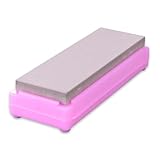 Shapton 5000 Shapton 5000 |
|
Check Latest Price |
 Mitsumoto Sakari 1000/3000 Mitsumoto Sakari 1000/3000 |
|
Check Latest Price |
 Norton 4000/8000 Norton 4000/8000 |
|
Check Latest Price |
 HOSHANHO 1000/6000 HOSHANHO 1000/6000 |
|
Check Latest Price |
 King G-45 220 King G-45 220 |
|
Check Latest Price |
Read the table as a job list rather than a ranking. Four of these twelve are coarse or heavy-repair tools, four are the 1000 grit workhorses that do most of the real work, and the rest are finishing stones you add later.
1. Shapton Glass 1000 – The One to Buy First
Shapton K0702 Blade, #1000, Medium, Orange
1000 grit medium stone
210 x 70 mm face
45 g, splash and go
Pros
- Highest rated stone in the group
- Multi-purpose 1000 grit roughing or medium stage
- Compact and light at 45 g
- Standard 210 x 70 mm face suits kitchen knives
Cons
- Single stone leaves the grit progression unfinished
- Needs a regular flattening routine to stay true
I have used this stone more than any other in this list, mostly on a gyuto and a nakiri that get used every week. At 1000 grit it is a genuinely capable middle step: it will rough a dull edge back into shape and refine a moderately sharp one, which means it covers both jobs on a knife you are not fussy about.
The dimensions are 210 by 70 millimetres with a 15 millimetre body, and it weighs 45 grams. That light weight sounds like a disadvantage until you try to move the blade back and forth with one hand while the other hand holds the stone. Nothing about it feels like a slab of stone in your fingers.
What makes it my first recommendation is the water behaviour. On the Kitchen Knife Forums thread that comes up constantly in first-stone advice, owners repeatedly single out the Shapton Glass stones for how fast they dry, describing them as dry very fast at roughly ten to twenty minutes. In an apartment kitchen that is the difference between a stone you use weekly and a stone you leave soaking in a sink.
Feedback is the other word you will hear attached to good stones, and it means the tactile sense of what the blade is doing under your hand, the drag and the change in resistance as the bevel forms. This stone gives you plenty of it, which matters more to a beginner than raw cutting speed. If you cannot feel what the stone is doing, you will not know when to stop.
Be aware of the honest drawback. It is a single-grit stone, so on its own it only handles step one of the progression, and it needs a regular flattening routine to stay true. Owners who pair it with a finishing stone get the full benefit; owners who stop at 1000 will wonder why the edge is more functional than keen.
If your knives are hard stainless like VG-10 or SG-2, this is a sensible middle of the road: hard enough not to dish quickly, forgiving enough to learn on. If you own Shirogami or Aogami carbon steel and want to watch the edge come up beautifully, I would pair it with the Naniwa Chosera 3000 later in the list.
Outdoor and bushcraft blades get sharpened on exactly this grit as a field-maintenance step, and a 45 gram stone that does not need a bucket is a reasonable companion for that job too.
2. King KW65 1000/6000 – Two Stages in One Stone
KING KW65 1000/6000 Grit Combination Whetstone with Plastic Base
1000 and 6000 grit combo
8 x 2.5 x 1 inch body
Plastic base included
Pros
- Most reviewed stone in the group
- Two grits cover shaping and polishing
- Harder than many water stones so it wears slowly
- Works on kitchen knives
- chisels and plane irons
- Plastic base holds the stone steady
Cons
- No English instructions
- 1000 grit side leaves a clay-like slurry
- Sides are unlabelled so you identify grit by feel
This is the stone I recommend to anyone who wants one purchase to cover most of a sharpening session. The 1000 side sets the edge and the 6000 side takes it to a paper-cutting finish, so you can go from a blunt knife to a keen one without a second stone on the counter.
The body is 8 by 2.5 inches and a full inch thick, which is the thickest in this group and the reason it feels stable under pressure. Owners consistently credit the construction for wear resistance, and it is noticeably harder than typical soft resin-bound stones, so it holds its shape through heavy sessions rather than hollowing out in the middle.
It is also the most reviewed stone here, with more than seven and a half thousand ratings, which tells you something real about long-term ownership. In a forum thread from an American knife forum, multiple owners with far more expensive stones say this King holds its own, and one describes getting a genuinely sharp, paper-cutting edge after about thirty minutes of practice as a beginner.
The complaints are consistent and mostly cosmetic. There are no English instructions, the two sides are not labelled so you work out which grit is which by feel, and the 1000 side produces a clay-like slurry that will stain a worktop if you leave it. The plastic base is genuinely useful, though the whole assembly can still creep on a smooth counter, so put a damp cloth under it.
This is a soaking stone, not a splash-and-go one, so give it ten minutes in water before the first pass. For anyone working on hard stainless Japanese knives who wants a full progression in a single object, that trade is worth making. Pair it with a coarser stone, like the Chosera 400 further down, when you need to fix a chip.
3. King 1000 Medium – The Most Forgiving Stone to Learn On
KING Grain Sharpening Stone, #1000, Medium
1000 grit medium stone
Thick ceramic body
Soaks before use
Pros
- Highest rating average in the group
- Excellent tactile feedback
- True to advertised grit
- Wears slowly and stays flat
Cons
- Slower cutting than some newer stones
- Softer than ceramic stones and can dish with heavy use
- Cannot reset a deep bevel
Feedback is the headline here. The owner reviews describe it as giving excellent tactile feedback about what the blade is doing, and in a Reddit sharpening discussion about Japanese knife stones one member makes a point that applies to this stone exactly: the Cerax 1000 gives far more feedback, which is the property that would have made it a much better first stone for them. This King is the same idea at a different tier.
It is a synthetic ceramic water stone and it does not produce the heavy natural-style slurry that softer stones do, which means it resists clogging and cleans with a rinse. It is rated 4.7 across more than two thousand ratings, the highest average of any stone in this list, and owners with expensive Naniwa, Shapton, Suehiro and Imanishi stones rate it as comparable value.
The body is thick at nearly three inches, so it will last for years, and it resists wear and stays flat longer than softer stones. The honest trade is speed: several owners note it cuts more slowly than some newer stones in the same bracket, and a slow stone is a real drag when you have five dull knives waiting.
It also cannot reset a badly damaged edge on its own. That is a job for a coarse stone, and if your Japanese knife has a chip rather than a dull edge, go straight past this one to the Naniwa Chosera 400.
For regular maintenance on a VG-10 gyuto or a nakiri that sees daily use, this is the most quietly excellent option in the list. The Japanese-language packaging trips some buyers up, so plan ten minutes of research before your first session rather than assuming you are doing it wrong.
4. Naniwa Chosera 400 – For Chips and Deep Damage
Naniwa Chosera Whetstone SS-400 Grit 400
Coarse 400 grit stone
210 x 70 x 25 mm
Sturdy holder with toishi
Pros
- Rated 4.8 with strong coarse-stage performance
- Cuts fast through hard stainless and damaged edges
- Resists clogging with metal
- Large working area
- Includes a good sized dressing stone
Cons
- Slightly softer and less aggressive than a dedicated 320 grit stone
- Absorbs more water than finer grits and needs careful drying
- Glued holder can promote uneven drying and cracking
This is the repair stone, and it earns its place in a kit that has a Japanese knife with a real chip in it. At 400 grit it removes steel quickly, and owners report bringing dull or damaged blades back to shape in roughly four to ten passes on the large working area.
The construction is a professional quality Japanese stone at 210 by 70 by 25 millimetres, supplied on a sturdy holder with a toishi dressing stone of 65 by 50 by 30 millimetres included. That dressing stone is not a gimmick; it is how you de-glaze a ceramic surface and how you clean the sharpening mud off the face.
It does not clog the way softer stones do, and it has enough hardness to stay honest on hard stainless like VG-10 and SG-2. A Kitchen Knife Forums thread that covers many brands praises Naniwa Chosera stones for exactly this coarse-stage work, and one long-serving owner reports sharpening about eighty knives on Chosera 800 and 3000 stones and finding them still flat.
The three drawbacks are real. It is slightly softer and less aggressive than a dedicated 320 grit stone, so it will not blitz through severe damage quite as fast. It drinks more water than finer grits, so drying matters. And it is glued to a plastic holder, which owners note can promote uneven drying and cracking if you are careless.
Buy this one second, not first. Sharpening a merely dull knife on 400 grit is a waste of both time and steel, and beginners who start too coarse often dig holes in a thin edge. Use it for chips, for reprofiling a badly neglected blade, or when a knife has been used on bone.
5. Kota Japan 1000/6000 – Best for Someone Who Has Never Sharpened
Kota Japan 1000-grit Coarse Side and 6000-grit Polishing Side Knife Sharpening Whetstone with Bamboo Base and Blade Guide
1000 and 6000 grit combo
7.25 x 2.25 inch face
Bamboo base and angle guide
Pros
- Included blade angle guide removes the common beginner barrier
- Non-slip bamboo base keeps the stone stable
- Clear written instructions included
- Suits kitchen knives
- scissors and straight razors
Cons
- Plastic angle guide can scratch the blade if slid along it
- Must be dried thoroughly after use
- No engraving to show which side is which grit
The angle guide is the reason this stone exists in my list. Every beginner freehand sharpening session fails for the same reason, holding a consistent angle, and this set includes a guide sized to sit against the spine so you get roughly 15 degrees without guessing.
Reviewers single out that guide as the specific thing that let them maintain a consistent bevel. The bamboo base with silicone grips handles the second common failure, which is the stone moving while you work, and the corundum construction is described as consistent in hardness and resistant to cracking and chipping.
Users report paper-slicing and hair-shaving edges after twenty to thirty minutes of practice, and the 1000 to 6000 pairing means one stone takes you from dull to polished. The manufacturer calls it professional grade and lists kitchen knives, pocket knives, scissors and straight razors as fair game.
Soak it for ten to fifteen minutes, as the instructions specify. Two cautions come straight from owners: the plastic angle guide is stiff and can scratch the blade surface if you slide it along the knife instead of lifting it away, and the stone must be dried fully after use or the packaging can develop mould.
This is the pick if your Japanese knife is a single gyuto and you want one object to do everything. The face is 7.25 by 2.25 inches, narrower than the shapton and the King, so it dishes a little sooner, but for once-per-week touch-ups that is a fair trade for the guidance it gives you on day one.
6. Naniwa Super Ceramic 1000 – Fast Cuts on Hard Steel
1,000 Grit Super Ceramic Water Stone with a Base (Japan Import)
1000 grit ceramic stone
210 x 70 x 25 mm
Base and dressing stone included
Pros
- 84 percent five-star ratings with only 1 percent one-star
- Ceramic construction cuts faster than resin-bound stones
- Hard surface resists glazing and holds flatness
- Long 8.27 inch face suits long strokes
Cons
- Single grit side with no finishing option
- Soaking required before use and full drying after
- Ceramic can chip if a blade edge is dug in
Ceramic construction is the story here. Compared with a traditional resin-bound stone, the abrasive cuts noticeably faster, which matters on hard steels like SG-2 and R-2 that a soft stone will just skate across.
The satisfaction profile is unusually clean, with 84 percent five-star ratings and 97 percent four-star or better, and owners describe a hard, low-glazing surface that holds its flatness over repeated sessions. The 8.27 inch length gives you plenty of room for the long diagonal strokes that Japanese knives suit well, and the 25 millimetre body is one of the thicker ones in this group.
It ships with a base and a 65 by 47 by 32 millimetre dressing stone, which on a hard ceramic surface is not optional maintenance, it is the thing that keeps the stone abrading rather than polishing its own scratches over the face.
The main limitation is structural: it is a single-grit stone, so it handles only the first step of the progression. Water stones like this must be soaked before use and dried fully afterwards, and ceramic has one hard failure mode, if you dig the blade edge in at an angle under pressure you can chip the stone.
For someone with a collection of hard stainless gyuto and santoku who wants quick weekly touch-ups, this is a strong pick. For carbon steel enthusiasts who care about how the apex finishes, a hard ceramic is a slightly blunt instrument and a softer finishing stone will do more for the final edge.
7. Naniwa Chosera 3000 – The Premium Finishing Step
Chosera 3,000 Grit Stone – with base
3000 grit finishing stone
210 x 70 x 25 mm
Splash-proof base and toishi
Pros
- Fast
- load-resistant cut
- Very slow wear
- Polishes above its stated grit while still cutting tomato skin
- Satisfying tactile feedback
- Includes dressing stone and attached base
Cons
- Several buyers report ceramic cracking after limited use
- Glued base means the stone cannot be flipped to dry both sides
- Chip-prone corners during flattening
Step two of the progression, and the stone enthusiasts recommend most often. A 1000 grit stone leaves a burr and a coarse apex; a 3000 grit stone removes the burr and refines that apex into something the next grit can work with. Skipping it is why so many people find a sharpened Japanese knife still feels slightly grabby.
What you get is a fast, load-resistant cut that needs only a spray of water to clean, and very slow wear, often reported as near-lifetime after two hundred or more passes. Owners note it polishes above its stated grit while retaining enough bite to cut tomato skin, which is exactly the balance you want from a 3000.
Tactile feedback is described as comfortable and satisfying compared with Arkansas or diamond alternatives. The stone is made in Japan at 210 by 70 by 25 millimetres and ships with a dressing stone and an attached splash-proof base, so it is a splash-and-go style stone in practice even though it is a resin-free ceramic.
The recurring complaint is cracking. Several buyers report the ceramic cracking after limited use or in dry climates, and the attached base is the likely reason, since a glued stone cannot be flipped or removed to dry both faces evenly. Treat the corners carefully during flattening; owners flag them as chip-prone.
If you own carbon steel such as Shirogami or Aogami and want an apex you can see reflected in, this is where the money goes. If you are still fighting to hold a 15 degree angle on a 1000 grit stone, learn that first and buy this second.
8. Shapton 5000 – The Polishing Stage
Shapton K0704 Blade Blade, #5000, Finish Enge
5000 grit finishing stone
210 x 70 x 15 mm
Splash and go, case included
Pros
- Excellent polishing power for a finishing stage
- Rated 4.8 across more than 5700 ratings
- Works on chisels
- knives and scissors
- Storage case doubles as a sharpener
Cons
- Lacks the smooth silky feel of traditional finishing stones
- Finishing grit leaves no bite so it is a terminal step
This is the third step, and the reason a Japanese knife feels dangerous in a good way. After a 1000 and a 3000, the 5000 refines the apex into a fine edge with polish, and the difference between a 3000-only finish and a 5000 finish is obvious the moment you slice a sheet of paper held flat in the air.
The review profile is about as strong as any product we looked at, with 87 percent five-star ratings across more than five and a seven hundred ratings. The praise is specifically about polishing power rather than feel, and the stone is listed as suitable for chisels, knives and scissors, so it is not limited to kitchen work.
One practical detail deserves attention: the storage case can also be used as a sharpener, which sounds like a gimmick until you consider that for travel or a small kitchen you now have a protected home for the stone. Dimensions are 210 by 70 by 15 millimetres at half a kilo, and it dries fast enough to live in a drawer rather than a tray of water.
The honest drawback is in the product’s own description. It does not have the smooth, silky feel common to traditional finishing stones, and the finishing grit leaves no bite for further refinement, so it is a terminal step rather than a middle one. If you want to keep refining after this, you need a higher grit, not more time on the 5000.
A Kitchen Knife Forums thread on first water stone sets sees plenty of owners pair a 1000 with a 5000 rather than a 3000, skipping the middle stage. Owners do describe a 1000 grit stone as never rivaling a 3, 4 or 6 thousand for sharpness, and this is where that gap gets closed for a splash-and-go user who wants the shortest possible sequence.
My rule is that you cannot skip the 3000 if you own hard stainless, because that is the grit that reliably clears a stubborn burr on SG-2. On carbon steel, going 1000 straight to 5000 works well. Either way, this stone is a finishing tool, not a maintenance tool.
9. Mitsumoto Sakari 1000/3000 – Compact for Small Kitchens
MITSUMOTO SAKARI 1000/3000 Grit Japanese Whetstone Knife Sharpening Stone
1000 and 3000 grit dual sided
7.09 x 2.36 inch face
Bamboo base and kraft box
Pros
- 1000 and 3000 pairing covers repair through polishing
- Sharpeners report it works faster than stones they owned before
- Non-slip bamboo base
- Consistent corundum abrasion with little grit shedding
Cons
- Smallest working surface in the group so it dishes sooner
- Not a mirror finishing stone
- No clear instructions included
The interesting thing about this stone is that it covers the first two steps of the progression in one body, and owners who own pricier stones report it sharpens faster than stones they had before. Sushi professionals using it on carbon steel yanagiba report restoring them to razor sharpness, which is a demanding test for any 1000 to 3000 pairing.
The white corundum is sintered at high temperature with an optimised pore structure for even water absorption, which is why the slurry stays consistent instead of turning to uneven paste as you work. The bamboo base reduces sliding to support a steady 15 to 20 degree angle, and a kraft box is included for storage.
It is also compact. At 7.09 by 2.36 inches it is the smallest working surface in this group, and that has a direct cost: the centre dishes faster, so you will be flattening more often than with a long stone.
Two further limits are worth stating plainly. The 3000 side is the upper limit, so this is not a mirror finishing stone. And there are no clear instructions in the box, so if you have never sharpened freehand, expect to spend a session reading before you start.
For someone with a single carbon steel yanagiba in a small kitchen who wants one compact stone to cover roughing and refining, this is a sensible buy. The dual-grit pairing also makes it a natural companion to a separate finishing stone later, when you want polish.
At a 4.5 average it sits just below the rest of the list, and the shortfall shows up in the small face and the missing instructions rather than in the abrasion itself. Sharpening quality here is good; the packaging of the experience is thinner.
10. Norton 4000/8000 – A Large Bench Face for Straight Razor Work
Norton Knife Sharpener Whetstone Japanese Sharpening Stone with 4000/8000 Combination Grit, Wet Stone Sharpening Stone
4000 and 8000 grit combo
8 x 3 inch bench face
Holder case with rubber feet
Pros
- 8000 side produces a smooth
- shave-ready polish
- Case doubles as a stable stand
- Long-serving owners still rate it highly after years
- Priced well below comparable Japanese finishing stones
Cons
- 8000 side glazes over and needs a nagura stone to re-open it
- Soft stone that wears and dishes in the middle
- Too smooth to set a bevel from scratch
This is the outlier in the list: a Western bench stone aimed at straight razor users that also happens to finish a Japanese knife beautifully. At 4.6 across 499 ratings, owners overwhelmingly come from the razor world and describe it as an old reliable veteran that still rivals newer Japanese stones on smooth edge quality.
The two-sided design is 4000 for refining an existing edge and 8000 for polishing to a mirror finish, on a 1 by 8 by 3 inch bench stone face. That is the largest single face in this group, and it also handles kitchen knives, utility knives and tools, so nothing stops you using it on a nakiri.
The case is worth more than it looks. It doubles as a stable stand with rubber feet and securing notches, so you have somewhere to keep the stone and somewhere to work it at the same time. Water is used as the lubricant rather than oil, which means cleanup is a rinse and a wipe.
There is one significant technical complaint, and it is specific enough that you should know it before buying. The 8000 grit side glazes over, meaning the abrasive surface stops cutting metal until it is re-opened with a nagura stone. That is normal for a very fine finishing stone, but it surprises people who expect every session to remove metal.
It is also a soft stone that wears and dishes in the middle with heavy use, and it is too smooth to set a bevel from scratch, so a coarser 220 or 1000 stone comes first. Some units arrive not perfectly flat and need flattening out of the box, and one review reports a stone arriving broken after transport in a paper bag with no protective packaging.
Use it as the last step. If you have already run a 1000 and a 3000 on your Japanese knife, this is where you take the edge from sharp to genuinely keen, and the big face makes the long polishing strokes easy.
One more thing owners mention: a stone this smooth, lightly re-flattened on sandpaper, delivers consistently smooth edges. That periodic flattening habit is what keeps the 4000 and 8000 sides doing their job rather than becoming a very expensive piece of smooth grey rock.
11. HOSHANHO 1000/6000 – Built Around the Grip
HOSHANHO Knife Sharpening Stone Set, Double-Sided Grit 1000/6000 Whetstone
1000 and 6000 grit dual sided
7.76 x 2.87 inch face
Grooved armrest bamboo base
Pros
- Larger and wider face than most competitors makes strokes safer
- Grooved armrest base gives a real grip
- 1000 and 6000 handles repair
- deburring and polish
- Works on garden
- hunting and kitchen knives
Cons
- Cannot be used on serrated or ceramic blades
- Wide footprint takes more drawer space
- Less established maker than King or Naniwa
Most stones treat stabilisation as an afterthought. This one builds the whole product around it, with an armrest base design that has a grooved grip moulded into it, and 7.76 by 2.87 by 0.94 inch dimensions give a bigger working area than most competitors in this category.
The idea is simple and correct: if the stone is bigger and easier to hold, your strokes are longer and your hands are less likely to shift the stone at the wrong moment. On a long nakiri, a wide face means fewer repositioning breaks mid-stroke.
Both sides are useful. The 1000 grit side repairs small gaps and strengthens the edge, and the 6000 side deburrs and polishes. Reviewers like that it handles kitchen knives, garden tools, hunting knives and straight razors, and a five minute soak with no oil needed keeps cleanup simple.
Not every knife is a candidate. It is explicitly not suitable for serrated blades or ceramic knives, which rules out a serrated bread knife from your routine, though not your Japanese steel.
The drawbacks are mostly about fit and pedigree. The wide footprint takes up more counter or drawer space than a slim stone, and HOSHANHO is a less established whetstone maker than King or Naniwa, which matters if you want a long serviceable record of spare parts and accessories.
At 4.6 across 271 ratings with no written customer review text captured for the listing, I would treat this as the pick for a specific problem: a large, stable face that is comfortable to hold. If that is not a problem you have, the King KW65 covers the same grits for less money.
12. King G-45 220 Grit – The Entry Point for New Geometry
Japanese King Knife Sharpener Whetstone Grit 220 G-45
220 grit coarse stone
6.93 x 2.05 inch face
No base or holder included
Pros
- Cheapest entry to a real coarse grit
- Correct first step for setting a fresh bevel
- Compact footprint suits a small station
- Backed by an established name
Cons
- Small
- narrow surface limits stroke length
- Thin 0.59 inch body with no base or holder
- Coarse grit only so it cannot finish an edge
This is the cheapest way to get a genuinely coarse stone on the bench, and coarse is the grit you need when the edge geometry is wrong rather than merely dull. A knife that has been ground on a pull-through sharpener, or a blade that has picked up a chip, needs steel removed at 220 grit before anything else will work.
The King G-45 is a carborundum, or aluminium oxide, stone bonded to a rigid backing at 6.93 by 2.05 by 0.59 inches. At less than two thirds of an inch thick, it is the thinnest stone here, and no base or holder is included, so you need something under it to work on.
Its job is fast metal removal, nothing more. It is coarse grit only, so it cannot polish or refine an edge, and the small narrow face limits how long a stroke can be before you have to reposition.
The place this stone fits is as a third tool, not a first one. If you own hard Japanese steel and want to reprofile a thinning knife or remove a chip, a 220 grit stone followed by the 1000 and 3000 stones is the correct sequence, and using only 1000 grit for a job this big is a common beginner mistake.
Be careful using it as a beginner, because 220 grit rewards pressure and a heavy hand digs holes in a thin Japanese edge faster than any other grit in this list. Flatten the face before the first pass and keep the pressure light.
For a traveller or a second home where space is tight, the compact footprint is a genuine advantage. Everything else about it says specialist tool, so I would not start here.
How to Choose a Water Stone for Japanese Knives?
Start with 1000 grit and add from there. The single most repeated piece of advice in the forums is buy one stone and add later, and the reason is not budget, it is skill. Most sharpening failures at the start come from angle and pressure, not from the wrong abrasive. A 1000 grit stone teaches you both, and everything you buy afterwards plugs into a sequence you already understand.
Then add a 3000, and only then think about polish. The 3000 is what clears a stubborn burr on hard steel. Owners on a Kitchen Knife Forums thread are blunt that a 1000 grit stone will never rival a 3, 4 or 6 thousand for sharpness, so if you skip this step you are the reason your knife feels dull.
Match the stone to the steel. Hard stainless steels such as VG-10, SG-2 and R-2 need a harder, faster-cutting abrasive and more finishing steps, because they resist refinement. Carbon steels such as Shirogami and Aogami are easier to bring to a fine apex and reward softer finishing stones, but they are more easily damaged by a hard, fast stone used carelessly. For carbon steel the Chosera 400 and the Chosera 3000 are a natural pairing.
Soaking versus splash and go is a kitchen decision. A soaking stone gives you a full slurry and a slower, steadier cut, and the King and Naniwa stones here all need ten to fifteen minutes in water. A splash-and-go stone, like the two Shapton stones, just needs a wet surface and dries in ten to twenty minutes, which is why owners describe them as the most practical choice in an apartment setting. One user on a sharpening forum simply avoids soaking altogether and wipes stones down before storing them in a locker.
Do not overthink soaking times. A fifteen minute soak in a kitchen sink is described by experienced forum members as not challenging, far less of a barrier than beginners assume. The real objection in a small apartment is drying time, not soak time, and that is a question of which stone you bought, not how you use it.
Size and base matter more than brand. A stone with a bonded plastic base or a rubber-footed holder is far better than a bare stone on a wet counter, and a longer face means longer strokes and a larger area to work across. Every stone in this list except the King G-45 and the Shapton Glass 1000 arrives with some form of base or holder.
How to Sharpen a Japanese Knife on a Water Stone
Soak or wet your stone, set it on a damp cloth with a base or holder, and lay the blade flat on the face. Raise the spine until the gap between the blade and the stone matches roughly the thickness of a coin at the spine, which on most Japanese knives is a 15 degree per side bevel. A 20 degree bevel is more forgiving and more durable, but it is not what a thin gyuto wants.
Start with coarse strokes along the full length of the stone, using the spine-and-heel motion so the whole edge stays in contact. Watch the base of the blade for a wire edge, or burr, to appear along the underside; that burr is the signal that the 1000 grit stage has done its job. Lift the blade by the spine rather than sliding it off the stone, and check the edge by feeling along the underside with a fingertip.
Move to the 3000 grit side and repeat until the burr is gone. Then to the finishing grit if you have one. End the session by stropping on a leather strop or a folded newspaper to realign the edge, which costs nothing and noticeably improves how it feels on food.
Common beginner mistakes are worth naming, because the forum consensus is that nearly all of them are avoidable. Digging a hole in the middle of the edge comes from pressing too hard in one spot, and a long stone with a stable base is the best defence. A wandering angle comes from trying to do it with one hand on a stone that slides, and a guide such as the one included with the Kota Japan set solves it outright. And skipping the burr removal stage is why edges feel sharp for a week and then go nowhere, because the burr is the only thing holding a dull apex together.
Maintenance, Flattening and Storage
Every soft water stone dishes in the centre over time, which is called dishing, and an uneven stone produces an uneven bevel. The fix is flattening, either on a diamond lapping plate or on sandpaper on a flat surface, and the forums recommend a multi-purpose diamond plate in the region of 400 for exactly this job. Cheap diamond plates in that range also double as a touch-up tool, and one owner reported removing a light scratch on a Global knife in about a minute.
Clean your stone before you store it. Hard ceramic and resin stones glaze over with metal particles and need their dressing stone used regularly to re-open the surface, and the Naniwa stones here ship with a toishi for that purpose. A glazed surface stops cutting and starts polishing nothing.
Dry water stones properly and the rest of maintenance is easy. Stand them upright so air moves on both faces, do not leave them lying in a puddle, and avoid resting one stone on top of another while either is damp. Owners on sharpening forums note that some stones dry quickly on the surface while staying wet underneath, which is exactly the condition that leads to cracking on a ceramic or glued stone.
Finally, keep the edge of the stone out of harm. Dishwashers, drawer edges and stone-on-stone storage chip corners, and chipped corners are the most common damage we see on these products, along with rough transit. The King KW65 in particular draws repeated reports of cracked corners on arrival, so inspect the box before you sign for it.
Frequently Asked Questions
Is 1000 grit okay for a Japanese knife?
Yes. A 1000 grit water stone is the correct starting and weekly maintenance grit for Japanese knives, because it sets the bevel and restores a dull edge without removing excessive steel. It will not produce a truly keen edge on its own, so add a 3000 grit stone later and a 6000 to 8000 grit stone when you want a fine finish.
What type of whetstone is best for sharpening Japanese knives?
A water-lubricated synthetic stone used in a grit progression. Start at 1000 grit to set the edge, move to 3000 grit to remove the burr and refine the apex, then finish at 6000 to 8000 grit. Hard stainless steels such as SG-2 need a harder stone and more finishing steps than carbon steels such as Shirogami.
What is the best 1000 grit whetstone?
The Shapton Glass 1000 is the strongest all-round choice, rated 4.8 across more than 4,500 ratings, with a fast-drying surface that suits small kitchens. The King 1000 Medium is the most forgiving to learn on, the Naniwa Super Ceramic 1000 cuts fastest on hard steel, and the King KW65 pairs 1000 with 6000 grit if you want two stages in one stone.
Do Japanese knives need water stones?
Not specifically water stones, but they do need stones. Japanese kitchen knives are made from hard steels that hold an edge well but need an abrasive that can remove steel without rolling the edge. A water stone is the traditional and most controllable choice, while a quality diamond plate is a faster alternative for rough work.
Can you use a whetstone on a VG-10 knife?
Yes. VG-10 is a stainless steel and a standard 1000 grit water stone handles it without difficulty. Because stainless is harder and more resistant to refinement than carbon steel, add a 3000 grit stone to clear the burr reliably and consider a harder, faster-cutting ceramic abrasive such as the Naniwa Super Ceramic 1000.
How often should I sharpen a Japanese knife?
A light touch-up on 1000 grit every few weeks keeps a kitchen knife sharp, and a full progression from 1000 through 3000 to a finishing grit every few months is enough for most home cooks. Sharpen immediately rather than waiting if the knife has hit bone, frozen food, or developed a visible chip, since those need coarser grit and a repair stage.
Do I need to soak a water stone before use?
Soaking stones such as the King and Naniwa models need ten to fifteen minutes in water to saturate and form a slurry. Splash-and-go stones such as the two Shapton stones only need a wet surface and dry in ten to twenty minutes, which is the main practical advantage in a small kitchen.
How do I stop my water stone dishing?
You cannot stop it, but you can correct it. Soft water stones wear a hollow in the centre over time, and the remedy is regular flattening on a diamond lapping plate or sandpaper on a flat surface. Use the included dressing stone to keep the surface from glazing, and check the stone for rocking on a flat counter to know when it needs attention.
If you also carry smaller blades that need the occasional touch-up away from a kitchen, our EDC knife guide covers the edge considerations for that narrower steel.
Start Here: The Sharpening Setup I Would Build
After working through all twelve of these stones, the setup I would hand anyone asking about the best water stones for Japanese knives is simple. Buy one 1000 grit stone, get comfortable with it, and add a 3000 grit stone when that one stops being a challenge. Everything else is specific to a problem you will recognise when you hit it.
For most people that means the Shapton Glass 1000 as the starting point, because it is the highest rated stone here, it dries fast, and it is light enough to hold comfortably. If you would rather have two stages in one object, the King KW65 1000/6000 does the same job with one less thing on the counter. If you have never sharpened freehand at all, the Kota Japan set with its angle guide will save you months of trial and error.
Add a coarse stone only when a knife has a chip rather than a dull edge, and add a finishing stone only when you decide the edge is good but not keen. Buy the stone that solves the problem in front of you, use it properly, and keep it flat.
Whichever route you take, sharpen before you think the knife has gone bad, not after. A Japanese knife kept on a regular 1000 grit touch-up is a much easier tool to live with than one saved for a rescue job every six months. That is the whole argument for water stones, and it holds up in 2026 just as it did the first time.