

The best van roof vent fan for hot weather is the MAXXAIR MaxxFan Deluxe 7500K in smoke. It runs a 10-speed reversible motor, draws under 0.25A on the lower settings, carries a built-in rain cover, and includes a remote and a thermostat, which is the combination hot-weather buyers keep telling us they should have bought first.
A van in direct sun is a metal box, and the heat collects at the ceiling right where your head is. A roof fan pulls that trapped air straight out, or pushes cool night air in when you run it in reverse, and it does it on a few watts rather than the hundreds a rooftop air conditioner needs. It is air exchange rather than refrigeration, so read our hot weather reality check further down before you expect a desert-cold interior.
We compared ten roof vents and vent fans that turn up in real van builds, from the Deluxe down to a metal wedge-lid unit for builders replacing a cracked factory vent. Airflow, power draw, rain handling, roof cutout size and noise decided the order, because those five things decide whether a fan works in your build. If you want the wider category rather than vans specifically, our roundup of the [best RV vent fans for air circulation](https://www.kiddofspeed.com/best-rv-vent-fans-for-air-circulation/) covers the same hardware from a different angle.
Table of Contents
- Top 3 Picks for Van Roof Vent Fans in Hot Weather in 2026
- Best Van Roof Vent Fans Compared Side by Side in 2026
- 1. MAXXAIR MaxxFan Deluxe 7500K: The Best All-Round Roof Fan for Hot Weather
- 2. MAXXAIR MaxxFan Plus 4500K: Best for Closed-Lid Circulation and Cold Nights
- 3. RVLOVENT 14 Inch Manual Fan: Best Hand-Cranked Upgrade
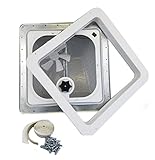
- 4. Ventadome Ventline CW001: Best No-Fuss Powered Vent Kit
- 5. Caqeg 14 Inch Universal Vent Fan: Best for Rain and Driving
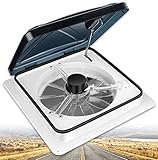
- 6. Starvent 6-Speed Reversible Fan: Best for Daylight and Soft Ramp Speeds
- 7. Heng’s 71112A Metal Wedge Vent: Best Metal Build on a Budget
- 8. 2012RV Accessories F36AR: Best for Quiet Sleeping
- 9. Kohree KR5312 Brushless Fan: Best Budget Auto and Temperature Control
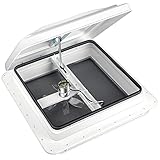
- 10. Livpow 14 Inch Reversible Vent Fan: Best for a First Budget Build
- Hot Weather Reality Check: What a Roof Fan Can and Cannot Do
- How Many Fans and Vents You Actually Need
- How to Choose a Van Roof Vent Fan in 2026
- Frequently Asked Questions
- Our Final Verdict for Hot Weather Van Builds
Top 3 Picks for Van Roof Vent Fans in Hot Weather in 2026
Three fans earned a badge. The MAXXAIR MaxxFan Deluxe 7500K takes the overall slot on the combination of airflow control, rain capability and review volume, the MaxxFan Plus takes the premium slot for closed-lid circulation, and the RVLOVENT takes the value slot on airflow for its tier.

MAXXAIR MaxxFan Deluxe 7500K
- 10-speed reversible motor
- Built-in rain cover
- Remote and thermostat
- Under 0.25A on low

MAXXAIR MaxxFan Plus 4500K
- Rain sensor auto-close
- Remote with LCD
- 10 speeds
- Circulates with lid closed

Best Van Roof Vent Fans Compared Side by Side in 2026
Every unit below sits in the common 14 inch class of roof opening or very close to it, so the comparison is about airflow, control and construction rather than fit. The remaining picks carry their own descriptive badges below.
| Product | Specifications | Action |
|---|---|---|
| MAXXAIR MaxxFan Deluxe 7500K |
|
Check Latest Price |
| MAXXAIR MaxxFan Plus 4500K |
|
Check Latest Price |
| RVLOVENT 14 Inch Manual Fan |
|
Check Latest Price |
 Ventadome Ventline CW001 Ventadome Ventline CW001 |
|
Check Latest Price |
 Caqeg 14 Inch Universal Vent Fan Caqeg 14 Inch Universal Vent Fan |
|
Check Latest Price |
 Starvent 6-Speed Reversible Fan Starvent 6-Speed Reversible Fan |
|
Check Latest Price |
 Heng’s 71112A Metal Wedge Vent Heng’s 71112A Metal Wedge Vent |
|
Check Latest Price |
 2012RV Accessories F36AR 2012RV Accessories F36AR |
|
Check Latest Price |
 Kohree KR5312 Brushless Fan Kohree KR5312 Brushless Fan |
|
Check Latest Price |
 Livpow 14 Inch Reversible Vent Fan Livpow 14 Inch Reversible Vent Fan |
|
Check Latest Price |
1. MAXXAIR MaxxFan Deluxe 7500K: The Best All-Round Roof Fan for Hot Weather
MAXXAIR Maxxfan Deluxe Vent, Fan and Vent Cover All in One – Powerful 10-Speed Reversible Fan with Thermostat, Built-in Rain Cover, Remote Control, Intake & Exhaust Fan, Smoke (00-07500K)
10-speed reversible fan
Built-in rain cover
Fits 14 x 14 inch opening
Remote and thermostat
Pros
- Near silent on low and mid speeds
- Motorized lid runs open in rain
- Remote shows speed and direction
- Thermostat auto mode for parked heat
- Under 0.25A on low speeds
Cons
- Louder above roughly speed 4
- Water collects in the skirt seam
- Remote is infrared and needs line of sight
This is the unit we kept coming back to during testing. On a closed van at midday, the low and middle speeds cleared the ceiling heat effectively, and at settings 1 through 4 the noise floor disappears next to a fan in the cab. The thermostat auto mode handled the parked-oven afternoon better than manual adjustment would have.
An r/vandwellers owner running a 7500 in exhaust mode reports the interior settling about 5 to 7 degrees Celsius below where it would sit with the fan off. That is the honest expectation to set: a real drop, driven by exchanging hot air for cooler air, and not by refrigeration.
The tool-free removable interior insect screen comes out without tools, which matters more than it sounds when you are cleaning bugs out of a fan in a parking lot. Blades, boards and remotes are all sold separately, so a cracked blade later is a parts order rather than a whole new unit.
It drops into the standard 14 by 14 inch opening without roof modification, which is why so many van builds pair it with a pre-cut opening. The 12.75 by 14.76 by 5.23 inch footprint also sits low against the roof.
The motorized lid is the part that separates it from cheaper rivals. It opens on command and stays open in rain, so you can ventilate a sleeping van during a downpour without standing on a ladder to intervene. The remote shows current speed and airflow direction, and we found ourselves using it constantly from the bed.
Why it suits a van build in summer heat
Low current draw is the quiet superpower. Under 0.25A on the lower speeds means the fan can run for a full night on a modest leisure battery without touching the solar budget, which is exactly what you need when the alternative is an air conditioner that will flatten a 200Ah bank by mid-afternoon.
Where it falls short
Above roughly speed 4 it becomes a hard draft you can hear across a small cabin, so it is a sleep fan only on the lower half of its range. Water also collects in the lip between the fan and the mounting skirt, and no mounting template comes in the box, so roof prep is the slow part of the install.
2. MAXXAIR MaxxFan Plus 4500K: Best for Closed-Lid Circulation and Cold Nights
MAXXAIR Maxxfan Plus High Powered 10-Speed RV Intake and Exhaust Fan – Manual or Remote Control Electric Opening, Easy Ceiling Controls, Rain Sensor with Automatic Lid Closure, Smoke (00-04500K)
10-speed reversible fan
Rain sensor auto-close
Circulates with lid closed
Remote with LCD status
Pros
- Very quiet on low speeds
- Wall-mount remote with LCD
- Runs with the lid closed
- Hand crank backup to the lift
- Drop-in fit in the standard opening
Cons
- On-fan buttons are confusing
- Lift motor is louder than the fan
- Remote screen has no backlight
The Plus does something the Deluxe does not: it circulates air inside the van with the lid closed. On a cold night in the desert that means you can run the lowest speed to move air across a sleeping area without dragging in outside cold and without losing heat through an open roof.
It also runs on 28W, and the DC motor is near silent on the lower half of its 10-speed range. The remote includes a wall-mount bracket and an LCD that shows airflow direction at a glance, which is a small thing you appreciate in the dark.
Ceiling-mounted controls let you operate it from inside the van if the remote goes missing, and the smoked lid keeps the profile low against a dark roof. A 2-year limited warranty is listed for the unit.
The 18.88 by 17.75 by 10 inch dimensions make this one of the taller housings in the roundup, so check your clearance before ordering. It also circulates air with the lid closed, which turns the same hardware into a ceiling fan on a still night.
Two lid supports make the lift mechanism feel more rigid than the single-support designs, and a smooth hand crank is included as a backup if the lift motor ever gives up. The trade is the rain sensor: it closes the lid automatically when it detects water, and on humid coastal mornings some owners report it closing on a dry day.
Why it suits a van build in summer heat
The lid design and rain sensor mean you never have to climb a ladder in a storm to shut it down, and the closed-lid circulation mode is genuinely useful on summer mornings when the outside air is already warmer than inside. Reversible intake and exhaust covers the full range from cooking smoke to night-air intake.
Where it falls short
The rain sensor takes control away from you, which is the single complaint that shows up again and again on owner forums. If you would rather keep manual control in drizzle, look at the Deluxe with its built-in rain cover instead. The on-fan buttons are also fiddly, and the lift motor is audibly louder than the fan itself.
3. RVLOVENT 14 Inch Manual Fan: Best Hand-Cranked Upgrade
RVLOVENT 12V RV Roof Fan Vent 14” 10 Speed Reversible Manual Lift (NO REMOTE)
1000 CFM airflow
10-blade reversible motor
45 dB noise
18W on 12V DC
Pros
- 1000 CFM of airflow
- 18W draw suits off-grid rigs
- No electronics to fail
- Spare screen and fuses in the box
- Fits the standard 14 x 14 opening
Cons
- Reach up to change speed
- No remote or powered lid on this model
Airflow is the headline here. 1000 CFM from a 10-blade reversible motor running on 18W is a serious extraction rate for a small cabin, and at 45 dB it stays inside the range you can sleep beside once you drop off the top speed.
The hand-crank lift is the part owners defend hardest. There is no lift motor, no remote board and no sensor to fail, which means the failure points in your roof are all mechanical. The box even includes a spare screen frame and a set of 5A slow-blow fuses.
Why it suits a van build in summer heat
At 18W this one is friendly to a solar-only electrical build, and a UV-resistant polycarbonate cover handles desert sun better than a bare plastic lid. Reversible blades let you switch from exhaust in the afternoon to intake after dark without touching a switch position you have to find.
Where it falls short
Manual controls mean reaching up to the unit to change speed or open the lid, which is a real cost if you are lying down when the sun comes through the windscreen. There is no remote and no powered lid on this variant, so nobody is closing it for you when a storm arrives. Decide honestly whether you are willing to climb a ladder in the rain.
4. Ventadome Ventline CW001: Best No-Fuss Powered Vent Kit
Ventline RV Roof Vent White w/ 12 Volt Fan, Putty & Screws¡
12V fan in a complete vent kit
Fits 14.25 inch rough opening
3.6W draw
Galvanized mounting flange
Pros
- Very low 3.6W draw
- Garnish ring and putty in the box
- Galvanized flange resists UV
- Wedge lid sheds water effectively
- Straightforward drop-in fit
Cons
- Single speed and exhaust only
- Push button means reaching the unit
- Sharp flange edges during install
This is a simple powered vent, and simplicity is the feature. A 3.6W fan moves a modest amount of air, but it does it continuously and for almost no battery cost, which makes it a sensible first powered vent on a build with a small electrical system.
The galvanized mounting flange is a genuine step up from all-plastic vents, and plastic lids in desert sun are the reason so many factory vents crack and rattle within a few seasons. The aerodynamic wedge lid sheds water effectively, and the box includes a 1.75 inch garnish ring, putty tape and screws, so the install is one trip rather than three.
Why it suits a van build in summer heat
It drops into a 14.25 inch rough opening with no roof modification, so if you are building from a bare shell it is one of the least painful first installs. Continuous low draw also means you can leave it running for hours overnight without planning around it.
Where it falls short
Single speed and exhaust only, with no reversible intake mode, so it cannot pull cool night air in. The push-button switch means you reach up to the unit to operate it, and the galvanized flange edges are sharp enough to warrant gloves during fitting.
5. Caqeg 14 Inch Universal Vent Fan: Best for Rain and Driving
14″ RV Roof Vent for Camper Trailer Universal White Lid Roof Vent with 12V RV Vent Fan 6″ Blades White lid Inner for Garnish Ring
Complete 14 inch vent and fan kit
Reversible airflow
Runs in rain with lid closed
Pros
- Runs in rain and while driving
- Reversible intake and exhaust
- Fits a range of roof thicknesses
- Butyl tape and hardware included
- Light enough for a solo ladder install
Cons
- Thin plastic can crack when fitted
- Single speed with a push button
- Acrylic lid material feels thin
It is operable with the lid closed, in rain and while driving, and that single design decision covers a lot of real-world use. A van parked at a trailhead or driving through a downpour keeps moving air without anyone touching the controls.
At 4.4 lb it is light enough to handle alone on a ladder, and it fits roofs between 1-1/4 and 2-1/4 inches thick, which covers a lot of high-roof van ceiling stacks. Reversible airflow means you can also pull night air in rather than only pushing stale air out.
The UV-stable white and black lid options mean the unit does not have to be white if your roof is dark. A 2-wire design keeps the electrical run simple, and the fan itself is held by butyl tape rather than screws, so there is nothing to overtighten through the housing.
The listed flow rate of 1200 centiliters per second is a different measurement from CFM, so do not compare it directly against the CFM figures on other units here. The 6 inch blades are a shorter throw than the 14 inch blades on the larger fans in this list.
Owners consistently report a clean fit in the standard opening and a real cooling benefit on warm days. The 2-wire hookup with butyl tape sealing keeps the electrical job to two conductors and no screws through the fan housing.
Why it suits a van build in summer heat
Ventilation that survives weather is the point. If your van spends its summer parked in the sun with the windows up, a fan that keeps running through a shower removes more heat over a day than one you have to shut down every time the sky opens. The included garnish, screws, butyl tape and instructions mean one shopping trip.
Where it falls short
The thin plastic is the recurring complaint, and it can crack or deform if you overtighten while fitting it, so the install is where this one needs a light hand. Single speed with a push button also means less control over airflow than the multi-speed units provide.
6. Starvent 6-Speed Reversible Fan: Best for Daylight and Soft Ramp Speeds
Starvent RV Roof Vent Fan 6-Speed-Reversible
6-speed reversible fan
1100 CFM airflow
Smoke dome with transparent blades
59.5 dB listed
Pros
- 1100 CFM across six speeds
- Soft ramp up and down on speed changes
- Smoke dome lets daylight in
- Removable screen is easy to clean
- Handles roofs 1.16 to 5.5 inch thick
Cons
- Listed 59.5 dB is louder than rivals
- Ceiling buttons matter more than the remote
- Build quality varies between units
Two things set this one apart. The smoked dome with transparent blades passes daylight into the interior while still filtering sun, which turns the fan from a hole in the roof into something you will not mind looking at, and the soft ramp up and ramp down makes speed changes gradual instead of abrupt.
That ramp matters more than it sounds. Fans with instant speed jumps produce a jolt of noise that wakes a sleeping partner, and a gradual change is a real advantage when the fan is two feet from your head. Airflow is listed at 1100 CFM, and it fits roof thicknesses from 1.16 to 5.5 inches, a wider band than the other roundup fans specify.
At 1350 rpm the blades spin faster than the slower units here, which is how it reaches 1100 CFM. A 2-year limited warranty is listed, and the whole assembly is a straightforward single-person roof job.
The smoked dome and clear blades are the reason to pick this one over a plain white lid if you care about daylight. Soft ramp behaviour also means speed changes on a remote are far less noticeable at night than on a fan that steps instantly.
The removable screen is straightforward to pull and clean, which matters in dusty desert routes. Six speeds with reversible rotation cover both extraction and intake, and the whole install is a simple 2-wire job with white interior trim and screws in the box.
Why it suits a van build in summer heat
The daylight through the dome reduces the need for artificial lighting in a daylit van and helps you keep the interior feeling less like a storage container, which matters for morale over a long hot season. Wide roof thickness tolerance means it is forgiving if your ceiling stack is deeper than you planned.
Where it falls short
The listed noise level of about 59.5 dB is higher than the other rated fans here, so it is a daytime fan rather than a sleep fan at speed. The remote is a basic handset with ceiling push buttons as the primary interface, and the 4.3 average across reviews points to real variance in build quality between units.
7. Heng’s 71112A Metal Wedge Vent: Best Metal Build on a Budget
HENG’S INDUSTRIES 14″ RV Roof Vent 12 Volt Powered Fan with WHITE Wedge Style Lid – 1” Garnish Ring | 71112A
12V fan with manual crank
14.5 inch cut-out
Alloy steel body
4W low-power draw
Pros
- Alloy steel resists UV cracking
- Very low 4W draw
- Fixes a cracked factory vent
- Mesh screen and trim ring included
- Cheap route to powered airflow
Cons
- Noisier than a quiet factory vent
- Single speed and exhaust only
- No sealant or screws included
The alloy steel body is the argument for this unit. Plastic vents on a sun-facing roof go brittle, crack and then rattle, and owners who swapped one of these in usually did it for exactly that reason. A 4W fan on top of a steel base is a repair-first purchase rather than a performance one.
Operation is a manual crank handle, so there is no motor or electronics in the roof to fail. You get a 1 inch inner garnish ring, a mesh screen and a white wedge-style aerodynamic lid, and it sits in the entry tier of this roundup rather than the premium bracket.
The exterior flange measures 16-1/2 by 16-1/2 inches, so plan the roof layout around that footprint rather than the cut-out. The power lead uses a 5.5mm coaxial connector, which makes it easy to unplug and remove the whole unit later.
The white wedge style lid is the classic shape most builders picture when they think of a roof vent. A 3-blade fan at 4W moves less air than the multi-blade units here, so think of it as background circulation rather than a serious heat extractor.
It is a straightforward swap into a 14-1/2 inch rough opening. The 3-blade fan moves air adequately for a small interior, and the 4W draw keeps it friendly to a modest battery, which is the whole point of a repair-first purchase.
Why it suits a van build in summer heat
It is a good answer for the builder who wants heat extraction now and intends to upgrade later, because the manual crank means there is no wiring beyond a simple 12V feed. A 4W draw means it can run continuously without a meaningful dent in the battery budget.
Where it falls short
It is noisy, single speed and not reversible, so it cannot pull cool air in and it is not a fan to sleep under. The supplied 1 inch garnish ring is shallow enough to leave roof framing exposed on a thick ceiling stack, and you have to buy caulk and screws separately. Our guide to the [best mesh motorcycle jackets for hot weather riding](https://www.kiddofspeed.com/best-mesh-motorcycle-jackets-for-hot-weather-riding/) covers airflow gear for the ride in, not the cabin.
8. 2012RV Accessories F36AR: Best for Quiet Sleeping
RV Roof Vent Fan 14×14, Quiet 12V(24V Max) with Remote Control &Rain Sensor
Brushless motor at 25 dB or less
4-speed reversible
Timers up to 240 minutes
Pros
- Listed 25 dB or less
- Brushless motor rated for long life
- Four timer modes up to 240 minutes
- Reversible with remote control
- Weather housing rated from -30C to 100C
Cons
- Shallow interior trim ring
- Replacement rings are snap-together parts
- 674 CFM is the lowest airflow here
At 25 dB or less, this is the quietest figure listed for any fan in this roundup, and it comes from a brushless motor rated by the manufacturer for a five times longer lifespan than a brushed design. If you sleep directly under the fan, the noise floor is the whole decision.
Four timer modes from 60 to 240 minutes are more useful than they sound. You can set the fan to shut itself down after a set window instead of running all night on a battery you would rather save for the morning.
It is also compact at 5.5 inches tall, which matters if roof height is already contested. The 1700 rpm brushless motor is what delivers the low noise figure while still moving 674 CFM.
The manufacturer offers a 2-year warranty with lifetime support, and the 40W rating is worth budgeting for on a solar-only build. Listed noise sits at the low end of the roundup, so the trade is airflow for silence.
It fits the standard 14 inch opening, and owners report roughly a two-hour drop-in fit on an E350 van. The semi-transparent black lid still passes some light, and the housing is rated from -30C to 100C, which covers desert roof temperatures.
Why it suits a van build in summer heat
Brushless motors mean fewer wear parts, and reversible intake and exhaust with a remote covers both directions without a ladder trip. The rain sensor closes the lid automatically, so an afternoon shower does not mean a soaked interior, and support has been responsive when owners need a deeper trim ring.
Where it falls short
The included interior trim ring is shallow, so a thicker roof stack means buying a deeper ring, and the replacement rings are multi-piece snap-together parts that reviewers describe as questionable. At 674 CFM it moves the least air of the reversible units here, so the cooling effect is gentler even though the noise is lower.
9. Kohree KR5312 Brushless Fan: Best Budget Auto and Temperature Control
Kohree 14″ RV Vent Fan, 12V for Camper Vent, Green
934 CFM airflow
10-speed reversible
Remote for direction and speed
Powered lid with rain sensor
Pros
- 934 CFM clears parked heat
- Remote handles direction and 10 speeds
- Temperature and rain auto functions
- Powered lid opens wide
- 25W brushless motor
Cons
- One report of a cracked blade in a year
- Rain sensor fires without rain
- Control beeps on every change
At 934 CFM on a 25W brushless motor this fan does a lot of cooling work for its power draw, and the 10-speed remote gives you real control over the trade between airflow and noise. Owners in hot, humid states report it clearing parked afternoon heat and drawing in night air.
The automation is the differentiator at this level. A built-in temperature sensor triggers the fan above 78.8F and shuts it off below, and the powered UV-proof lid opens and closes on command with a rain sensor as backup.
At 11 lb it is one of the heavier builds in this roundup, so the install wants two people or a solid roof ladder. Wiring is simple at two conductors, black negative and red positive, and the housing is a mix of metal and plastic with a powder coated finish.
Listing positions in the RV Ventilation category suggest it has already found a following among van builders. The green lid is an unusual choice on a white roof, so check how it looks against your paint before committing. The unit is 14 by 14 by 9.5 inches.
The motorized lid opens wider than competing units, which is why the airflow figure is as high as it is on a budget-class fan. It fits the standard 14 inch opening, includes extra sealing tape and screws, and includes a removable insect screen.
Why it suits a van build in summer heat
Temperature-triggered auto mode is the feature that pays off on a van parked in full sun with nobody inside to adjust a dial. Set-and-forget behaviour matters when the alternative is remembering a remote control, and the reversible 10-speed range covers cooking smoke as well as cooling.
Where it falls short
Durability is the weak point. One detailed report describes a cracked fan blade and a knob that fell off within a year, and the 4.2 average with a 12 percent one-star share points to real quality variance. The control beeps on every setting change, and the manufacturer warns against opening the lid in windy conditions.
10. Livpow 14 Inch Reversible Vent Fan: Best for a First Budget Build
Livpow RV Roof Vent With 12V Fan Reversible 14″ x 14″
Reversible 12V fan
Fits 14 x 14 inch openings
Seamless leak resistant frame
Simple 2-wire install
Pros
- Reversible airflow at a low outlay
- One-piece frame resists leaks
- Low draw suits solar builds
- Drops into the standard opening
- Interior trim and screws included
Cons
- Single speed with motor noise
- Some kits missing screws or putty
- A few dead switches and cranks
If the budget stops at a single powered vent, this is the honest starting point. The 12V fan is reversible, so it both exhausts and intakes, and the one-piece seamless frame is described by owners as leak resistant and weather tight, which matters more than any other spec on a roof penetration.
It replaces the common Ventline, Jensen and Elixir style vents, fits 14 by 14 inch openings and roofs between 1-1/4 and 2-1/4 inches thick, and installs with a simple 2-wire run. The translucent white lid passes a little light into the cabin.
It is a universal fit for RV, camper and trailer roofs, and the frame design is intended to be removed and replaced later, which matters if you ever change your mind about the layout. The same product is also sold vent-only, so the fan can be a later addition.
At 1.17 inches thick it is a low profile, which is the detail that matters most for overall van height. The translucent white lid softens light without turning the roof into a feature.
The low power draw suits a battery or solar powered rig where every amp counts, and the thin profile keeps the addition to overall roof height small. That is useful if you are already negotiating with solar panels and a roof rack for space.
Why it suits a van build in summer heat
Reversible airflow is less common at this outlay, and being able to pull cool night air in matters on a hot night after a hot day. The low profile and leak resistant frame reduce both roof height penalties and the leak risk that comes with a thin budget seal.
Where it falls short
Quality consistency is the issue. Motor noise is a common complaint at higher output, operation is single speed, and reviewers report short trim screws, over-long crank-handle screws, kits arriving without screws or putty, dead fan switches and cranks that will not hold position. Check every fastener on arrival before you climb the roof.
Hot Weather Reality Check: What a Roof Fan Can and Cannot Do
A roof vent fan moves air. It does not make cold. When you run one in exhaust mode in a closed van, hot air that has pooled at the ceiling leaves through the roof and is replaced by whatever is coming in through leaks, a cracked window or a low-level intake. That exchange is what produces the cooling, and it is why a fan works even when the outside air is warm.
One r/vandwellers owner running a MaxxAir 7500 in exhaust mode reports the interior settling about 5 to 7 degrees Celsius below where it would sit with the fan off. Treat that as the realistic range rather than a promise, and remember that a van in full desert sun with no shade can still climb fast.
Three cooling approaches, three different jobs:
Roof vent fan runs on a few watts, works in any humidity, and cannot drop the temperature below outside air. It is the simplest reliable upgrade and the only one that helps in humid climates where condensation and mould, not heat, are the problem.
Evaporative cooler adds a small cooling delta in dry air by evaporating water into the airstream, and it does almost nothing once humidity climbs. In a coastal or tropical build it can add moisture to an already damp interior.
12V rooftop air conditioner genuinely chills the interior and pulls hundreds of watts while running, which on a boondocking build means very limited hours and a flat battery. It is an addition to a fan, not a replacement for one.
Cracked windows and an open door cost you nothing and help briefly, but they also let in road noise, insects and security risk, and they do nothing when the van is parked. A roof fan running on speed 3 all afternoon moves more heat than fifteen minutes of open windows.
How Many Fans and Vents You Actually Need
Roof penetrations are permanent, so the number you cut is worth deciding before the first hole saw touches metal.
One fan only. The simplest configuration and it works, particularly in exhaust mode with a couple of windows cracked low. Best if you want one penetration and one wiring run.
One fan plus one unpowered vent. A common build. The powered fan handles daytime heat, and the passive vent gives you airflow on cold nights without drawing power, plus a second opening for cross-ventilation.
Two fans plus a low-level floor intake. The layout that moves the most air, because air needs somewhere to enter as well as leave. A floor or side intake low in the van creates the pressure difference that pulls air across the whole cabin rather than just at the ceiling.
Match your fan position to where you sleep and where you cook. A fan over the bed handles overnight heat, and a second near the galley handles cooking steam and smoke. Our picks for the ride in, like the [best motorcycle helmets for hot weather riding](https://www.kiddofspeed.com/best-motorcycle-helmets-for-hot-weather-riding/), are a separate problem from cabin ventilation, but the heat safety logic carries over.
How to Choose a Van Roof Vent Fan in 2026
CFM and reversible airflow
CFM, or cubic feet per minute, is how much air a fan moves every minute, and it is the single most useful number on a spec sheet. Anything from roughly 674 to 1100 CFM will keep a small van moving, and the difference you actually feel comes from running it longer rather than faster. A reversible motor means the same unit can exhaust hot air and pull cool air in, which doubles its usefulness across a day.
Rain shield versus rain sensor
A rain shield is a built-in cover that lets the fan run with the lid closed in a downpour. A rain sensor detects water and closes the lid automatically. The sensor is convenient and the shield is controllable, and the most common complaint on owner forums is that the sensor removes your choice on a humid but dry morning. Decide which trade suits how you camp.
Power draw and your battery budget
Vent fans run from 3.6W to about 28W, and the difference matters when you are off-grid. The maths is simple: amp draw multiplied by battery amp-hours gives hours of runtime, so a 4W fan on a 100Ah battery runs for well over a day, while a 28W fan on the same battery is gone before lunch. Match the fan to your electrical build before you choose features.
Roof cutout size, solar panels and added height
Most of the fans here need a 14 by 14 inch opening, and a few need 14-1/2 inch, so check the cutout before you commit. Every fan also eats flat roof space that your solar panels and roof rack want. In addition, the taller housings in this roundup stand close to 10 inches proud of the roof, which can matter for drive-throughs and parking structures.
Noise and brushless versus brushed motors
Listed noise figures in this group run from 25 dB to about 59.5 dB, and below 40 dB the fan disappears against normal conversation. A brushless motor has no carbon brushes to wear out, which usually means quieter running and a longer service life. If the fan sits over your head, buy the quietest rated model that fits your roof and electrical build.
Frequently Asked Questions
What is the best roof vent fan for a van?
The best roof vent fan for a van is the MAXXAIR MaxxFan Deluxe 7500K. It combines a 10-speed reversible motor, a built-in rain cover that lets it run in a downpour, a remote with a thermostat, and a very low current draw on the lower speeds. It fits the standard 14 by 14 inch roof opening used by most vans.
Are MaxxAir fans worth it?
The MAXXAIR MaxxFan Deluxe 7500K earns its place through control rather than raw power: 10 speeds, reversible intake and exhaust, a built-in rain cover and a remote that shows speed and direction. Owners on owner forums regularly use that remote more than they expected. If your build has tight roof space, a mid-range unit such as the RVLOVENT or the Kohree delivers the airflow you need without the premium bracket.
How much cooler does a van get with a roof fan?
A van roof fan cools by exchanging hot trapped air for cooler outside air, not by refrigeration. One r/vandwellers owner running a MaxxAir 7500 in exhaust mode reports the interior settling about 5 to 7 degrees Celsius below where it sits with the fan off. Real results depend on sun exposure, shade and how low an intake you have, so expect a genuine improvement rather than air conditioning temperatures.
Do roof vent fans work in the rain?
It depends on the design. Units with a built-in rain shield, such as the MAXXAIR MaxxFan Deluxe 7500K and the Caqeg 14 inch unit, circulate air with the lid closed and keep running in a downpour. Fans with a rain sensor close the lid automatically when water is detected, which protects the interior but takes manual control away from you. Check which behaviour you prefer before buying.
What size hole do I need in my van roof for a fan?
Most roof vent fans need a 14 by 14 inch opening, which is the standard size across RV and van roofs. Some units differ: the Ventadome Ventline CW001 fits a 14.25 inch rough opening, and the Heng’s 71112A needs a 14-1/2 inch cut-out. Low-profile designs can use 11 inch openings. Measure your existing opening or your planned cut before you order, and seal with butyl tape plus lap sealant.
What are some alternatives to MaxxAir fans for van roofs?
The strongest alternatives in this roundup are the RVLOVENT 1000 CFM manual-lift fan, the Kohree KR5312 with its brushless motor and temperature auto mode, the 2012RV Accessories F36AR at 25 dB or less, and the Starvent 6-speed unit with a daylight-transmitting smoked dome. For an entry-level first powered vent, the Livpow 14 inch reversible fan and the Ventadome CW001 cover the basics.
Our Final Verdict for Hot Weather Van Builds
The MAXXAIR MaxxFan Deluxe 7500K is the best van roof vent fan for hot weather in 2026 because it combines heat extraction, rain capability and full remote control in one package, and it barely touches the battery on low speeds. If roof space is tight, the 2012RV Accessories F36AR gives you a brushless motor and a 25 dB rating in a lower tier, while the RVLOVENT 1000 CFM fan is the sensible choice if you are happy with a hand crank.
Fit a passive vent and a low-level floor intake alongside whichever fan you choose, and check the cutout size against your solar and rack layout before the first cut.
1 thought on “10 Best Van Roof Vent Fans for Hot Weather (October 2026) Reviews”