

Multi zone homes are where most smart thermostat buying guides fall apart. A thermostat that looks excellent on a single central hallway wall can leave a drafty bedroom cold and a sunlit office hot, because one sensor can only ever describe one spot. Picking the best smart thermostats for multi zone homes means answering two questions first: how many separate spaces does your ductwork or hydronic piping actually serve, and does your system use motorized dampers or remote sensors to keep them apart.
We spent weeks comparing ten mainstream Wi-Fi thermostats on the criteria that matter in a zoned house: sensor support, C-wire behavior, multi-stage and heat pump handling, and what each brand does when you install more than one device. What we found is that the word multi-zone hides two very different setups, and the wrong one wastes money fast.
If you are still narrowing the field, our guides to the best smart thermostats for multiple zones and the best connected thermostats for a smart home cover the ecosystem side in more depth. This guide goes straight at the zoned HVAC problem, and it was updated for 2026.
Table of Contents
- Top 3 Picks for Multi Zone Homes in 2026
- Best Smart Thermostats for Multi Zone Homes in October
- 1. ecobee Smart Thermostat Premium – Best Overall for Virtual Zoning
- 2. ecobee Smart Thermostat Enhanced – Best for Occupancy-Led Zoning
- 3. Honeywell Home T9 – Best for Sensor Weighting
- 4. Google Nest Learning Thermostat 4th Gen – Best for Learning Schedules
- 5. ecobee Smart Thermostat Essential – Best ENERGY STAR Set Within One Brand
- 6. Sensi Smart Thermostat ST55 – Best for Two-Wire Boiler Zones
- 7. Google Nest Thermostat – Best for Homes Without a C Wire
- 8. Honeywell Home Smart Color Thermostat – Best for Rebate-Eligible Installs
- 9. Honeywell Lyric T6 Pro – Best for Z-Wave Security Systems
- 10. Amazon Smart Thermostat – Budget Pick for Outfitting Several Zones
- How Many Smart Thermostats Do You Actually Need?
- C-Wire, HVAC Type and Terminals: The Compatibility Check
- Why Contractors Push Back on Some Smart Thermostats
- Line-Voltage and Hydronic Systems
- What Energy Savings to Realistically Expect
- Frequently Asked Questions
- Conclusion
Top 3 Picks for Multi Zone Homes in 2026

ecobee Smart Thermostat Premium
- Includes SmartSensor
- 95% HVAC compatibility
- Power Extender Kit
- 3-year warranty

Sensi Smart Thermostat ST55
- Works without a C wire
- Two-wire boiler friendly
- 3-year warranty
- 23 percent claimed savings
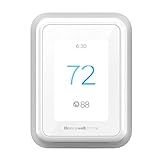
Honeywell Home T9
- Per-schedule sensor weighting
- Smart Room Sensor ready
- Fan circulate mode
- 2-year warranty
Best Smart Thermostats for Multi Zone Homes in October
| Product | Specifications | Action |
|---|---|---|
| ecobee Smart Thermostat Premium |
|
Check Latest Price |
 ecobee Smart Thermostat Enhanced ecobee Smart Thermostat Enhanced |
|
Check Latest Price |
| Honeywell Home T9 |
|
Check Latest Price |
 Google Nest Learning Thermostat 4th Gen Google Nest Learning Thermostat 4th Gen |
|
Check Latest Price |
 ecobee Smart Thermostat Essential ecobee Smart Thermostat Essential |
|
Check Latest Price |
| Sensi Smart Thermostat ST55 |
|
Check Latest Price |
 Google Nest Thermostat Google Nest Thermostat |
|
Check Latest Price |
 Honeywell Home Smart Color Thermostat Honeywell Home Smart Color Thermostat |
|
Check Latest Price |
 Honeywell Lyric T6 Pro Honeywell Lyric T6 Pro |
|
Check Latest Price |
 Amazon Smart Thermostat Amazon Smart Thermostat |
|
Check Latest Price |
1. ecobee Smart Thermostat Premium – Best Overall for Virtual Zoning
ecobee Smart Thermostat Premium – WiFi, Siri & Alexa Built-In, Smart Sensor
95% HVAC compatibility
SmartSensor included
Power Extender Kit
ENERGY STAR certified
3-year warranty
Pros
- SmartSensor targets the room actually in use
- 95% HVAC system compatibility
- Power Extender Kit included for homes without a C-wire
- Built-in air quality monitor with filter reminders
- 3-year manufacturer warranty
Cons
- Top of the cost range in this roundup
- Doorbell view and smoke alarm listening need extra ecobee hardware
- Siri support requires an Apple home hub
The Premium is the most fully equipped model here on the sensor side, with a room sensor in the box. That single fact matters more in a zoned home than any voice assistant or display size, because the sensor is what tells the thermostat which part of the conditioned space you are actually sitting in. In our comparisons it was the one model where adding a second zone member did not immediately mean adding hardware to the order.
It also has the broadest compatibility claim of the ecobee range at 95% of HVAC systems, and the box includes a power extender kit, backplate, trim plate, wire labels and mounting hardware. The listed weight is 1.3 pounds with a metal body, and the round body measures 4.09 inches wide. Buyers who want a data point on expected behavior should note the 4.3 average across 4,170 ratings.
Reviewers repeatedly single out the sensor for resolving hot and cold spots rather than the built-in speaker, which most people try once and stop using. The air quality monitor and filter change reminders get more steady use because they cut down on callbacks from an HVAC contractor. App control, scheduling, vacation mode and energy use views are all handled in the ecobee app alongside Alexa, Google Assistant, Apple HomeKit and Android and iOS devices.
What we would flag before buying: the listed uses cover air conditioner, boiler, dehumidifier, electric baseboard heater, furnace, heat pump and humidifier, but this is a 24 volt low-voltage unit and will not sit directly on a 120 or 240 volt baseboard circuit without relay hardware. For a hydronic retrofit, treat it as a low-voltage room controller, not a circuit controller. Our earlier guide to smart thermostats for heat pumps covers the staging side in more depth.
What you get when you install it in every zone
Install one per zone and each Premium reports to the same account, so schedules, utility alerts and energy history sit together instead of scattered across separate apps. The SmartSensor in each room overrides the wall thermostat reading when someone is there, which is exactly the behavior you want in a family house where the upstairs is used at night and the downstairs is used all day.
Radar occupancy sensing adds a preheat and precooldown behavior that works across the whole home, so the rooms you are about to walk into are already at temperature. Built-in smoke alarm listening and a doorbell camera view are real but incremental, and both push you toward additional ecobee hardware or a subscription you may never use.
Where it disappoints
It sits at the top of the cost range here, and that adds up quickly across a four-zone install in a way the sensor and speaker features do not fully repay. The sensor is also only one, so a large open-plan main floor with three distinct activity areas still needs two more sensors bought separately.
Users report that Siri features need an Apple home hub in the mix, and that some security functions sit behind a paid plan. If your goal is pure temperature control with the fewest decisions to make, the Enhanced model below covers most of this behavior for less.
2. ecobee Smart Thermostat Enhanced – Best for Occupancy-Led Zoning
ecobee Smart Thermostat Enhanced, Programmable Wifi Thermostat
Built-in occupancy sensing
90% HVAC compatibility
eco+ efficiency engine
4 inch LCD
3-year warranty
Pros
- Built-in occupancy sensing preheats and precools
- Works with Alexa and Google Assistant plus HomeKit and SmartThings
- eco+ uses routine and weather and grid data
- Power extender kit included in the box
- 3-year warranty
Cons
- SmartSensors sold separately
- No built-in voice assistant
- No built-in air quality monitor
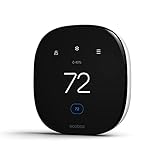
The Enhanced keeps the part of the Premium that actually drives comfort, which is the built-in occupancy sensor, and drops the speaker, the air quality monitor and the bundled room sensor. In a zoned house that trade often makes sense, because the sensor in the Premium tells you where you are in one room while the thermostat in the next room cannot do the same thing.
Compatibility is listed at 90% of HVAC systems and the power extender kit, backplate, trim plate and wire labels are in the box, so C-wire-less installs are handled without a second purchase. The listing covers air conditioner, boiler, furnace, heat pump and humidifier, runs on 24 volts, and carries a 3-year manufacturer warranty. It holds a 4.4 average across 3,709 ratings.
Reviewers point to app reliability and the preheat behavior as the standouts, along with how cleanly it swapped in for an older unit. eco+ is the quiet advantage here: it factors routine, weather and grid activity into scheduling, which matters when a utility runs time-of-use pricing and your zone setbacks land during an expensive window by accident.
The catch is cost arithmetic. Every extra room you want to monitor needs a separately purchased SmartSensor, so a three-zone setup with sensors can approach what the Premium costs once you are done. The glossy rectangular body is 4.09 inches square with a 4 inch LCD and lists at 0.45 kg.
Why it fits a zoned floor plan
Because occupancy sensing is built in, you can put an Enhanced in each zone and still get room-aware behavior at the wall without buying a sensor for the first room in every zone. That is the cheapest path to reasonable comfort in a two-story or split-level house that has no zone control board at all.
It works with Amazon Alexa, Google Assistant, Apple HomeKit and SmartThings, and control comes from the ecobee app on a smartphone, tablet or Apple Watch. If your household already runs a mixed ecosystem, that flexibility is worth more than a built-in speaker.
Where it disappoints
There is no built-in voice assistant and no air quality monitor, so two of the Premium’s more talked about features are simply absent rather than gated. Buyers who expected a bundled sensor with the box will find it sold separately, which is the single most common complaint pattern in its reviews.
At 90% compatibility it also leaves more systems on the outside than the Premium does. Run the manufacturer’s compatibility checker against your exact equipment before committing, especially on older hydronic or dual fuel setups.
3. Honeywell Home T9 – Best for Sensor Weighting
Honeywell Home T9 WiFi Smart Thermostat, Smart Room Sensor Ready, Touchscreen Display, Alexa and Google Assist
Sensor weighting by schedule
Smart Room Sensor ready
LCD touchscreen
Power adapter
2-year warranty
Pros
- Choose which sensor drives temperature by day and time
- Works with multi-stage and heat pump systems
- Same backplate as older Honeywell installs
- Fan circulate mode evens out rooms
- Reliable Wi-Fi over multi-year use
Cons
- Room sensors sold separately
- Sensor priority is buried in a non-intuitive menu
- App sometimes shows a wrong inside temperature until restarted
- No humidity scheduling
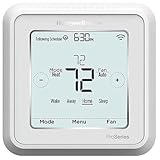
The T9 is the pick if your zones are uneven rather than absent. Its multi-room focus lets you weight heating and cooling decisions by room, and you can pick a different sensor combination for daytime and nighttime, which is the closest any mainstream unit here comes to real zone scheduling. Sensors can also act as plain temperature probes instead of occupancy detectors, useful for a sunroom that swings hard in the afternoon.
Compatibility is the other strength. It works with most forced air gas, oil and electric systems, hot water and steam, and heat pumps with electric backup, and a power adapter is included so it functions in homes where a C wire is missing. The listing specifies two AAA batteries, a 2-year limited warranty, and a 7.2 ounce plastic body measuring 3.7 by 4.92 inches.
Owners consistently rate the Wi-Fi connection as stable across years and call the circulate fan mode useful for pushing air into rooms the main return cannot reach. Installation is straightforward because the backplate matches the one used on older Honeywell T6 installs, so a staged upgrade across four zones is much less work than it would be with a different brand.
Two limitations show up repeatedly. The Resideo app buries the sensor priority settings and does not show which sensor is currently driving the inside temperature on the main screen, and some users report the app displaying a wrong inside or set temperature until the app is restarted. There is also no humidity scheduling, only automatic and circulate fan modes.
Best case for a four-zone retrofit
With a zone control panel already installed, a T9 in each zone gives you genuine independent control, and the per-schedule sensor weighting lets one zone target a bedroom while another holds a sunlit hallway steady. That is the closest match to true zoning behavior in this list, and it scales cleanly to two, three or four zones.
Monthly energy reports and utility efficiency program rewards come through the same app, and geofencing switches between home and away automatically. For a heat pump house the compatibility list matters, and a heat pump with more than one backup heat stage is outside what this model covers.
Where it disappoints
A C wire is required, and it will not control 120 or 240 volt electric baseboard heat. Room sensors are an extra purchase per room, so the sensor-led strategy adds hardware cost to every zone you want balanced.
The interface is functional rather than attractive, and the always-backlit screen looks dated next to the ecobee and Nest units. If app polish and glanceable design matter to the people living with it, the Enhanced or the Nest Learning will feel newer every day.
4. Google Nest Learning Thermostat 4th Gen – Best for Learning Schedules
Google Nest Learning Thermostat (4th gen) + Nest Temperature Sensor (2nd gen) – Obsidian
Learning schedule
Matter compatible
2nd gen sensor included
Large Farsight display
Pros
- Learning behavior needs no schedule setup
- Included 2nd gen sensor prioritizes the room you use
- Sensor groups balance multiple rooms in the app
- Dynamic Farsight readable across a room
Cons
- Not ENERGY STAR rated
- 4th gen wiring connector does not fit 3rd gen baseplates
- Can struggle in systems without a C wire
- US market only
This is the thermostat to pick when nobody in the house will ever set a schedule by hand. The learning behavior builds itself from your routine in roughly a week, and Adaptive Eco uses the outside temperature to choose an energy-saving away temperature rather than a fixed setback. In a zoned house that removes the most common failure mode, which is one person programming a schedule and the rest of the household living around it.
The bundle includes a Nest Temperature Sensor second generation, and the Google Home app supports grouping multiple sensors for more balanced whole-home comfort. The display is 60% larger than the previous generation with Dynamic Farsight and automatic brightness, the body is polished obsidian aluminum, and it runs on a CR2 battery. It holds a 4.4 average across 2,596 ratings.
Reviewers highlight the learning behavior, the larger Farsight display and grouped sensor control. It works with most 24V systems including gas, electric, oil, forced air, heat pump and radiant, and it is Matter compatible, which matters if you are building an automation setup that should not lock into a single brand.
The most cited drawbacks are hardware and certification related. Fourth generation mounting hardware and the wiring connector do not fit third generation baseplates, so an upgrade means re-mounting. The listing also notes this model is not ENERGY STAR rated, which rules it out of many utility rebate programs, and it is a US market product that will not work with UK underfloor or boiler installs.
Where the sensor grouping earns its keep
Sensor groups let you treat a main floor as one entity even when the thermostat sits in a hallway. Put the second generation sensor in the room you actually use, group it with the thermostat in the app, and the pair reads as a single zone without any ductwork changes.
It is a clean answer for a two-story home with no zone board, and the included sensor means the first balanced zone costs nothing extra. The device also asks permission before making schedule changes, and sends a notification instead of quietly altering your week.
Where it disappoints
Some users report setup friction in systems without a C wire, including a setup app that reports no power on the R wire, and Google support being slow to resolve it. Eco temperature can also be set too high for cold-sensitive people, and the hold has to be released manually before you can adjust it again.
The ring interface adds steps to common settings compared with arrow-button thermostats, and the lack of ENERGY STAR certification is a real cost when your utility offers rebates. If rebate money matters to the decision, check the eligibility terms before you buy rather than after.
5. ecobee Smart Thermostat Essential – Best ENERGY STAR Set Within One Brand
ecobee Smart Thermostat Essential – WiFi Thermostat, Energy Star Certified
ENERGY STAR certified
85% HVAC compatibility
Color touchscreen
Indoor humidity sensing
Pros
- Keeps ENERGY STAR certification
- eco+ includes indoor humidity detection and schedule assistant
- Time-of-use preheating during peak pricing
- Color touchscreen with free software upgrades
Cons
- Power Extender Kit and trim kit sold separately
- SmartSensors sold separately
- Lowest ecobee compatibility at 85%
- Plastic build looks basic
The Essential is the ecobee to buy when you want every zone on the same app and the same utility rebate eligibility, without paying for speakers and air quality hardware. It is ENERGY STAR certified, which keeps it inside most rebate programs, and it runs the same eco+ suite as the models above with indoor humidity detection, a schedule assistant and time-of-use preheating and precooling during peak pricing windows.
Compatibility is listed at 85% of systems, covering gas, oil, electric, dual fuel, forced air, heat pump and boilers on 24VAC equipment. The unit is battery powered, weighs 3.2 ounces, and measures 3.62 inches square with a 3.74 inch color screen. Buyers should note the 4.2 average across 1,887 ratings, the lowest average of the three ecobee models in this roundup.
Reviewers value its cost position, the ENERGY STAR certification and a clean app experience with energy consumption tracking. Control comes from the touchscreen or the ecobee app, and it works with Apple HomeKit, Google Assistant and Alexa. For a household already invested in the ecobee ecosystem, this is the least disruptive way to add a third or fourth zone.
The add-on math is the catch. The power extender kit and trim kit for a C-wire-less home are sold separately, as are the SmartSensors, so a four-zone install with no existing common wire is a multi-item order rather than a single purchase. The plastic body and white finish also read as more basic than the metal Premium.
Standardizing the whole house on one brand
For a three or four zone house, running every zone on one brand removes a specific class of problem. When different manufacturers manage different zones, schedules drift and the zones argue with each other, leaving one room heating while another cools. Standardizing on a single ecobee account keeps every zone schedule and energy report in one place.
Because it is ENERGY STAR certified, it also stays eligible for utility incentives that the Nest Learning in this list is not. If your decision is partly driven by rebates, that difference is worth more than the missing speaker.
Where it disappoints
At 85% compatibility it is the narrowest match of the three ecobee models here, so older or unusual equipment is more likely to need a compatibility check first. There is no built-in occupancy sensor on this model the way the Enhanced has one, so room awareness depends entirely on optional sensors.
Users who expected a comparable experience to the Premium often describe the plastic construction and the need to buy two add-ons before a clean install. If your house already has a common wire at every wall location, most of that complaint disappears.
6. Sensi Smart Thermostat ST55 – Best for Two-Wire Boiler Zones
Sensi Smart Thermostat, Wi-Fi, DIY, Alexa, Energy Star Certified, ST55
No C wire needed in most homes
Built-in level plate
ENERGY STAR certified
3-year warranty
Pros
- Installs in about 10 to 15 minutes
- C wire not required in most applications
- Fits the existing wall footprint
- Reports successful installs on two-wire boiler systems
- Sensi states it does not sell personal data
Cons
- No remote temperature sensors
- Alert thresholds are not adjustable
- Wi-Fi registration can fail on mesh networks
- Battery-only operation adds a response delay
The ST55 is the one here that hydronic owners keep recommending, and the reason is a specific wiring detail rather than a feature. A C wire is not required in most applications, which is exactly the situation in older hydronic and baseboard homes, and several users report replacing old manual thermostats on multi-zone boiler systems with no rewiring at all.
It also holds a 4.4 average across 23,062 ratings, one of the three most reviewed models here. Installation is genuinely quick because the back plate has a built-in level and the app walks through each step, with users commonly reporting ten to fifteen minutes per thermostat. The body is a traditional rectangle with physical buttons, 5.88 inches wide by 3.75 inches tall, and it carries a 3-year warranty.
Scheduling is the other strength, with 7-day, weekday and weekend, and copy-and-swap options plus independent daily control. It displays humidity on the unit and in the app, reports HVAC usage with filter reminders, and works with Amazon Alexa, Apple HomeKit, Google Assistant, SmartThings and Vera. The manufacturer states it does not sell personal information to third parties, which matters for a device with permanent access to your schedule.
The limitation is real and it is the reason this is not our first pick overall: there are no remote temperature sensors. Each thermostat reads only the room it is mounted in, so a physically zoned home gets one reading per zone and nothing finer. High and low temperature and humidity alert thresholds are also fixed rather than adjustable, and Wi-Fi registration can fail on mesh or dual-band networks until the 2.4 GHz and 5 GHz SSIDs are separated.
Where it is the only sensible answer
Hydronic baseboard and in-floor heating wired on two-wire boiler systems leave most smart thermostats unusable, because they assume a 24 volt low-voltage control circuit that those systems do not have. The ST55 is the pick for a three-zone hot water baseboard house, and it also covers rooms where you are swapping a manual dial and want the schedule to change without anyone learning a new interface.
For a large all-electric retrofit with many independent baseboard circuits, this is a realistic path because each circuit is a natural zone. You are accepting one thermostat per circuit and no sensor-based balancing within it.
Where it disappoints
Battery-only operation means a delay of roughly twenty to twenty-five seconds before the boiler responds to a temperature change, which some hydronic owners notice. Add that to the missing remote sensors and a zone made of two rooms will still average them.
The companion app interface is due for a refresh, and the non-adjustable alert limits hurt if you are monitoring a rental or a property you are not living in. For pure comfort control in a forced air house, the T9 handles uneven rooms better.
7. Google Nest Thermostat – Best for Homes Without a C Wire
Google Nest Thermostat – Smart Thermostat for Home – Programmable Wifi Thermostat – Charcoal
No C wire in most homes
Geofencing plus motion sensing
ENERGY STAR certified
1-year warranty
Pros
- Runs without a C wire in most homes
- Geofencing combined with the built-in motion sensor
- Monthly energy reports and savings suggestions
- HVAC monitoring alerts when equipment is not running
Cons
- C wire or power accessory needed for zone controlled systems
- One thermostat per zone with an adapter at the furnace
- Swipe controls confuse less technical users
- Only a 1-year warranty
This is the unit most people buy first, and for a single central location it does the basics well. It works without a C wire in most homes, has an automatic learning schedule that builds itself in about a week, and combines geofencing with the built-in motion sensor so someone staying home does not trigger an away setback. The listing puts the review count at 29,638 with a 4.1 average, the largest review base in this roundup and the second-lowest average of the ten.
Read the zoning note in the product listing carefully, because it is the deciding line for this topic. The manufacturer states that a C wire or a compatible power accessory is needed for heating only, cooling only, zone controlled and heat pump systems, and that zoning requires one Nest per zone with a power adapter installed at the furnace for each one. In other words, the easy no-wire install stops being easy the moment your home is actually zoned.
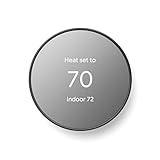
Owners like the low entry point, the ENERGY STAR certification and the clean round design, and savings suggestions plus monthly energy reports are genuinely useful for spotting a zone that is running warm. The device is 3.3 inches square, weighs just under 5 ounces, and runs on two AA batteries on 2.4 GHz and 5 GHz Wi-Fi with Bluetooth Low Energy for interconnect.
The recurring complaints are practical. Swipe-based setting changes confuse less technical users, the Google Home setup runs a long onboarding sequence with no obvious expert mode, and some installs showed persistent E294 error codes after wiring issues with minimal documentation in the box. Owners also report the thermostat dropping offline and needing to be physically removed from the wall to re-pair.
A reasonable option for single-zone homes
If you have one central thermostat location and no zone control panel, this is a low-friction way to get scheduling, geofencing and energy reports. Adding a second thermostat to a system with no dampers behind it does not create a second zone, so treating this as a multi-zone tool is a mistake we see repeatedly.
It works with Google Assistant and Matter-certified voice assistants, and the round ring interface shows time to target temperature plus a weather forecast. For a house where someone is testing whether smart temperature control is worth living with, that is enough.
Where it disappoints
The one-year warranty is the shortest in this roundup, while the Honeywell and ecobee models carry two to three years. The C wire and power adapter requirement applies to exactly the systems a zoned home tends to have, so the advertised ease of installation narrows considerably at the moment you need it most.
It is a US-market product and will not work with UK underfloor or boiler installations. Offline behavior during an internet outage also causes noticeable control problems, which matters in a house with a hydronic system where the control path includes a boiler controller.
8. Honeywell Home Smart Color Thermostat – Best for Rebate-Eligible Installs
Honeywell Home RTH9600WF Smart Color Thermostat ENERGY STAR Wi-Fi Programmable Touchscreen Alexa Ready – C-Wire Required
Color touchscreen
Utility rebate eligible
Weather on screen
C wire required
2-year warranty
Pros
- ENERGY STAR certified and eligible for utility rebates
- Customizable color display
- Indoor and outdoor temperature with humidity and forecast
- Monthly usage tracking with energy-saving tips
Cons
- C wire required with a separate power adapter for older homes
- No remote temperature sensors
- Not compatible with 120 to 240 volt baseboard heat
- Rechargeable AAA can lose Wi-Fi after a power flicker
If your utility offers rebates for connected temperature controls, this unit is built to qualify. It is ENERGY STAR certified and the listing states it is eligible for utility rebates and ongoing energy-saving incentive programs in many areas, with monthly usage tracking and personalized tips to support the claim. That makes it a straightforward pick for a multi-zone install where the incentive applies per device.
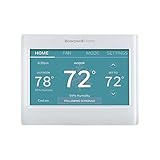
It is also the most reviewed Honeywell model here, holding a 4.3 average across 20,099 ratings. Compatibility covers forced air gas, oil and electric systems, hot water and steam, and heat pumps with electric backup. The box includes the thermostat, wall plate, screws, anchors, a quick start guide and wire labels, and the unit carries a 2-year limited warranty on a rechargeable AAA battery.
Reviewers like the customizable color display, the on-screen outdoor temperature, humidity and daily forecast, and the set-and-forget programming options. It connects to Amazon Alexa, Google Assistant, Microsoft Cortana and IFTTT, which is a wider voice list than most competing units offer, and Smart Response technology anticipates heating and cooling needs.
The zoning limitation is direct: it does not support remote temperature sensors, so multi-zone balancing is limited to the fixed wall location in each zone. The C wire is required, and a separate power adapter is needed for older homes, and it is not compatible with 120 to 240 volt electric baseboard heat. Some users also report the Wi-Fi circuit dropping after a power flicker because the rechargeable AAA is the only power source.
Best fit for a rebate-driven upgrade
When the deciding factor is an incentive rather than sensor flexibility, this unit keeps the process simple. Install one per zone, keep each on the same Honeywell account, and the monthly reports give you something concrete to show when the utility asks how the program turned out.
It is a sensible choice in a large house where every zone already has a common wire at the thermostat location, because in that situation the missing remote sensors cost you nothing you were going to use anyway.
Where it disappoints
No remote sensors means uneven rooms stay uneven, and that is the most common reason a home is called multi zone in the first place. It also will not run heating-only oil furnace systems without a C wire present, which rules out a category of older homes outright.
The rechargeable battery is a step backward for reliability compared with models that accept a hard-wired common wire. If your walls already have the wire, pick a model that uses it rather than carrying its own cell.
9. Honeywell Lyric T6 Pro – Best for Z-Wave Security Systems
Honeywell TH6220WF2006/U Lyric T6 Pro Wi-Fi Programmable Thermostat with Stages Up to 2 Heat/1 Cool Heat Pump or 2 Heat/2 Cool Conventional
Z-Wave for automation
2 heat 1 cool heat pump
2 heat 2 cool conventional
Battery backup
Pros
- Z-Wave radio joins a security or automation system
- Supports up to 2 heat and 1 cool stages on heat pumps
- Multi-stage support for conventional equipment
- Battery backup keeps settings through an outage
Cons
- No remote temperature sensors
- Geofencing cannot detect which floor someone is on
- Builder-supplied models can arrive locked in contractor mode
The T6 Pro is the pick when your home automation runs on Z-Wave rather than a cloud app. The built-in radio lets the thermostat join a smart security or automation system, which is how systems like Ring can be driven past the usual two-thermostat Z-Wave ceiling. In a home with six or eight zones, that integration path is the reason to consider it at all.
Equipment support is broad for a simple unit, covering up to two heat and one cool stage on a heat pump or two heat and two cool stages on a conventional system. Two AA batteries provide backup so settings survive a power outage, and the unit weighs 4 ounces. It holds a 4.4 average across 2,659 ratings.
Owners value the Z-Wave integration with security systems, the battery backup and the multi-stage equipment support, and it pairs with the same Resideo account as the other Honeywell units in this roundup. That shared account means you could pair a T6 Pro in some zones with a T9 in others and still see them in one place, which is a reasonable staged upgrade path.
The complaints are consistent. There are no remote temperature sensors, so it cannot be rebalanced for hot and cold rooms, and geofencing-based home and away detection cannot tell which floor of the home someone is on, which matters if you have sensors on both levels. Some builder-installed units also arrive in contractor mode and cannot be added to the Resideo app.
When this is the right choice
If your security system, lighting or locks are already on Z-Wave, keeping the thermostat on the same radio avoids a second hub and keeps automations local. In a physically zoned house, one T6 Pro per zone gives you independent control of each damper through the zone board, and the multi-stage support handles a two-stage furnace or a heat pump with electric backup.
It is also a useful interim step in a retrofit. Place T6 Pro models in the zones that already have wiring, then replace specific zones with a sensor-capable model later without changing the account.
Where it disappoints
Without remote sensors this is a one-reading-per-zone device, so it will not fix the uneven room problem on its own. The contractor mode issue on builder-supplied units can be a real stumbling block, and the fix is a removal and re-pair rather than a settings change.
Geofencing that ignores floor level is a genuine limitation in a two-story house where the second thermostat is upstairs. If comfort balancing is the goal rather than automation, the T9 is the better Honeywell.
10. Amazon Smart Thermostat – Budget Pick for Outfitting Several Zones
Amazon Smart Thermostat, Save money and energy, Works with Alexa and Ring, C-wire required
Built on Honeywell technology
Alexa comfort zones
ENERGY STAR certified
C wire required
Pros
- Lowest cost per zone in this roundup
- Built on Honeywell Home thermostat technology
- Alexa comfort zones use presence detection
- Comfort zones adjust from temperature readings or presence
Cons
- C wire required
- No on-device display
- No remote temperature sensors
- Lowest average rating here at 4.0
- Tied to the Alexa ecosystem
The Amazon Smart Thermostat is built on Honeywell Home thermostat technology, which is a meaningful detail when cost is the deciding factor. You are not buying unknown hardware to fill every zone in the house. The listing notes it is ENERGY STAR certified, and the same unit can be deployed across several zones of a house.
Its comfort zone feature works by connecting to select Alexa devices that adjust heating and cooling based on temperature readings or presence detection. Home, away and sleep schedules can be set manually or handed to Alexa, the Alexa app monitors and controls temperature while you are out, and the app guides the installation with customer service available behind it.
It holds a 4.0 average across 25,495 ratings, the lowest score in this roundup. The review volume is high and consistent, which is useful when you want a model that has been installed in a lot of homes. The main limitation for a multi-zone project is the lack of remote sensors, since each device reads only the room it is mounted in.
There is no physical display of temperature, humidity or system status, so all control runs through Alexa or the app, and the integration is narrower than ecobee, Nest or Honeywell. A C wire is required for power, so homes without one need additional wiring work before installation.
Where it makes sense
For a two or three zone house where each zone has its own common wire, this is the most direct way to get every zone on schedules and app control without spending heavily on each location. Buying one unit per zone keeps the setup simple, and Alexa presence detection handles the away setback for you.
It is also a reasonable first step in a larger staged retrofit. Put these in the easy zones now and upgrade one zone later with a sensor-capable unit once you know how the house actually behaves, which is a cheaper way to learn than replacing everything at once.
Where it disappoints
No display means no glanceable answer, and anyone who does not use voice control has to open an app for every adjustment. That is a real problem in a guest room, a nursery or a home with older residents.
With no remote sensors, uneven rooms within a zone stay uneven, and the low 4.0 average reflects the C wire requirement and pairing friction more than the thermostat itself. Treat it as a volume purchase for simple zones rather than as a comfort solution for an open-plan floor.
How Many Smart Thermostats Do You Actually Need?
Count your zones, not your rooms. If your system has a zone control board driving motorized dampers, you need one thermostat per zone, full stop, because each thermostat is the only thing calling that branch for heat or cooling. A four-zone house needs four thermostats, and adding a fifth thermostat to a four-zone system creates conflict rather than a fifth zone.
If you have no zone board and one central unit, you need one thermostat plus as many remote room sensors as the house has meaningfully different spaces. Two to four sensors usually covers a two-story home, and how many sensors you can add is a real limit, so check it before you plan the layout.
For hydronic baseboard or in-floor heat, each circuit is a zone and needs its own control, which can mean more devices than rooms. An older all-electric house with a dozen independent baseboard circuits is a genuine retrofit case, and mixing smart devices in the circuits you care about with existing programmable dials in the rest is a reasonable, staged approach.
Two separate HVAC systems, such as a furnace downstairs and a heat pump upstairs, each need their own thermostat. Keep them on the same app and brand where you can, because mixed ecosystems across zones is one of the most common causes of zones fighting each other.
C-Wire, HVAC Type and Terminals: The Compatibility Check
Run through this list before you order anything. First, confirm the common wire: a C wire provides continuous power and most of these models need one, or need a listed power adapter or extender kit, and the Nest, ecobee and Sensi models in this roundup are the ones built to run without it in more cases.
Second, identify the equipment type. Single stage, multi stage, heat pump with electric backup, dual fuel, hot water and steam are all in the compatibility claims above, and oil-fired heating-only systems are the most commonly excluded. Third, note your terminals, particularly the O/B reversing valve terminal on a heat pump, where reversed polarity shows up as heating that will not run or a compressor that never engages.
Fourth, check the network. Several of these units prefer 2.4 GHz Wi-Fi, and registration failures on mesh or dual-band routers are among the most reported problems, so separating the SSIDs solves a surprising share of install headaches. Fifth, if you have a zone board, confirm how many dampers and how many zone inputs it provides, and whether your thermostat supports multi-stage staging through that board.
Sixth, on heat pumps, set the auxiliary heat lockout deliberately. Default settings that leave emergency heat eligible at moderate outdoor temperatures are the reason a house runs the expensive backup heat far more than it should, and it is a five-minute setting that contractors ask for on nearly every heat pump install.
Why Contractors Push Back on Some Smart Thermostats
The resistance is usually about installation practice, not about the device. Power-stealing thermostats on systems without a common wire can cause the furnace to short-cycle, relay chatter and repeated equipment calls, and technicians see that damage on their next service visit. Nest installs are a frequent example because the C wire question is often discovered at the wall rather than in advance.
The second issue is default auxiliary heat lockout values nobody adjusts. The third is sensor placement. A sensor mounted near a supply register, a sunlit exterior wall or a high-traffic hallway can read several degrees away from the room you think it represents, which is enough to keep a zone running when nobody is cold.
None of that means a specific brand is banned in the field. It means the three decisions worth making yourself are tracing the common wire back to the air handler before the wall plate comes off, setting the lockout to match your system’s balance point, and mounting each sensor on an interior wall at seated height away from vents.
Line-Voltage and Hydronic Systems
A standard smart thermostat is a 24 volt low-voltage device, and 120 or 240 volt electric baseboard heat does not work with it at all. Running a low-voltage model directly on a baseboard circuit risks damage to both, so hydronic and baseboard homes need either a high-voltage rated model or a low-voltage thermostat paired with a relay module on each circuit.
That is the gap most roundups leave open, and it is why a three-zone hot water baseboard owner often ends up on forums rather than on a product page. Our pick in that situation is the Sensi Smart Thermostat ST55, which is reported to work on two-wire boiler systems used for multi-zone baseboard control, but the honest caveat is that a true hydronic zone with a pump relay, mixing valve or floor sensor belongs with an electrician or hydronics specialist.
Whatever route you take, budget for relay hardware per circuit rather than per house. The thermostat is the small part of a hydronic smart install, and the relay count, not the device count, is what determines whether the job goes smoothly.
What Energy Savings to Realistically Expect
Manufacturer claims on this product category run up to 23, 26 and even 31 percent, and those are modeled marketing figures rather than results most households will measure. The realistic range for a properly commissioned smart thermostat in an average home is closer to 10 to 15 percent on heating and cooling, and the difference between a 10 percent and a 30 percent outcome is usually schedule quality rather than the device.
In a zoned home the savings logic changes anyway. Controlling each zone independently means the hottest room no longer sets the temperature for the whole house, so the benefit comes from comfort and equipment wear as much as from the utility bill. A shorter payback, typically somewhere between one and three years, is a reasonable expectation once you account for the hardware.
Two things reliably improve the outcome. Setting the auxiliary heat lockout correctly on a heat pump prevents the expensive backup stage from running on mild nights, and running a variable speed system on a wide temperature band rather than aggressive setbacks often matters more than any schedule. Our earlier guide to smart thermostats for heat pumps goes deeper on that balance point.
Frequently Asked Questions
Can a smart thermostat control multiple zones?
Not by itself. Physical zoning requires a zone control board that drives motorized dampers, with one thermostat per zone so each can call for heat or cooling independently. A single thermostat with remote room sensors creates virtual zoning instead: it averages readings and shifts the setpoint to smooth uneven rooms without separating the airflow. Installing a second thermostat on a single-zone system with no dampers does not create a second zone, and the devices tend to conflict.
Do I need a smart thermostat for each zone?
Yes, if your home has a zone control board and motorized dampers. Each zone needs its own thermostat because that thermostat is the only control calling its branch for heating or cooling. Without a zone board, one thermostat plus two to four room sensors is usually enough for a two-story home. Hydronic baseboard and in-floor systems are different again, since every independent circuit counts as its own zone and needs its own control.
Can Ecobee handle multiple zones?
It can cover multiple rooms and physical zones when installed as one thermostat per zone, and the Premium includes a SmartSensor in the box. But ecobee’s multi-room support is built around sensors attached to a single thermostat, not around commanding a zone control board directly. If your home has dampers, you need one ecobee per zone and the dampers do the separating. If it does not, one unit plus added SmartSensors is the intended path, and those sensors are sold separately.
Why do HVAC guys hate Nest thermostats?
Usually because of installation practice rather than the device itself. Nest is frequently installed on systems without a common wire, where power stealing can cause the furnace to short-cycle or the relay to chatter, and fourth generation hardware does not reuse third generation baseplates. Auxiliary heat lockout often stays at its factory default, so the backup stage runs on mild nights. Swipe-based controls and offline behavior also add service calls that technicians did not sign up for.
Do I need a C-wire for a smart thermostat?
Most of them want one, because the common wire provides continuous power. Several models in this roundup run without a common wire in most homes, including the Sensi ST55 and the Google Nest Thermostat, and the ecobee models include a power extender kit in the box on some versions. Heating only, cooling only, zone controlled and heat pump systems are the cases where a C wire or a listed power accessory is still required, so check your equipment before ordering.
Can I mix smart and programmable thermostats across zones?
Yes, and for many older all-electric homes it is the practical retrofit path. Keep programmable dials on the circuits you are not upgrading and smart devices on the ones that matter most, usually the rooms you actually occupy. The coordination suffers a little because the mixed halves run on different schedules, so set the legacy thermostats to a fixed moderate temperature rather than a full schedule. Replacing the remaining dials later is then a simple swap rather than a rewire.
Conclusion
For a home with dampers and a zone control board, the Honeywell Home T9 gives you the most control per zone, because it is the one mainstream model here that lets you weight sensors by time of day. For a home with no zone board that just runs uneven, the ecobee Smart Thermostat Premium is the strongest all-round choice, since the included SmartSensor and the power extender kit cover the two problems buyers hit most. The Sensi ST55 is the answer for two-wire boiler and baseboard wiring that the other models cannot touch.
Whichever you choose, the decisions that actually determine whether a multi-zone install works happen before the order: count the zones, trace the common wire, set the auxiliary heat lockout and place the sensors on interior walls. Get those right and any of these ten becomes a good fit for your home in 2026.