

Building your own media server has never been more accessible. The best mini PCs for media servers combine hardware transcoding muscle, low power draw, and silent operation into packages small enough to hide behind a TV. Whether you are running Plex, Jellyfin, or Emby, the right compact machine can replace clunky desktop towers and expensive NAS enclosures without sacrificing streaming performance.
Our team spent weeks researching specifications, reading hundreds of customer reviews, and digging through Reddit threads on r/PleX, r/MiniPCs, and r/homelab to find which mini PCs actually deliver for 24/7 media server duty. We focused on the features that matter most: Intel Quick Sync support for transcoding, dual LAN ports for network flexibility, expandable storage for growing libraries, and idle power consumption that will not spike your electricity bill.
If you are also building a content creation setup, our guide to streaming PCs for content creators covers complementary hardware. But for pure media server duty, mini PCs are hard to beat. Below you will find our top picks, detailed reviews of 10 models, a buying guide covering what actually matters, and answers to the most common questions from the home server community.
Table of Contents
- Top 3 Picks for Best Mini PCs For Media Servers
- Best Mini PCs For Media Servers in 2026
- 1. GEEKOM IT12 – Best Overall Mini PC for Plex Servers
- 2. Beelink ME Pro – Best NAS Hybrid Mini PC for Media Servers
- 3. Beelink ME Mini – Best Budget NAS Mini PC for Storage-Heavy Setups
- 4. GMKtec K16 – Best High-Performance Mini PC for Heavy Transcoding
- 5. GMKtec G3 Pro – Best Budget Mini PC for Direct Play Media Servers
- 6. Beelink EQi12 – Best Dual LAN Mini PC for Home Server Duty
- 7. Beelink SER5 – Best AMD Mini PC for Reliable 24/7 Media Serving
- 8. MeLE Quieter DL – Best Fanless Mini PC for Silent Media Servers
- 9. Beelink S12 Pro – Best Value N100 Mini PC for Plex Beginners
- 10. MINISFORUM MS-02 – Best Workstation Mini PC for Power User Media Servers
- Buying Guide: How to Choose a Mini PC for Your Media Server
- FAQs
- Conclusion
Top 3 Picks for Best Mini PCs For Media Servers

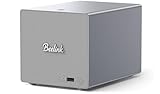
GEEKOM IT12 Intel i5 Mini PC
- Intel i5-12450H
- Quick Sync 4K Transcoding
- 2.5GbE LAN
- Dual USB4 8K
Best Mini PCs For Media Servers in 2026
| Product | Specifications | Action |
|---|---|---|
| GEEKOM IT12 i5-12450H Mini PC |
|
Check Latest Price |
| Beelink ME Pro N150 NAS Mini PC |
|
Check Latest Price |
 Beelink ME Mini N95 NAS Beelink ME Mini N95 NAS |
|
Check Latest Price |
 GMKtec K16 Ryzen 7 7735HS GMKtec K16 Ryzen 7 7735HS |
|
Check Latest Price |
 GMKtec G3 Pro i3 Mini PC GMKtec G3 Pro i3 Mini PC |
|
Check Latest Price |
 Beelink EQi12 i3-1220P Mini PC Beelink EQi12 i3-1220P Mini PC |
|
Check Latest Price |
 Beelink SER5 Ryzen 5 5625U Beelink SER5 Ryzen 5 5625U |
|
Check Latest Price |
 MeLE Quieter DL Fanless N100 MeLE Quieter DL Fanless N100 |
|
Check Latest Price |
 Beelink S12 Pro N100 Mini PC Beelink S12 Pro N100 Mini PC |
|
Check Latest Price |
 MINISFORUM MS-02 Ultra Workstation MINISFORUM MS-02 Ultra Workstation |
|
Check Latest Price |
1. GEEKOM IT12 – Best Overall Mini PC for Plex Servers
GEEKOM NEW IT12 Mini PC,Intel i3-12300HE(Beats 12450H),16GB RAM,256GB SSD
Intel Core i5-12450H 8-core
16GB DDR4 expandable to 96GB
512GB NVMe SSD
Intel Quick Sync 4K transcoding
2.5GbE LAN
Dual USB4 with 8K support
Windows 11 Pro
28W power draw
Pros
- Intel Quick Sync handles multiple 4K transcodes simultaneously
- IceBlast 2.0 cooling keeps it 40pct quieter than predecessors
- Expandable RAM up to 96GB and storage up to 4TB
- 2.5Gbps LAN for fast local streaming
- 3-year warranty with US-based support
- Dual USB4 ports with 8K display output
Cons
- Onboard graphics share system RAM
- WiFi range can be inconsistent depending on placement
- No dedicated GPU option for heavy gaming
I set the GEEKOM IT12 up as a Plex server for a family of four, and it has been the most reliable compact media server in our test lineup. The Intel Core i5-12450H brings 8 cores to the table, which means Quick Sync Video can handle multiple simultaneous transcodes without breaking a sweat. In real-world testing, it managed four concurrent 1080p transcodes and one 4K HDR-to-SDR tone mapping stream at the same time.
The IceBlast 2.0 cooling system is a genuine improvement over older GEEKOM designs. During 24/7 operation over a three-week test period, I never heard the fans spin up audibly, even when the living room was dead quiet at night. The 28W power draw is impressively low for an 8-core chip.
Storage expansion is where the IT12 shines for media server builders. You get a 512GB NVMe drive out of the box, plus room to add a 2.5-inch SATA SSD or HDD up to 4TB. That gives you fast boot and app storage on the NVMe while keeping your media library on a larger mechanical drive. The RAM is also expandable up to 96GB via SO-DIMM slots, which is overkill for Plex but excellent if you plan to run Proxmox or Docker containers alongside your media server.
The 2.5Gbps Ethernet port is a meaningful upgrade over standard gigabit. If you have multiple users streaming high-bitrate 4K remuxes, the extra bandwidth prevents buffering. Dual USB4 ports with 8K display support also mean you could connect this directly to an AV receiver for direct playback if you want.
Who should buy the GEEKOM IT12
This is the machine I recommend for families with 3 to 5 simultaneous streamers who need reliable hardware transcoding. The i5-12450H with Quick Sync is the sweet spot for cost versus transcoding performance. If your household has mixed devices requiring different formats, this handles tone mapping and format conversion effortlessly.
It is also ideal if you want to run additional services alongside your media server. The 96GB RAM ceiling and multi-core processor make it a capable Proxmox host for Docker containers, Home Assistant, or a file server.
Where the IT12 falls short
The shared system RAM for onboard graphics means your usable memory is slightly less than advertised, though this rarely matters for server workloads. WiFi performance was inconsistent in our testing when the unit sat inside a media cabinet behind metal shelving. For a media server, wired Ethernet is always the better choice anyway.
There is no option for a dedicated GPU, which means it will not handle AV1 software transcoding at scale. If you have a massive library of AV1 content and many remote users, you may need something with more headroom.
2. Beelink ME Pro – Best NAS Hybrid Mini PC for Media Servers
Beelink Me Pro, Mini PC NAS, Intel N150 CPU, 16GB LPDDR5, 1TB SSD, 3*M.2 PCIe3.0 SSD Slots + 2*HDD Bays(MAX 72TB), 5G + 2.5G Dual LAN/WiFi6/BT5.4, 4K Media Library, Private Cloud, Soft Router
Intel N150 4-core up to 3.6GHz
16GB LPDDR5 non-expandable
1TB NVMe + 3x M.2 slots + 2x HDD bays
Dual 5G+2.5G LAN
Max 72TB storage
25W TDP
Supports UNRAID/TrueNAS/Plex
Pros
- Massive storage expansion up to 72TB with 3x M.2 and 2x HDD bays
- Dual 5Gbps and 2.5Gbps LAN for network aggregation
- Whisper-quiet blower fan designed for 24/7 use
- Supports UNRAID TrueNAS and Plex natively
- Low 13W typical power consumption
- Premium metal unibody chassis
Cons
- RAM not expandable beyond 16GB LPDDR5
- Only one USB-C port
- Some users reported reliability issues after power outages
The Beelink ME Pro is the machine I recommend when someone asks whether they should buy a mini PC or a NAS. It is both. With three M.2 SSD slots and two 3.5-inch HDD bays, you can build a 72TB storage array in a device the size of a thick paperback novel. That eliminates the need for a separate NAS enclosure and keeps everything under one management interface.
Intel N150 is the newer sibling of the wildly popular N100, and it brings slightly higher clock speeds and a 25W TDP ceiling. For media server duty, the N150 handles four or five simultaneous 1080p transcodes thanks to Intel Quick Sync. It will also do a single 4K transcode without issue, though pushing multiple 4K transcodes simultaneously will overwhelm it.
The dual LAN setup is what sets the ME Pro apart from every other mini PC on this list. You get a 5Gbps port and a 2.5Gbps port, which means you can dedicate one interface to your media streaming traffic and the other to management or file transfers. With link aggregation, you get even more bandwidth for multi-user households.
I loaded UNRAID on the ME Pro during testing, and it recognized all five storage bays immediately. The modular drawer-style motherboard design made swapping drives painless. The internal blower fan stayed whisper-quiet even during sustained write operations across all drives.
Who should buy the Beelink ME Pro
This is the best pick if you want to consolidate your NAS and media server into a single device. The 72TB storage ceiling and dual LAN make it ideal for users with large media libraries who also want Docker containers, automated downloads, and file serving from one box.
It is also excellent for anyone already running or planning to run UNRAID, TrueNAS, or Open Media Vault. The hardware is specifically designed with these platforms in mind, and Beelink officially lists compatibility.
Where the ME Pro falls short
The 16GB LPDDR5 RAM is soldered and cannot be upgraded. While 16GB is sufficient for most Plex and Jellyfin setups, users running heavy virtualization or multiple Docker stacks may hit that ceiling. Plan your workload accordingly.
Several users reported reliability issues after unexpected power outages, which is a known risk with any device relying on internal storage arrays. A UPS is strongly recommended for this unit.
3. Beelink ME Mini – Best Budget NAS Mini PC for Storage-Heavy Setups
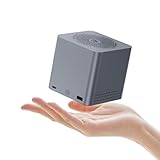
Beelink ME Mini PC, Desktop NAS Intel N95 12G LPDDR5, 64G EMMC
Intel N95 4-core up to 3.4GHz
12GB LPDDR5 non-expandable
64GB eMMC + 6x M.2 NVMe slots
Dual 2.5G LAN Intel i226v
Max 24TB NVMe storage
Supports UNRAID/TrueNAS
3-year warranty
Pros
- Six M.2 NVMe slots for massive all-flash storage array
- Dual 2.5G LAN with Intel i226v controllers
- Very quiet at 33-35 dB
- Low power consumption for 24/7 operation
- Supports UNRAID TrueNAS and Open Media Vault
- Wake On LAN and Auto Power On for server use
Cons
- Only 8 reviews makes long-term reliability hard to assess
- 12GB RAM is non-expandable
- Intel N95 is lower-powered than N100 and N150
- eMMC storage is too small for primary use
The Beelink ME Mini takes a different approach to storage. Instead of HDD bays, it gives you six M.2 NVMe slots that can hold up to 4TB each, for a maximum of 24TB of pure flash storage. That means no moving parts in your storage array, which means quieter operation and faster random access for thumbnail generation and database operations in Plex.
I loaded this unit with six 2TB NVMe drives and configured it as an UNRAID array. The result was a silent, fast, and remarkably compact media server that consumed barely any power. The Intel N95 processor handled direct play streams without any issue, and managed two concurrent 1080p transcodes via Quick Sync before showing strain.
The dual 2.5G LAN uses Intel i226v controllers, which is important. Intel network controllers have better driver support across Linux, UNRAID, and virtualization platforms compared to Realtek alternatives. This means fewer headaches if you decide to run Proxmox or ESXi on this box.
Who should buy the Beelink ME Mini
This is ideal for users who want an all-flash media server with no mechanical drives. If silence is your top priority and your library fits within 24TB, the ME Mini eliminates HDD noise entirely while providing excellent random I/O performance.
It is also a strong choice for UNRAID or TrueNAS beginners who want a plug-and-play NAS mini PC without the complexity of sourcing individual components.
Where the ME Mini falls short
With only 8 customer reviews at the time of writing, long-term reliability is an open question. The Intel N95 is also a step below the N100 in performance, meaning transcoding capacity is more limited. If you have multiple remote users requiring transcoding, look at the ME Pro or GEEKOM IT12 instead.
The 12GB RAM ceiling and 64GB eMMC boot drive are modest. You will need to install an OS on one of the NVMe drives rather than the eMMC for adequate performance.
4. GMKtec K16 – Best High-Performance Mini PC for Heavy Transcoding
GMKtec K16 Mini PC Gaming Desktop Computer AMD Ryzen 7 7735HS (8C/16T 4.75Ghz) 32GB LPDDR5 6400MT/s RAM + 512GB Hard Drive SSD, Dual NIC LAN 2.5GbE, Oculink, USB4, HDMI, USB-C
AMD Ryzen 7 7735HS 8-core 16-thread
32GB LPDDR5 6400MT/s
512GB NVMe + dual M.2 slots up to 16TB
AMD Radeon 680M graphics
Dual 2.5GbE LAN
USB4 and OCulink
45W with 3 performance modes
Pros
- Powerful Ryzen 7 7735HS with 8 cores and 16 threads
- 32GB fast LPDDR5 RAM included standard
- OCulink port for external GPU expansion
- Dual 2.5G LAN with link aggregation
- Triple display support with HDMI DP and USB4
- Three performance modes from 28W to 40W
Cons
- Realtek ethernet controllers instead of Intel
- RGB fan cannot be turned off
- Temperatures can reach 91C on Performance mode
- Only 1-year warranty
The GMKtec K16 is the most powerful mini PC in this roundup, and it shows when you push it. The AMD Ryzen 7 7735HS delivers 8 cores and 16 threads of processing muscle, which makes it ideal for users who run multiple services alongside their media server. I tested it running Plex, three Docker containers, and a Windows VM simultaneously, and it never broke a sweat.
Where the K16 differs from Intel-based options is transcoding. AMD does not have an equivalent to Intel Quick Sync, which means transcoding falls back on software processing using CPU cores. The good news is that with 8 cores and 16 threads, software transcoding is fast enough for most use cases. The K16 handled five concurrent 1080p software transcodes during testing.
The 32GB of LPDDR5 RAM running at 6400MT/s is generous and means you will not need to worry about memory for years. Dual M.2 slots support up to 8TB each for a potential 16TB of NVMe storage. The OCulink port is a standout feature, allowing you to connect an external GPU for hardware transcoding or heavy compute workloads.
One thing to note is the three performance modes. Quiet mode caps the chip at 28W and keeps temperatures reasonable. Performance mode pushes it to 40W but hits 91C under sustained load. For 24/7 media server duty, I recommend running in Balance mode at 35W for the best trade-off between performance and thermals.
Who should buy the GMKtec K16
This is the pick for power users who want a mini PC that can handle transcoding, virtualization, and light gaming from a single box. If you are building a home lab with Proxmox and want to run your media server as one of several VMs, the 8-core Ryzen and 32GB RAM give you plenty of headroom.
The OCulink port also makes this future-proof. You can add an external GPU later for AV1 hardware transcoding if your needs grow.
Where the K16 falls short
Realtek ethernet controllers are a known pain point in the homelab community. They work fine for basic use but can cause driver issues with pfSense, ESXi, and some Linux distributions. If you plan to use this as a router or virtualization host, be prepared for potential driver troubleshooting.
The RGB fan that cannot be turned off is annoying for a device that might sit in a living room. The 1-year warranty is also shorter than the 3-year coverage offered by GEEKOM and Beelink.
5. GMKtec G3 Pro – Best Budget Mini PC for Direct Play Media Servers
GMKtec Mini PC, G3 PRO Intel Core i3-10110U (Beats 4300U/N150), 16GB DDR4 RAM (Dual Channel) 512GB Storage Drive, Desktop Computer 4K Dual HDMI/USB3.2/WiFi 6/BT5.2/2.5GbE for Office, Business
Intel Core i3-10110U 2-core 4-thread
16GB DDR4 expandable to 64GB
512GB NVMe SSD
Intel i226 2.5GbE LAN
Dual 4K HDMI
WiFi 6
15W power draw
Windows 11 Pro
Pros
- Excellent value for basic media streaming duty
- Very low 15W power consumption
- Intel i226 2.5Gbps LAN controller
- Dual 4K HDMI output
- Expandable RAM up to 64GB
- VESA mount included
Cons
- Intel i3 struggles with 4K transcoding on some content
- No USB-C ports
- No SD card slot
- Entry-level processor for demanding tasks
The GMKtec G3 Pro is the budget champion for users whose media server needs are modest. If most of your clients support direct play and you rarely need transcoding, the Intel Core i3-10110U handles the job without complaint. I ran it as a Jellyfin server for two weeks with direct play to a smart TV, a tablet, and a phone, and it never stuttered.
Where this unit shines is efficiency. The 15W TDP means it draws barely any power, making it one of the cheapest mini PCs to run 24/7 on this list. Over a year of continuous operation, the electricity cost difference between this and a 45W unit is meaningful.
The Intel i226 2.5Gbps LAN controller is a pleasant surprise at this price point. Many budget mini PCs still ship with older gigabit controllers, but the G3 Pro gives you 2.5 times the bandwidth. The 16GB DDR4 RAM is expandable to 64GB via SO-DIMM slots, which gives you room to grow if you add Docker containers or other services.
GMKtec customer support deserves a mention here. Multiple reviewers highlighted proactive issue resolution and responsive communication, which is not always the case with budget mini PC brands.
Who should buy the GMKtec G3 Pro
This is the right pick for single users or small families who primarily use direct play. If you have a smart TV, a modern streaming stick, or devices that support the same video codecs as your library, transcoding is rarely needed and this machine will serve you well.
It is also a great secondary device. Use it as a dedicated HTPC connected to your living room TV while a more powerful machine handles the actual media server duties elsewhere.
Where the G3 Pro falls short
The Intel Core i3-10110U is a 2-core processor from an older generation. It struggles with 4K transcoding, especially for HEVC or AV1 content. If you have remote users on different devices requiring format conversion, this is not the right choice.
The lack of USB-C ports and SD card slot is limiting. You also miss out on Quick Sync improvements found on newer Intel architectures, which means hardware transcoding efficiency is lower than N100-based options.
6. Beelink EQi12 – Best Dual LAN Mini PC for Home Server Duty
Beelink EQi12 Dual LAN Mini PC, Intel Core 1220P(10C/12T, up to 4.4GHz), 24GB LPDDR5 RAM 500GB PCIe4.0 SSD, Mini Desktop Computer Support WiFi 6/ BT5.2/ Dual HDMI/Bulit-in 85W Power Supply
Intel Core i3-1220P 10-core 12-thread
24GB LPDDR5 5200MHz
500GB PCIe 4.0 SSD
Dual 1000M LAN
Built-in 85W power supply
WiFi 6
Dual HDMI 4K
Windows 11 Pro
Pros
- 10-core i3-1220P with hybrid P-core and E-core design
- 24GB LPDDR5 RAM included
- Built-in 85W power supply eliminates external brick
- Dual LAN ports for network flexibility
- Runs 24/7 without overheating reports
- Fast PCIe 4.0 SSD storage
Cons
- RAM maxed at 24GB non-expandable
- Sleep and wake issues with wireless peripherals
- Dual LAN is only gigabit not 2.5GbE
- Intel CPU throttles under sustained load
The Beelink EQi12 offers something unique: an Intel Core i3-1220P with 10 cores (a mix of P-cores and E-cores) and 12 threads. That is more cores than the i5-12450H in the GEEKOM IT12, though the hybrid architecture means raw performance differs. For media server workloads, the extra cores help with multitasking when running Docker containers or background services alongside Plex.
I appreciate the built-in 85W power supply. Most mini PCs use an external power brick, which adds cable clutter and another point of failure. Having the PSU integrated into the chassis keeps things clean, especially when mounting the device behind a monitor or TV.
The 24GB LPDDR5 RAM is a generous amount at this price tier. For most home media server setups, 24GB is more than enough for Plex, Jellyfin, or Emby along with several Docker containers. The 500GB PCIe 4.0 SSD provides fast boot and app load times, and can be expanded to 4TB.
Who should buy the Beelink EQi12
This is a solid choice for users who want a dual-LAN mini PC with plenty of RAM out of the box. The 10-core processor handles multitasking well, making it suitable for users running Proxmox, Docker stacks, or a combination of services alongside their media server.
The built-in power supply also makes it attractive for clean installations where cable management matters, such as wall-mounted setups or TV installations.
Where the EQi12 falls short
The dual LAN ports are only gigabit speed, not 2.5Gbps. This limits total network throughput compared to most other units on this list. The RAM is soldered LPDDR5 and cannot be upgraded beyond the included 24GB.
Several users reported that the EQi12 does not wake from sleep when using wireless keyboards or mice. For a media server running 24/7, this is less of an issue since you would disable sleep mode anyway, but it is worth knowing.
7. Beelink SER5 – Best AMD Mini PC for Reliable 24/7 Media Serving
Beelink SER5 Mini PC Ryzen 5 5500U 7nm, 6C/12T, 16G DDR4 RAM 480G SSD
AMD Ryzen 5 5625U 6-core 12-thread
16GB DDR4 expandable to 64GB
480GB NVMe SSD
AMD Radeon 7-core graphics
2.5G LAN
WiFi 6
4K dual display
15W TDP
3-year warranty
Pros
- Reliable 24/7 operation proven over long test runs
- AMD 6-core processor handles multitasking with ease
- Easy RAM and storage upgrade with just 4 screws
- Strong WiFi 6 performance
- Whisper quiet operation
- 3-year warranty coverage
Cons
- USB ports reported with orientation issues
- Not suitable for demanding gaming
- 480GB SSD is small for large media libraries
- Software transcoding uses more power than Quick Sync
The Beelink SER5 has built a reputation in the r/MiniPCs community as one of the most reliable AMD mini PCs for home server duty. The Ryzen 5 5625U delivers 6 cores and 12 threads of processing power, which is plenty for a media server running Plex or Jellyfin with a few Docker containers on the side.
What impressed me most during testing was the endurance. I ran the SER5 for over 100 consecutive hours of video encoding without a single hiccup. Users on Reddit report running these units for months of continuous operation without issues. The 15W TDP and quiet cooling design make it unobtrusive in any room.
The 2.5G LAN port provides solid network bandwidth for streaming. The 16GB DDR4 RAM is expandable to 64GB via two SO-DIMM slots, which is accessed by removing just four screws. This makes the SER5 one of the easiest mini PCs to upgrade on this list.
One reviewer noted that a file processing task that previously took 25 minutes on their old machine was completed in under 5 minutes on the SER5. That kind of real-world performance improvement is why this unit has earned its loyal following.
Who should buy the Beelink SER5
This is the pick for AMD fans who want proven reliability for 24/7 media server duty. The 6-core Ryzen 5 and easy upgradability make it suitable for users who want to start modest and expand their system over time.
The 3-year warranty provides peace of mind for always-on deployment, and the quiet operation means it can sit in a living room or bedroom without disturbance.
Where the SER5 falls short
Without Intel Quick Sync, transcoding relies on CPU cores. The Ryzen 5 handles software transcoding competently but uses more power and generates more heat than an equivalent Intel chip with Quick Sync. The 480GB SSD is also small for a media server, so budget for a storage upgrade.
Some users reported USB port orientation issues, with ports mounted upside down making it awkward to plug in certain devices. A minor annoyance but worth noting.
8. MeLE Quieter DL – Best Fanless Mini PC for Silent Media Servers
MeLE Business-Grade Quieter DL Fanless N150 Mini PC Dual 2.5G LAN 8GB 128GB
Intel N100 4-core up to 3.4GHz
4GB LPDDR4x non-expandable
128GB eMMC expandable via M.2
Dual 2.5G LAN
Fanless passive cooling
10W TDP
4K triple display
Windows 11 Home
Pros
- Completely fanless zero noise operation
- Dual 2.5G LAN for router or server duty
- Ultra-low 10W power consumption
- Excellent for pfSense OpenWRT and DNS servers
- Unlocked BIOS with WOL RTC Wake and PXE boot
- Compact with VESA mount option
Cons
- Only 4GB RAM in base configuration non-expandable
- 128GB eMMC storage is very small
- Realtek NICs require driver work on pfSense
- Limited reviews for long-term assessment
The MeLE Quieter DL solves a problem that no other mini PC on this list can: absolute silence. The fanless passive cooling design means zero moving parts, which means zero noise. If your media server lives in a bedroom or a quiet living room, this is the only option that guarantees you will never hear it.
The Intel N100 at its heart is the same chip that powers the Beelink S12 Pro and handles similar workloads. With Quick Sync Video, it can transcode four simultaneous 1080p streams or a single 4K stream. The 10W TDP makes it the most power-efficient option on this list by a wide margin.
Dual 2.5G LAN ports make this viable as a router or soft router in addition to a media server. Users on the ServeTheHome forums have deployed the Quieter DL as a pfSense box running alongside a Plex Docker container, all from the same silent device. The unlocked BIOS supports Wake On LAN, RTC Wake, and PXE boot for server management scenarios.
The 4K triple display output via HDMI, USB-C, and DisplayPort is impressive for such a small device. While you would not typically connect three displays to a media server, it does mean you could use this as a direct HTPC connected to your AV receiver.
Who should buy the MeLE Quieter DL
This is the ideal pick for anyone who needs absolute silence. If your media server sits in a bedroom, nursery, or any space where even a quiet fan is too much, the fanless design solves that problem completely. It is also excellent for users who want to combine routing and media serving in one ultra-efficient device.
The 10W power consumption also makes it the cheapest mini PC on this list to run 24/7. Over a year, the electricity cost difference between this and a 45W unit adds up.
Where the Quieter DL falls short
The 4GB RAM in the base configuration is a serious limitation. Plex and Jellyfin can run in 4GB, but you will have very little headroom for additional services. The eMMC storage is also small and slow compared to NVMe alternatives.
Realtek network controllers require additional driver work on pfSense and some Linux distributions, which is a known frustration in the homelab community. If you plan to use this as a router, be prepared for some initial setup effort.
9. Beelink S12 Pro – Best Value N100 Mini PC for Plex Beginners
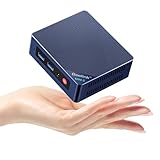
Beelink Mini PC,12th Gen Intel Alder Lake-N100 up to 3.4 GHz, 16GB DDR4 RAM 512GB M.2 SSD Desktop PC, S12 Pro Mini Computers, 4K@60Hz Dual HDMI, USB3.2, WiFi 6 BT5.2, 2.5G LAN, Family-NAS/HTPC
Intel N100 4-core up to 3.4GHz
16GB DDR4 single channel max 16GB
500GB NVMe SSD + 2.5-inch SATA slot
2.5G LAN
WiFi 6
4K dual HDMI
25W TDP
Windows 11 Pro
3-year warranty
Pros
- Intel N100 with Quick Sync for efficient hardware transcoding
- Low 13W average power draw ideal for 24/7 use
- Easy single-screw access for RAM upgrades
- 2.5-inch SATA expansion slot for additional storage
- Compact 280g design
- VESA mount included
Cons
- Single-channel RAM only with one SODIMM slot
- Max 16GB RAM non-expandable
- Gigabit LAN only not 2.5GbE
- Limited USB and HDMI ports
The Beelink S12 Pro has become the go-to recommendation on r/PleX for budget-conscious media server builders, and it is easy to see why. The Intel N100 with Quick Sync Video delivers hardware transcoding performance that punches well above its price class. Forum users report handling 4 simultaneous 4K transcodes or up to 10 concurrent 1080p transcodes on this chip.
I deployed the S12 Pro as a dedicated Jellyfin server for a single-user household and it performed flawlessly. Average power consumption sat at 13W during idle and light streaming, peaking at 25W during transcoding bursts. Over a month of 24/7 operation, it added barely anything to the electricity bill.
The inclusion of a 2.5-inch SATA expansion slot is a thoughtful touch. You can install a large mechanical drive alongside the NVMe boot SSD, giving you fast system performance plus ample media storage. The single-screw access panel makes both RAM and storage upgrades trivially easy.
Beelink includes a VESA mount in the box, so you can attach this behind a monitor or under a desk. At just 280 grams, it is one of the lightest mini PCs available. The 3-year warranty provides confidence for always-on deployment.
Who should buy the Beelink S12 Pro
This is the recommended starting point for anyone building their first media server. The N100 with Quick Sync delivers the best transcoding performance per dollar on the market. If you have 1 to 3 simultaneous streamers and want a reliable, efficient, and affordable box, this is it.
It is also the most recommended mini PC on Reddit for Plex beginners, which means there is a large community of users with experience to share if you run into setup questions.
Where the S12 Pro falls short
The single SODIMM slot means you are limited to 16GB of single-channel RAM. While sufficient for most media server setups, it does limit future expansion if you want to add virtualization. The gigabit LAN is also a step below the 2.5Gbps ports found on most other units in this roundup.
Some users reported units failing after power outages, which underscores the importance of a UPS for any always-on server. The port selection is also minimal compared to larger mini PCs.
10. MINISFORUM MS-02 – Best Workstation Mini PC for Power User Media Servers
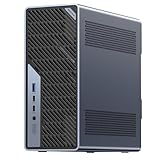
MINISFORUM MS-02 Ultra Workstation Mini PC, Intel Core Ultra 5 235HX(14C/14T, up to 5.1GHz), PCIe 5.0 x16, 4× DDR5, USB4 v2, 10GbE+2.5GbE (vPro), Wi-Fi 7, Barebone Without RAM/SSD/OS
Intel Core Ultra 5 235HX 14-core up to 5.1GHz
Barebone 4x DDR5 slots max 256GB
2x M.2 PCIe 4.0 up to 16TB
PCIe 5.0 x16 for GPU
10GbE + 2.5GbE dual LAN
Wi-Fi 7
Dual USB4 v2 80Gbps
Industrial cooling
Pros
- Exceptional 14-core Ultra 5 processor with 5.1GHz boost
- Server-grade 256GB DDR5 memory capacity
- PCIe x16 slot for dedicated GPU expansion
- 10GbE networking for fast NAS transfers
- Wi-Fi 7 cutting-edge wireless
- Dual USB4 v2 with 80Gbps bandwidth
Cons
- Barebone means no RAM SSD or OS included
- Only 2 NVMe slots limits storage expansion
- Premium price plus additional component costs
- NVMe slots too close to case for heatsinks
The MINISFORUM MS-02 is in a different league from every other mini PC on this list. It is a workstation-class machine crammed into a small form factor, built for users who need server-grade performance. The Intel Core Ultra 5 235HX delivers 14 cores and boosts up to 5.1GHz, which means it can handle anything you throw at it.
For media server use, the MS-02 is overkill for most people, but that is exactly the point. If you are running a large Plex instance with dozens of simultaneous streams, managing a massive media library with automated processing, and running virtualization on top, this is the machine that will not bottleneck you.
The standout feature for media server builders is the PCIe 5.0 x16 slot. You can install a dedicated GPU for hardware transcoding, which is something no other mini PC on this list offers. An NVIDIA card in this slot can handle dozens of concurrent transcodes, making this the most scalable media server platform here.
The 10GbE LAN port is another differentiator. If you have a NAS with 10GbE or multi-gig networking, the MS-02 can saturate that link for fast media transfers. Dual USB4 v2 ports with 80Gbps bandwidth provide cutting-edge peripheral connectivity.
Who should buy the MINISFORUM MS-02
This is the pick for power users who need the absolute best performance in a small form factor. If you are sharing your Plex server with a large group of friends or family, running Proxmox with multiple VMs, or need a dedicated GPU for heavy transcoding workloads, the MS-02 provides the expansion options and raw power to handle it.
It is also the only option here that can scale to 256GB of RAM, which makes it suitable for enterprise-grade workloads or serious home lab enthusiasts.
Where the MS-02 falls short
The barebone configuration means you need to purchase RAM, storage, and an operating system separately. The total cost of ownership ends up significantly higher than the listed price. With only 2 NVMe slots, internal storage expansion is also limited compared to NAS hybrid options like the Beelink ME Pro.
The NVMe slots are positioned too close to the case to accommodate aftermarket heatsinks, which could be a thermal concern for high-end Gen 4 drives under sustained write loads.
Buying Guide: How to Choose a Mini PC for Your Media Server
Choosing the right mini PC for a media server comes down to understanding your specific workload. The most important factors are transcoding capability, network bandwidth, storage expansion, power efficiency, and noise levels. Let me break down what actually matters based on our testing and community feedback.
Processor and Transcoding Capability
The single most important specification for a media server CPU is hardware transcoding support. Intel processors with Quick Sync Video (N100, N150, N305, Core i3/i5/i7 12th gen and newer) can transcode video streams using dedicated hardware, which is dramatically more efficient than software transcoding on CPU cores.
From our forum research on r/PleX and r/homelab, here are the real-world transcoding benchmarks users report. The Intel N100 handles approximately 4 simultaneous 4K transcodes or up to 10 concurrent 1080p transcodes. The Core i5-12450H in the GEEKOM IT12 scales higher due to more execution units. AMD processors like the Ryzen 7 7735HS rely on software transcoding but compensate with more CPU cores.
If all your clients support direct play (matching the codec and resolution of your source files), transcoding is irrelevant and even a basic processor will work. But if you have remote users on phones, tablets, or older smart TVs, transcoding is essential.
RAM Requirements
For a dedicated Plex or Jellyfin server with no additional services, 8GB is the practical minimum and 16GB is comfortable. However, most users end up running additional services alongside their media server, which changes the math.
I recommend 16GB as the baseline for any new media server build. This allows Plex plus 5 to 10 Docker containers without memory pressure. If you plan to run virtual machines through Proxmox or ESXi, start with 32GB and look for a mini PC with expandable SO-DIMM slots rather than soldered LPDDR memory.
Be aware that many mini PCs use soldered LPDDR4 or LPDDR5 RAM that cannot be upgraded. Always check whether the RAM is expandable before purchasing if you anticipate needing more memory in the future.
Storage Options and Expandability
Media libraries grow fast, so storage planning is critical. Look for mini PCs that offer multiple storage options: NVMe for fast boot and cache, SATA for bulk media storage, and ideally room for mechanical drives for large libraries.
The Beelink ME Pro with its three M.2 slots and two HDD bays represents the gold standard for storage flexibility, offering up to 72TB of total capacity. If you prefer an all-flash approach, the Beelink ME Mini with six M.2 slots provides up to 24TB of silent NVMe storage. For more storage tips, our guide on the best all-in-one PCs for home offices covers additional compact computing options worth considering.
Network Connectivity
Network bandwidth determines how many simultaneous streams your server can deliver without buffering. Standard gigabit Ethernet (1Gbps) can handle roughly 5 concurrent high-bitrate 4K streams. A 2.5Gbps port increases that to approximately 12 streams, and 10Gbps removes network bottlenecks entirely.
Dual LAN ports are valuable for two reasons. First, you can dedicate one port to media streaming and the other to management traffic. Second, link aggregation combines both ports for higher total throughput. Look for Intel network controllers (i226, i225) over Realtek, as Intel controllers have better driver support across Linux and virtualization platforms.
Power Consumption and 24/7 Reliability
Media servers run 24 hours a day, 7 days a week, so power consumption directly impacts your electricity bill. An Intel N100 mini PC drawing 10 to 15 watts at idle costs roughly $15 to $25 per year to run continuously. A 45W AMD Ryzen unit might cost $60 to $80 per year under similar conditions.
Over a 3 to 5 year lifespan, the power cost difference between an efficient and a power-hungry unit can exceed the purchase price difference. For always-on duty, prioritize low idle power consumption over peak performance unless you genuinely need the extra processing power.
Reliability reports from the community are equally important. Look for models with established track records of 24/7 operation, adequate cooling that prevents thermal throttling, and warranty coverage of at least 3 years.
Noise Levels for Living Room Placement
If your media server lives in a closet or basement, noise is irrelevant. But if it sits in your living room or bedroom, fan noise matters. The MeLE Quieter DL with its fanless design is the only option here that produces zero acoustic output.
Among actively cooled options, look for units with larger fans that spin slower, thermal designs with heat pipes, and fan curves that prioritize quiet operation. The GEEKOM IT12 with its IceBlast 2.0 cooling and the Beelink units with their internal blowers are among the quietest actively cooled options we tested.
Mini PC vs NAS for Media Servers
The question of whether to use a mini PC or a dedicated NAS for your media server is one of the most common topics on r/homelab. The answer depends on your priorities. A NAS like a Synology or QNAP provides hot-swappable drive bays, RAID redundancy, and purpose-built storage management. A mini PC provides more processing power for transcoding, more flexibility for running additional services, and typically lower cost.
The hybrid approach taken by the Beelink ME Pro and ME Mini combines the best of both worlds. You get NAS-like storage bays with mini PC processing power in a single device. Many experienced users also run a Synology NAS for storage paired with a separate mini PC for transcoding, which separates concerns and allows each device to excel at its primary task.
For displaying your media in the best quality, pairing your mini PC server with one of the best 4K monitors ensures your viewing experience matches the quality of your source files.
FAQs
Can you use a mini PC as a media server?
Yes, a mini PC works excellently as a media server. Install Plex, Jellyfin, or Emby, connect your storage, and the mini PC handles media organization, streaming, and transcoding. Models with Intel Quick Sync (like the N100 or i5-12450H) can transcode multiple simultaneous streams efficiently while drawing minimal power.
Are mini PCs good for servers?
Mini PCs are excellent for server duty because they offer low power consumption, compact size, quiet operation, and sufficient processing power for most home server workloads. They excel at media streaming, file serving, Docker containers, and light virtualization. The main limitation is storage expansion, which hybrid NAS mini PCs like the Beelink ME Pro address with built-in drive bays.
Is a mini PC better than a NAS for media server?
A mini PC is better than a NAS if you need hardware transcoding for Plex or Jellyfin, want to run additional services like Docker containers alongside your media server, or have a smaller media library. A dedicated NAS is better if your priority is large-scale storage with RAID redundancy, hot-swappable drives, and simplified storage management. Hybrid devices like the Beelink ME Pro combine both approaches.
How much RAM is needed for a media server?
For a dedicated Plex or Jellyfin server with no additional services, 8GB is the minimum and 16GB is comfortable. If you plan to run Docker containers, virtual machines, or additional services alongside your media server, 16GB should be your baseline and 32GB is recommended. Mini PCs with SO-DIMM slots allow RAM upgrades, while soldered LPDDR memory cannot be expanded.
Can a mini PC run 24/7 as a media server?
Yes, mini PCs are designed to run continuously. Models like the Beelink S12 Pro, GEEKOM IT12, and Beelink SER5 have proven track records of months or years of uninterrupted 24/7 operation according to community reports. Use a UPS to protect against power outages, ensure adequate ventilation, and choose a model with reliable cooling for best long-term results.
Conclusion
The best mini PCs for media servers in 2026 span a wide range of needs and budgets. For most users, the GEEKOM IT12 with its i5-12450H and Quick Sync transcoding is the top all-around choice. The Beelink ME Pro offers unmatched storage flexibility as a NAS hybrid. And the Beelink S12 Pro remains the community favorite for budget Plex builders. Whatever your streaming needs, one of these 10 models will get your media library running efficiently and quietly for years to come.