
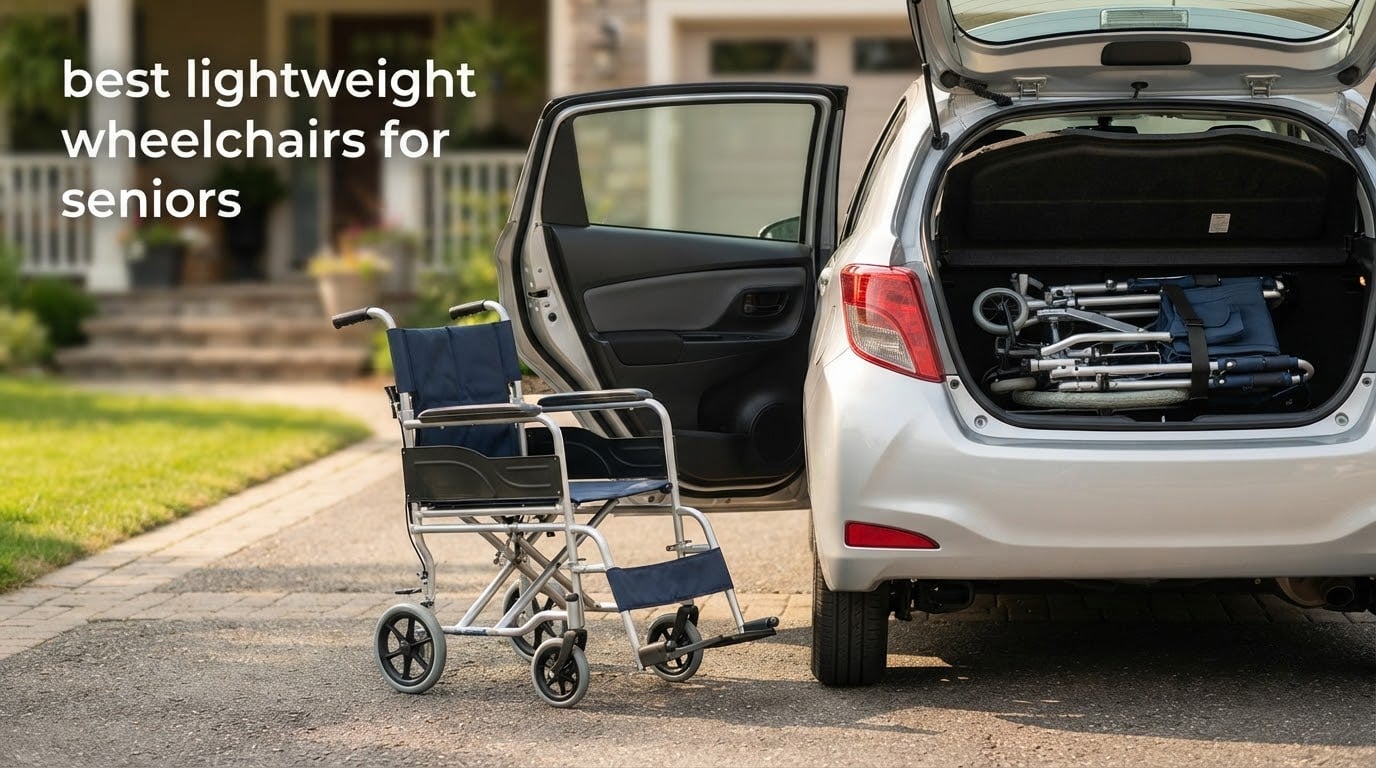
If you have spent any time shopping mobility equipment for an older parent, you already know the number that decides almost everything: how much the chair weighs. A chair at 22 pounds goes into a small car trunk by one person. A chair at 41 pounds usually needs two, and that is exactly the situation that ends a caregiver’s back. Weight decides whether a senior can move through a narrow apartment, whether a daughter can load the chair alone on a Tuesday, and whether anyone can handle it at an airport curb.
But here is the problem we kept running into while comparing the best lightweight wheelchairs for seniors on the market: the weight on the listing is often not the weight you lift. Sellers advertise the bare frame or the chair with the rear wheels removed, and the assembled chair in your trunk is heavier. Buyers on wheelchair forums describe this so consistently that we treat every weight figure in this roundup as a starting point rather than a fact, and we tell you which number the manufacturer actually publishes.
Before we get into the individual chairs, here is the framework. The word lightweight means something different in each of the three main categories, so the categories matter more than the number:
Transport chairs, about 18 to 32 pounds are pushed by a caregiver and have small rear wheels. The Medline Ultra Lightweight Transport on our list is published at 15 pounds, which makes it the lightest frame we could find with a full 300-pound capacity. Best for doctor appointments, shopping trips, and car travel where a caregiver does the pushing.
Self-propelled manual wheelchairs, about 24 to 41 pounds have large rear wheels and hand rims so the occupant can push independently. The Karman LT-980 weighs 24 pounds and uses 22-inch flat-free rear wheels, the only chair here built for genuine self-propulsion. Best for a senior with enough arm strength to drive the chair themselves.
Powered chairs add a battery, motor, and joystick, and most of them do not qualify as lightweight at all. We have covered the heavier powered category separately in our guide to the best electric wheelchairs for seniors and our picks for foldable electric wheelchairs for travel, so this roundup stays with manual and transport chairs.
The rest of this guide breaks down the twelve chairs we compared on weight, frame material, seat size, capacity, brakes, and what happens to them on rough ground, then walks through how to choose one without overspending on features the user will never touch. A word before we start: talk to an occupational therapist or the senior’s physician before ordering. Wheelchair fit affects fall risk, skin integrity, and independence, and those are medical decisions, not shopping decisions.
Table of Contents
- Top 3 Picks: Lightweight Wheelchairs in 2026
- Best Lightweight Wheelchairs for Seniors (October 2026)
- 1. Drive Medical Blue Streak – Our All-Round Pick for Daily Use
- 2. Medline Lightweight Foldable Transport – Best Value Caregiver Chair
- 3. Drive Medical Folding Transport – Most Versatile for Small Cars
- 4. Drive Medical Silver Sport 1 – Best for Longer Outings
- 5. Medline Ultra Lightweight Transport – Lightest Frame With Full Capacity
- 6. Medline Comfortable Folding 20 Inch – Widest Seat in the Set
- 7. Karman LT-980 Ultra Lightweight – Best for Self-Propelled Travel
- 8. Platinum Health Hummingbird – Best for Users Near 350 lb
- 9. EconoHome Expedition Folding – Best Ready-to-Use Setup
- 10. SOFTFISH 18 lb Transport Chair – Best for Medical Vehicle Stowage
- 11. Dr. Dunley Folding Transport – Best for a Padded 19 Inch Seat
- 12. WEYRAL Transit Travel Wheelchair – Best with a Reclining Backrest
- How to Choose a Lightweight Wheelchair for a Senior
- What counts as lightweight, and why sellers misquote it
- Transport vs self-propelled vs powered: the first question to answer
- Seat width, seat depth and getting the fit right
- Weight capacity and the margin you actually need
- Folding size, car trunks and airline stowage
- Aluminum vs carbon steel: what the frame material changes
- Brakes, transfers and the questions to ask before you buy
- Medicare Part B coverage in four steps
- Frequently Asked Questions
- What is the best lightweight wheelchair to buy?
- How much do lightweight wheelchairs weigh?
- Which is easier to push, a wheelchair or a transport chair?
- Can you use a transport wheelchair as a regular wheelchair?
- What is the best transport chair for a heavy person?
- What is the most comfortable wheelchair for all-day use?
- What is the best wheelchair for people with dementia?
- What kind of wheelchair will Medicare pay for?
- Final Verdict: Which Lightweight Wheelchair Fits Your Situation
Top 3 Picks: Lightweight Wheelchairs in 2026

Drive Medical Blue Streak
- 41.3 lb alloy steel frame
- 18 inch seat
- 300 lb capacity
- Limited lifetime warranty

Medline Foldable Transport
- 25 lb aluminum frame
- 12 inch rear wheels
- Hand brakes plus wheel locks
- 300 lb capacity

Drive Medical Folding Transport
- 26 lb steel frame
- 17 inch padded nylon seat
- 8 inch wheels
- Folds flat in two steps
Best Lightweight Wheelchairs for Seniors (October 2026)
| Product | Specifications | Action |
|---|---|---|
| Drive Medical Blue Streak |
|
Check Latest Price |
| Medline Lightweight Foldable Transport |
|
Check Latest Price |
| Drive Medical Folding Transport |
|
Check Latest Price |
 Drive Medical Silver Sport 1 Drive Medical Silver Sport 1 |
|
Check Latest Price |
 Medline Ultra Lightweight Transport Medline Ultra Lightweight Transport |
|
Check Latest Price |
 Medline Comfortable Folding 20 Inch Medline Comfortable Folding 20 Inch |
|
Check Latest Price |
 Karman LT-980 Ultra Lightweight Karman LT-980 Ultra Lightweight |
|
Check Latest Price |
 Platinum Health Hummingbird Platinum Health Hummingbird |
|
Check Latest Price |
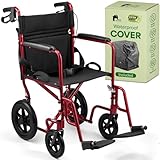 EconoHome Expedition Folding EconoHome Expedition Folding |
|
Check Latest Price |
 SOFTFISH 18 lb Transport Chair SOFTFISH 18 lb Transport Chair |
|
Check Latest Price |
 Dr. Dunley Folding Transport Dr. Dunley Folding Transport |
|
Check Latest Price |
 WEYRAL Transit Travel Wheelchair WEYRAL Transit Travel Wheelchair |
|
Check Latest Price |
1. Drive Medical Blue Streak – Our All-Round Pick for Daily Use
Drive Medical Blue Streak Lightweight Wheelchair, Footrests, 18″ Seat
41.3 lb alloy steel frame
18 inch seat, 300 lb capacity
Limited lifetime warranty
Pros
- Largest review base in this group at 18k+
- Swing-away footrests and flip-back desk arms make transfers easy
- Limited lifetime warranty
- Single-axle frame turns smoothly indoors
Cons
- Heaviest chair here at 41.3 pounds
- 36 inch overall width is wide for narrow doorways
- Solid wheels feel harsh on uneven ground
The Blue Streak is the chair most people in this category end up owning, and the reason is not marketing. It is the sheer size of its review base, roughly 18k reviews averaging 4.5 stars, which means every common failure mode has already been documented by someone who hit it before you did. About 77 percent of those ratings are five stars, and the recurring theme is transfers: swing-away footrests and flip-back desk-length arms mean the user can stand up, step out, and get into a car or a restaurant chair without a caregiver wrestling with leg rests.
Where it wins is longevity and warranty. This is a limited lifetime warranty on an alloy steel frame, and steel does not fatigue the way lightweight aluminum tubing can. If the senior will use a chair daily for several years rather than for occasional trips, that matters more than shaving fifteen pounds off the total.
The trade-off is honest weight. At 41.3 pounds published, this is the heaviest chair in the roundup, and it is not a transport chair. A single caregiver lifting this into a trunk is doing a two-person job. Owners on wheelchair forums describe self-propelling standard-weight steel chairs as difficult and sometimes unsafe, so if the plan is independent movement, this is the wrong chair no matter how many stars it has.
Two smaller details caught our attention. The 36-inch overall width clears fewer doorways than a 26-inch transport chair, which matters in tight apartments. And the solid wheels, while maintenance-free, are noisier and harsher than pneumatic or flat-free tires when the route involves broken sidewalk or grass.
Who the Blue Streak suits
It suits a daily indoor user with a caregiver who is not the one doing the lifting, or one who has two adults available for car trips. The 300-pound capacity and the 18-inch seat handle a wide range of adult body sizes, and the limited lifetime warranty makes it a safe long-term purchase.
It also suits a senior who wants to wheel themselves around a kitchen or living room during the day, because the single-axle frame and 12-inch turn radius make it easy to pivot in tight indoor space.
Who should skip it
Skip it if one person has to load and unload it alone several times a week, or if the home has narrow hallways and doorways under 36 inches. It is also a poor match for anyone who will spend hours outdoors on uneven surfaces, where the solid wheels transmit every bump straight into the frame.
2. Medline Lightweight Foldable Transport – Best Value Caregiver Chair
Medline Lightweight Foldable Transport Wheelchair with Handbrakes and 12-Inch Wheels, Blue Frame, Black Upholstery
25 lb aluminum frame
19 inch by 16 inch seat
12 inch rear wheels
300 lb capacity
Pros
- Genuinely light with a full 300 lb capacity
- Hand brakes plus rear wheel locking brakes
- Roomy 19 inch seat for a transport chair
- No assembly required
Cons
- 12 inch rear wheels still struggle on rough ground
- Foot supports can detach during trunk loading
- Weak users need a positioning belt
This is the chair we would put in the hands of a family caregiver who has to do everything alone. It publishes at 25 pounds in the technical specifications, though the feature copy rounds to 26 pounds, and that is a genuine assembled weight rather than a frame weight, which puts it in a different class from most listings in its price range.
The 19-inch-wide by 16-inch-deep seat is unusually generous for a transport chair, and 77 percent of the 12k-plus reviews give it five stars. The 12-inch rear wheels are the reason it handles thresholds, curb cuts, and uneven pavement better than the 8-inch chairs further down this list, and the aluminum frame is stiff enough to feel solid while pushing.
Brakes are where this chair shows its caregiver-first design. You get caregiver hand brakes on the push handles for controlled descents, plus rear wheel locking brakes that engage before a transfer so the chair cannot roll out from under the user. That combination is the single most important safety feature in this roundup.
The complaints are consistent and worth hearing. Detachable foot supports can pop loose when the chair is being lifted in and out of a trunk, so check the clips every time. Users with weak trunk control can slide forward without a positioning belt, and the brake cable sometimes arrives out of adjustment, which causes a rubbing sound on the first week of use.
Who this transport chair suits
It suits a senior who cannot self-propel and does not need to, whose caregiver pushes from the handles and manages the hand brakes. It also suits narrow doorways and small apartments, and it folds to 27.75 by 11 by 31.25 inches, which clears most car trunks and closets.
For a user with dementia or a high fall risk, this is one of the safer picks here because the hand brakes and wheel locks give the caregiver full control on slopes and during transfers.
Who should skip it
Skip it if the intended route is grass, gravel, or a badly broken path, because 12-inch rear wheels on a folding frame still get twitchy there. Anyone who can push themselves should look at the Karman LT-980 instead, since this chair has no hand rims and no self-propulsion.
3. Drive Medical Folding Transport – Most Versatile for Small Cars
Drive Medical Folding Transport Wheelchair, Swing-Away Footrest, Silver
26 lb steel frame
17 inch padded nylon seat
8 inch wheels
33 by 21.5 by 39 inches
Pros
- Folds flat in two steps and fits a compact car trunk
- Padded 17 inch seat for longer outings
- Rear tilt pedals help clear raised thresholds
- No assembly required
Cons
- Narrow seat limits usable width to about 14 inches
- Footrests must be removed before each fold
- 8 inch front casters can foul the footrests when reversing
There is something appealing about how simple this chair is. It is a steel frame, 26 pounds, four features, and a fold-flat back. Buyers report owning it for years, including trips over cobblestones, and about 74 percent of the 10k-plus reviews are five stars. For a senior who needs a chair for a few appointments a month, that is exactly enough chair.
The two-step fold is genuinely fast, and the padded 17-inch nylon seat stays comfortable through a full afternoon at a family gathering. The rear tilt pedals that let a caregiver tip the chair over a raised threshold are an old-school feature that most modern budget chairs have dropped.
What you give up is width and wheel size. One reviewer measured roughly 14 inches of usable seat width on a chair advertised at 17 inches, which is the single most common complaint across 10k reviews. If the user is broad through the hips or shoulders, they will feel the sides of the chair, and a 17-inch nominal seat leaves no margin.
The 8-inch wheels are the other limitation. They are quiet and never need air, but they catch on uneven ground and they do not roll over a standard curb cut without a tilt. Rear wheel brakes also sit low enough that engaging them means bending almost to the ground, which is awkward for a caregiver with a bad back.
Who this chair suits
It suits a smaller-framed senior, or a user who only needs occasional transport support rather than all-day seating. It suits caregivers with a small car, since the folded footprint fits a compact sedan trunk with room to spare. It also suits anyone who wants zero setup, because the chair arrives ready to use.
It is a reasonable second chair to keep in a car, in a closet at a relative’s house, or at a medical appointment, where the main goal is getting a person from the door to the waiting room and back.
Who should skip it
Skip it for a larger user, since the narrow seat is the most repeated complaint in the reviews. Skip it if the route involves gravel, grass, or rough pavement, and skip it if the caregiver cannot comfortably bend to floor level to set the rear wheel locks.
4. Drive Medical Silver Sport 1 – Best for Longer Outings
Drive Medical Silver Sport 1 Folding Transport Wheelchair, Black
37.6 lb powder-coated steel
250 lb capacity
Foldable back and carry pocket
Breathable nylon upholstery
Pros
- Highest star average among the Drive Medical chairs here at 4.6
- Foldable back and built in carry pocket
- Full length padded armrests and breathable upholstery
- Push to lock brakes on a powder coated frame
Cons
- Heavy at 37.6 pounds for a transport chair
- 250 lb capacity is below most of the set
- Not designed for the user to propel
The Silver Sport 1 is the transport chair for a day out rather than a trip across town. It carries a 4.6 star average from 8k-plus reviews, with 79 percent of ratings at five stars, and the reason owners keep it is comfort over hours: breathable nylon upholstery and full-length padded armrests that support the forearms rather than the bare steel pipes many rivals use.
The foldable back is a small design touch with a large payoff. The chair collapses to a fraction of its height for a closet or a trunk, and the built-in carry pocket holds a jacket, a phone, or a folded blanket without needing a separate bag hanging off the handles.
Urethane tires on composite wheels roll smoothly and need no air pressure, which removes the most common maintenance complaint in this category. The powder-coated steel frame and push-to-lock brakes are the standard, dependable combination that has kept this chair in production for years.
Two numbers work against it. At 37.6 pounds it is closer to a full-size wheelchair than to a travel chair, so a single caregiver will feel it during loading. And the 250-pound capacity is 50 pounds below what the Medline chairs in this roundup carry, which can rule it out for larger seniors.
Who the Silver Sport 1 suits
It suits a senior who spends several hours seated at a time, such as at a day program, a family event, or a long outpatient appointment. The padded armrests and breathable upholstery are the difference between a chair that tolerates four hours and one that does not.
It also suits users who will keep the chair folded in a closet most of the time and bring it out for trips, thanks to the foldable back and the integrated carry pocket.
Who should skip it
Skip it if the chair has to be lifted into a vehicle by one person several times a week, since 37.6 pounds is the second-heaviest option here. It is also the wrong choice above 250 pounds, and it does not allow the user to propel themselves.
5. Medline Ultra Lightweight Transport – Lightest Frame With Full Capacity
Medline Ultra Lightweight Transport Wheelchair for Adults, Foldable, 19-Inch Seat Width, Black Frame, Black Upholstery
15 pounds listed weight
Aluminum frame
300 lb capacity
19 inch by 16 inch seat
Pros
- Lowest published weight we found with a 300 lb capacity
- Roomy 19 inch seat with desk length armrests
- Cup holder and swing away footrests included
- Rear wheel locking brakes for transfers
Cons
- 8 inch rear wheels are less stable on uneven ground
- Two different weights are published for this chair
- Higher cost than steel frame transport chairs
This chair illustrates exactly the weight-quoting problem we mentioned at the start. The technical specifications list 15 pounds. The feature description on the same listing says 19 pounds. Neither number includes a note about what was removed, and the difference between them matters to anyone trying to decide whether a caregiver can carry it up a staircase.
Setting that aside, the engineering is genuinely good. It is an aluminum frame with a 19-inch by 16-inch seat, a 300-pound capacity, desk-length cushioned armrests, a cup holder, and swing-away footrests. It ranks near the top of the self-propelled wheelchair category in Amazon’s best sellers, and 80 percent of its 7,800-plus reviews are five stars.
The aluminum construction is why the weight drops without the frame feeling like it will buckle. Aluminum resists corrosion, which matters for a chair that lives in a damp garage or on a covered porch, and it holds its alignment better than the pressed steel used in budget chairs.
The 8-inch rear wheels are the real cost of that light frame. They are the smoothest and quietest option on smooth indoor floors and short paved routes, but they are less stable over broken pavement, and users report the chair feeling unsettled on grass and gravel. For a senior whose life is mostly indoor surfaces and clinic visits, that is a fair trade.
Who this Medline transport suits
It suits households where one caregiver handles every lift, especially if stairs or a high trunk lip are involved, because it is the least weight we found in this roundup at a full 300-pound rating. It suits users who need a roomy seat but a small folded footprint, since it collapses to 24 by 10.8 by 33.5 inches.
It also suits seniors with balance issues who need both armrests for support, since the desk-length armrests give a full-length surface to push down on during a transfer.
Who should skip it
Skip it if the user weighs more than 300 pounds, and skip it for anyone whose day includes unpaved paths, park grass, or steep driveways. Buyers who want the absolute lowest weight and expect to travel in medical transport vehicles may prefer the 18-pound chair further down, but it carries a 220-pound capacity and a much thinner build.
6. Medline Comfortable Folding 20 Inch – Widest Seat in the Set
Medline Comfortable Folding Wheelchair with Swing-Back Desk-Length Arms and Swing-Away Footrests, 20”W x 16”D Seat
38 lb hammertone frame
20 inch by 16 inch seat
300 lb capacity
Dual axle setup
Pros
- Widest seat in this roundup at 20 inches
- Dual axle frame adjusts ride height and stability
- Swing away footrests make entry and exit clean
- Folds flat for a car trunk or closet
Cons
- Heavy at 38 pounds so travel is inconvenient
- Full size chair rather than a compact transport chair
- Smooth tires are firmer on rough ground
Seat width is the quiet factor that decides comfort more often than weight. Most transport chairs in this roundup sit at 17 or 18 inches, and the narrower ones measure closer to 14 inches of usable space. This chair comes in a 20-inch width, with 18-inch and 16-inch versions also available, which is enough clearance for a broader user to sit without feeling the armrests against their hips.
It ranks second in Amazon’s self-propelled wheelchair category, and 80 percent of its nearly 3,000 reviews are five stars. The dual axle frame is the feature experienced users look for: the rear wheels can be repositioned along the frame to change the seat-to-floor height and the stability balance between the front and rear casters.
The hammertone high-strength frame supports up to 300 pounds, and the swing-away footrests let a user step in and out without tangling their feet, which is the detail that makes transfers safer when balance is uncertain. Padded armrests and a nylon seat are specified for extended use rather than quick hops.
At 38 pounds this is a full-size chair, not a travel chair. It folds flat for storage, but the folded package is still substantial, and lifting it into a car solo is a genuine strain. If the senior needs a chair primarily for travel, a transport model in this roundup will serve them better.
Who the 20 inch Medline suits
It suits larger seniors who feel cramped in an 18-inch transport seat, and anyone who needs the extra clearance during transfers, particularly when a caregiver is assisting from the front. The dual axle also lets you set a lower, more stable seat if the user tends to slide forward.
It suits a home setup where the chair stays in use most of the day and comfort outranks portability. The 300-pound capacity covers a wide range of adult users.
Who should skip it
Skip it if the chair must be loaded into a vehicle regularly by a single caregiver, or if the user’s home has doorways that a 20-inch-wide frame will not clear. Those wanting self-propulsion should check the axle position and hand rims carefully before buying, since this model is not built around them.
7. Karman LT-980 Ultra Lightweight – Best for Self-Propelled Travel
Karman 24 pounds LT-980 Ultra Lightweight Wheelchair, Black
24 lb aluminum frame
22 inch flat-free rear wheels
18 inch by 16 inch seat
250 lb capacity
Pros
- Only chair here built for genuine self propulsion
- Owners report carrying it up stairs one handed
- Large 22 inch rear wheels roll over bumps smoothly
- Folding backrest and seat plus a backrest pouch
Cons
- Not intended for all-day sitting
- Hard plastic armrests with no padding
- Footplates are not height adjustable
- Only 250 lb capacity
This is the only chair in our roundup that a senior can genuinely push themselves, and that single fact changes everything about how it should be evaluated. The 22-inch flat-free polyurethane rear wheels roll over sidewalk cracks and parking lot seams without catching, and the user-accessible hand brakes at the wheels mean the person in the chair controls their own stopping rather than relying on someone behind them.
Owners report lifting it up a flight of stairs with one hand, which is why it has a devoted following despite a lower 4.3 star average. At 24 pounds published without footrests, it is a genuinely portable self-propelled chair, and the rigid frame feels noticeably firmer under load than the folding transport models here.
The compromises are all about comfort and adjustability. The armrests are hard plastic rather than padded, and reviewers consistently note this after a few hours. The footplates do not adjust for height, so a taller user ends up sitting with a raised-knee posture that gets uncomfortable quickly. The 28-inch overall length and 29-inch folded height mean it passes through a standard interior door only narrowly.
Wheel locks also need adjustment out of the box on some units, which is a five-minute job but worth doing before the first use. The 250-pound capacity sits below the 300-pound rating of the Medline chairs, and the compact 18-inch by 16-inch seat is on the small side for a larger user.
Who the Karman LT-980 suits
It suits a senior with enough upper-body strength and coordination to push themselves over sidewalks and through a parking lot without a caregiver’s help. It also suits a traveler who wants a self-propelled chair that a single person can lift into a vehicle or carry up stairs.
It suits trips rather than daily home use, since the light rigid frame and small seat are built for mobility on the move rather than hours of seated comfort.
Who should skip it
Skip it for all-day use. A firm, unpadded chair is a poor choice for a senior who sits in it for six or more hours, or for anyone with existing pressure sore risk. It is also the wrong choice above 250 pounds or for a user with long legs who will find the fixed footplate height uncomfortable.
8. Platinum Health Hummingbird – Best for Users Near 350 lb
Platinum Health Hummingbird™ Ultra-Lightweight Foldable Transport Wheelchair, Handbrakes,12-Inch Rear Wheels, Extra-Wide Seat. Convenient Table-Length Padded Armrests. (Sky Blue)
32 lb aluminum frame
350 lb capacity
12 inch rear wheels
Folds to 33 by 23 by 9.5 inches
Pros
- 350 lb capacity at only 32 pounds
- Extra wide 18 inch seat for a heavier user
- 12 inch rear wheels clear thresholds easily
- Table length padded armrests for desk work
Cons
- Much smaller review base than the branded rivals
- A higher share of one-star ratings than established models
- Weight is published for the chair as configured
Heavier users face a stubborn problem in this category. Bariatric wheelchairs exist, but they are heavy, and chairs rated for larger users tend to fall apart quickly if they are also built to be light. The Hummingbird is the most interesting compromise we found, pairing a 350-pound capacity with a 32-pound aluminum frame and a folded size of 33 by 23 by 9.5 inches.
The 12-inch rear wheels are a deliberate choice, and they make threshold crossings and tight corners noticeably easier than the 8-inch chairs in this roundup. Table-length padded armrests let the user pull close to a desk or a dining table, and built-in carry handles help with loading. The chair also comes in four colors that do not look like medical equipment.
Here is the honest caveat. This listing has 173 reviews and a 4.3 average, with 67 percent five-star ratings and a 7 percent one-star share. The established Drive Medical and Medline models in this roundup carry ten to a hundred times the review history, which means a decade of durability feedback you simply do not have here.
Published dimensions help with planning. Overall width at the widest point is 24 inches, overall length excluding footrests is 25 inches, and the top of the armrests sits 28 inches from the floor. The 19.5-inch seat height is higher than most chairs here, which helps a user stand but can be awkward for shorter users.
Who the Hummingbird suits
It suits a senior in the upper 200s to mid-300s who still needs a chair light enough for a single caregiver to load into a car. It also suits anyone who works at a desk or eats at a table for hours, because the table-length padded armrests support a forward-leaning posture that standard-length arms cannot.
It suits users who move between indoor floors, ramps, and sidewalk routes where 12-inch wheels earn their keep.
Who should skip it
Skip it if you are buying it as a long-term primary chair and want a deep record of long-term ownership, because 173 reviews is thin evidence for a five-year purchase. Anyone above 350 pounds is outside the rating, and the 19.5-inch seat height may be too tall for a shorter user to push off from comfortably.
9. EconoHome Expedition Folding – Best Ready-to-Use Setup
EconoHome Light Weight Wheelchair – Expedition Folding Transport Wheelchairs for Adults with Hand Brakes – Portable Ultra Lightweight Wheel Chair – Fully Assembled, Cover Included – 300 lb Capacity
22 lb fold-flat aluminum frame
300 lb capacity
Arrives fully assembled
Protective cover included
Pros
- Only 22 pounds with a 300 lb rating
- Arrives fully assembled with a protective cover
- Includes a seat belt and companion hand brakes
- Large rear wheels glide over thresholds
Cons
- Narrow seat despite the 300 lb rating
- No user manual included in the box
- Some reports of footrest and rivet failure within months
The thing we liked most about this chair was the least glamorous: it arrives fully assembled with a protective cover already in the box. There is nothing to bolt together, no tools, no instructions to lose. For a family caregiver who just wants the chair to arrive and work, that removes a genuinely common source of frustration.
At 22 pounds with a 300-pound capacity and a fold-flat aluminum frame, the numbers on paper are excellent. It includes companion-activated hand brakes, a seat belt, padded armrests, and swing-away footrests, which is a more complete package than most chairs at this weight. About 76 percent of its 177 reviews are five stars.
Parts availability is the concern here, and it is the one forum buyers raise most often about lightweight chairs in general. A broken plastic footrest clip or a stripped rivet on an unknown brand can end someone’s mobility until a replacement arrives, and this listing includes no user manual or care instructions in the box to help with setup or minor repair.
A small number of reviewers reported a broken footrest and loosening rivets within a few months, and the footrest can detach during use. The seat width is narrow despite the 300-pound rating, so a larger user should measure before committing.
Who the EconoHome Expedition suits
It suits a household that wants a light, fully assembled chair with no setup and no separate cover purchase, particularly one that keeps the chair in a car or on a covered porch. The included seat belt is a genuine plus for a user with dementia who might otherwise slide forward out of the chair.
It suits caregivers who want companion hand brakes without paying for a premium brand, and the fold-flat frame stores upright against a wall in a small apartment.
Who should skip it
Skip it if long-term parts availability matters to you, because there is no manual in the box and the build quality reports are thinner than the established brands. Larger users should be cautious about the narrow seat, and anyone planning to keep this chair for many years should weigh the lighter warranty support against a steel-frame alternative.
10. SOFTFISH 18 lb Transport Chair – Best for Medical Vehicle Stowage
18LBS UIltra Lightweight Wheelchairs with Foldable Footrest and Armrests, 1s Quick Folding Transport Wheelchair Lightweight Foldable with Handbrakes, Travel Transport Chair for Adults Seniors Kid
18 lb aluminum alloy frame
220 lb capacity
One second quick fold
Two stage brakes and seatbelt
Pros
- Light enough to lift with one hand
- One second quick fold stores upright in a car
- Fits medical transport vehicles that larger chairs cannot
- Breathable slip resistant 3D mesh cushion
Cons
- Narrow and sized for smaller adults or children
- No fold latch so the chair cannot be secured
- Fold out push handles bend under regular use
Eighteen pounds is the practical floor for a chair that still has a recognizable frame, and this one hits it. The one-second fold stores the chair upright in a car, a bedroom, or the back of a medical transport vehicle, which is the situation this chair was designed for. Owners use it to get a person from a bedroom to a scheduled appointment without a full-size chair in the hallway.
The two-stage brake design is unusual and useful: light pressure slows the chair, full pressure locks it. A built-in seatbelt, fold-back armrests, and flip-up footrests all support transfers, and the 3D mesh cushion resists slipping during the day.
Now the part that matters. The 220-pound capacity is the lowest in this roundup, and the seat runs narrow, sized more for smaller adults than for large seniors. Several one-star reviews describe the build as flimsy, and the fold-out push handles bend under regular use. The folded frame has no latch, so it cannot be secured when stowed, which matters in a vehicle that is moving.
The 64 percent five-star share is the lowest among the chairs that performed well, and the one-star rate runs higher than the established brands. This is a specialty chair, not a general-purpose one.
Who this 18 lb chair suits
It suits a smaller-framed senior under 220 pounds who needs a chair that a single person can carry with one hand, and it is the right fit for medical transport vehicles or ambulances that cannot take a full-size chair. It also suits short indoor distances where a chair is parked near a bed or a door.
The quick fold and upright storage make it practical in a small apartment where closet space is genuinely scarce.
Who should skip it
Skip it for any user above 220 pounds, and skip it as a primary daily chair. The bendable push handles, missing fold latch, and reports of flimsy construction make it a poor choice for rough outdoor surfaces or for a caregiver who will be lifting it many times a day.
11. Dr. Dunley Folding Transport – Best for a Padded 19 Inch Seat
Dr Dunley Folding Transport Wheelchair with Swing-Away Footrests,19″ Wide Padded Seat, Full-Length Armrests
Lightweight carbon steel frame
19 inch padded seat
250 lb capacity
Full length armrests
Pros
- Roomy 19 inch padded seat for the price
- Full length armrests support the forearms
- Swing away footrests make transfers cleaner
- Flat folding frame stores in a closet or trunk
Cons
- 250 lb capacity is below most of the set
- No published chair weight in the specifications
- Small review base limits durability evidence
This chair does one thing simply: it gives you a wide, padded, 19-inch seat with full-length armrests at the low end of the market. For a senior who feels cramped on narrower transport chairs but does not need a heavy bariatric frame, that combination is unusual. About 72 percent of its 128 reviews give it five stars.
The carbon steel frame folds flat for vehicle and tight-space storage, and the swing-away footrests let a user step out without a caregiver lifting their legs. The padding on the seat is a real upgrade over the bare nylon sling used on many budget chairs, and it matters over a multi-hour outing.
The gap here is information. This listing publishes a 250-pound capacity, a seat size, and a frame material, but it does not publish a chair weight, which makes it impossible to confirm from the spec sheet whether one caregiver can lift it. We would ask for that number before ordering, and treat any guess as a question for the seller.
The 128-review base is the other limitation. When a chair has a decade of feedback, you know which parts fail. With this few reviews, you are buying on spec sheet alone, and the 250-pound rating excludes anyone larger regardless.
Who the Dr. Dunley suits
It suits a mid-sized senior who wants the seat width of a mid-size chair without paying for a 38-pound frame, and it suits anyone who values a padded seat and forearm support for longer outings on a tight budget. The flat fold works for anyone storing the chair in a closet or a small trunk.
It also suits buyers comparing a lower-cost option who are willing to confirm the chair weight directly with the seller before committing.
Who should skip it
Skip it for users over 250 pounds, and skip it if you cannot get a confirmed weight figure from the seller, because a chair you cannot lift is not lightweight in any sense that matters. Buyers planning a multi-year primary chair may prefer a brand with deeper parts availability.
12. WEYRAL Transit Travel Wheelchair – Best with a Reclining Backrest
Super Lightweight Portable Transit Travel Wheelchair, Upgraded Folding Transport Wheelchairs (Weight 24lbs) for Adults and Seniors, Come with Telescopic Handle and Travel Bag
26.7 lb aluminum alloy frame
11 inch honeycomb rear wheels
Reclining backrest
Telescopic handle and travel bag
Pros
- Reclining backrest several buyers call a lifesaver
- Spring damped honeycomb wheels smooth out bumps
- Rear step bar helps tip over curbs
- Telescopic handle hides under the seat when not in use
Cons
- Lowest star average in this roundup at 4.1
- Hard to fold because the release is not intuitive
- Reports of plastic hardware breaking within days of travel
- Seat is narrow and short
This is the only chair in the roundup with a reclining backrest, and that is not a gimmick. A rigid sling seat pushes a senior’s pelvis forward over several hours, and a reclined position is one of the few practical ways to shift pressure without a separate cushion. Several buyers describe the recline as the reason they kept the chair.
The running gear is also unusual. Eleven-inch honeycomb rear wheels with spring damping take the sting out of bumps better than the solid casters on lighter transport chairs, and a rear step bar lets the pusher tip the front casters over a curb. The telescopic handle tucks under the seat when it is not needed, and a carrying bag is included for airline stowage.
Start with the weight discrepancy, because it is a textbook case. The product title says 24 pounds. The technical specification says 26.7 pounds. Buyers deserve to know which one they are lifting before the chair arrives.
More importantly, this chair has the lowest star average in our roundup at 4.1, with about 10 percent one-star ratings, against 2 to 5 percent for the established brands. Buyers report plastic hardware, including brake handles, breaking within days of travel, no published phone support for repairs, and a folding mechanism that is not intuitive. The seat is also narrow and short, so larger users are poorly served despite the claims about handling grass, sand, mud, and snow.
Who the WEYRAL suits
It suits a senior who cannot tolerate a rigid upright seat for long stretches, or who has early pressure sore risk and needs a recline option between cushions. It also suits frequent travelers, since the recline, the telescopic handle, and the included carrying bag make airport and cruise handling easier.
It suits routes with rough pavement, where the spring-damped wheels smooth out more than the casters on lighter chairs.
Who should skip it
Skip it as a primary daily chair, because the hardware failure reports and the absence of published repair support carry real risk for someone who depends on it every day. Larger users should avoid it given the narrow seat, and anyone who folds a chair several times a week will find the release mechanism frustrating.
How to Choose a Lightweight Wheelchair for a Senior
What counts as lightweight, and why sellers misquote it
The first thing to understand is that lightweight is a category-relative word with no universal retail standard. A 26-pound transport chair is genuinely light. A 26-pound self-propelled chair with 22-inch rear wheels would be remarkable, because the larger wheels, hand rims, and brakes add weight that a transport chair does not carry.
The practical bands we use are roughly 15 to 26 pounds for transport chairs, 24 to 41 pounds for self-propelled manual chairs, and well above that for powered models. The operative test is not the number on the listing. It is whether one caregiver can lift the heaviest individual piece into a car, alone, on a bad day.
That brings us to the quoting problem. When a seller advertises a bare frame weight, the assembled chair is typically heavier because the rear wheels, front casters, footrests, and hardware all go back on. The Medline Ultra Lightweight Transport in this roundup publishes two different numbers for the same chair, 15 pounds in the specifications and 19 pounds in the feature copy, and neither carries a note about what is included. Ask for the assembled weight, then ask the caregiver to actually lift the chair before you commit.
Transport vs self-propelled vs powered: the first question to answer
Answer one question before you look at any other specification: will the senior push themselves, or will a caregiver push? This is the single most repeated question in caregiver forums, and it eliminates half the catalog immediately.
A transport chair has small rear wheels, no hand rims, and a caregiver at the handles. It is lighter, narrower, cheaper, and easier to store. A self-propelled manual wheelchair has large rear wheels and hand rims, which adds weight but lets the occupant move independently over sidewalks and parking lots. A powered chair adds a battery and joystick, extends range and reduces exertion, and usually weighs 50 pounds or more.
Buyers frequently ask whether a transport chair can double as a regular wheelchair. It cannot. There are no hand rims and the small rear wheels are not designed to be pushed from inside the seat. Using one that way is a common and avoidable accident.
Caregivers also ask which is easier to push. In our view the honest answer is that a transport chair is easier to push on smooth ground because it is lighter and has a narrower turning circle, while a self-propelled chair with larger rear wheels rolls more smoothly over cracks and thresholds. A transport chair is easier to lift; a self-propelled chair is easier to ride.
Seat width, seat depth and getting the fit right
Measure the user’s hip width while they are seated in their usual position and add an inch or two of clearance. Anything tighter than that and the user will brace against the armrests, which fatigues the shoulders and shows up as skin irritation along the inner thighs over time.
Seat depth matters just as much. Too deep and the feet do not reach the footplates, which pushes the knees up and forward. Too shallow and the thighs press into the frame. Most chairs in this roundup sit at 16 inches of depth, which suits most adults, and the narrow ones in this roundup measure closer to 14 inches of usable width than their nominal rating suggests.
If a senior will use the chair for many hours, treat cushioning as a medical decision rather than a comfort preference. A sling seat with a thin pad is where pressure sore risk begins, and a senior who cannot reposition independently needs a cushion that spreads load across the pelvis rather than concentrating it on the tailbone.
Weight capacity and the margin you actually need
Most chairs in this roundup are rated 250 or 300 pounds, and two sit lower. The Hummingbird reaches 350 pounds at 32 pounds of chair weight, which is the closest thing here to a bariatric lightweight chair. The 18-pound SOFTFISH transport chair is rated at 220 pounds, which rules it out for a large share of seniors.
The forum advice we would give is to leave real margin. A chair rated exactly at the user’s weight is being used at its limit, and frames, axles, and casters wear faster under that load. Aim for a rating at least 50 to 75 pounds above the user’s weight, and if you are between two ratings, take the higher one.
Buyers ask about heavy users specifically. There is a genuine trade-off here, and it is the most consistent complaint in the wheelchair community: a chair that handles a larger user, folds, and stays light at the same time usually does not exist. The realistic choice is a heavier bariatric chair that stays put, or a lighter chair with a lower rating.
Folding size, car trunks and airline stowage
The measurement that matters is not the folded length in the listing. It is the opening of your car. Measure the narrowest point of the trunk or hatch, and the width of the rear door opening, before you order, because a chair that folds to 11 inches wide and one that folds to 12 inches can mean the difference between fitting and not fitting.
A standard interior doorway is about 32 inches, so a 36-inch-wide chair like the Blue Streak will not clear it without turning. Transport chairs in the 22 to 26 inch width range clear typical interior doors without a turn, which is why caregivers in small apartments gravitate toward them.
For air travel, gate-checking a wheelchair is routine and the chair travels in the cargo hold, so the folded dimensions and the removable parts matter more than the weight. Anyone considering a folding power chair needs to check airline lithium battery rules well ahead of the trip, because those rules are specific and change. If a lightweight chair will not work for the whole trip, airport and venue wheelchair services are the fallback, and it is worth confirming they exist at your destination before you book.
The caregiver advice we would repeat from experienced home-care workers is simple: buy the travel chair and practice putting it in and out of the car at home before the trip. Do not rely on a chair handed to you at an airport or a hotel.
Aluminum vs carbon steel: what the frame material changes
Aluminum frames are lighter and resist corrosion, which makes them the usual choice for travel chairs and anything stored in a damp garage or on a covered porch. Carbon steel frames are heavier, tolerate more abuse, and generally come with longer warranties because the material itself is very hard to break. The Blue Streak’s limited lifetime warranty on an alloy steel frame is the clearest example in this roundup.
The practical rule is to match the material to the use. A chair loaded into a car several times a week, or carried up stairs, wants aluminum. A chair that stays in a bedroom or a dining room and gets pushed daily for years wants steel, because it will be more stable and the warranty will last.
Brakes, transfers and the questions to ask before you buy
Brakes come in three forms and the difference is safety, not convenience. Push-to-lock wheel locks are engaged by the occupant or a caregiver pressing a lever at the wheels. Caregiver hand brakes are squeezed at the push handles to slow a descent. Occupant-accessible hand brakes sit at the wheels so the person in the chair can control their own speed.
For a senior who cannot self-propel, the safest combination is caregiver hand brakes plus rear wheel locking brakes, which is exactly what the Medline Foldable Transport and the EconoHome Expedition offer. For a senior who can push, the Karman LT-980’s wheel-mounted hand brakes are the right arrangement. Test every brake before the first use, and check the wheel locks again after the chair has been folded and unfolded a few times.
Two safety habits matter more than any feature on this list. Lock the wheels before every transfer, so the chair cannot roll out from under the user. And keep your fingers clear of the frame when folding, because a folding wheelchair can crush fingertips in a fraction of a second.
For seniors with dementia or a high fall risk, a seat belt or positioning vest is not optional. Caregivers describe patients slowly working their way down out of a chair to the floor, and that happens without a belt in seconds. The EconoHome Expedition, the SOFTFISH 18 lb chair, the Karman LT-980, and the WEYRAL all include a seat belt in the specification. Look for an anti-tip bar as well, and confirm that the wheel locks are within reach of the person in the chair rather than behind them.
Medicare Part B coverage in four steps
Wheelchairs qualify as durable medical equipment under Medicare Part B when a physician or practitioner writes an order and documents the medical need. The process runs like this: get a prescription from a doctor, take it to a Medicare-approved DME supplier, and ask whether the supplier accepts assignment, which means they bill Medicare directly rather than billing you first.
After the Medicare payment, you are still responsible for the standard 20 percent coinsurance unless you have a Medigap policy. Power wheelchairs typically require prior authorization, so start that conversation early rather than after a chair has already been ordered. If you are on Medicaid rather than Medicare, eligibility rules differ by state, and it is worth asking the supplier directly.
One practical note: Medicare coverage is tied to documented medical necessity, not to weight. If a caregiver’s real problem is that they cannot lift a 40-pound chair, that is a legitimate reason to ask for a lighter chair in the prescription discussion, but it needs to come from the clinician rather than the shopping cart.
Frequently Asked Questions
What is the best lightweight wheelchair to buy?
The best lightweight wheelchair is the one that matches who pushes it. For a caregiver-pushed chair, the Medline Foldable Transport at 25 pounds with hand brakes and a 300-pound capacity is our pick. For a senior who self-propels, the Karman LT-980 uses 22-inch rear wheels and weighs 24 pounds. For all-day indoor use, the Drive Medical Blue Streak carries a limited lifetime warranty on a steel frame.
How much do lightweight wheelchairs weigh?
Transport chairs run roughly 15 to 32 pounds, self-propelled manual chairs about 24 to 41 pounds, and powered chairs considerably more. Check whether the published figure is the bare frame weight or the assembled weight, because the assembled chair is always the heavier number you will actually lift.
Which is easier to push, a wheelchair or a transport chair?
A transport chair is easier to push on smooth ground because it is lighter and narrower. A self-propelled wheelchair with larger rear wheels rolls more smoothly over cracks, thresholds, and uneven pavement, but it is heavier to lift. In practice, transport chairs are easier to lift and self-propelled chairs are easier to ride.
Can you use a transport wheelchair as a regular wheelchair?
No. Transport chairs have small rear wheels and no hand rims, so the person in the chair cannot propel themselves. Pushing one from inside the seat is unstable and unsafe. If independent movement matters, choose a self-propelled manual wheelchair with 22-inch rear wheels and occupant-accessible hand brakes.
What is the best transport chair for a heavy person?
Look for a rating well above the user’s actual weight. The Platinum Health Hummingbird is rated to 350 pounds at 32 pounds of chair weight, which is unusual in this category. Most others here are rated 250 or 300 pounds. Aim for a rating 50 to 75 pounds above the user’s weight rather than matching it exactly.
What is the most comfortable wheelchair for all-day use?
All-day comfort comes from a correctly sized seat, padded armrests, and pressure-distributing cushioning rather than from the lightest possible frame. The 18-inch by 16-inch seat of the Drive Medical Blue Streak and the full-length padded armrests of the Silver Sport 1 suit long sitting periods. A senior who cannot reposition should have an occupational therapist assess cushioning needs.
What is the best wheelchair for people with dementia?
Prioritize a seat belt or positioning vest, brakes within the occupant’s reach, and supervised transfers. Caregivers describe patients slowly sliding out of an unbelted chair within seconds. Lock the wheels before every transfer, and check for an anti-tip bar. Several chairs in this roundup include a built-in seat belt in the specification.
What kind of wheelchair will Medicare pay for?
Medicare Part B covers a wheelchair classified as durable medical equipment when a physician documents the medical need and writes the order. You take that order to a Medicare-approved supplier, and you pay the standard 20 percent coinsurance unless you have a Medigap policy. Power wheelchairs usually require prior authorization, so start early.
Final Verdict: Which Lightweight Wheelchair Fits Your Situation
After comparing all twelve, the choice comes down to who pushes and how often. Our overall pick is the Drive Medical Blue Streak, the only chair here that pairs a limited lifetime warranty on a steel frame with the largest review base in the group, and it is the safest bet for a senior who will use a chair daily for years in a home setting.
That said, the most complete package for a single caregiver who does every lift is the Medline Foldable Transport at 25 pounds with caregiver hand brakes, rear wheel locks, and a roomy 19-inch seat, and it carries the second-largest review base in the group. If the senior pushes themselves, the Karman LT-980 is the only chair here with 22-inch rear wheels and occupant-accessible hand brakes, and it is light enough for one person to carry up stairs. For users above 300 pounds, the Platinum Health Hummingbird is the only honest option in this category.
Whichever one you choose, measure the car opening and the narrowest doorway before you order, and have the caregiver lift the chair once, today. That single test settles more questions than any specification on the page. Whatever the outcome, talk to an occupational therapist about fit and cushioning first, and if you need a powered chair, start with our foldable electric wheelchair travel picks instead.