

The Sharp Pebble Whetstone 1000/6000 Grit Sharpening Stone is the best knife sharpening system for beginners in 2026 because it pairs a dual-grit water stone with a folding angle guide, so the one thing newcomers find hardest, holding a consistent bevel angle, is handled for you. If you want zero learning curve instead of a stone, the Chef’sChoice 15XV EdgeSelect does the angle work through spring-loaded guides. This guide covers ten systems across the four families you will actually find on the market: manual pull-through sharpeners, electric sharpeners, whetstones, and guided fixed-angle systems.
I spend a lot of time in forums and cooking threads where the same question surfaces. Someone buys their first Japanese knife, likes it, then discovers they cannot keep an edge on it. Somebody else throws a block-set chef’s knife in a dishwasher and ruins the edge inside a month. The honest answer from people who have sharpened knives for decades is consistent: the equipment matters far less than the habit, and the habit is much easier to build when your system removes the guesswork.
That is the criterion I used for every pick below. Not sharpness alone, though all ten get sharp. I weighted three things heavily: does the system hold a repeatable angle, how much blade metal does it take off over five years, and can a nervous first-timer succeed on the first session without reading thirty pages of instructions. Last updated for 2026.
If you are still choosing knives, our guide to the best premium Japanese knife sets is worth reading first, because single-bevel geometry changes which sharpeners you can safely use. For outdoor blades rather than kitchen knives, see our picks of the best skinning knife sets for big game.
Table of Contents
- Top 3 Picks: Best Knife Sharpening Systems for Beginners (October 2026)
- Best Knife Sharpening Systems Compared in 2026
- 1. Sharp Pebble 1000/6000 Whetstone – Best Overall for Beginners
- 2. KITCHELLENCE 4-in-1 Sharpener – Best Budget Manual Sharpener
- 3. Presto EverSharp Electric – Best Value Electric Sharpener
- 4. Chef’sChoice 15XV EdgeSelect – Best Premium Electric Sharpener
- 5. Lansky Deluxe 5-Stone System – Best for Learning Stone Sharpening
- 6. Work Sharp Guided Field Sharpener – Best for Travel and Gifting
- 7. Work Sharp Precision Adjust Kit – Best for Adjustable Edge Angles
- 8. Work Sharp MK2 Electric – Best for Knives, Scissors and Tools
- 9. King KW65 1000/6000 Whetstone – Best Japanese-Style Water Stone
- 10. Wucgea 8-in-1 Stone Kit – Best Complete Beginner Bundle
- How to Choose a Knife Sharpening System: 4 Steps
- The Four Sharpening Families Compared
- 6 Beginner Sharpening Mistakes and How to Fix Them
- Frequently Asked Questions
- Conclusion: The Best Knife Sharpening System for Your Kitchen
Top 3 Picks: Best Knife Sharpening Systems for Beginners (October 2026)
These three cover the most common beginner situations. The first is the best all-round starting point, the second is the lowest-effort way to fix a dull knife tonight, and the third is the best electric option for a kitchen that sharpens weekly.

Sharp Pebble 1000/6000 Whetstone
- Dual 1000 and 6000 grit corundum stone
- Angle guide locks blade position
- Bamboo non-slip base
- Water-based with no oil needed
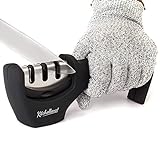
KITCHELLENCE 4-in-1 Sharpener
- Three slots for repair
- sharpen and polish
- No power or water required
- Compact ABS body
- Seconds per knife
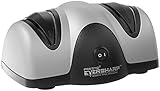
Presto EverSharp Electric
- Two-stage sharpening
- Sapphirite grinding wheels
- Precision blade guides
- Suction-cup base
Best Knife Sharpening Systems Compared in 2026
Every product in this roundup appears below with its type, angle control, and the abrasive it uses. Angle control is the column beginners should read first, because it decides how much practice the tool demands.
| Product | Specifications | Action |
|---|---|---|
| Sharp Pebble 1000/6000 Whetstone |
|
Check Latest Price |
| KITCHELLENCE 4-in-1 Sharpener |
|
Check Latest Price |
| Presto EverSharp Electric |
|
Check Latest Price |
 Chef’sChoice 15XV EdgeSelect Chef’sChoice 15XV EdgeSelect |
|
Check Latest Price |
 Lansky Deluxe 5-Stone System Lansky Deluxe 5-Stone System |
|
Check Latest Price |
 Work Sharp Guided Field Sharpener Work Sharp Guided Field Sharpener |
|
Check Latest Price |
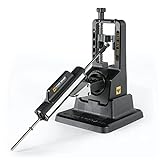 Work Sharp Precision Adjust Kit Work Sharp Precision Adjust Kit |
|
Check Latest Price |
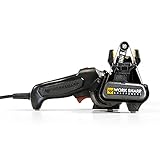 Work Sharp MK2 Electric Work Sharp MK2 Electric |
|
Check Latest Price |
 King KW65 1000/6000 Whetstone King KW65 1000/6000 Whetstone |
|
Check Latest Price |
 Wucgea 8-in-1 Stone Kit Wucgea 8-in-1 Stone Kit |
|
Check Latest Price |
1. Sharp Pebble 1000/6000 Whetstone – Best Overall for Beginners
Sharp Pebble Whetstone Knife Sharpener – 1000/6000 Grit Sharpening Stone
1000/6000 grit corundum stone
Non-slip bamboo base
Angle guide and manual
2.1 pounds
Pros
- Angle guide locks the blade at a repeatable angle
- Dual grit covers repair through polishing
- No oil or power needed
- Works on knives
- scissors and chisels
Cons
- Freehand technique still takes practice
- No flattening stone included
- Unlabeled grit sides cause confusion
This is the system I hand to friends who tell me they have never sharpened anything. The stone is a dual-sided corundum whetstone, 1000 grit on one face for repairing a dull edge and 6000 grit on the other for polishing, bonded to a bamboo base so it does not skate across a wet counter. The reason it beats cheaper stones is the folding angle guide in the box, a small plastic piece you clip onto the base and rest the spine of the blade against.
In my sessions the guide changes everything for a first-timer. Without it, most people rock the blade at wildly different angles and end up with a rounded edge that feels sharper for about a day. With it, the angle stays put and the 1000 grit side does the actual work of resetting the bevel. Reviewers report 30 to 45 minutes on a genuinely dull knife for a first full session, and closer to ten minutes once the motion becomes familiar.
Technically this is a straightforward water stone, and the specification list is honest about it: corundum material, water-based operation with no honing oil, and a physical footprint of 7.25 by 2.25 by 1 inches. It handles kitchen knives, pocket knives, scissors, chisels and razors, which means one tool covers most of a household’s sharpening needs. Nothing about it is exotic, and that is precisely why it works as a first purchase.
It is also a real skill investment, and I want to be straight about that. You are learning to hold a blade at a consistent angle, to wet the stone, and to feel for the burr along the edge before you change sides. Sharp Pebble claims the stone stays flat longer than cheap stones do, and buyers broadly agree, but a corundum stone of this class will still eventually dish in the middle. Plan to add a lapping plate in year two, not day one.
Is the angle guide enough to replace a clamping system?
No, and the difference shows up on damaged blades. The angle guide controls the angle, but it does not clamp the spine rigidly, so on a badly nicked or very hard knife your hand can drift as pressure increases. Users coming from a clamp-based system consistently report going back to the jig for heavier repairs. For normal dulling on a Western chef’s knife, the guide is more than enough.
It also does nothing for single-bevel geometry. The guide is built around a double bevel, which is right for the vast majority of home kitchen knives and wrong for a yanagiba, where you sharpen the back of the blade at a fixed angle and hollow out the front. If that describes your knife, look at the stone kits in positions nine and ten and read the single-bevel section in the buying guide.
What do beginners get wrong with this stone?
Pressing too hard is the most common error I see. Harder pressure does not sharpen faster, it just generates heat and slurry faster, and it can shorten your session before the edge is finished. Use a light touch and let the stone do the work.
The second error is skipping the 6000 grit side. People get impatient after the 1000 grit pass, the knife already cuts, and they put it away. The 1000 grit side leaves a toothy edge that dulls in days. The 6000 pass is what turns that into an edge that holds through a week of prep work, and it takes two or three minutes.
2. KITCHELLENCE 4-in-1 Sharpener – Best Budget Manual Sharpener
4-in-1 Kitchen Knife Accessories: 3-Stage Knife Sharpener Helps Repair, Restore, Polish Blades and Cut-Resistant Glove (Black)
Three-slot manual design
ABS body with non-slip base
180 g, 8.3 inch long
Ambidextrous handle
Pros
- Seconds per knife with no skill needed
- Smallest footprint in this list
- Restores badly dull knives to usable
- No water or power required
Cons
- Edge is adequate rather than fine
- Needs frequent re-doing
- Some buyers report the glove is missing from the box
This is the sharpener you buy when you want the problem solved tonight with zero learning curve. The blade goes into one of three fixed slots, you pull, and the geometry of the slot decides the angle for you. There is a diamond rod slot for straightening small bends, a main sharpening slot that restores the V shape, and a fine polishing slot for finishing. The whole unit weighs 180 grams and stands about 8.3 inches tall.
With more than 39,000 reviews behind it, this is the most battle-tested manual pull-through in the group, and the pattern of feedback is very consistent. Buyers like that a knife goes in and out in seconds with no water bowl, no outlet, and no learning curve. It is the sharpener I recommend to anyone who cooks twice a week and has no intention of developing a stone habit.
Where the reviews get honest is on edge quality. A fixed-slot sharpener produces a good daily-maintenance edge, not a fine slicing edge, and experienced users say so plainly. The edge is short-lived compared with a stone or a three-stage electric unit, which means you will be running the knife through the polishing slot more often than you would like. For a knife that spends its life on a cutting board doing onions, that is a completely reasonable trade.
Two practical notes. First, the package is advertised with a cut-resistant glove, and a small number of buyers report it arriving separately from the sharpener, so treat that as a bonus rather than a promise. Second, follow the slot sequence rather than skipping straight to the main sharpening slot. The first pass through the diamond rod is what removes the small bends that stop the blade from sitting flat in the next slot.
Will it handle a Japanese or carbon steel knife?
Yes, and this is where pull-throughs get unfairly criticised. The slot is a symmetric V, which is exactly right for a double-bevel stainless or carbon steel knife, and a flat double-bevel is standard on most Japanese gyuto and santoku blades. The tool does not care what steel the blade is made from.
What it cannot do is single-bevel work, and it cannot reprofile. If your knife has been sharpened to a very acute 15 degree edge and you want to move it back to a more forgiving 20 degrees, a fixed slot will not do that. It maintains the angle it was built around rather than the angle the knife needs.
Who should skip this one?
Skip it if you slice fish, make paper-thin garnishes, or own a set of knives you spent real money on and want to keep for decades. The fast repeated passes that keep a dull knife working are the same passes that slowly grind away steel over a long life. Forum regulars who own expensive blades almost never run a pull-through as their only system for exactly that reason.
Also skip it if the kitchen is your only reason to sharpen and you have serrated knives as your main slicing tools. A fixed V slot is the wrong tool for a serrated blade, since it tries to re-bevel each tooth. Look for a dedicated serrated slot or a diamond abrasive instead.
3. Presto EverSharp Electric – Best Value Electric Sharpener
Presto 08800 EverSharp Electric Knife Sharpener
Two-stage electric system
Sapphirite grinding wheels
Precision blade guides
9.9 by 7.2 by 4.8 inches
Pros
- No angle guesswork at all
- Fast on a usable edge
- Compact and quiet
- Owners report years of service
Cons
- Two stages limit final refinement
- 120-volt design only
- Overuse can weaken a thin edge
The EverSharp is the electric sharpener to buy if you want the machine experience without the premium. It runs a two-stage system: a coarse grinding wheel followed by a fine honing wheel, both made from sapphirite, the same abrasive used in professional sharpening shops. Between them sit precision blade guides that physically position the knife at the correct angle every single time you draw it through.
That guide is the reason electric machines appeal to beginners. You are not estimating anything. You draw the blade through and the machine decides the angle, which means a first-time user can produce a decent edge in their first minute rather than their first month. With nearly 19,000 reviews, the durability story is the strongest part: owners describe multi-year service and sharpening only a few times a year, treating it like any other countertop appliance.
The specification is honest and simple. Plastic body with sapphirite wheels, 3 pounds, 9.9 by 7.2 by 4.8 inches, 120-volt. That last detail matters if you travel or live outside North America, since the unit will not run on other voltages. A suction-cup base holds it in place, and reviewers consistently note it is quieter and smaller than most competing electric units.
The limitation, stated plainly, is the two-stage ceiling. A two-stage wheel grinds and then refines, but it does not strop, so the finished edge is good rather than excellent compared with a three-stage unit. Reviewers with fine-whetstone experience report that a pass on a honing steel afterwards noticeably improves the result. And because the wheel is abrasive, running a very thin edge through it repeatedly will grind that edge down faster than you want.
Is an electric sharpener worth it for a home cook?
Yes, if you sharpen weekly and you value consistency over finesse. The speed difference is dramatic: an electric unit returns a dull knife to service in about a minute, while the same job on a stone takes half an hour of practice. That speed is what converts a one-time experiment into a habit, and habits are what actually keep an edge sharp.
The honest counter-argument is metal removal. An abrasive wheel always removes more steel per session than a stone used with light pressure, and over a decade that difference is real. If you own a small set of inexpensive knives, you will never notice. If you own a hand-forged Japanese knife you intend to keep for life, the conservation from a stone is worth more to you than the convenience.
What about serrated knives and other blades?
It handles most non-serrated blades and one-sided serrated knives, which covers the majority of kitchen knives in a normal home. Two-sided serrated bread knives are the exception, and you should not force them through. The product information is clear on this point, and it matches what experienced users say about wheel sharpeners generally.
It also does not sharpen scissors, garden tools, or axes. If your household includes a lawn mower blade or a pair of shears that need work, the EverSharp will not touch them. In that case the Work Sharp MK2 in position eight is the better single purchase, because it handles both categories.
4. Chef’sChoice 15XV EdgeSelect – Best Premium Electric Sharpener
Chef’sChoice 15XV EdgeSelect Professional Electric Knife Sharpener with 100-Percent Diamond Abrasives and Precision Angle Guides for Straight Edge and Serrated Knives, 3-Stage, Gray
3-Stage EdgeSelect, diamond abrasives
15 degree Trizor edge
Spring angle guides
3-year warranty
Pros
- Genuinely fine edge on dull or nicked knives
- Repeatable angle every pass
- Handles straight and serrated blades
- Three stages including a stropping step
Cons
- Bulky countertop footprint
- Instructions must be followed closely
- Knives only
- no tools or scissors
This is the machine I would put on a counter in a house with a lot of good knives. Where the EverSharp has two stages, the 15XV has three, and the first two run on 100 percent diamond abrasives while the third is a patented flexible stropping system. The result is not just a sharp edge but a refined one, which is why the owner reviews describe cutting paper and shaving rather than merely slicing tomatoes.
The technical headline is the EdgeSelect system itself. Patented flexible spring guides automatically adjust to hold the sharpening angle while you draw the blade through, and the machine converts a standard 20 degree factory edge into a 15 degree Trizor XV edge. A finer edge cuts cleaner and slices further, but it is more fragile, so this is a machine for someone who will use the knife immediately rather than store it for months.
Speed is the other reason reviewers keep this one. The manufacturer figures are about one minute for a first-time sharpening and about ten seconds for a resharpen, and owners with 14,000-plus reviews generally report the same. Many of them describe abandoning a whetstone routine altogether because a repeatable fifteen-degree diamond edge in a minute is a better trade than a better edge in forty-five minutes.
Do read the manual, though. That is the most repeated piece of advice in the reviews: work each stage until a consistent burr forms along the edge, and save the stropping stage for touch-ups. Skipping the early stages to get to the fast one produces a worse edge and more metal removal than you intended. There is also a 3-year limited warranty, which is the longest stated in this group.
Is it worth the step up from a two-stage electric?
Worth it if the knives are the point. The third stage is what separates a good edge from a very good one, and on expensive blades the difference in cutting feel is obvious, particularly on soft produce where a blunt edge squashes rather than slices. Reviewers who upgraded from a two-stage unit tend to be the ones who notice it most.
Not worth it if you own a handful of inexpensive knives and sharpen twice a year. A two-stage machine will keep those knives cutting perfectly well, and the extra counter space and extra cost buy you refinement you will not notice. The measurement that matters here is 10 by 4.25 by 4.25 inches and 4.2 pounds: that is a real appliance taking up a real slab of worktop.
Can it sharpen a serrated or single-bevel knife?
Serrated, yes. The product information explicitly covers straight-edge and serrated knives, and users with serrated bread and steak knives report good results, which comes from the flexible guides adapting to the tooth profile rather than pressing a fixed bevel against it.
Single-bevel Japanese knives are a different story and I would not recommend them here. A wheel-based system lays down a symmetric double bevel, and a yanagiba or a deba is not designed for that geometry. It also cannot thin, cannot reprofile, and cannot put a true apex on a single bevel. For those knives, stay with a stone.
5. Lansky Deluxe 5-Stone System – Best for Learning Stone Sharpening
Lansky Deluxe Knife Sharpening System: 5-Stone Ceramic Knife Sharpener Kit with Honing Oil – LKCLX
Five color-coded stones
Knife clamp holds the angle
Honing oil and case
1.1 pounds
Pros
- Full grit range from extra coarse to extra fine
- Clamp removes freehand angle guesswork
- Color coding makes the sequence obvious
- Case keeps the kit organized and portable
Cons
- Oversized case takes a full drawer
- Oil bonding to plastic holders can fail
- Oil workflow adds mess and setup
The Lansky kit is the traditional answer to the beginner problem, and the reason is the clamp. You put the knife in, tighten it, and the blade sits at a repeatable angle while you draw it across a stone. No guide to fumble, no angle to estimate, and no motor noise. The clamp turns a stone system into something that behaves like a guided machine while still letting you move through a real grit progression.
You get five stones, colour-coded from extra coarse through coarse, medium, fine alumina oxide, and an extra-fine ceramic hone, each in a finger-grooved holder so your grip stays clear of the abrasive. There is honing oil in the box, a practice knife replica for learning on, and a moulded storage case. At 1.1 pounds and 10.25 by 9.75 inches, it is a self-contained kit that does not need anything else to get started.
What the five stones buy you is range. The extra-coarse stone is for chips and serious edge damage that a 1000 grit stone will not touch, and the extra-fine ceramic is for polishing. Beginners who buy a single dual-sided stone and hit a chip have nowhere to go; here you can work all the way down. The colour coding sounds like a small thing and it genuinely reduces the number of decisions a nervous person has to make.
The oil workflow is the real trade-off against modern water stones. Lansky stones are oiled, not soaked, which means no soaking and no water bowl, but it does mean oil on your fingers, on the cloth, and on the knife. It also ages the stones. Buyers moving to electric machines most often cite the oil bonding to the plastic holders and stones eventually loosening as the deciding drawback.
Is five stones too many for a first purchase?
It is more than you need on day one, and I would say so to anyone asking. The extra-coarse and the extra-fine will sit unused for months on a home kitchen knife that just needs edge maintenance. What makes the kit work as a first purchase is not the stone count, it is that the clamp and the case come in the same box, and those two pieces are what usually get bought separately.
There is a real argument for the full range anyway if you own more than kitchen knives. The kit is marketed for outdoor, hobby and garden blades as well, and if you bring back a hunting knife with a chip in it, you have the stone that fixes it. Read our skinning knife picks if that is your use case.
Will it handle Japanese single-bevel knives?
It can, but you have to set the angle deliberately, and the clamp is double-sided by design. For a single-bevel knife you want to sharpen the back of the blade at a steep fixed angle and leave the front hollow. You can work up to a suitable grit on the back and skip the front entirely, which is a technique experienced sharpeners use with any clamp system.
What the clamp will not do is change the angle while you work, which is a limitation compared with an adjustable chassis. If you own a mixed collection with a mix of factory angles, the Work Sharp Precision Adjust in position seven is the more flexible tool, and the freehand stones in positions one, nine, and ten suit experienced single-bevel users better than any of them.
6. Work Sharp Guided Field Sharpener – Best for Travel and Gifting
Work Sharp Guided Field Sharpener, Compact Travel Knife Sharpener Tool
Five abrasive surfaces in one tool
Fixed 20-25 degree angle
135 g, 9.53 inches long
3-year warranty
Pros
- Highest rating in this group
- Five abrasive surfaces including a strop
- No power
- water or setup needed
- Compact enough for a pack or a drawer
Cons
- Fixed angle cannot adapt to blade geometry
- Abrasive surfaces wear and are not warrantied
- Not a repair tool for serious damage
This is the highest-rated product we reviewed, at 4.8 out of 5 across more than 12,000 reviews, with 85 percent of those giving five stars. That number is not an accident. The tool is a single unit containing five abrasive surfaces, and it does what it promises in seconds with no power, no water, and no assembly. For a first-time user, the appeal is that there is nothing to learn and nothing to set up.
Inside are diamond plates for coarse work, ceramic rods that rotate to expose coarse and fine surfaces plus a groove for fish hooks, and a leather strop for finishing. The whole package is 135 grams and just under 10 inches long, and it slides into a pack or a kitchen drawer. There is a limited lifetime warranty on the body and a 3-year warranty overall, with abrasives excluded.
The technical limitation is the angle, and it is not adjustable. The guide holds a fixed 20 to 25 degree range, which covers the majority of Western kitchen knives and most pocket knives at the factory angle they ship with. What it cannot do is shift to match a European versus an Asian edge, which is the single most common request in the reviews.
The second limitation is scope. Five abrasive surfaces sound like a full system, but the diamond plates are small and the angle is fixed, so this is a maintenance and touch-up tool rather than a reprofiling or repair one. If a blade has a real chip in it, you want a stone or a motorised unit, not this. One nice detail: the diamond plates remove to expose a broad head wrench underneath for field repairs.
Is it the right gift for someone who cannot cook yet?
It is, and this is the clearest use case in the whole roundup. A gift buyer wants to say three things: you cannot break it, you cannot use it wrong, and it needs nothing else. This tool satisfies all three, and the highest rating in the group is largely a rating for exactly that, since buyers are reporting satisfaction rather than measured edge performance.
The one thing to tell the recipient is what it is not for. A fixed 20 to 25 degree guide is wrong for a single-bevel Japanese knife, and the small diamond plates are not meant for repairing a damaged edge. Used as a maintenance tool on a normal kitchen or pocket knife, it will keep the blade working indefinitely.
Does it replace a full sharpening system?
No, and treating it as a full system is the main mistake buyers make. It is the best travel sharpener and the best drawer-drawer sharpener in this list, and it covers knives, hooks, and general blade maintenance with a strop on the end. It does not cover a full grit progression, an adjustable angle, or heavy edge repair.
For that reason I would pair it rather than substitute it. A home user with one of these in a drawer and a stone on the counter has covered both the daily touch-ups and the periodic full sharpening, which is the same two-tier setup I would build for a family with a single good chef’s knife.
7. Work Sharp Precision Adjust Kit – Best for Adjustable Edge Angles
Work Sharp Precision Adjust Knife Sharpener Kit, Fixed Angle System
Adjustable 15-30 degrees
1-degree increments
320/600 grit, diamond and ceramic
3-year warranty
Pros
- Match factory angles on Asian and European knives
- V-block clamp holds serrated blades securely
- Three abrasive surfaces in one rod
- No power needed
Cons
- Slower than an electric sharpener per knife
- Technique takes practice to get consistent
- Base is large for the working parts
This is the middle path that most roundups skip, and it is the kit I would buy for someone with a mixed knife drawer. The chassis indexes the sharpening angle from 15 to 30 degrees in one-degree increments, so you can set a Western chef’s knife to its 20 degree factory edge and a Japanese gyuto to a finer 15 without changing equipment. Being able to reproduce a factory angle is the single most underrated feature in this category.
The clamping system is a V-block, and that is why it earns its place on this list. A V-block holds a straight edge and a serrated edge both, repeatably, which pull-through slots and most pull-through V designs do not. Reviewers with serrated bread knives specifically call the V-block out as the feature that made the kit usable for them.
Three abrasives are indexed on a single sliding rod: a tri-brasive sharpening stone at 320 and 600 grit, a diamond abrasive, and a fine ceramic. That range lets you start at 600 grit to set an edge, move to diamond to refine it, and finish on ceramic, and the whole rod swaps between positions without tools. A benchtop base keeps the chassis stable, which matters more than it sounds, because a moving jig produces a wandering angle.
It is a manual system, so it is quiet and needs no power, and at 215 grams plus a base it is portable. The 3-year warranty covers it. The criticism in the reviews is consistent and fair: it is slower and more hands-on than a motorised unit, there is a technique curve to getting consistent strokes and pressure, and the base is bulky relative to the parts doing the work.
Is it better than an electric sharpener for a mixed collection?
For angle control, yes, and that is the decisive point. The electric machines in this list either hold a fixed angle or convert to a single 15 degree edge. The adjustable chassis lets you match whatever the knife came with, which matters when you own knives from different manufacturers with different factory bevels.
For raw speed, no. This is a hands-on process with a draw stroke per side, and it will take you several minutes per knife rather than the minute an electric unit takes. Choose it for control and versatility, not for throughput. If you sharpen six knives on a Sunday morning, an electric machine is the better tool for that specific job.
Can beginners actually use the clamp and rod?
Yes, and it is more forgiving than a stone. The clamp holds the blade and the chassis holds the angle, so your job is reduced to a steady draw stroke with even pressure. That is a much smaller ask than freehand stone work, and it is why I put this kit above the freehand stones for anyone who is anxious.
Two cautions. First, do not skip the coarse stage when a blade is in bad shape; the 320 grit side is there for chips, and starting at 600 will just polish a damaged edge. Second, the 15 degree setting produces a fragile edge that will not survive a bone or a frozen item, so keep it for thin-skinned produce and reserve 20 degrees for general kitchen work.
8. Work Sharp MK2 Electric – Best for Knives, Scissors and Tools
Work Sharp MK2 Electric Knife Sharpener – Adjustable 2-Speed Knife Sharpening System for Kitchen Knives, Pocket Knives, Scissors, Axes & Garden Tools
Two-speed electric motor
Flexible abrasive belts
Edge guide reaches the tip
3-year warranty
Pros
- Handles knives
- scissors
- axes and mower blades
- Fast on kitchen knives
- Second speed copes with heavy grinding
- Compact and simple to operate
Cons
- Fixed edge guide angle
- Belt systems remove more steel than a strop
- Belts need replacing as they wear
The MK2 earns its spot because of what it does beyond the kitchen. A two-speed motor runs a light setting for routine sharpening and a heavy grinding setting for axes, lawn mower blades and garden tools, and the flexible abrasive belts conform to whatever edge you feed them, serrations included. If one device has to cover a household’s blades, this is the one I would choose.
At 4.7 out of 5 across more than 8,000 reviews, it sits second only to the field sharpener in this group, and the reviews describe consistent, repeatable results rather than occasional brilliance. The edge guide runs the full length of the blade, supporting it all the way to the tip, which is a small design detail that prevents the rounded tips users complain about on cheaper belt machines.
It is also compact and genuinely simple, roughly 7 by 2.25 by 1.25 inches with a straight on-off switch and no menu to navigate. Belts and a knife sharpener are the stated contents, and there is a 3-year warranty. The simplicity is deliberate: you load the knife, turn it on, draw it through a few times, and turn it off.
The trade-off is metal removal, and it is the same trade every belt machine makes. Belts are an aggressive grinding surface compared with a stropping stage, so the more you use it, the more steel comes off. Reviewers also note that the edge guide angle is fixed, which is the same limitation as the Chef’sChoice and Presto units, and that belts need replacing as they wear.
Should a kitchen knife go on the same belt as a mower blade?
Yes, but do not rush it. The second speed exists for exactly this reason, and running a mower blade on the first speed wastes time while running a chef’s knife on the second grinds it away faster than you want. My advice is to treat them as two separate jobs on one machine, and to give the good knife the light speed and fewer passes.
Flexible belts are also why this machine handles serrated knives at all. A hard grinding wheel flattens serration teeth and smooths the tips off them, while a flexible belt wraps around each tooth and grinds the valleys. The material information lists the belts as the included abrasive, and that flexibility is the mechanical reason serrated knives survive the process.
How often do the belts need replacing?
There is no fixed interval, and anyone quoting one is guessing. It depends on how much steel you put through the machine and how abrasive your material is. A household sharpening a few kitchen knives a month will run a set of belts a long time. A user running mower blades and axes through the second speed will wear them out much faster and should keep spares.
Consumable availability is worth checking before you buy anything belt-driven, and it is one of the reasons forum buyers favour repairable systems. The good news here is that abrasive belts for this class of machine are widely made, and the 3-year warranty means the motor and body are covered separately from the consumable.
9. King KW65 1000/6000 Whetstone – Best Japanese-Style Water Stone
KING KW65 1000/6000 Grit Combination Whetstone with Plastic Base
1000/6000 grit water stone
Injection-molded plastic base
8 by 2.25 by 1 inches
16 ounces
Pros
- Hard stone that resists dishing
- Long-established Japanese maker
- 1000/6000 covers repair through polish
- Also works on chisels and plane irons
Cons
- No instructions and the grit sides are unlabeled
- Plastic base slides on a wet counter
- No angle guide bundled
- Stones often arrive with chipped corners
The King KW65 is the stone I would put in front of someone who already owns Japanese knives and wants to learn to sharpen them properly. It is a 1000 and 6000 grit combination water stone from a long-established Japanese maker, bonded to an injection-molded plastic base, 8 by 2.25 by 1 inches and 16 ounces. Water stones are the native format for Japanese knife geometry, and using one removes any doubt about whether your process suits the blade.
What separates it from cheaper stones is hardness. King stones are hard enough that they wear slowly and hold their flatness far longer than soft stones, which means you flatten them far less often. That is the single most important physical property in a first water stone, and experienced users consistently rank it above cheaper alternatives for exactly this reason.
The 1000 grit side repairs and re-establishes an edge, and the 6000 grit side polishes. Reviewers describe beginners reaching a paper-cutting or even shaving edge in their first session with 30 to 40 minutes of practice, and the finish is finer than a dual-sided stone of the same price class because the two stones are each optimised for their job. It also handles chisels and plane irons, which broadens its use well past the kitchen.
There are three real drawbacks, and none of them are about the stone itself. There are no written instructions, the grit sides are not labelled so the rougher side is the 1000, and the plastic base lets the whole unit slide around a wet countertop. The packaging is also the most criticised thing in the reviews, with stones frequently arriving with chipped corners.
Is a harder stone actually better for a beginner?
For a water stone, yes. Soft stones wear fast, dish in the middle, and give you a concave surface that produces a mismatched edge on a 200 mm blade. A hard stone stays flat longer, which means the angle you set is the angle you keep. Beginners benefit from this more than experienced users do, because beginners take far more passes to get an angle right.
The trade is that a hard stone removes metal slightly less quickly and needs more pressure to work efficiently, which can frustrate someone expecting fast results. If you find yourself leaning hard and thinking it is not cutting, that is the hard stone telling you to be patient rather than a defective product.
How do I deal with the unlabeled sides and no instructions?
Touch each side with a fingernail. The rougher, gritty-feeling side is the 1000 grit, and the smoother one is the 6000. Mark the base with a permanent marker or a piece of tape on your first session so you never have to guess again, since confusing the two is the most commonly reported beginner error with this stone.
For technique, soak the stone in water for 5 to 10 minutes before starting, rewet it as it dries out during work, and keep the stone flat on a damp cloth to stop it sliding. Put a small drop of dish soap on the wet surface to build a slurry, which is what actually does the cutting, and expect to spend 30 to 40 minutes on your first knife.
10. Wucgea 8-in-1 Stone Kit – Best Complete Beginner Bundle
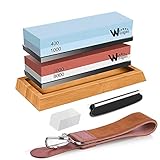
Wucgea Knife Sharpening Stone Kit – 400/1000 3000/8000 Grit Japanese Whetstone Set with Non-Slip Rubber Base, Angle Guide, Flattening Stone and Leather Strop
400/1000 and 3000/8000 grit
Angle guide, flattening stone, strop
Bamboo base
Pros
- Angle guide and flattening stone both included
- 400 grit repairs chips coarser kits skip
- Four grit levels cover repair to polish
- Leather strop included for a mirror edge
Cons
- Many components to learn at first
- Takes more counter space than a single stone
- Water stones still need soaking and flattening
- Guide accuracy varies
The Wucgea kit is the most complete stone package in this roundup, and it solves the two problems that make stone buying annoying. The angle guide is included, so you are not hunting for one, and the flattening stone is included, so the maintenance tool that keeps your stones flat does not become a second purchase in year two. That combination is why buyers describe it as the best all-in-one first setup.
The stones are white corundum in two pairs: 400 and 1000 grit for repair and edge setting, and 3000 and 8000 grit for smoothing and polishing. They sit in non-slip rubber holders on a bamboo base, so the set is stable on a wet counter. There is also a leather strop for use with polishing compound when you want a mirror edge, and the kit works on kitchen knives, hunting and pocket knives, scissors, and chisels.
The 400 grit is the piece that sets this kit apart from the usual dual-sided 1000 and 6000 starter stone. A 1000 grit stone will smooth an edge but will not efficiently remove a chip or a ding, so if you nick a blade and your only stone is 1000 grit you are stuck. The 400 grit gives you somewhere to go, which reviewers single out as the most useful surprise in the package.
Everything is water-based, so you soak the stones 5 to 10 minutes before use and no oil is needed. The kit is also the heaviest of the stone options at 3 pounds, and the parts are listed at roughly 7.5 by 3 by 1.4 inches once assembled, so it wants a real spot on the counter rather than a drawer.
Is a four-stone set overkill for a first purchase?
Slightly, yes, and I would rather say so than oversell it. On a knife that only needs edge maintenance, the 3000 and 8000 stones will stay in the tray. The practical value of the set is not the stone count, it is that the range plus the angle guide plus the flattening stone means nothing else needs buying for years.
The real cost is cognitive. Beginners report that the number of pieces makes the first session harder to get to grips with, because you have to work out which stone comes next. My advice is to treat 400 and 1000 as your working pair for a couple of months, then introduce 3000 and 8000 once the motion is automatic.
How does the guide compare with a clamp?
It is less rigid, and buyers say so directly. A clamp holds the spine absolutely still while a guide relies on your hand pressure staying consistent, so on a hard or badly damaged knife the guide is more likely to drift. On a knife that is simply dull, the guide is enough, and it is far easier to store and carry than a clamp assembly.
If you already have experience with a clamp or with a guide, this kit will not upgrade you. If you have never sharpened anything, though, the fact that the guide and the flattening stone are in the same box is worth more than any single technical specification, and that is why it earns the final slot rather than an earlier one.
How to Choose a Knife Sharpening System: 4 Steps
Step one is to identify your worst-case knife, not your average one. Everything else follows from this. If you own a single-bevel yanagiba, a deba, or a thin carbon steel knife, three of the four families are off the table, because pull-through slots, fixed V-blocks and motorised wheels all lay down a symmetric double bevel. If your worst-case knife is a bread knife with a serrated edge, you need a serrated slot, a flexible abrasive belt, or a dedicated diamond sharpener. If it is a set of ordinary Western chef’s knives, you have complete freedom of choice.
Step two is to pick your angle target, and for most beginners the answer is 20 degrees per side. Anything in the 15 to 20 degree range works, but a 20 degree edge is more forgiving and more resistant to chipping, while a 15 degree edge cuts further and slices cleaner but goes blunt faster and is easier to damage. If your system cannot change the angle, match it to a 20 degree factory edge. If it can change the angle, set 20 degrees for general work and drop to 15 only for thin-skinned produce and fish.
Step three is to think about the grit range you actually need. Coarse grit from 80 to 400 removes chips and sets an edge, 1000 to 3000 smooths and refines, and 3000 to 8000 polishes. A single dual-sided 1000 and 6000 stone covers ninety percent of home kitchen work, which is why it is the most common beginner kit on the market. Add a coarser stone only if you actually chip blades.
Step four is to be honest about maintenance. Water stones need soaking, rewetting, and periodic flattening, and a soft stone needs flattening more often. Oil stones need oil on everything, including your fingers and your cloth. Electric and belt machines need consumables replaced on an irregular schedule, and pull-throughs need nothing at all, which is a real and underrated advantage.
The Four Sharpening Families Compared
Manual pull-through sharpeners are the lowest friction entry point. A fixed slot decides the angle, you pull, and the knife is usable again in under a minute with no water, power, or technique. They remove more metal per session than a stone because you are grinding a fresh bevel rather than refining an existing one, and the finished edge is a maintenance edge rather than a fine one.
Electric sharpeners are the fastest and most consistent option for a beginner, because the machine holds the angle and you only supply forward motion. The cost is metal removal over a long life and a fixed or preset geometry, plus counter space and a power cord. They cannot reprofile, cannot thin, and cannot put a true apex on a single bevel, which is the sharpest criticism leveled at them by experienced owners.
Whetstones give the most control and the finest edges and remove the least metal when used with light pressure. The cost is a genuine learning curve, a wet or oiled workflow, and the need to flatten soft stones. Stones are a skill you build over years, not a gadget you buy once.
Guided fixed-angle systems sit between the pull-through and the stone. A clamp, jig, or adjustable chassis holds the blade at a repeatable angle, so you get stone-level control without freehand technique. The cost is time, since each knife takes several deliberate strokes, and most of them are less portable than a pull-through.
On the question of whether a knife sharpener is better than a whetstone: for a nervous first-timer, a sharpener wins, because a guided slot removes the hardest variable and the first session usually goes well. For a knife you care about long-term, a whetstone wins, because light pressure on a fine stone removes far less steel and produces an edge you can refine rather than replace.
6 Beginner Sharpening Mistakes and How to Fix Them
1. Pressing too hard. Harder pressure does not sharpen faster. It generates heat, breaks down the abrasive faster, and produces a coarser edge. Use a light touch, roughly the pressure of writing with a pen, and let repeated light passes do the work.
2. Skipping the grit progression. Starting on a fine grit stone or a fine electric stage to save time is the most common error. Coarse grit sets the edge, medium refines, fine polishes. If you only have a fine stage available, you will polish a burr into an edge rather than remove it.
3. Forgetting to stabilise the tool. A moving stone or a sliding jig produces a wandering angle, which is worse than a slightly wrong but consistent one. Dampen the cloth under a water stone, use the non-slip base that came with it, and put your non-dominant hand on the tool.
4. Not checking the edge. Run a fingernail across the blade, or better, mark the edge with a permanent marker before you start and watch which part of the marker disappears. That single trick tells you instantly whether you are reaching the tip and the heel, and it is the fastest way to find a bad angle.
5. Sharpening on schedule instead of on condition. A calendar is a poor guide. Hone every few uses with a steel, and sharpen when the knife stops cutting cleanly on a tomato or a sheet of paper. Frequent light maintenance beats an aggressive monthly session, and it removes far less metal.
6. Confusing honing with sharpening. A honing rod realigns an edge that is already sharp. A sharpener removes metal to create a new one. Using only a rod on a genuinely dull knife will never make it sharp again, which is a common and expensive misunderstanding.
One more piece of advice that calms almost every nervous beginner: sharpening is closer to sharpening a pencil than to cutting a bar of steel. You are removing a very small amount of material to expose a shape that was already in the blade. Even a session that goes badly leaves your knife usable, and the amount removed over a careful year is far less than a single dropped knife.
Frequently Asked Questions
What is the easiest knife sharpener to use for beginners?
A manual pull-through or a preset-angle electric sharpener is the easiest, because the fixed V-shaped slot or the precision blade guide physically holds the blade at the right angle. You supply forward motion and nothing else. A Sharp Pebble 1000/6000 whetstone with its folding angle guide is the easiest stone option, since the guide removes the same guesswork while you learn.
Is it worth getting an electric knife sharpener?
Yes, if you sharpen weekly and value speed and consistency. An electric unit returns a dull knife to service in about a minute and produces the same angle every time, which is what turns sharpening into a habit. The caveat is that abrasive wheels remove more metal per session than a stone used with light pressure, so it is a poor conservation tool for expensive thin-edged blades.
What is a good beginner knife sharpening kit?
A dual-sided 1000 and 6000 grit whetstone shipped with a non-slip base and an angle guide is the most complete beginner kit, and the Sharp Pebble set is our pick. If you want the whole range in one box, a kit that also includes a coarse stone, a flattening stone and a strop covers every step of edge maintenance from day one.
Is a knife sharpener better than a whetstone?
For a first-timer, a sharpener is better, because a guided slot removes the angle variable and the first session usually goes well. For a knife you want to keep for decades, a whetstone is better, because light pressure on a fine stone removes far less steel and lets you refine an edge rather than grind out a new one. Most people end up owning both.
Can I sharpen serrated knives with these sharpeners?
Mostly no. A fixed V-shaped pull-through slot tries to re-bevel each tooth and will not work properly on a serrated blade. Look for a dedicated serrated slot, a flexible abrasive belt, or a diamond rod, all of which are stated capabilities of the picks in this roundup. Whetstones in general are unsuitable for serrations.
How often should I sharpen my knives?
Hone with a steel every few uses, and sharpen whenever the knife stops cutting cleanly rather than on a schedule. For most home cooks that means a full sharpening every few months. Frequent light maintenance sessions remove far less metal than occasional aggressive sharpening, which is the single best way to extend the life of a blade.
Conclusion: The Best Knife Sharpening System for Your Kitchen
For most people reading this in 2026, the best knife sharpening systems for beginners come down to a single question: do you want zero learning curve or a skill you keep for life. If the answer is zero learning curve and you own ordinary Western kitchen knives, start with the Sharp Pebble 1000/6000 whetstone and use the angle guide until you no longer need it. If you want the answer in sixty seconds, the Presto EverSharp does the same job without a water bowl.
If you own Japanese or carbon steel knives, add a water stone to your setup from the start and avoid wheel and pull-through systems. If you want a machine that produces a refined edge on expensive blades, the Chef’sChoice 15XV is the one I recommend. And if the sharpener is going in a pack or being given to someone who does not cook yet, the Work Sharp Guided Field Sharpener is the highest-rated, lowest-effort option in this roundup.
Whichever one you choose, buy it, put it where you will actually use it, and sharpen before the knife stops cutting rather than after. The habit matters more than the hardware, and the hardware only decides how quickly you build the habit.