

Short answer: the AccuSharp Ergonomic Knife Sharpener is the best knife sharpener for serrated knives for most people, because it handles straight and serrated edges in roughly ten seconds with no technique to learn. If your serrations are fine or your blade is expensive, the DMT DiaFold Serrated Diamond Sharpener is the more dedicated choice.
A serrated edge is not one edge. It is dozens of small ones, and each scallop has to be re-pointed on both sides. That single fact explains why a normal knife sharpener feels like it does nothing useful on a bread knife, and why the best knife sharpeners for serrated knives are built around a narrow, tapered or contoured abrasive surface rather than a flat stone.
We compared ten sharpeners across three tool families: hand-held carbide sharpeners, tapered diamond and ceramic rods designed for gullets, and guided electric and belt systems. Each one was judged on whether it physically reaches the valleys between teeth, whether it treats both sides of a scallop, and whether the result is repeatable without years of practice. We also tracked how each tool handles a mixed knife that has a plain spine section and a serrated section.
What follows is a practical roundup rather than a workshop manual. Every pick below is listed with its abrasive type, the serration sizes it suits, and the honest drawbacks, because the wrong tool here does not merely fail to sharpen. It can flatten a serration pattern beyond easy repair.
If you are still assembling a kit, our guide to the best premium knife sets for home chefs covers which blades actually need a dedicated serrated sharpener.
Table of Contents
- Top 3 Picks for Serrated Knife Sharpening in 2026
- Best Knife Sharpeners for Serrated Knives Compared (October 2026)
- Why Serrated Knives Need Their Own Sharpening Approach
- 1. AccuSharp Ergonomic Knife Sharpener – Ten Seconds for Straight and Serrated
- 2. DMT DiaFold Serrated Diamond Sharpener – The Dedicated Cone for Any Serration
- 3. Chef’sChoice 15XV EdgeSelect – Guided Electric Sharpening With a Serration Stage
- 4. Work Sharp Ken Onion System – Belt-and-Guide Sharpening for Every Tool
- 5. Chef’sChoice Manual 4643009 – Compact Two-Stage Manual Angle Control
- 6. Wamery Retractable Diamond Rod – Smallest Tool That Handles Scallops
- 7. AccuSharp Knife and Scissor Combo Pack – Two Tools in One Case
- 8. Lansky Fine Serrated Ceramic Hone – The 1000 Grit Finishing Step
- 9. Fino Edge Retractable Diamond Rod – Pocket Backup for Field Kits
- 10. Croco Dial 5-in-1 Sharpener – Three-Step Dial With Carbide and Ceramic
- How to Sharpen a Serrated Knife Step by Step
- Sharpener Types to Keep Away From Serrated Edges
- How to Match a Sharpener to Your Serration Pattern
- Frequently Asked Questions
- What is the best knife sharpener for a serrated bread knife?
- Do you need a special sharpener for serrated knives?
- What is the best way to sharpen serrated knives?
- Can you put a serrated knife in a knife sharpener?
- What kind of knife sharpener can sharpen serrated knives?
- How to sharpen a serrated bread knife at home?
- Will a pull-through sharpener work on serrated knives?
- Final Verdict on Serrated Knife Sharpening
Top 3 Picks for Serrated Knife Sharpening in 2026

AccuSharp Ergonomic Sharpener
- Ten-second restore
- Carbide blades reversible
- Works on straight and serrated

DMT DiaFold Serrated Sharpener
- 1/4 inch to 1/16 inch cone
- 600 mesh diamond
- Folds to 5 inches

Chef’sChoice 15XV EdgeSelect
- Three-stage electric system
- Serration-protecting strop stage
- 15 degree angle guides
Best Knife Sharpeners for Serrated Knives Compared (October 2026)
| Product | Specifications | Action |
|---|---|---|
| AccuSharp Ergonomic Knife Sharpener |
|
Check Latest Price |
| DMT DiaFold Serrated Diamond Sharpener |
|
Check Latest Price |
| Chef’sChoice 15XV EdgeSelect Electric |
|
Check Latest Price |
 Work Sharp Ken Onion Sharpening System Work Sharp Ken Onion Sharpening System |
|
Check Latest Price |
 Chef’sChoice Manual 4643009 Chef’sChoice Manual 4643009 |
|
Check Latest Price |
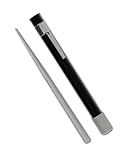 Wamery Retractable Diamond Rod Wamery Retractable Diamond Rod |
|
Check Latest Price |
 AccuSharp Knife and Scissor Combo Pack AccuSharp Knife and Scissor Combo Pack |
|
Check Latest Price |
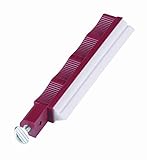 Lansky Fine Serrated Ceramic Hone Lansky Fine Serrated Ceramic Hone |
|
Check Latest Price |
 Fino Edge Retractable Diamond Rod Fino Edge Retractable Diamond Rod |
|
Check Latest Price |
 Croco Dial 5-in-1 Sharpener Croco Dial 5-in-1 Sharpener |
|
Check Latest Price |
Why Serrated Knives Need Their Own Sharpening Approach
Hold a bread knife up to the light and the structure becomes obvious. Each tooth is a wedge with two shoulders and a point at the tip, and the valley between two teeth is called a gullet or scallop. That point is what grips the crust. Grind it flat and the knife is finished, permanently.
A flat stone or a cylindrical honing rod touches only the tips. It rounds them over at a shallow angle and leaves the gullets untouched, which is why serrated blades seem to sharpen briefly and then go dull again within a few slices. A dedicated tool places a narrow tapered tip into each gullet and works it scallop by scallop, restoring the point on one shoulder and then the other.
Two other variables decide your tool. Serration size, meaning how many teeth sit in a given stretch of edge, sets how narrow the working tip must be. Fine pocketknife serrations need a needle-fine point, while a coarse bread knife gullets with room to spare. Whether the scallops are cut on both sides or only the ground side also changes the technique, because a one-sided blade is deburred entirely from the unground back.
Our selection criteria were straightforward: the abrasive must reach into a typical gullet, both shoulders of a scallop must be addressable, the tool must be usable by a beginner, and the manufacturer must state the abrasive and grit rather than only claiming sharpness.
1. AccuSharp Ergonomic Knife Sharpener – Ten Seconds for Straight and Serrated
AccuSharp Knife Sharpener, Ergonomic Comfortable Handle, Compact & Easy to Use, Restore and Hone Straight & Serrated Knives, White
Tungsten carbide blades
Serrated and straight edges
1.6 oz
9 inch long
Pros
- Restores serrated and straight edges in roughly ten seconds
- Reversible carbide blades double service life
- Full-length finger guard keeps hands clear
- Ergonomic handle suits either hand
- Dishwasher cleanable
Cons
- Coarse carbide abrasive will not produce a polished straight edge
- Consistent angle takes practice to master
This is the sharpener I keep within reach of the cutting board. The carbide blade assembly is drawn along the blade from heel to tip, and the alternating raised teeth of the serration pass over the carbide teeth in sequence, each one getting its point restored as you go. On a well-maintained knife the whole pass takes about ten seconds.
What makes it the top pick is that it does not ask you to change your behaviour. There is no angle setting, no water bowl, no separate stropping stage, and no second tool for finishing. The full-length finger guard means your hand stays behind the blade for the entire stroke, which matters when you are working on a small paring knife over a wet cutting board.
The single-tungsten-carbide construction is the compromise to understand. It is a restorative abrasive, not a finishing abrasive, so it will not take a straight chef’s knife to a mirror edge and it is not the tool you reach for when you want a razor-sharp tip on a Japanese steel blade. It is built to return function quickly to an edge that has gone dull through ordinary use.
The blades reverse, so when one face is worn down you flip the assembly rather than replace the tool. Buyers commonly report five to ten years between blade changes, which is the strongest long-term cost argument in this roundup. At 1.6 ounces it also disappears into a drawer, which is where a sharpener earns its place or loses it.
If you own only one serrated knife and one other knife, this covers both indefinitely. If your serrations are genuinely fine, like those on a folding knife, the carbide teeth are physically wider than your gullets and you will feel the blade skip rather than bite. That is the one situation where a tapered rod is the better buy, and we cover it next.
How it handles coarse bread knife gullets
Coarse, widely spaced serrations are this tool’s home turf. The carbide teeth are wide and shallow enough that each gullet receives a real pass rather than a glancing touch, and the alternating shoulders of a bread knife mean the draw-through stroke alternates sides naturally.
Expect the tip of each tooth to come back crisp within one or two passes on a knife that has been used rather than abandoned. For a blade left unused for years, repeat passes on each side rather than leaning harder, because pressure does not accelerate carbide and it does encourage a wandering angle.
Where it falls short on fine work
Fine pocketknife serrations and micro-serrations on a tactical blade are outside its comfort zone. The gap is not really about ability, it is about contact area: a wider carbide tooth bridging a narrow gullet removes less metal from the point than you want and more from the shoulder than you want.
Reviewers also point out that the tool rewards a steady, almost unmodified stroking motion, and that your first session will feel awkward. Budget an evening before judging it. Once the pace is right, it is genuinely the fastest restore in this list.
2. DMT DiaFold Serrated Diamond Sharpener – The Dedicated Cone for Any Serration
Diamond Machining Technology (DMT) Diafold Serrated Diamond Knife Sharpener, Fine (FSKF), 4″
Tapered cone from 1/4 to 1/16 inch
600 mesh diamond
Folds to 5 inches
18 g
Made in the USA
Pros
- Cone taper matches gullets of any common size
- Fine diamond leaves no grinding slurry
- Folds small enough for a carry bag
- Sharpens faster than conventional stones
- Works on gut hooks and clippers too
Cons
- Plastic folding handles feel cheap and can flex
- One taper size only
- Fine grit alone is slow on a badly dulled edge
This is the only tool here built from the ground up for the job rather than adapted to it. The 4-inch cone tapers from a quarter-inch diameter down to a sixteenth, which means the thick base addresses the broad gullets of a bread knife while the fine tip reaches the micro-serrations on a pocketknife. One tool covers the full range that normally demands two.
The abrasive is a fine 25-micron, 600-mesh micronized monocrystalline diamond bonded to the cone. That fine grade is why the surface produces no slurry and why you can work dry or with water, whichever you prefer. Because diamond cuts rather than burnishes, it also bites faster than a ceramic rod at similar nominal grit.
Enthusiasts on sharpening forums repeatedly recommend a tapered diamond tool like this as the base of a serration routine, with finishing handled separately on a finer stone or ceramic hone. The reasoning is sound: reprofile with diamond, then refine. Experienced hands often work entirely freehand, using a near-unmodified steeling motion and letting the cone ride the edge in both directions.
One forum point worth repeating, since it contradicts a lot of marketing copy, is that a perfectly round rod is not the ideal shape for every serration pattern. A contoured or elliptical stone profile can follow a tooth shoulder more faithfully. That critique applies to straight rods more than to a tapering cone, which is one reason this tool outperforms many of its competitors.
Which knives this is the right choice for
Reach for it when you own a mix: a coarse bread knife, a serrated pocketknife, and a combination-pattern hunting knife. The taper is the deciding factor, because the same cone handles both extremes without a settings change or an accessory swap.
It is also the tool to choose if you sharpen gut hooks, gouges, carving tools or nail clippers alongside your knives. The point doubles as a conical file, which is a genuinely useful second function in a workshop drawer.
Build quality and the fine grit limit
The most common criticism is the folding handle. Reviewers describe the plastic hinge and grip as cheap, and some report flex or outright breakage, which is a real risk if you are pressing hard on a hardened blade. Handle it like a precision instrument rather than a chisel.
The second limitation is abrasive grade. A single fine diamond does not enjoy reprofiling a knife that has been dull for years, because fine grit removes metal slowly. Many users solve this by starting with a coarser diamond file and finishing on this cone. That is the correct order of operations.
3. Chef’sChoice 15XV EdgeSelect – Guided Electric Sharpening With a Serration Stage
Chef’sChoice 15XV EdgeSelect Professional Electric Knife Sharpener with 100-Percent Diamond Abrasives and Precision Angle Guides for Straight Edge and Serrated Knives, 3-Stage, Gray
Three-stage electric system
Flexible stropping stage
15 degree guides
4.2 pounds
Pros
- Repeatable angle control without practice
- Third stage built to polish and preserve serrations
- Ten-second resharpen once an edge exists
- Solidly weighted unit stays put
- Repairs badly nicked blades
Cons
- Bulky countertop footprint
- Converts edges to a 15 degree bevel
- Knives only
- Angle conversion takes several passes on hard steel
This is the answer when you have several serrated knives, a scarred blade, or simply no patience for freehand technique. The 15XV draws the blade through three stages: two plated with 100 percent diamond abrasives, then a flexible abrasive system that polishes and is specifically designed to prolong a serrated edge rather than grind it flat.
The spring guides self-adjust as the blade passes, which is how it maintains a consistent angle through the entire stroke. First-time sharpening takes about a minute; once the edge exists, a resharpen is roughly ten seconds. For a household with a bread knife, a serrated utility knife and a couple of nicked favourites, that throughput is the whole argument.
Owners frequently compare it against wet-stone work on speed and usually put the machine ahead for volume, while conceding a hand sharpener can reach a marginally keener apex given far more time. The three-year limited warranty and the roughly 14,000-review base suggest the reliability picture is settled and positive.
The electric warning in most sharpening circles applies to cheap wheel sharpeners with a spinning abrasive, not to a guided system with a fixed diamond plate and compliant guides. The plate here moves with the blade rather than the blade being dragged across a rotating surface, and the manufacturer rates it for serrated knives as well as straight edges.
Where the electric approach earns its counter space
The advantage shows on damage. A blade with a chip or a dulled tip needs material removed evenly and symmetrically, and that is exactly what a fixed-angle guide delivers. Freehand work on a niced blade can easily remove twice as much from one shoulder as the other.
It also suits mixed households. Anyone in the house can use it without instruction, which matters more than enthusiasts often admit, because a knife that cannot be sharpened gets used until it is thrown away.
Trade-offs you accept with this unit
It occupies counter space permanently. At 4.2 pounds and roughly 10 inches long, it is not a drawer item, and reviewers call the footprint out as the single most common complaint.
The angle conversion is the other issue. It takes traditional 20-degree factory edges down to a 15-degree Trizor XV bevel. That produces a keen edge and it suits most kitchen knives, but some collectors with hard-use or single-bevel blades simply do not want the factory geometry changed. Scissors and other tools are out of scope as well.
4. Work Sharp Ken Onion System – Belt-and-Guide Sharpening for Every Tool
Work Sharp Ken Onion Knife Sharpener Tool – Adjustable Knife Sharpening System – For Knives, Scissors, Serrated Blades, & Tools
Flexible abrasive belts
Precision sharpening guides
Electronic speed control
2 pounds
Pros
- Keen and repeatable edges from a guided belt system
- Covers knives
- scissors
- serrated blades and tools
- Speed control keeps results consistent
- Stainless steel construction
- Three-year warranty
Cons
- Costs more than any manual or rod sharpener here
- Belts wear and need replacing
- Straight edges are the system's real strength
The Ken Onion edition takes the guided-slot concept a step further with flexible abrasive belts, precision sharpening guides and electronic speed control. The angle is set once, the knife is drawn through, and the same result comes out on the next blade. For someone who sharpens regularly across several tool types, that repeatability is the entire purchase case.
It handles serrated blades as well as straight ones, which puts it ahead of machines that claim knife coverage but quietly grind away gullets. It also covers scissors, so if your household has shears that have gone dull, this handles them in the same session with the same guides.
Buyers consistently describe the sharpness as professional level and note that despite its capability the footprint suits a home kitchen rather than a dedicated workshop bench. The stainless steel body and three-year comprehensive warranty also make it the most durable machine here.
I would class this as a serration-capable machine rather than a serration-first one. On a bread knife it will do the job well and consistently. On fine pocketknife serrations, a tapered diamond cone remains the more precise instrument, and the belt approach adds nothing the cone cannot do at that scale.
Best fit for a serious home sharpener
Buy this if you sharpen more than a few times a year, if you use knives from several manufacturers with different factory angles, or if you want one device for knives, scissors and general tools. The adjustable angle setup means you are not locked into a single bevel geometry.
Electronic speed control is a quieter benefit than it sounds. Slower belt speed with firm pressure removes metal cleanly, faster speed polishes. Being able to change that without changing anything else makes the difference between reprofiling a niced edge and just touching it up.
What you give up for it
Cost is the first factor. It sits well above every manual and rod option in this roundup, and above the countertop electric sharpener too, so the case depends on frequency of use.
Belts are consumables and will need replacing, which adds an ongoing cost the manual tools do not carry. And the honest limitation buyers report is that straight edges are where this system truly excels. Serrated work is supported, not specialised.
5. Chef’sChoice Manual 4643009 – Compact Two-Stage Manual Angle Control
Chef’sChoice Manual Knife Sharpeners for 15- and 20-Degree Straight-Edge and Serrated Knives with Diamond Abrasives Precise Angle Control & Compact Footprint, 2-Stage, Gray
Manual two-stage design
Selectable 15 and 20 degrees
100 percent diamond
9.25 inches
Pros
- Needs no power and stores compactly
- Diamond abrasives plus micron polishing stage
- Angle choice suits Japanese and European edges
- Covers straight
- serrated
- sports and pocket knives
- Ten-year warranty
Cons
- Light body can wobble on a work surface
- Manual technique takes practice
- No scissor or tool capability
This is the manual counterpart to the electric model, and it makes the same two-stage argument without a plug. The first stage uses 100 percent diamond abrasives for shaping, the second polishes with micron-sized diamond. Separate sharpening and polishing stages are what build a stronger, arch-shaped bevel rather than a flat grind.
Angle selection is the feature that matters most here. Switching between 15 and 20 degrees lets you match a Japanese single-bevel kitchen knife and a European double-bevel chef’s knife from the same unit, and the manufacturer rates it for straight, serrated, sports and pocket knives, so serrated work is a stated capability rather than an aside.
CrissCross sharpening technology works both sides of the blade together, which shortens the stroke considerably compared with a single-arm design. At 9.25 inches long and 8 ounces it stores in a drawer, and the 10-year warranty is the longest coverage in this roundup.
Owners who like it point to the finish on straight edges as the strongest evidence for the two-stage layout. Those who are less happy focus on feel, because at 8 ounces there is not much mass behind the draw.
Who gets the most from this design
Anyone who already understands sharpening angles and wants a repeatable tool without giving up drawer space to a machine. The selectable bevel also makes it the safer pick for a mixed knife collection, since you can match an existing edge instead of forcing one geometry on everything.
It suits a kitchen rather than a field kit. There is no case, no folding mechanism, and the handle is a fixed Soft Touch grip sized for a countertop session.
Where the manual format shows strain
Lightness is the recurring theme. Reviewers report the body wobbling against the work surface, and a wobbling sharpener on a serrated blade is worse than useless because the angle wanders gullet to gullet. Press the heel down before you draw.
Beginners also need several sessions before the angle becomes consistent, and there is no scissor or tool capability, so a kitchen that also needs shears sharpened needs a second device.
6. Wamery Retractable Diamond Rod – Smallest Tool That Handles Scallops
Wamery Serrated Knife Sharpener, Retractable Diamond Rod Pocket (Black)
Tapered diamond-coated rod
Flat section for plain edges
Retractable pocket body
1.12 ounces
Pros
- One tool covers scallops and straight edges
- Tapered end reaches micro-serrations between teeth
- Retractable body protects the rod in a pocket
- Very light at 1.12 ounces
- Low one-star share across the rating base
Cons
- Coarse grit restores rather than polishes
- Single retractable length suits short blades
- Small diameter limits material removal on damaged steel
This is the pocket option, and for its size it is unusually capable. The tapered diamond-coated tip reaches into scallops and micro-serrations, while the flat half-round section restores plain straight edges. Two surfaces, one tool, one pocket.
At 1.12 ounces it is the lightest item in the roundup, and the retractable body protects the rod while it sits in a jacket pocket or a tackle box. That protection matters more than it sounds, because a diamond-coated rod left loose in a bag is a knife edge hazard for everything around it.
Roughly a thousand buyers have rated it, with a strong majority giving five stars and only a small share giving one. The reason is straightforward: it is a field maintenance tool that restores an edge when you are away from a kitchen, and it does so without needing a flat surface, a bowl of water, or any setup time at all.
For fishing and hunting users specifically, the same tapered point handles gut hooks and hooks as well as the bread knife in the kitchen. That versatility is the reason it earns a place in a camp roll rather than a kitchen drawer.
How we use it in practice
Treat it as a maintenance rod rather than a sharpening machine. Draw it along the blade with light, even pressure, one shoulder at a time, and the tapered tip will bring each scallop back to a serviceable point in a couple of passes.
Because the body retracts to protect the rod, it also disappears into a pocket without announcing itself, which is how the best field tools work. It is the one to reach for when the good sharpener is at home.
Where it stops
The diamond grit is coarse, and that is a deliberate trade for cutting speed in the field. It restores a working edge, but it will not produce the refined finish you get from a 1000-grit ceramic hone, so it is the first stage rather than the last.
Long straight edges are also awkward on a single retractable rod, because the exposed length is short. And a small diameter limits how much steel it can remove, so a badly damaged or chipped blade needs a real file or a guided system instead.
7. AccuSharp Knife and Scissor Combo Pack – Two Tools in One Case
AccuSharp Hand-Held Carbide Blade Sharpener & ShearSharp Scissor Sharpener, Restores and Hones Straight & Serrated Knives, Revives the Edge of General Purpose Scissors
Knife sharpener plus ShearSharp tool
Reversible carbide blades
Two count pack
3.2 ounces
Pros
- Two tools in one pack
- Sharpens straight and serrated knives plus cleavers and filet knives
- Restores general-purpose scissors
- hedge clippers and tin snips
- Reversible carbide blades double service life
Cons
- Coarse carbide leaves a functional rather than polished edge
- Scissor tool suits everyday shears rather than premium blades
The differentiator here is the second tool. Alongside the hand-held knife sharpener you get the ShearSharp scissor sharpener, and both use reversible diamond-honed tungsten carbide blades. A kitchen that keeps a serrated bread knife, a pair of shears, hedge clippers and tin snips can service all four from one purchase.
The knife side works exactly as the single-tool version does: a draw-through pass across carbide teeth that restores straight and serrated edges in a few strokes. Reported blade life is five to ten years before a replacement assembly, so the ongoing cost is close to nothing.
Buyers single out the safe ambidextrous grip and the full-length finger guard as much as the sharpening itself, and the review base of around 5,900 sits comfortably above the middle of this roundup with a 4.6 average.
Compared with the standalone knife sharpener, this pack is the better choice if you own shears and the worse choice if you do not. The added tool is genuinely capable rather than a novelty, so the value calculation is straightforward.
When a scissor sharpener actually matters
Shears go dull at the pivot and along one blade, usually because of a nick. A dedicated scissor tool restores the bevel geometry in a few strokes on general-purpose kitchen shears, which is the kind of repair most people would otherwise pay a shop to handle.
Hedge clippers and tin snips work in the same slot, so a gardener gets a second useful tool from the same pack. That is the situation where the two-tool format clearly earns its extra cost.
Its limits are honest and simple
The carbide abrasive produces a functional edge, not a polished one, and anyone expecting a chef’s knife to reach a mirror finish after a pass through it will be disappointed. It restores slicing ability, nothing more.
The scissor tool is sized for general-purpose shears. Premium hair and grooming shears with thin, high-quality blades need a finer system than carbide, so do not point it at those. It also suits the knife-side limitation of the single sharpener: fine pocketknife serrations are still too narrow for the carbide teeth to seat properly.
8. Lansky Fine Serrated Ceramic Hone – The 1000 Grit Finishing Step
Lansky Fine Hone for Serrated Knives, Red, One Size
Ultra-fine 1000 grit ceramic
Triangular serration profile
1.6 ounces
3 inches long
Pros
- Triangular profile fits neatly between serrations of common sizes
- Produces a finer closed edge than a medium hone
- Pairs naturally in a two-stage Lansky routine
- Cleans with warm water and soap
- Reduces the burr left on the back of the blade
Cons
- Fine grit is slow on a genuinely dull edge
- Very aggressive or unusual serration profiles may not match
- Works best alongside a Lansky jig rather than freehand
Be clear about what this is. It is a finishing hone, not a reprofiling tool, and the manufacturer says so: it is intended to be used after a medium serrated hone so the two stages work progressively. Skip the coarse stage and this will feel far too slow.
The triangular ceramic profile is the clever part. Rather than a round rod that touches the tooth tips, the triangle presents a narrow apex that reaches between the scallops of common sizes and follows the shoulder more closely. It is a purpose-built answer to the geometry problem rather than a general-purpose rod repurposed.
Reviewers consistently report a noticeably finer, more closed edge than the medium serrated hone produces, and a reduction in the burr left on the back of a serrated blade. Ceramic also cleans easily with warm water and dish soap, which matters when you are working with a fine abrasive that gums up if you do not.
At 1.6 ounces and 3 inches long it is one of the smaller tools here, and it is most effective when the Lansky blade jig sets the angle while you move the hone along the blade, which is how the system is designed to be used.
Where a finishing stage earns its place
A serrated knife does not need a keen straight edge, it needs points that pierce cleanly without tearing. The finishing stage is what closes the edge after the coarser work has restored the point, and it is what makes the blade feel sharp rather than merely sharp enough.
If you already own a medium serrated hone, or plan to, this is the natural companion and the pairing is well established among users of that system.
Why you should not start here
Fine grit takes time and practice to bring a genuinely dull edge back. On a knife that has been unused for years, the first stage has to be a coarser diamond or medium hone, otherwise you will spend an evening producing almost no visible change.
It is also not universal. Very aggressive or specially angled serration patterns may not match the triangular profile, and the hone works best with the Lansky jig and system rather than freehand. If your knives are unusual, the DMT tapered cone covers more patterns than this does.
9. Fino Edge Retractable Diamond Rod – Pocket Backup for Field Kits
Fino Edge Serrated Knife Sharpener Rod – Retractable Diamond Sharpening Rod – Ultra Portable Diamond Knife Sharpener Rod – Mini Pocket Sharpener for Outdoor Hunting Fishing (FE-RDSR)
400 grit diamond-coated rod
Tapered and flat ends
Pocket sized at 5 inches
Aluminum body
Pros
- Retractable design protects the rod in transit
- Tapered end fits serrations and flat end handles plain edges
- Also sharpens gut hooks
- hooks and cuticle nippers
- Diamond coating cuts quickly with little pressure
- Inexpensive field backup
Cons
- Instructions are terse and unspecific
- Narrow flat section needs a steady hand on long edges
- Not designed to reprofile a badly damaged blade
This rod is built for one job: keeping an edge usable while you are nowhere near a kitchen. The 400-grit mono-crystalline diamond coating on a steel rod retracts into an aluminum body, so the whole thing measures 5 by 1 by 1 inches and protects itself in a pack.
The tapered end handles serrations and the flat end handles plain edges, which covers a serrated hunting knife, a fishing knife and a gut hook in the same session. Users report restoring dull hooks and bread knives with it regularly, which tells you the diamond coating bites fast under light pressure.
It ranks in hunting knife sharpeners rather than kitchen knife sharpeners, and the review base of a few hundred reflects a narrower, more specialised buyer. That is a fair trade for a tool that costs very little and fits in a jacket pocket.
Compared with the other retractable rod here, this one offers a longer exposed rod, which helps on longer straight edges and on a serrated knife where you want more length to work with. The 400-grit rating is coarser than the fine diamond available elsewhere, and that shows up in the finish rather than in the function.
What it is genuinely good for
Field maintenance on a dull edge that still needs to work today. Camping, hunting and fishing kits are the target, and for a gut hook or a cuticle nipper it is more than adequate.
Diamond coating means less pressure is needed to cut, which is helpful with cold hands and limited light. The protective housing is the feature that makes it practical to carry, since an exposed abrasive rod in a pack is a hazard to everything else in there.
Where it falls short
The instructions are the complaint that appears most often. They are terse and less specific than buyers want, and serrated sharpening is technique-sensitive enough that poor guidance shows up as an uneven result.
The flat section is also narrow for long straight edges and needs a steady hand. Like the other rod options, it will not reprofile a badly damaged blade, and at 400 grit it restores rather than polishes.
10. Croco Dial 5-in-1 Sharpener – Three-Step Dial With Carbide and Ceramic
Croco Dial 5-in-1 Knife Sharpener for Straight & Serrated Knives
Five-in-one rotating head
Three-step dial
Tungsten carbide and ceramic
Non-slip grip pads
Pros
- Single dial covers restore
- sharpen and polish in three passes
- Also handles scissors as well as straight and serrated blades
- Non-slip grip pads keep the unit steady
- Tungsten carbide and ceramic working surfaces
- Storage pouch included
Cons
- Sharpening angle is not disclosed so results vary by blade
- Polish often fails the finger-nail test and nicks remain
- Unsuitable for carefully hand-honed hunting knives
This is the last pick, and the rating reflects that. Across a few hundred reviews it holds a 4.0 average with a solid five-star share but also a meaningful one-star share, the widest spread in the roundup. What works well is the concept, which is that three passes under one rotating head cover restore, sharpen and polish without changing tools.
Set the dial to 1 to restore a dull blade, to 2 to sharpen the edge, to 3 to polish. Tungsten carbide and ceramic surfaces rotate against the blade, and the non-slip grip pads keep the unit steady, which matters more than the marketing suggests because a moving base produces a moving angle.
Owners generally call it easy to use and effective for reviving dull daily knives and scissors, which is a reasonable description of what a household drawer sharpener should do. A storage pouch is included, and it ranks in the top three in its category, so it is not a marginal product.
It also sits in our roundup because it ranks in the top three for knife sharpeners generally, which means it is the dial option most people encounter first. Knowing where its limits are is more useful than avoiding it.
Where the three-step design works
It is well suited to daily-use knives that have simply gone dull through months of ordinary cutting and to scissors in the same session. The progression from restore to polish means you are not buying a separate finishing tool for that category of knife.
For anyone who will not read instructions, the single dial is genuinely simple. Set a number, draw the blade, repeat. That simplicity is not a compromise here, it is the design goal.
Why the rating sits where it does
The sharpening angle is not disclosed, and that single omission explains most of the critical reviews. Without a stated angle, results vary by blade geometry and by how the user holds it, and the polish stage frequently fails a finger-nail test with nicks still visible.
Buyers also caution against using it on a carefully hand-honed hunting or fishing knife. An edge that took hours to build deserves an abrasive you control, not a rotating head with an unpublished angle. For a serrated knife this is a functional tool; for a fine straight edge it is not.
How to Sharpen a Serrated Knife Step by Step
Before anything touches the blade, clean it. Dried residue on the gullets polishes the abrasive instead of the steel, and you will conclude the tool is worn when it is simply dirty. Wipe the blade and run the back of a fingernail along each shoulder to feel where the point has rounded over.
Next, pick the section. Sharpening the whole edge at once is how beginners lose control. Work in sections of about a centimetre, from the heel forward, and finish each section before moving on. On a one-sided serration, only the ground side carries a bevel, so all the deburring happens from the back.
Support the blade. Work on a folded towel or a non-slip mat so the knife cannot slide when you change direction.
Place the tip in the first gullet. The tapered point sits in the valley with the tool angled shallowly, roughly 10 to 15 degrees to the blade face, not at 45 degrees as you would on a straight edge.
Draw along one shoulder. Move the tool forward along the tooth face from heel to tip with light, even pressure. Take three to five strokes before moving on.
Reverse to the other side. Place the tip in the same gullet from the opposite side and repeat. Both shoulders of every scallop need work or the edge tears in one direction only.
Work along the flat between teeth. A few light passes along the unground flat with the tool held almost flat removes the burr that forms behind the serrations. Experienced sharpeners do this from the back at a very low angle.
Deburr with a soft strop. A folded leather strop or the corner of a board, worked away from the edge on the flat side, is the conventional finishing step that experienced hands use after the abrasive stage.
Finish on a fine hone. If you want more than a functional bite, work the same scallop-by-scallop motion on a 1000-grit ceramic hone or an extra-fine diamond surface.
Test on paper, not on food. A sheet of printer paper sliced cleanly is the fastest confirmation that the points are back.
The whole routine is slow the first few times and acceptable thereafter. If your knives are harder-working than they are delicate, the guided systems earlier in this roundup will deliver the same result with less practice.
Sharpener Types to Keep Away From Serrated Edges
Pull-through sharpeners with the paired abrasive arms are the single most damaging thing you can put on a serrated knife. The arms ride along the edge as a unit and cannot enter a gullet, so they grind the tips flat while leaving the valleys untouched. This is the most commonly reported mistake among owners who regret a ruined bread knife.
Spinning electric wheels without guides are the second category to avoid. The rotating abrasive is the same width as the whole edge, so it treats the serrations exactly as it treats a straight bevel and removes the points you are trying to restore. Forums describe this as the moment the serration pattern stopped looking like it did on day one.
Flat whetstones are a third, milder problem. They will not reach into a gullet at all, so they simply round the tips. They are useful for reprofiling a plain spine section on a combination knife, then you switch to a tapered tool for the serrated portion.
A final caution about generic countertop sharpeners with fixed angled slots. They handle large, evenly spaced bread-knife gullets and then fail quietly on fine pocketknife serrations or on irregular mixed patterns, because the slot geometry is fixed and the gullets are not.
How to Match a Sharpener to Your Serration Pattern
Count the teeth before you buy anything. Lay a ruler against the edge and count the gullets over an inch or two. A dozen or more gullets per inch means fine serrations typical of a pocketknife or a utility blade. Four to six per inch means coarse gullets on a bread or tomato knife. This single measurement eliminates most wrong purchases.
Then check whether the scallops are cut on both sides. Most kitchen serrations are two-sided, which means each tooth has a bevel on the left and right and you alternate sides. One-sided serrations, common on many hunting and tactical patterns, have a bevel on the ground face only, so the entire deburring stage happens on the unground back.
For fine serrations, the working tip has to be narrower than the gullet. That rules out hand-held carbide sharpeners with wide teeth and points you toward a tapered diamond cone or a needle-fine ceramic hone. The tapered tip also makes it far easier to reach the base of a deep gullet where the first rounding starts.
For coarse gullets, almost anything tapered will work, and a carbide draw-through becomes practical again because its teeth fit inside the valley. If your only serrated knife is a bread knife and it is not an expensive one, the honest answer in enthusiast circles is that sharpening may not be worth the effort, and buying a new knife is the better use of the money. The forum consensus is consistent on this, and most roundups avoid saying it.
Consider the steel next. High-carbon stainless steel holds a fine apex but needs more care to avoid micro-chipping, so lighter pressure and a finer abrasive serve it better. Tougher stainless or coated blades can take a coarser diamond without damage. A softer, very cheap blade is often best replaced rather than sharpened.
Finally, think about frequency. If you sharpen a few times a year, a rod or a draw-through tool is all you need. If you sharpen weekly across knives, shears and tools, a guided system with a stropping stage reduces total time even after the setup effort.
Many of our readers arrive here while assembling a full kit, and the best bushcraft knives for wilderness survival guide covers the edge types most likely to need coarse gullets restored. Readers who prefer a Japanese set can see our best premium Japanese knife sets picks alongside it.
Frequently Asked Questions
What is the best knife sharpener for a serrated bread knife?
For most people the AccuSharp Ergonomic Knife Sharpener is the best option for a serrated bread knife, restoring the edge in roughly ten seconds with no technique to learn. If your serrations are finer than a typical bread knife, or the blade is valuable, a tapered diamond cone such as the DMT DiaFold is more precise because its tip fits inside narrow gullets.
Do you need a special sharpener for serrated knives?
Yes, for good results. Each scallop is its own small edge with two shoulders, so a flat stone or a straight honing rod only touches the tips and rounds them over. A dedicated serrated sharpener has a narrow, tapered or contoured surface that fits inside the gullet and works one scallop at a time, on one side and then the other.
What is the best way to sharpen serrated knives?
Work scallop by scallop with a tapered diamond or ceramic tool held at a shallow angle of about 10 to 15 degrees, not 45 degrees. Take three to five light strokes along one shoulder of each gullet, then repeat on the opposite side, and advance section by section from the heel toward the tip. Finish by deburring the flat between the teeth from the unground back side at a very low angle.
Can you put a serrated knife in a knife sharpener?
Only in a sharpener designed for it. Guided electric systems with fixed diamond plates and compliant spring guides, such as the Chef’sChoice 15XV, are rated for serrated knives and handle them well. Pull-through sharpeners, spinning electric wheels without guides, flat whetstones and fixed-angle countertop slots will not enter the gullets and will grind the points flat.
What kind of knife sharpener can sharpen serrated knives?
Four families work well: tapered diamond rods and needle files, which reach into gullets of any size; triangular or tapered ceramic hones rated at fine grit for finishing; hand-held carbide sharpeners with narrow teeth for coarse bread-knife serrations; and guided systems with adjustable angle guides that are rated for serrated blades. A fine 1000-grit ceramic hone is the finishing stage rather than a reprofiling tool.
How to sharpen a serrated bread knife at home?
Clean the blade first, then work in short sections from the heel forward. Place the tapered tool inside the first gullet at a shallow angle, draw it along one shoulder for three to five strokes, then repeat from the opposite side so both shoulders of every tooth are treated. Deburr the flat behind the serrations and confirm the result by slicing printer paper.
Will a pull-through sharpener work on serrated knives?
No. The arms of a pull-through sharpener ride along the whole edge as a single unit and cannot enter a gullet, so they grind the serration tips flat while leaving the valleys untouched. This permanently flattens the pattern and makes the blade worse. This is the most common self-inflicted damage reported among serrated knife owners.
Final Verdict on Serrated Knife Sharpening
The AccuSharp Ergonomic Knife Sharpener is our pick as the best knife sharpener for serrated knives for most people, because it covers straight and serrated edges in ten seconds with no learning curve. The DMT DiaFold is the dedicated answer when your gullets are fine or your blade deserves a proper tapered diamond tool, and the Chef’sChoice 15XV is the one to buy when you sharpen frequently and want repeatable angle control.
Whichever you choose, the rule that matters most is simple: the tool has to fit inside the gullet, and the pull-through sharpener in the drawer needs to stay away from every serrated blade you own. If you are still choosing knives, our picks for the best EDC knives for urbex beginners and the best skinning knife sets for big game both carry heavy serration patterns worth knowing how to maintain. This roundup was updated for 2026.