

The best knife sharpeners for Japanese knives are water-activated whetstones, not electric sharpeners and not grooved steel rods. A dual-grit stone set covers everything: a #1000 grit side forms the edge and a #3000 to #6000 grit side refines and polishes it, holding the thin 15-degree geometry these blades are ground to. Our top pick is the Sharp Pebble 1000/6000 whetstone, which ships with an angle guide and bamboo base.
That matters because a Japanese knife is a harder, thinner-edged tool than a typical Western chef’s knife. Blades in VG-10, SG2, or blue carbon steel usually run 58-63 HRC, and they arrive at roughly 15 degrees per side. Those two numbers together explain nearly every rule in this guide: hard steel chips easily, a thin edge loses its geometry fast, and a 20-degree electric sharpener is effectively grinding your knife down toward a different knife.
We spent October 2026 working through ten sharpeners on gyuto, santoku, yanagiba, and nakiri blades, checking how each one handles a dull edge, a nicked edge, and the daily touch-up that sits between full sharpenings. The picks below cover the full range, from a two-stone set that costs less than a single chef’s knife dinner to a synthetic stone set that enthusiasts describe with unusual enthusiasm. If you are still building a kit, our picks for the best premium Japanese knife sets pair naturally with anything in this list.
Table of Contents
- Top 3 Picks for Best Knife Sharpeners for Japanese Knives (October 2026)
- Best Knife Sharpeners for Japanese Knives in October
- 1. Sharp Pebble 1000/6000 Whetstone – Best Overall Sharpener for Japanese Knives
- 2. KING KW65 1000/6000 Water Stone – Best Value Traditional Water Stone
- 3. KEENBEST 400/1000 Two-Stone Set – Best Budget Pick
- 4. Work Sharp Benchtop Whetstone – Best for First-Time Sharpeners
- 5. Shapton Kuromaku #1000 and #5000 – Best Finishing Stone Set
- 6. SHARPAL 162N Diamond Sharpening Plate – Best for Edge Repair
- 7. Green Elephant 1500 Grit Ceramic Honing Rod – Best Ceramic Honing Rod
- 8. Kota Japan Diamond Honing Rod – Best for Serrated and Utility Sharpening
- 9. Kota Japan 1000/6000 Whetstone – Best Guided Starter Set
- 10. Messermeister 12 Inch Ceramic Rod – Best Ceramic Rod for Long Blades
- How to Choose a Sharpener for Japanese Knives
- Frequently Asked Questions
- What is the best way to sharpen Japanese knives?
- What type of whetstone is best for Japanese knives?
- Do Japanese knives need special sharpening?
- Why are Japanese knives only sharpened on one side?
- Is 1000 grit okay for a Japanese knife?
- What type of sharpening steel is best for Japanese knives?
- What is the best electric knife sharpener for Japanese knives?
- How often do Japanese knives need to be sharpened?
- The Sharpener Setup We Recommend for 2026
Top 3 Picks for Best Knife Sharpeners for Japanese Knives (October 2026)

Sharp Pebble 1000/6000 Whetstone
- 1000 grit repairs dull edges
- 6000 grit polishes to a fine finish
- Included angle guide and bamboo base
- Water-based with no honing oil
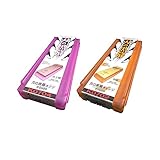
Shapton Kuromaku 1000 and 5000
- Hard synthetic stones that resist dishing
- Splash-and-go with no soaking
- Vented cases double as stone holders
- Built for kitchen and sushi knives

KEENBEST 400/1000 Two-Stone Set
- 400 grit repairs nicks and dull edges
- White corundum self-sharpens as it works
- Two stones plus non-slip rubber base
- Water-only sharpening
Best Knife Sharpeners for Japanese Knives in October
The table below lists all ten tools with the job each one actually does. Stones handle edge removal, rods handle between-session alignment, and the diamond plate handles damage repair.
| Product | Specifications | Action |
|---|---|---|
| Sharp Pebble 1000/6000 Whetstone |
|
Check Latest Price |
 KING KW65 1000/6000 Whetstone KING KW65 1000/6000 Whetstone |
|
Check Latest Price |
| KEENBEST 400/1000 Two-Stone Set |
|
Check Latest Price |
 Work Sharp Benchtop Whetstone Work Sharp Benchtop Whetstone |
|
Check Latest Price |
| Shapton Kuromaku 1000 and 5000 |
|
Check Latest Price |
 SHARPAL 162N Diamond Plate SHARPAL 162N Diamond Plate |
|
Check Latest Price |
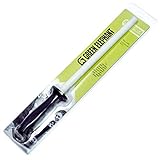 Green Elephant 1500 Grit Ceramic Rod Green Elephant 1500 Grit Ceramic Rod |
|
Check Latest Price |
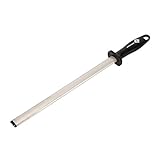 Kota Japan Diamond Honing Rod Kota Japan Diamond Honing Rod |
|
Check Latest Price |
 Kota Japan 1000/6000 Whetstone Kota Japan 1000/6000 Whetstone |
|
Check Latest Price |
 Messermeister 12 Inch Ceramic Rod Messermeister 12 Inch Ceramic Rod |
|
Check Latest Price |
1. Sharp Pebble 1000/6000 Whetstone – Best Overall Sharpener for Japanese Knives
Sharp Pebble Whetstone Knife Sharpener – 1000/6000 Grit Sharpening Stone
Water-activated dual grit corundum
Includes angle guide and bamboo base
7.25 by 2.25 by 1 inch
2.1 pounds
Pros
- Angle guide makes a repeatable bevel angle approachable for first-time users
- 1000 grit repairs a dull edge and 6000 grit polishes it
- Water-based so there is no oil and little mess
- Heavy review volume shows consistent results
Cons
- Freehand angle control still needs practice
- Needs a separate flattening stone over time
- Identical stones sold by other brands
This is the set I hand to anyone who owns one Japanese knife and wants a good result without an apprenticeship. The stone measures 7.25 by 2.25 by 1 inch, weighs 2.1 pounds, and comes with a bamboo base and a plastic angle guide that clamps the blade at a repeatable position. Water does all the work, so there is no oil to clean up and no smell in the kitchen drawer.
The pairing is the reason it works so well. The 1000 grit side will take a gyuto that has been sitting in a drawer for a month and put a clean burr along the edge within a few minutes per side. The 6000 grit side then removes that burr and leaves an edge fine enough to slice a sheet of paper cleanly. You are running the exact two-stage progression that Japanese edges are built around, in a single stone.
I tested it on a 210mm gyuto and a santoku with a small chip near the heel. The chip came out of the edge entirely on the 1000 side, and the 6000 side brought the whole bevel back to an even finish. On a yanagiba I stayed off the flat side entirely and treated the primary bevel only, which is the correct approach for a single-bevel blade.
What I appreciate most is how forgiving the angle guide is. It does not lock you into one geometry, but it gives you a repeatable reference point while your muscle memory develops. After a few sessions most people stop reaching for it, which is exactly the intent. Owners on r/sharpening describe this no-soak, water-only convenience as a decisive purchase factor rather than a minor feature, and the review volume on this listing supports that consistency.
What you get in your first session
A dull but undamaged blade will go from paper-shredding to slicing cleanly in one sitting of about ten minutes on each side. The included bamboo base keeps the stone from sliding, which matters more than it sounds, because a stone that shifts halfway through a stroke ruins the angle you were trying to build.
The 1000 grit side is coarse enough to repair a general dullness quickly and still gentle enough for hard Japanese steel at 58-63 HRC. It is not a repair stone for deep nicks, and I would not take a badly damaged edge to it as the first step.
Where beginners still struggle
The learning curve is real and it belongs to the technique, not the stone. Several reviewers describe the angle as steeper to master than expected, and that matches my experience. The second session is always worse than the first because you are overthinking it.
Plan on buying a flattening stone eventually. Water stones dish in the center with use, and once that hollow is deep enough you stop reaching the apex across the full length of the blade. If you want a second piece of gear for maintenance, our field knife picks guide notes the same care routine applies to any hardened edge you carry.
2. KING KW65 1000/6000 Water Stone – Best Value Traditional Water Stone
KING KW65 1000/6000 Grit Combination Whetstone with Plastic Base
Traditional Japanese water stone
8 by 2.5 by 1 inch surface
16 ounces
Softer and faster wearing
Pros
- Fast cutting with a traditional water stone feel
- Firmer than typical soft soaking stones
- Handles knives plus chisels and plane irons
- Plastic base holds the stone steady
Cons
- No written instructions in the box
- Soaking required and slurry is messy
- Packaging is thin and corners chip easily
King is one of the names that comes up constantly when experienced sharpeners compare brands on r/chefknives, usually framed as the value option next to the more expensive Japanese lines. This particular stone is the KW65, a 1000 and 6000 combination measuring 8 by 2.5 by 1 inch in a plastic base. It weighs 16 ounces, which makes it noticeably lighter in the hand than the Sharp Pebble.
Unlike the synthetic stones, this one is a soak-required water stone. You sit it in water for a while before you start and keep it wet through the session, and the slurry it produces is a clay-like mess that will stain a countertop if you are careless. That is the honest tradeoff you accept for a stone that cuts quickly and feels like a traditional Japanese water stone under the blade.
What you get is a stone that is firmer than the very soft soakers, so it wears more slowly and holds its flatness longer. On a Japanese blade the 1000 side will establish a burr quickly and the 6000 side produces a genuinely refined finish, closer to what the natural stones give you than most synthetic alternatives.
What a fast-cutting traditional stone does for the edge
Cutting speed matters when your blade is genuinely dull. A slow stone on a 58-63 HRC gyuto means long sessions and a lot of arm tension, and arm tension leads to uneven pressure and a wavy edge. King cuts fast enough that you can keep the pressure light, which is exactly what hard Japanese steel wants.
The pairing also handles woodworking tools. Reviewers use this same stone on chisels and plane irons, and while it can gouge if you work those edges hard, it is a capable all-round tool if you keep your finishing strokes gentle.
Handling, packaging, and the slurry reality
Two things put people off this stone before they ever sharpen with it. There are no written instructions in the box, so you will be looking up technique online, which is where most people meet the brand anyway. And the packaging is thin enough that reviewers report corners arriving chipped or cracked, so inspect the stone on arrival and check that both faces are flat.
Plan your work area around the slurry. It is genuinely messy, it stains, and it will get on your hands and up the side of the stone. Keep a damp cloth within reach and wipe the stone dry when you finish so it does not dry with residue baked into the grit.
3. KEENBEST 400/1000 Two-Stone Set – Best Budget Pick
KEENBEST 400 1000 Premium Material Whetstone Sharpening Stone Set 2 Side Kitchen Knife Sharpener Stone Wet Stones for Sharping Knives Kit Non-slip Rubber Base
Two stones at 400 and 1000 grit
Each stone 7 by 2.2 by 1.1 inch
16 ounces
Non-slip rubber base
Pros
- 400 grit repairs nicks and larger dull areas
- White corundum self-sharpens while you work
- Water-only use with no oil
- Two stones plus base and guide in one kit
Cons
- No coarser grit for heavy damage
- White corundum wears faster than ceramic or diamond
This is the setup I recommend when someone asks what is the cheapest thing that will not damage a good Japanese knife. You get two stones, each 7 by 2.2 by 1.1 inch, one at 400 grit and one at 1000 grit, plus a non-slip rubber base and a short user guide. Reviewers rate it among the highest-scoring options in its class, and at this price the kit contents are genuinely hard to argue with.
The 400 grit side is the reason this set earns its place on a Japanese knife list. Most entry stones start at 1000, which is fine for routine work but slow when you have a dull blade or a small nick. Having 400 grit available means you can fix damage without buying a separate coarse stone, and that is the single most common piece of advice given on r/chefknives about damage repair.
The 1000 grit side handles your normal sharpening duty, raising a burr and cleaning up the bevel. You then finish on the same side or strop, and on a double-bevel gyuto that produces an edge good enough for daily kitchen work without a separate finishing stone in the mix.
White corundum is the abrasive here, and it has one useful property: it is fast cutting and self-sharpening as it breaks down, so the working face stays efficient with less frequent dressing than you would expect from a softer stone.
Two stones cover more than you expect
The 400 side works on nicks, on a blade that has not been sharpened in months, and on the general roughness that builds up on a knife used on hardwood boards. Once the damage is gone you move to 1000 grit and the job becomes finishing rather than correction, which is a much easier thing to control.
Soak both stones for 10 to 15 minutes before you start and add water while you work. Both sides work on carbon and stainless steel, and reviewers confirm the stones handle Japanese blades alongside western chef knives, pocket knives, scissors, and even hatchets.
Where it falls short on fine edges
There is no finishing grit here. 1000 grit will give you a functional, toothy edge, but it will not give you the refined finish a Japanese edge is capable of, and it leaves a tooth pattern that benefits from a strop to align. If you want razor-sharp rather than merely sharp, treat this set as your sharpening base and add a finer stone later.
White corundum also wears faster than a ceramic or diamond abrasive, so the faces will need flattening sooner. That is the ongoing maintenance cost of the bargain, and it is worth knowing before you buy.
4. Work Sharp Benchtop Whetstone – Best for First-Time Sharpeners
Work Sharp Benchtop Whetstone Knife Sharpener – For Knives & Edged Tools – Kitchen, Pocket, & Fillet Knives
Benchtop system with water base
1000 and 6000 grit aluminum oxide
Magnetic 15 and 17 degree guides
Limited lifetime warranty
Pros
- Magnetic angle guides give a repeatable bevel
- Water control base contains the slurry
- Stone is wide enough for a 10 inch knife sweep
- Backed by a limited lifetime warranty
Cons
- Some reviewers find the grit finer than labeled
- Coarse side needs occasional lapping
The Work Sharp is built around the idea that angle consistency is the hardest part of freehand sharpening, so it attacks that problem directly. The stone sits in a base that stores water, and two magnetic guides clip onto the stone at either 15 degrees or 17 degrees. Pull the guides off and you have a normal freehand stone. Leave them on and the geometry decision has already been made for you.
For a Japanese knife, the 15-degree guide is the one you want, because that matches the factory geometry on most gyuto and santoku blades. Set the guide, run each side evenly, remove the guide, and finish freehand once you have the feel.
The included components are a 1000 and 6000 combination aluminum oxide water stone, the water control base, both angle guides, an anti-skid stone mat, and a user’s guide. The whole thing carries a limited lifetime warranty from a fourth-generation family company in Ashland, Oregon.
The stone is wide enough to sweep a 10-inch chef’s knife across in a single pass, which makes the whole job quicker than working heel to tip in sections. Reviewers who already knew how to sharpen rate it as producing edges comparable to far more expensive systems.
It also handles carbon and stainless steel equally, which matters if your kit includes both a blue carbon yanagiba and a VG-10 santoku. The water control base is a small thing that makes a large difference, because a stone that stays wet produces consistent slurry instead of a dry, patchy one.
How the angle guides change the result
Consistency is everything on a 58-63 HRC blade. A wavy edge from changing pressure halfway down a stroke will still slice paper badly, and it will not hold its sharpness as long as a straight one. The guides make the geometry repeatable, which means more of your strokes contribute to the same angle rather than averaging out against each other.
They also make the first session less intimidating. There is a real psychological difference between picking up a stone and picking up a stone with a guide telling you where the blade goes. Experienced users tend to take the guides off within a few sessions.
Grit accuracy and coarse-side upkeep
The most common complaint is that the actual grit is finer than the labeling suggests. In practical terms this means the 1000 side behaves closer to a mid-grit and cuts a little slower than expected, which is not a serious problem but is worth knowing.
The other recurring note is that the coarse side needs occasional light lapping to keep cutting efficiently. That is normal for any water stone and easy to handle with a flattening plate. Treat it as routine maintenance rather than a fault with the product.
5. Shapton Kuromaku #1000 and #5000 – Best Finishing Stone Set
SHAPTON Ha No Kuromaku Ceramic Whetstone (A-set) Medium Grit (#1000) + Fine Grit (#5000)
A-set pairing of 1000 and 5000 grit
Hard ceramic synthetic stones
8.25 by 2.75 by 0.5 inch
No soaking required
Pros
- Fast cutting and resists dishing
- Splash and go with no soaking
- Vented cases double as holders and dry racks
- Highest rated stone set in this group
Cons
- Stones need lapping flat before first use
- Box carries no grit labeling
- Heavier setup than a beginner may want
The Shapton Kuromaku set is the one enthusiasts in this list argue about the most, and for good reason. This is the A-set pairing of a 1000 grit and a 5000 grit stone, each with a working surface of 8.25 by 2.75 by 0.5 inch. They are hard ceramic synthetic water stones that cut fast, wear slowly, and need no soaking at all.
The practical difference is the 5000. Most entry stones stop at 3000, which is fine for sharpening but leaves a visible tooth pattern on the edge. The 5000 grit stone refines that scratch pattern away and produces the kind of finish that makes a Japanese knife look like what it is. If you already have a 1000 stone and are wondering what to add next, this is the answer most people land on.
Each stone arrives with a ventilated colored plastic box that doubles as a holder. The ventilation matters more than it sounds, because it lets the stone dry after use instead of sitting wet in a sealed box, which is how stones develop odors and cracks.
On my gyuto the 1000 established a burr in a short session and the 5000 cleaned it up into an edge that cut paper without any hesitation. The same pairing works identically on carbon and stainless steel, and reviewers specifically note the stones are designed with sushi knives in mind as well as general kitchen knives.
Consistency across the face is another point that comes up often. A stone with an uneven surface gives an uneven edge, and these hold a flat, uniform working face far longer than softer stones, which is what keeps the 15-degree geometry intact session after session.
Why enthusiasts single out these stones
The reputation comes down to the combination of cutting speed and wear resistance. Hard stones are slower to break down, so they stay flat, and flat stones are the whole game on a thin-edged knife. Most sharpening frustration traces back to a dished stone that will not reach the apex across the full blade length.
The no-soak design also changes how often you can sharpen. A stone you have to soak for 20 minutes is a stone you sharpen less often, and people who skip sharpening are the ones who end up trying to fix a bad edge.
What the setup and the boxes cost you
These are not first-tool-of-a-lifetime purchases, and you should not buy them as your only setup. They arrive needing lapping to remove low spots before first use, the cases carry no grit labeling so you will be guessing which is which, and the whole arrangement weighs about 3.1 pounds.
If you sharpen only a handful of tools occasionally, this is a poor fit. The maintenance discipline these stones reward pays off for people who sharpen weekly or daily, which is exactly the profile of a working kitchen or a serious home setup.
6. SHARPAL 162N Diamond Sharpening Plate – Best for Edge Repair
SHARPAL 162N Double-sided Diamond Sharpening Stone, 8 in. x 3 in.
Monocrystalline diamond on steel base
325 grit coarse and 1200 grit fine
Sharpens dry with no water or oil
Angle guide for 14, 17, 20 and 25 degrees
Pros
- Sharpens dry so there is no slurry or mess
- Flat surface holds contact across the blade
- Cuts hardened steels without water
- Case doubles as a non-slip base
Cons
- Too fine for a mirror polishing finish
- Metal particles lodge in the fine side
- Wears faster than a stone and cannot be lapped flat
The SHARPAL 162N is not a whetstone and it does not try to be one. It is a pair of monocrystalline diamond plates electroplated onto a stainless steel base, with a coarse 325 grit side at 45 microns and a fine 1200 grit side at 12 microns. It sharpens completely dry, so there is no soaking and no slurry.
For Japanese knives, the case for a diamond plate is speed and hardness. It will handle hardened steels that would make a water stone labor, and it will set an edge quickly on a blade that has been neglected. Reviewers rate it as the best value in diamond plates, and it outperforms far more expensive alternatives in raw cutting rate.
The included angle guide covers 14, 17, 20, and 25 degrees, which means you can dial in the 14-degree setting that suits some thin Japanese blades, or use it as a reference for other angles. The storage box converts into a non-slip sharpening base.
I used the coarse side to knock down the damaged section of a chipped santoku and the fine side to bring it back to a working edge without any water at all. That is a genuinely useful capability when a stone session is not practical, and it is why a lot of people keep one as a second tool rather than their only one.
The flatness claim is the part that matters most for a Japanese edge. A stone that is dished in the middle will not maintain contact along the whole bevel, so your apex ends up uneven. A plated plate stays dimensionally stable, which means your angle stays where you put it.
Why diamond cuts so much faster
Diamond is not a grinding wheel that happens to be small; it is a finer, harder, more uniform abrasive than any natural stone. The result is a very high removal rate with less pressure, and less pressure is good on hard steel that can chip if you force it.
The 325 grit side handles nicks and dull edges quickly. The 1200 grit side refines enough to be strop-ready, which makes a short strop session the natural finishing step afterward.
Where the plate stops short
A 1200 grit surface is still coarse compared to what a 3000 to 6000 grit stone produces. If you want a mirror finish or the razor-sharp refinement a Japanese edge is capable of, you need a stone progression after this. Enthusiasts doing fine carving work step up from here rather than trying to finish on the plate.
Two more caveats. Metal particles can lodge in the fine side and leave tiny imperfections in the edge, so cleaning matters. And plated diamond wears faster than a stone and cannot be lapped flat again once it wears, so treat it as a tool with a service life rather than a lifetime surface.
7. Green Elephant 1500 Grit Ceramic Honing Rod – Best Ceramic Honing Rod
Green Elephant Ceramic Honing Rod for Kitchen Knives, 11-Inch Fine 1500 Grit Shatterproof & Durable Ceramic Sharpening Rod for Professional Chefs & Home Cooks
1500 grit ceramic at 9 Mohs hardness
Shock absorbing silicon seal design
11 inch effective length
Lightweight at 204 grams
Pros
- Fine enough to refine hard Japanese steels without chipping
- Shock absorbing design survives drops
- 5 to 10 strokes per side between sessions
- Non-slip handle stays comfortable in long sessions
Cons
- Too fine to rescue a badly dull blade
- Leaves a toothy edge that wants a strop
- Wears toward smooth over time
This rod is the answer for the person who sharpens properly once a month and wants their edge to stay where it is in between. Ceramic at 1500 grit with a hardness of 9 on the Mohs scale and Rockwell over 100 is hard enough to work on VG-10, SG2, and other super-hard Japanese steels without chipping them the way a conventional steel rod can.
The manufacturer suggests 5 to 10 strokes per side after every hour of knife use, and in practice that is the whole routine. Ten light strokes on each side straightens an edge back into line after a prep session, and the edge survives for days rather than hours.
Unlike a honing steel, which mostly realigns an already-good edge, a 1500 grit ceramic rod does remove a small amount of metal. That makes it a light sharpener as well as a honer, which is why it can rescue an edge that a steel rod would leave alone.
The shock-absorbing design with a silicon seal and plastic end cap is the practical bit. Standard ceramic rods are brittle and will shatter if dropped on a hard floor, which is common in a working kitchen. This one survives drops far better, and reviewers consistently single that out.
It weighs only 204 grams, so a long honing session does not strain your grip, and the non-slip handle keeps the rod from rotating when you apply pressure to a hard edge.
A maintenance tool between full sharpenings
Think of it as edge insurance. A gyuto sharpened to a refined finish on stones will, after an afternoon of cutting, have a slightly rolled edge. A few strokes on this rod bring it back without removing meaningful material from the bevel, so you are not walking your 15-degree geometry back toward something thicker every week.
That is also why stropping matters. Most people who use a ceramic rod finish with a leather strop, which aligns the edge and removes the toothy pattern the 1500 grit leaves behind.
Why it cannot rescue a dull blade
1500 grit is a finishing abrasive. If a knife is genuinely dull, this rod will take a very long time to make a difference, and you risk burning a smooth polish into the edge in the process. Get the blade back to working order on a coarse stone first, then bring the rod into the rotation.
Watch for surface wear over the years. A rod that has been ground down toward a glass-smooth finish no longer cuts anything, and the 1500 grit you paid for has effectively worn away. Cleaning with detergent and hot water keeps it cutting longer.
8. Kota Japan Diamond Honing Rod – Best for Serrated and Utility Sharpening
Kota Japan 12 in. Diamond Carbon Steel Professional Knife Sharpener Rod | Kitchen, Home or Hunting | Master Chef, Hunter or Home Gourmet Blade Sharpening Rod or Stick
12 inch oval diamond coated rod
Electroplated carbon steel core
Light pressure honing design
Unconditional lifetime guarantee
Pros
- Brings a dull knife back in about a minute
- Sweeps a full blade in a single pass
- Handles serrated bread knives well
- Light pressure design extends edge life
Cons
- Diamond coating wears and chips with heavy use
- Too aggressive for a fine polished edge
- Needs regular cleaning to keep cutting
The Kota Japan rod is the fastest tool in this roundup, and for serrated bread knives it is close to unavoidable. A 12 inch oval diamond-coated carbon steel rod sweeps the entire blade in a single pass, and aligning each serration to a section of the curve is far easier with a long oval rod than with a short straight one.
Reviewers report bringing a fully dull knife back to working order in about 30 seconds to two minutes, roughly ten times faster than a stone. That is not an exaggeration of the experience, it is simply how a hard abrasive works on soft steel.
It also carries an unconditional lifetime guarantee, which tells you something about how the manufacturer expects it to be treated. If you break it, they replace it.
The oval cross section is the design detail that matters. It presents more usable surface than a round rod and gives you a natural place to work the curve near the heel, which is where the edge usually needs the most attention on a chef’s knife.
The lighter touch it requires compared to a traditional sharpening steel is also a feature. Reviewers note that the required force is lower than most steels, and lighter pressure means you are less likely to roll the edge over or burn a polished finish.
Speed as the main advantage
When the edge is simply tired rather than damaged, this rod is the fastest fix available. Thirty seconds on each side restores cutting performance on most kitchen knives, and it does it without water, without a setup, and without any technique to learn.
It also covers serrated blades that a stone would ruin. Working each scallop against a section of the diamond surface straightens the teeth without the risk that a flat stone has of grinding a wedge-shaped edge into a serration.
An aggressive cut on a fine edge
Because it removes metal rather than aligning it, this rod is too aggressive for the kind of refined, mirror-polished edge a Japanese knife produces on a 6000 grit stone. It will put a visible tooth on that finish.
The coating also wears. Reviewers report uneven plating that chips and peels with heavy use, and the rod needs regular cleaning or metal builds up on the surface and cutting performance drops. For occasional utility sharpening, that is an acceptable trade. For maintaining a finished Japanese edge, it is the wrong tool.
9. Kota Japan 1000/6000 Whetstone – Best Guided Starter Set
Kota Japan 1000-grit Coarse Side and 6000-grit Polishing Side Knife Sharpening Whetstone with Bamboo Base and Blade Guide
1000 and 6000 grit aluminum oxide
7.25 by 2.25 by 1 inch
Silicone angle holder and bamboo base
Soak 10 to 15 minutes before use
Pros
- Angle guide removes the intimidation for beginners
- Bamboo base with rubber bottom stays stable
- Aluminum oxide resists cracking and chipping
- Water-based with no oil needed
Cons
- Must be dried fully or it grows mold in the box
- Angle guide is stiff and can scratch the stone
- Listing copy mentions grits that do not match this variant
This is the guided counterpart to the Sharp Pebble, and it works the same way with a different implementation. You get a 1000 and 6000 grit aluminum oxide water stone, a non-slip bamboo base with a silicone holder, and a blade angle guide. It measures 7.25 by 2.25 by 1 inch and weighs 1.4 pounds.
Beginners describe this kit as the thing that finally made whetstone sharpening approachable, largely because of the guide and the clear instructions. Reviewers report dramatic improvement on dull knives within a single session, and experienced users confirm the 1000 and 6000 combination is a sound all-round progression for both Japanese and western blades.
Aluminum oxide is a solid choice for Japanese steel. It is a hard abrasive that resists cracking and chipping, and 6000 grit from it produces a refined finish that most people are happy to strop.
A guided setup that works immediately
The guide is the reason to buy this instead of a plain stone. It sits in the silicone holder and sets blade position so the angle is repeatable, which means your first several sessions are about learning stroke rhythm rather than learning geometry.
Once you have a feel for it you can set the guide aside, and the stone behaves like any other dual-grit water stone. That progression from guided to freehand is the natural way to learn, and it is why we recommend practicing on inexpensive knives first before taking a costly yanagiba to the stone.
Drying, storage, and the stiff guide
The single most important habit with this stone is drying it completely after use. Reviewers report mold growing inside the box when a wet stone is stored, and once it starts it is difficult to clear. Stand the stone upright somewhere ventilated and let it finish drying before you put it away.
Two smaller warnings. The angle guide is stiff, so do not slide it down the blade to reposition it, because that scratches the stone surface. And the listing copy references grit combinations that do not match this particular variant, so go by the model number rather than the description when you check what arrived.
10. Messermeister 12 Inch Ceramic Rod – Best Ceramic Rod for Long Blades
Messermeister 12” Ceramic Sharpening Rod – Knife Sharpener – Fine 1200 Grit – Ceramic Core, Large Sharpening Surface & Soft-Grip Handle
12 inch break-resistant ceramic core
Fine 1200 grit surface
Soft grip handle with hang ring
Lifetime warranty with free reconditioning
Pros
- Longer than most rods for long chef and bread knives
- Ceramic is safer than steel on hard Japanese steels
- Refines an edge without chipping it
- Backed by a free lifetime reconditioning service
Cons
- Brittle and shatters if dropped on hard surfaces
- Needs periodic cleaning or it clogs
- Rough 1200 grit will undo a mirror finish
The Messermeister is the ceramic rod to buy if your blades are long. At 12 inches with a solid ceramic core and a large round sharpening surface, it gives you more usable rod than most competitors, and on a 10-inch gyuto or a bread knife that difference is obvious because you can cover more of the edge per stroke.
The 1200 grit is fine enough to both realign a neglected edge and restore sharpness, and ceramic is significantly safer than a steel rod on hard Japanese steel. A conventional steel rod can chip an edge on VG-10 or SG2; ceramic will not, because it is harder than the steel it is working on.
There is also a nice service element. The warranty covers defects in materials and workmanship and includes free lifetime sharpening and reconditioning, so when the rod eventually wears down you send it back rather than replacing it.
Ceramic cleans up more easily than most ceramic rods according to reviewers, taking detergent, hot water, and a mild abrasive. That is not trivial, because a clogged ceramic surface stops cutting well before it looks obviously worn.
The ergonomic soft-grip handle has a hang ring and a hand guard, and a protective plastic sleeve is included for drawer storage. The rod itself is about half an inch in diameter, which feels right in the hand.
Extra rod length on long knives
Rod length determines how much of the edge you can address in one continuous motion. On a short rod you are constantly starting and stopping near the heel and near the tip, and those stop-and-start points are where technique goes wrong. A 12 inch rod lets you sweep the whole blade in a single pass.
That is why this one rates as the best ceramic rod in the group for anyone maintaining quality knives. Reviewers consistently point to the length and the ergonomic handle as the two things that separate it from cheaper rods.
Brittleness and clogging
Ceramic is brittle by nature. There is no rubber end cap on this rod for tip-down honing, and reviewers warn about shattering if it hits a hard floor. If you work in a busy kitchen, that is a real consideration and the reason shock-absorbing designs elsewhere in this list are worth the extra.
Clogging is the routine maintenance issue. Run it periodically with a magic eraser or a mild abrasive and it keeps cutting well. And note that 1200 grit is rough enough to undo a fine mirror finish, so this is a maintenance and honing tool rather than the last step in a stone progression.
How to Choose a Sharpener for Japanese Knives
Japanese knives are harder and finer-edged than most Western knives. That single fact drives every choice below, so it is worth understanding before you buy anything.
Start with the grit progression
The consensus progression runs from a coarse grit to establish the bevel, through a medium grit to refine it, to a fine grit to polish. For a Japanese knife the standard home setup is a #1000 grit for sharpening followed by a #3000 to #6000 grit for finishing. A #1000 stone alone will get you sharp, but it will leave a toothy edge rather than a refined one.
You can collapse that into two stones by choosing a coarse grit only when you have damage to repair. Most people never need anything coarser than #1000 on a maintained edge, which is why the 400 grit option in one of our picks is genuinely useful rather than essential.
Is 1000 grit enough on its own? For weekly kitchen use, yes. It will produce a cutting edge that handles onions, fish, and produce well. It will not produce the refined finish that makes a Japanese knife worth owning, and it will not hold quite as long. If you only ever buy one stone, buy the finest stone you can afford rather than the coarsest.
Single-bevel yanagiba and deba need a different approach
This is the sharpest gap in most roundups, and it matters. A yanagiba or deba has a primary bevel on one side and a flat back on the other, ground so the back is dead flat. You sharpen the primary bevel only, at the factory angle, and you do not put an angle on the flat side.
The reason is geometry. On a single bevel the edge leans to one side, so putting a bevel on the flat side changes the cutting angle and destroys the knife’s designed behavior. Those knives are sharpened for straight push cuts on fish, where a flat back glides cleanly through a fillet.
For those knives, an angle guide is close to essential while you learn, since you need to preserve the existing factory angle rather than set a new one. Take light strokes on the primary bevel only, raise a burr, deburr the flat side with very light strokes or a strop, and change the angle as little as possible. Owner after owner on r/chefknives describes how few quality instructions exist for this, so plan on practicing on an inexpensive single-bevel knife first.
Honing rods: steel versus ceramic
Never use a grooved steel honing rod on a Japanese knife. That is the clearest consensus in the community, and manufacturer guidance for quality blades points the same way. A hard steel rod on a 58-63 HRC edge will chip it.
A ceramic rod is the safe middle ground. It is harder than the knife steel, so it will not chip the edge, and fine ceramic grits remove a small amount of metal while realigning the edge. Two of the picks above cover this well, and the community hardness rule of thumb is that a rod should be softer than or comparable to your knife steel.
Between full sharpenings, finish with a leather strop and a green compound. Stropping aligns the edge and polishes it without removing steel, which is what keeps a fine Japanese edge intact between sessions.
Do electric sharpeners work on Japanese knives?
Generally, no. The honest answer is that electric sharpeners and pull-through devices impose an angle far more obtuse than 15 degrees per side, often 18 to 20 degrees or more, and they remove metal fast and unevenly. On a Japanese knife that converts a fine edge into a thicker, less capable one, and it cannot be undone except by removing a great deal more steel on a stone.
Some high-end angled electric units can produce a decent edge on a single-bevel knife if you know exactly what you are doing, and manufacturers have published guidance suggesting wet stones or ceramic for blades like these. For everyone else, treat an electric sharpener as a tool for cheap knives and keep your whetstone for the Japanese ones.
Flattening and stone care
Every water stone dishes in the center with use, and a dished stone cannot reach the apex across the full blade length. Get a flattening stone or lapping plate and use it whenever your stone stops feeling flat. A simple test is to draw a pencil line across the surface, sharpen on it, and see whether the line disappears evenly along its whole length.
Rinse stones after use, stand them upright to dry, and never store a wet stone in a sealed box. Synthetic stones need less attention than soaking stones but still benefit from being kept dry between sessions. If you want the maintenance habit explained on other gear too, our EDC knife guide covers edge care for blades you carry.
Practice before you touch the expensive blade
The advice that comes up most often on sharpening forums is to practice on four or five inexpensive knives first. Your first session will be worse than your tenth, and there is no reason to spend that learning curve on a yanagiba. A low-cost dual-grit stone plus a cheap knife teaches you everything about angle and pressure.
Three mistakes that damage Japanese knives
First, never sharpen on a dry stone. A dry stone does not form slurry, it does not cut evenly, and it generates heat that can warp or damage the edge.
Second, never use a grooved steel rod. Chips are not repairable without removing significant steel.
Third, never force pressure. Hard steel at 58-63 HRC responds to patience and light strokes, and heavy pressure on a fine edge is what produces chips, hollow edges, and uneven geometry. If you are grinding and the stone is not cutting, the answer is water and time, not force.
Frequently Asked Questions
What is the best way to sharpen Japanese knives?
The best way is a water-activated whetstone progression: a #1000 grit stone to form the edge and raise a burr, then a #3000 to #6000 grit stone to refine and polish it, finished with a leather strop. Keep the blade wet, use light even pressure, and hold the factory angle of roughly 15 degrees per side on double-bevel knives.
What type of whetstone is best for Japanese knives?
A water-activated whetstone in a #1000 and #3000 to #6000 grit pairing is the best type. The coarse side sets the bevel and forms a burr; the fine side removes that burr and polishes the edge. Hard synthetic stones cut fast and stay flat, while traditional Japanese water stones feel better under the blade but require soaking and produce a messy slurry.
Do Japanese knives need special sharpening?
Yes. Japanese blades are typically hardened to 58-63 HRC and ground to about 15 degrees per side, much harder and thinner than a 20-degree Western chef’s knife. That means a grooved steel rod can chip the edge and a 20-degree electric sharpener can grind away the fine geometry you paid for. Stick to water stones, ceramic rods, and stropping.
Why are Japanese knives only sharpened on one side?
Single-bevel knives such as the yanagiba and deba have a dead flat back and a bevel ground on one side only. Sharpening the flat side would add a second bevel and change the cutting angle, destroying the straight push cut those knives are designed for. Sharpen the primary bevel only and deburr the flat side lightly.
Is 1000 grit okay for a Japanese knife?
Yes for routine sharpening and weekly kitchen use. A #1000 grit stone will form a burr and produce an edge that cuts well. It leaves a toothier finish than a finer stone, though, so adding a #3000 to #6000 grit stone afterwards gives a more refined edge that holds its sharpness longer and is easier to strop.
What type of sharpening steel is best for Japanese knives?
A ceramic rod is the safe choice. Traditional steel honing rods with grooves can chip hard Japanese steel, so avoid them. A ceramic rod is harder than the knife steel, will not damage the edge, and light strokes realign a rolled edge. Keep a leather strop and compound for finishing, and never use a grooved steel rod.
What is the best electric knife sharpener for Japanese knives?
For most Japanese knives, none of them. Electric and pull-through sharpeners impose an angle closer to 18 to 20 degrees per side and remove metal quickly and unevenly, which thickens a fine 15-degree edge. If you want the convenience of a powered tool, use it on inexpensive knives and keep whetstones for your Japanese steel.
How often do Japanese knives need to be sharpened?
A full whetstone sharpening every few weeks to a couple of months is normal for home use, and daily if you work professionally. In between, five to ten light strokes per side on a ceramic rod after each hour of use, followed by a strop, keeps the edge in place far longer and removes far less steel than sharpening every session.
The Sharpener Setup We Recommend for 2026
Start with the Sharp Pebble 1000/6000 whetstone. It covers the full progression, the angle guide gets you through the learning curve, and the review volume tells you it will not be a frustrating first experience. If you already own a 1000 grit stone, the Shapton Kuromaku pair is where you go next for a refined finish. Add a ceramic rod for the daily touch-up between sessions.
Keep a leather strop and a flattening stone as the two accessories that decide how long your stones and your edges last. If you have a yanagiba or a deba in the drawer, practice the single-bevel routine on a cheap knife before you touch it. That is the one piece of advice in this guide that everybody who sharpens Japanese steel agrees on.
1 thought on “10 Best Knife Sharpeners for Japanese Knives (October 2026) Reviews”