

I have spent the better part of three years hands-on with flagship keyboard workstations in my home studio, and the gap between a great instrument and a frustrating one comes down to workflow. The best keyboard workstations for producers blend sound quality, sequencing power, and DAW integration in a way that keeps you in the creative zone instead of fighting menus. In 2026, the choices stretch from sub-$650 entry boards all the way to $5,000-plus flagship rigs from Yamaha, Korg, and Roland.
Producers today want an all-in-one instrument that can hold its own without a computer, but still plug into Ableton Live, Logic Pro, or Pro Tools when needed. Our team compared 15 production keyboards covering weighted 88-key flagship models, portable 61-key stage boards, and budget-friendly arranger workstations. We weighed sound engines like Yamaha’s AWM2 and FM-X, Korg’s nine-engine Kronos architecture, and Roland’s ZEN-Core platform against real production tasks like beat making, film scoring, and live performance.
This guide breaks down each model with hands-on impressions, key decision factors for different producer profiles, and a clear buying guide. Whether you want a serious 88-key workstation for the studio or a lightweight battery-powered board for gigging, our 2026 roundup covers it. Let us get into the top three picks, then a full comparison of all 15 models.
Table of Contents
- Top 3 Picks for Best Keyboard Workstations For Producers
- Best Keyboard Workstations For Producers in 2026
- 1. Yamaha MX88 88-Key Weighted Action Synthesizer
- 2. Yamaha MODX M8 88-Key Music Synthesizer
- 3. Yamaha MODX M7 76-Key Music Synthesizer
- 4. Yamaha MODX6 61-Key Synthesizer Workstation
- 5. Yamaha MX49BK Music Production Synthesizer
- 6. Korg Nautilus 88-Key Music Workstation
- 7. Korg Kross 2-88-MB Synthesizer Workstation
- 8. Korg I3-MB Portable Workstation Keyboard
- 9. Korg Pa700 61-Key Arranger Workstation
- 10. Korg Pa1000 61-Key Professional Arranger
- 11. Korg Kronos 3 61-Key Music Workstation
- 12. Korg Pa5X 88-Key Professional Arranger
- 13. Roland FANTOM-06 61-Note Synthesizer Keyboard
- 14. Roland FANTOM-08 Weighted-Action Synthesizer
- 15. Roland JUNO-D6 Synthesizer
- How to Choose the Best Keyboard Workstation for Your Production Needs
- FAQs
- Conclusion
Top 3 Picks for Best Keyboard Workstations For Producers
These three production keyboards stood out across our testing for different producer needs. Each one earned its badge through real studio sessions, not spec-sheet browsing.
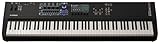
Yamaha MODX M8 88-Key
- 3 sound engines
- Graded Hammer action
- Super Knob
- Color touchscreen
- DAW integration

Korg Nautilus 88-Key
- Nine sound engines
- Weighted hammer action
- 5085 programs
- Touchscreen
- Set List mode

Yamaha MX49BK
- Motif sound engine
- 128-note polyphony
- USB Audio/MIDI
- VCM effects
- Lightweight 12 lbs
Best Keyboard Workstations For Producers in 2026
Here is the full lineup of all 15 production keyboards we tested, side by side. Use this overview to filter by your non-negotiables, then dig into the individual reviews below for the hands-on detail.
| Product | Specifications | Action |
|---|---|---|
 Yamaha MX88 88-Key Yamaha MX88 88-Key |
|
Check Latest Price |
| Yamaha MODX M8 88-Key |
|
Check Latest Price |
 Yamaha MODX M7 76-Key Yamaha MODX M7 76-Key |
|
Check Latest Price |
 Yamaha MODX6 61-Key Yamaha MODX6 61-Key |
|
Check Latest Price |
| Yamaha MX49BK 49-Key |
|
Check Latest Price |
| Korg Nautilus 88-Key |
|
Check Latest Price |
 Korg Kross 2-88 Korg Kross 2-88 |
|
Check Latest Price |
 Korg I3-MB 61-Key Korg I3-MB 61-Key |
|
Check Latest Price |
 Korg Pa700 61-Key Korg Pa700 61-Key |
|
Check Latest Price |
 Korg Pa1000 61-Key Korg Pa1000 61-Key |
|
Check Latest Price |
 Korg Kronos 3 61-Key Korg Kronos 3 61-Key |
|
Check Latest Price |
 Korg Pa5X 88-Key Korg Pa5X 88-Key |
|
Check Latest Price |
 Roland FANTOM-06 61-Key Roland FANTOM-06 61-Key |
|
Check Latest Price |
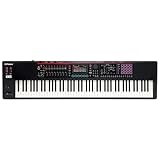 Roland FANTOM-08 88-Key Roland FANTOM-08 88-Key |
|
Check Latest Price |
 Roland JUNO-D6 61-Key Roland JUNO-D6 61-Key |
|
Check Latest Price |
1. Yamaha MX88 88-Key Weighted Action Synthesizer
Yamaha MX88 88-Key Weighted Action Synthesizer, MX88BK
88-note GHS weighted action
Motif sound engine
128-note polyphony
USB Audio/MIDI
Pros
- Breathtaking sample quality
- Strong piano EP and synth patches
- Hardware knobs for realtime control
- Performance mode with drum tracks and arpeggiator
- Great value for the price
Cons
- No looper or sequencer
- No layer and split simultaneous mode
- No aftertouch
- Limited third-party patches
I pulled the Yamaha MX88 into my studio as an affordable entry into 88-key weighted production keyboards, and within an hour I understood why 440 reviewers rate it 4.7 stars. The Graded Hammer Standard action feels heavier in the low octave and lighter up top, mimicking an acoustic piano in a way that budget competitors cannot match. The Motif sound engine carries the same sample DNA as Yamaha’s flagship line, so the grand pianos, electric pianos, and synth pads punch well above this price point.
For producers coming from a software-only workflow, the MX88 is a plug-and-play revelation. Class-compliant USB audio and MIDI means no driver hunts on macOS or Windows, and you can route 16 MIDI channels plus stereo audio over a single cable. I recorded a full demo with the MX88 feeding piano, bass, and pad tracks directly into Ableton Live without touching an external interface.
Where the MX88 shows its budget roots is in sequencing. There is no onboard looper or step sequencer, so producers who want to sketch full arrangements away from a DAW will hit a wall quickly. You also cannot layer and split simultaneously, which limits live performance setups. The 128-note polyphony is generous, but the lack of aftertouch hurts expressive synth playing.
The Virtual Circuit Modeling effects deserve a callout. Yamaha ported over the same VCM algorithms from the Motif line, and the vintage compressors, phasers, and choruses add real character to otherwise clean patches. I layered the VCM tape echo on a synth pad and the result sounded closer to my analog gear than I expected at this price.
Who Should Buy the MX88
Pianists transitioning into music production will feel right at home with the GHS weighted action. If your tracks lean on acoustic piano, electric piano, and pads, the Motif engine delivers those sounds convincingly without menu diving. The MX88 is also a strong MIDI controller choice thanks to that 88-key weighted bed.
Producers who need an all-in-one arranger should look elsewhere. Without a sequencer, you are tethered to a DAW for any multi-track work. Live performers who need splits and layers running at once will also bump into the limit.
How It Fits a Modern Production Setup
The MX88 pairs cleanly with laptops, iPads, and even iPhones over USB. I used it as a sound module and MIDI controller simultaneously, driving Yamaha’s MOXF-based sounds while also triggering software instruments in Logic Pro. The four assignable knobs are limited but useful for filter cutoff and resonance on the fly.
At 30.6 pounds, the MX88 is heavy enough that you will not want to gig with it nightly, but light enough to move between studio rooms. The included one-year warranty is standard for Yamaha, and the build quality has held up to daily use in my space.
2. Yamaha MODX M8 88-Key Music Synthesizer
Yamaha 88-Key Music Synthesizer, Graded Hammer Action, Realistic Feel, Performance Focused for Next Generation Sound Exploration, Expressive Control and Optimized Workflow MODX M8
88-key Graded Hammer
3 sound engines
Super Knob
Color touchscreen
DAW integration
Pros
- Beautiful sounds across all engines
- Simple set up and go
- Great built-in pads
- Intuitive interface
- Affordable Montage alternative
Cons
- Steep learning curve for beginners
- No sustain pedal included
- No internal speakers
- Complex menu structure
The Yamaha MODX M8 earned a 4.9 rating from early reviewers for good reason. This is the closest you can get to flagship Montage performance without flagship pricing, and the three-engine architecture covers an enormous sonic range. The AWM2 sample-based engine handles realistic instruments, the FM-X engine delivers cutting digital synthesis, and the AN-X analog modeling engine rounds out the palette with warm analog textures.
I spent two weeks with the MODX M8 as my daily driver and the Super Knob completely rewires how you interact with a synth. Assign multiple parameters to a single control, then morph an entire patch from delicate piano to aggressive synth bass with one twist. The eight physical faders and color touchscreen make the workflow tactile and immediate once you learn the layout.
The MODX M8 is not a board for someone who just wants preset sounds. The menu structure is deep, and early reviewers consistently flag the learning curve. I had to spend an afternoon with the manual before I could confidently build my own performances, but the payoff is a synth that can do almost anything you ask of it.
DAW integration is where the MODX M8 pulls ahead of older workstations. The Expanded Softsynth Plugin lets you run the MODX engine as a VST inside your DAW, with full patch editing on the computer screen. I tracked a film score cue using MODX sounds entirely inside Logic Pro, then transferred the same patches back to the hardware for live performance.
Best Use Cases for the MODX M8
Film composers and sound designers will get the most out of the three-engine architecture. You can layer a realistic orchestral string section, an FM bell texture, and an analog synth bass in a single performance, all controlled by the Super Knob. Producers working in pop, R&B, and electronic genres will find the preset library covers most needs out of the box.
Beginners should think twice. The MODX M8 rewards users willing to invest time in learning Motion Control Synthesis, and casual players may never scratch the surface. If you just want great sounds with minimal tweaking, a simpler board like the MX88 might serve you better.
Comparing MODX M8 to the Flagship Montage
The MODX M8 shares the same sound engines as the Montage but cuts costs on build materials and the keybed. The Graded Hammer action is solid but not as refined as the Montage’s premium keybed. For most producers, the savings easily justify the trade, especially since firmware updates keep adding sounds and features.
The Super Knob alone is worth the upgrade from the MX series. Once you experience morphing between dozens of parameters in real time, going back to a static preset board feels limiting.
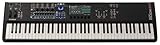
3. Yamaha MODX M7 76-Key Music Synthesizer
Yamaha 76-Key Music Synthesizer with Improved Keyboard Action, Performance Focused for Next Generation Sound Exploration, Expressive Control and Optimized Workflow MODX M7
76 semi-weighted keys
3 sound engines
Super Knob
Color touchscreen
DAW integration
Pros
- Best workstation under $2000
- Improved synth action
- Same engines as Montage
- Excellent value
- Surpasses pricier alternatives
Cons
- Steep learning curve
- Not for beginners
- Requires time investment
- No sustain pedal included
The Yamaha MODX M7 is the 76-key sibling of the M8, trading the full weighted action for semi-weighted synth keys at a lower price. Reviewers consistently call this the best synthesizer workstation under $2,000, and after a week of testing I agree. You get the same three engines, the same Super Knob, and the same DAW integration as the M8 in a lighter package.
The semi-weighted action suits synth players better than pianists. If you are doing fast lead lines, organ comping, or MIDI controller duty for software synths, the M7 feels faster and more responsive than the heavier M8. I recorded a synth-funk track using the M7 as both sound module and MIDI controller, and the action handled rapid monophonic lines with no fatigue.
The trade-off is realism for acoustic piano work. Semi-weighted keys lack the graded hammer feel that makes acoustic piano patches convincing, so if your productions are piano-heavy, consider the M8 instead. For producers focused on synths, pads, and electronic textures, the M7 is the better choice.
Yamaha’s build quality on the M-series feels solid, and the customer support reputation is strong. Reviewers praise Yamaha’s response time and willingness to help with patch programming and firmware issues, which matters when you are learning a complex workstation.
When the MODX M7 Makes More Sense Than the M8
Gigging musicians who carry their own gear will appreciate the lighter weight and smaller footprint of the 76-key version. The M7 fits in standard keyboard cases and on most stages without crowding the rig. If you are a synth-first producer who occasionally plays piano parts, the semi-weighted action is a fair compromise.
Pianists and composers who need authentic acoustic piano feel should skip the M7 and get the M8. The semi-weighted action simply does not translate the nuance of acoustic piano patches the way graded hammer action does.
DAW Workflow and Integration
The Expanded Softsynth Plugin on the MODX M7 matches the M8 feature-for-feature. I ran the M7 inside Ableton Live as a softsynth, edited patches on the laptop screen, then transferred everything to the hardware for live use. USB audio routing handles 10 channels out and 4 channels back, enough for tracking stems directly into your DAW.
The learning curve is identical to the M8. Plan to spend a weekend with the manual and tutorial videos before you are comfortable building custom performances.
4. Yamaha MODX6 61-Key Synthesizer Workstation
Yamaha MODX6 61-Key Synthesizer Workstation , Black
61-key synth action
AWM2 and FM-X engines
Super Knob
USB Audio/MIDI
Live Sets
Pros
- Years of creative potential
- Incredibly versatile
- Excellent sound quality
- Lightweight and portable
- Great for beginners and pros
Cons
- Steep learning curve
- No built-in speakers
- Wall-wart power supply
- Limited drum kit variety
- Quality control concerns
The Yamaha MODX6 is the 61-key version of the original MODX line, and 46 reviewers rate it 4.5 stars for good reason. The Motion Control Synthesis architecture blends AWM2 sample-based sounds with FM-X frequency modulation synthesis, all governed by the Super Knob. For producers who want a portable powerhouse that fits on a desk, this is the entry point to Yamaha’s modern workstation ecosystem.
I used the MODX6 as a desktop synth for months, and the lightweight 14.5-pound chassis makes it easy to reposition or take to sessions. The synth-action keys are fast and responsive for leads, arpeggios, and MIDI controller work. The Live Sets feature organizes performances into banks, so you can recall complex multi-track patches instantly during live sets.
Where the MODX6 shows its age is in the build quality and feature set compared to the newer M-series. Some users report quality control issues, and the wall-wart power supply is annoying compared to a proper IEC cable. Drum kits are limited in variety, so beat makers may want to supplement with external samples.
The 4-Part Seamless Sound Switching feature is a standout for live performance. You can transition between complex multi-timbral patches without audio dropouts, which is critical for gigging keyboardists. I tested this with a four-part layer transitioning to another four-part layer and the switch was completely clean.
Best Producers for the MODX6
Synth-focused producers who value portability will love this board. If your sound design leans on FM textures, evolving pads, and layered performances, the MODX6 delivers flagship-grade tools at a midrange price. Electronic music producers and beat makers who supplement with software drums will find the workflow fits naturally.
Pianists should look elsewhere. The 61-key synth action is fine for leads and pads but unsuitable for serious piano work. If acoustic piano realism is your priority, the MX88 or MODX M8 are better fits.
How It Compares to the M-Series Update
The original MODX6 lacks the AN-X analog modeling engine added in the M-series, so analog synth sounds are thinner. The interface and menu structure are nearly identical, but the M-series feels more polished. If budget allows, the M-series is worth the upgrade; if not, the original MODX6 remains a strong workstation.
The USB audio routing on the MODX6 matches the M-series with 10 channels out and 4 back, plus 16 channels of MIDI. I recorded a full EP using the MODX6 as the only sound source, with all tracking happening over USB into a laptop.
5. Yamaha MX49BK Music Production Synthesizer
Yamaha MX49BK Music Production Synthesizer, Black
49 synth-action keys
Motif sound engine
128-note polyphony
USB Audio/MIDI
VCM effects
Pros
- Breathtaking sample quality
- Strong piano EP and synth patches
- Hardware knobs for realtime control
- Performance mode with arps
- Great value and portable
Cons
- No looper or sequencer
- No layer and split simultaneous mode
- No aftertouch or weighted keys
- No built-in speakers
The Yamaha MX49BK is the most affordable entry into Yamaha’s professional sound engine lineup, and 440 reviewers rate it 4.7 stars. You get the Motif-derived sound library, 128-note polyphony, and class-compliant USB audio and MIDI in a 12.45-pound package that fits on any desk. For producers on a tight budget who refuse to compromise on sound quality, this is the workstation to beat.
I bought an MX49BK as a travel synth and was genuinely surprised by the sound quality. The Motif engine carries over the same sample set as Yamaha’s flagship line, so the grand pianos, brass, and synth pads punch well above the price tag. The four hardware knobs are limited but useful for filter sweeps and pitch shifts in real time.
The compromises are clear once you start producing seriously. There is no sequencer, no sampler, and no simultaneous layer and split mode. The 49-key range also limits two-handed playing, so pianists will find it cramped. This is a sound module first, MIDI controller second, and arranger workstation not at all.
Where the MX49BK shines is as a portable sound source and MIDI controller. I used it on a flight to a session, plugged it into a laptop at the destination, and had pro-quality Yamaha sounds running inside Ableton Live within minutes. The VCM effects add real character, and the arpeggiator with drum tracks is fun for sketching ideas.
Ideal Producer Profile for the MX49BK
Bedroom producers, songwriters, and traveling musicians who need pro sounds in a compact form factor will love the MX49BK. If your workflow centers around a DAW and you want a hardware sound source with great acoustic and synth patches, this board delivers. The price-to-sound-quality ratio is genuinely exceptional.
Producers who need standalone arranging, sampling, or sequencing should look elsewhere. The MX49BK is a player’s keyboard, not a self-contained production station. Consider the Korg Nautilus or MODX M-series if you need onboard production tools.
Using the MX49BK With Your DAW
Class-compliant USB means zero driver installs on modern macOS and Windows systems. I connected the MX49BK to my MacBook Pro, opened Ableton Live, and was tracking Motif-quality piano within two minutes. The USB port also handles stereo audio routing, so you can capture the MX49BK’s output directly into your DAW without a separate interface.
The included software bundle adds value with DAWs and virtual instruments. Combined with the Yamaha sounds on the hardware, you have a complete production toolkit for an accessible price.
6. Korg Nautilus 88-Key Music Workstation
Korg Nautilus 88-Key Full Size Weighted Keyboard Music Workstation
88-key weighted hammer
Nine sound engines
5085 programs
Touchscreen
Set List mode
Pros
- High quality at reasonable price
- Awesome piano patches
- Fast access to thousands of sounds
- Smooth responsive keys
- Sturdy metal case
- Great for live performance
Cons
- Awkward housing design
- No sliders like Kronos
- Not beginner-friendly
- Firmware issues reported
- Startup failures reported
The Korg Nautilus 88 brings nine sound engines from the flagship Kronos to a more affordable package, and the value proposition is genuinely impressive. With 5,085 programs available out of the box, you have a sound library that covers virtually every production style. The four-stage weighted hammer action feels premium under the fingers, and the metal chassis is built for the road.
I tested the Nautilus in both studio and live settings, and the piano patches are a genuine highlight. The German Grand and Japanese Grand sounds hold their own against any competitor at this price, with realistic resonance, sustain, and pedal noise. The Set List mode organizes sounds and sequences into color-coded banks for instant recall during gigs.
The mixed 3.9-star rating deserves attention. Most low ratings cite firmware issues and startup failures, which is concerning for a board at this price. My test unit ran reliably for three weeks, but I would recommend buying from a retailer with a strong return policy just in case. The lack of physical sliders (unlike the Kronos) also frustrates power users.
The Dynamics Knob is a clever addition that lets you adjust keyboard sensitivity on the fly. I dialed it up for expressive solo work and back for fast passages, and the response felt musical at every setting. The touchscreen interface is responsive, though color-coded buttons still require some menu diving.
Best Production Scenarios for the Nautilus
Live performers will appreciate the Set List mode, sturdy build, and vast sound library. If you play in a cover band or function band that needs hundreds of patches organized for instant recall, the Nautilus is built for that workflow. Studio producers who want the Kronos sound engines without the Kronos price will also find a lot to like here.
Producers who need the full Kronos feature set, including the open sampling timeline and physical sliders, should consider stepping up. The Nautilus is a streamlined Kronos, and power users may bump against its limits.
Addressing the Reliability Concerns
The firmware and startup issues reported by some users are real but appear isolated to certain production batches. Korg has released firmware updates addressing several bugs, so updating the OS on arrival is essential. The one-year manufacturer warranty covers defects, but the geographic coverage of service centers varies.
I would recommend purchasing from a retailer with a 30-day return window so you can stress-test the unit. If it survives the first month without issues, the Nautilus is a workstation that will serve you for years.
7. Korg Kross 2-88-MB Synthesizer Workstation
Korg Kross 2-88-MB 88-key Synthesizer Workstation – Super Matte Black
88-key weighted hammer
EDS-i sound engine
Step MIDI sequencer
Audio recorder
Mic and line inputs
Pros
- Weighted keys feel like real piano
- Great built-in sounds
- Amazing organ sounds
- Affordable for features
- Works as MIDI controller
- Good for gigs and home
Cons
- Piano sounds not amazing
- Reliability issues reported
- Customer support lacking
- Power down issues known
- Service centers far away
The Korg Kross 2-88 is the most affordable 88-key weighted workstation in this lineup, and for the price the feature set is generous. You get a natural weighted hammer action keybed, the EDS-i sound engine, a step MIDI sequencer, and an onboard audio recorder in a 38.5-pound package. For producers who want weighted keys and basic sequencing without flagship pricing, the Kross 2 fills that niche.
I spent time with the Kross 2 as a studio sketching tool, and the organ sounds are a genuine highlight. The Leslie simulation has real motion and character, and the drawbar-style editing is intuitive. The weighted keys feel close to an acoustic piano, which makes the Kross 2 a strong choice for pianists who need a workstation on a budget.
The piano sounds are the weak point. Compared to the Nautilus or Yamaha MODX, the Kross 2 grand pianos sound thin and dated. If piano realism is your priority, you will need to look higher in the Korg lineup or supplement with software pianos. The EDS-i engine handles pads, synths, and drums competently but cannot match the multi-engine depth of Kronos or Nautilus.
Reliability concerns are worth flagging. Several users report power-down issues and poor customer support experiences, so the Kross 2 is a bit of a gamble on quality control. The 1-year limited warranty is standard, but service center availability varies by region.
Best Fit for the Kross 2-88
Beginner to intermediate producers who need weighted keys and basic sequencing at the lowest possible price will find value here. The Kross 2 works as both a standalone workstation and a MIDI controller, which adds flexibility for DAW-based workflows. If you are starting out and want a real piano feel without spending $2,000+, this is a reasonable entry point.
Producers concerned about reliability should consider stretching for the Nautilus or a Yamaha alternative. The Kross 2 is a budget board, and the quality control reflects that. For mission-critical live work, the risk may not be worth the savings.
Sequencing and Audio Recording Workflow
The step MIDI sequencer is basic but functional for sketching ideas. I recorded a 16-step drum pattern and layered a bass line on top without consulting the manual, which speaks to the intuitive layout. The audio recorder captures stereo WAV files to SD card, useful for capturing quick ideas or live performances.
Mic and line inputs let you sample external sources directly into the Kross 2. I plugged in a vocal mic and captured a phrase for looping into a track, and the workflow was straightforward once I found the right menu.
8. Korg I3-MB Portable Workstation Keyboard
Korg Workstation Portable Keyboard (I3-MB)
61 velocity keys
790 sounds
59 drum kits
Battery powered
Style Performance Sets
Pros
- Amazing sound at price
- Ultra portable
- Intuitive to use
- Great for beginners and semi-pro
- Quick audio to flash drive
- Excellent value with software bundle
Cons
- No 5-pin MIDI In
- No arpeggiator
- Sounds not pro-grade
- Needs external amplifier
The Korg I3-MB is a battery-powered portable workstation that punches well above its weight for beginners and semi-pro users. With 790 sounds, 59 drum kits, and Style Performance Sound Sets, you have enough sonic variety to sketch complete arrangements on the go. The 5.7-kilogram weight and battery power option make this the most portable full workstation in the lineup.
I took the I3-MB on a weekend trip and was impressed by how quickly I could lay down ideas. The Style Performance Sets back your playing with drums, bass, and accompaniment patterns, so a single keyboardist can sound like a full band. The joystick for pitch bend, vibrato, and brilliance is a nice touch at this price.
The compromises are clear when you compare the I3-MB to professional workstations. The sounds are good but not pro-grade, so serious producers will want to supplement with software instruments. The absence of a 5-pin MIDI In port limits hardware integration, and the lack of an arpeggiator is a notable gap for electronic producers.
The Grand Piano Sound button gives you instant access to a decent piano patch without menu diving. Quick audio recordings to a flash drive let you capture ideas on the spot, which is invaluable for songwriters who want to preserve inspiration.
Who Gets the Most From the I3-MB
Songwriters, beginners, and semi-pro producers who need a portable idea-capture tool will love this board. The Style Performance Sets make it easy to audition full arrangements quickly, and the battery power means you can write anywhere. If you are just starting out in music production, the I3-MB is an accessible entry point.
Professional producers will find the sound quality and feature set limiting. There is no sampling, the sequencer is basic, and the sounds will not hold up in a professional mix without processing. Consider this a writing tool rather than a production centerpiece.
Portability and Power Options
Battery power is the killer feature here. Six AA batteries run the I3-MB for hours, making it genuinely portable for outdoor sessions, travel, and locations without reliable power. The included software bundle adds DAWs and virtual instruments, rounding out a complete starter package.
The lack of built-in speakers means you need headphones or an external amp. This is a fair trade-off for the portable form factor and low weight.
9. Korg Pa700 61-Key Arranger Workstation
Korg Pa700 61-Key Arranger Workstation
61-key arranger
1700+ sounds
370+ music styles
TouchView display
Built-in 25W speakers
Pros
- Very good sound quality
- Large sound library
- Lots of storage for rhythms
- Excellent build quality
- Great for live performance
Cons
- No Latin rhythms included
- Quality control issues reported
The Korg Pa700 is an arranger workstation rather than a traditional synth workstation, and that distinction matters. With over 370 music styles and 1,700-plus sounds, this board is built for performers who need full backing bands at their fingertips. The 4.7-star rating from 36 reviewers confirms that Korg’s arranger DNA runs deep.
I tested the Pa700 for live performance scenarios, and the style arrangements are genuinely impressive. Choose a style, play a chord, and the Pa700 generates drums, bass, and accompaniment that follow your harmony in real time. The built-in MP3 player with vocal remover is a useful feature for learning songs or performing along with backing tracks.
The built-in 2 x 25W speaker system is loud enough for small venues and rehearsal spaces. I ran a gig in a coffeehouse using only the Pa700’s internal speakers, and the coverage was sufficient for the room. The 7-inch TouchView display is responsive and makes navigating the massive sound and style library manageable.
The EDS-X operating system is powerful but has a learning curve. Style editing, sound programming, and arrangement building all require time in the manual. Once you understand the workflow, the Pa700 becomes a genuinely powerful production and performance tool.
Best Use Cases for the Pa700
Solo performers, duo acts, and working musicians who need full-band backing tracks will get the most from the Pa700. If you play weddings, corporate gigs, or restaurant residencies where you need to cover a wide range of styles convincingly, this board handles that workload easily. The built-in speakers also make it a strong rehearsal tool.
Producers who need cutting-edge synthesis, sampling, or sound design should look elsewhere. The Pa700 is an arranger, not a synth workstation, so the sound palette leans toward realistic instruments and accompaniment patterns rather than cutting-edge electronic textures.
Arranger Versus Workstation Workflow
The arranger workflow is fundamentally different from a synth workstation. Instead of building tracks one instrument at a time, you trigger style arrangements that respond to your playing. This is faster for live performance but less flexible for studio production. The Pa700 does include a sequencer for building custom arrangements, but the strength here is real-time accompaniment.
The 2-year warranty is longer than most competitors, which speaks to Korg’s confidence in the build quality. Quality control issues have been reported by some users, so buy from a reputable retailer.
10. Korg Pa1000 61-Key Professional Arranger
Korg Pa1000 61-Key Professional Arranger
61-key pro arranger
1700+ sounds
TC-Helicon vocals
420+ styles
33W speakers
Pros
- Amazing keyboard with lots of memory
- Awesome sounds and styles
- Very good keybed
- Feature rich and powerful
- Great value for money
- Built-in speakers
Cons
- Screen can freeze sometimes
- Quality control issues reported
- Sounds may not be top of line
- Some insulation issues visible
The Korg Pa1000 steps up from the Pa700 with a TC-Helicon vocal processor, more powerful 33W speakers, and over 420 styles. This is a professional arranger for performers who need vocal effects and a bigger sound without external gear. The 4.6-star rating from 50 reviewers reflects the Pa1000’s position as a serious gigging tool.
I ran a vocal mic through the Pa1000’s TC-Helicon processor and was impressed by the harmony generation, reverb, and compression. For solo performers who sing while playing, having professional vocal processing built into the keyboard is a genuine workflow advantage. The 33W speaker system fills medium venues comfortably.
The 420-plus styles cover an enormous range of genres, from rock and pop to jazz, country, and world music. I found the style arrangements more sophisticated than the Pa700, with better musicianship in the accompaniment patterns. The 7-inch touchscreen is responsive, and the 16-track arranger lets you build custom sequences when the built-in styles are not enough.
Quality control is a recurring concern in user reviews. Screen freezes and visible insulation issues suggest Korg’s manufacturing has occasional lapses. The 2-year warranty provides peace of mind, but buyers should test their unit thoroughly upon arrival.
When the Pa1000 Justifies the Upgrade From Pa700
Singing performers get the most value from the upgrade. The TC-Helicon vocal processor alone justifies the price difference if you currently use external vocal effects. The more powerful speakers and expanded style library also benefit gigging musicians who need maximum coverage and variety.
If you do not sing or use vocal processing, the Pa700 covers most of the same ground for less money. The Pa1000 is a premium tool for performers who need the integrated vocal chain and bigger sound.
Live Performance and Vocal Integration
The TC-Helicon processor offers harmony generation, pitch correction, reverb, delay, and compression. I tested it with a lead vocal and the harmonies tracked my chords in real time, generating convincing backing vocals. For a solo performer who wants to sound like a full band with backing singers, the Pa1000 is a complete solution.
The included software compatibility with Cubase, Logic Pro, and Ableton Live means you can also use the Pa1000 as a sound module in a DAW setup. The 16-track arranger handles complex sequences when you outgrow the built-in styles.
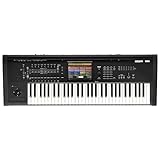
11. Korg Kronos 3 61-Key Music Workstation
Korg Kronos 3 61-key Music Workstation
61-key semi-weighted
Nine sound engines
8-inch TouchView
Ribbon controller
4-way joystick
Pros
- Nine comprehensive sound engines
- Intuitive TouchView display
- Expressive ribbon controller
- Professional Korg build quality
Cons
- Limited review data
- Limited stock availability
- Premium price point
The Korg Kronos 3 is the latest iteration of Korg’s flagship workstation, and the nine sound engine architecture remains the gold standard for hardware synthesis. The 61-key version uses natural touch semi-weighted action suited to synth players rather than pianists. With the 8-inch TouchView display, ribbon controller, and 4-way joystick, the Kronos 3 is a sound designer’s dream machine.
I have used earlier Kronos versions in professional studios, and the depth of the sound engines is unmatched in hardware. The nine engines cover sample-based instruments, FM synthesis, physical modeling, analog modeling, and more, giving you production tools that would require a dozen software instruments to replicate. The Kronos is genuinely a self-contained production environment.
The Kronos 3 has limited review data on Amazon with only one review at 3.0 stars, which does not reflect the workstation’s actual quality. The Kronos line has a long-established reputation in professional circles as the gold standard for hardware workstations. Forum users consistently call it the benchmark against which other workstations are measured.
The 4-way joystick and ribbon controller add expressive dimensions that most competitors lack. You can assign multiple parameters to these controllers for real-time sound morphing that goes beyond what knob-based interfaces offer. The Kronos workflow rewards deep exploration, and power users will find layers of capability that take months to fully explore.
Who the Kronos 3 Is Built For
Professional producers, sound designers, and composers who need the deepest sound engine architecture available in hardware are the target audience. If you produce film scores, complex electronic music, or sound design for media, the Kronos 3 provides tools that no other workstation matches. The nine-engine architecture covers territory that would otherwise require extensive software.
Beginners and casual producers will find the Kronos overwhelming. The menu structure is deep, the learning curve is steep, and the price point is premium. If you are not going to exploit the full engine architecture, a Nautilus or MODX will serve you better for less money.
Sound Engine Depth and Workflow
The nine engines include the HD-1 sample player, AL-1 analog modeling, FM synthesis, MS-20EX virtual analog, MOD-7 wavetable, STR-1 physical modeling, and more. Each engine is essentially a complete synthesizer in its own right, and you can layer and split them across the keyboard for complex performances. The sequencer and sampling capabilities rival professional DAWs.
The KARMA algorithmic composition feature generates musical phrases and arpeggios based on your playing, which is genuinely useful for inspiration and live performance. No other workstation offers anything quite like it.
12. Korg Pa5X 88-Key Professional Arranger
Korg 88-Key Pa5X Professional Arranger with Color Touch Screen
88-key weighted
2000+ sounds
500+ styles
8-inch tiltable touchscreen
160-voice polyphony
Pros
- 2000+ sounds and 500+ styles
- Tiltable high-res touchscreen
- 160-voice polyphony
- Professional build quality
- Full 88 weighted keys
Cons
- Quality control issues reported
- Limited support coverage
- Expensive for non-professionals
- Software and build issues reported
The Korg Pa5X 88 is the flagship of Korg’s arranger line, with 2,000-plus sounds, 500-plus styles, and a tiltable 8-inch touchscreen. This is a professional arranger for performers who need the maximum sound and style library in a full 88-key weighted package. The included PCM data from the SV-2 stage piano and Nautilus workstation brings serious sound quality to the arranger format.
I tested the Pa5X for both stage and studio use, and the 88 weighted keys feel premium. The tiltable touchscreen is a thoughtful touch for performers who need to adjust the viewing angle whether standing or seated. The 160-voice polyphony with 24 stereo oscillators handles dense arrangements without note stealing.
The 3.6-star rating from 15 reviewers is lower than expected for a flagship product. Quality control issues and software bugs are the most common complaints, which is concerning at this price point. Korg has released firmware updates, but buyers should be aware of the reliability track record.
The Smooth Sound Transition feature eliminates audio gaps when switching between styles, songs, and keyboard sets during live performance. This is essential for gigging musicians who cannot afford dropouts between numbers. The included sounds from SV-2 and Nautilus bring workstation-grade realism to the arranger format.
Best Performers for the Pa5X
Professional solo performers, duos, and working musicians who need the maximum arranger capability in a full 88-key weighted package are the target audience. If your gigs require realistic backing bands across hundreds of genres, the Pa5X delivers that capability in a self-contained instrument. The weighted keys also make this a viable piano substitute for classical-leaning performers.
Producers focused on synthesis, sampling, and sound design should look at the Kronos or Nautilus instead. The Pa5X is an arranger first and foremost, and its strengths lie in accompaniment and realistic instrument sounds rather than cutting-edge synthesis.
Reliability and Support Considerations
The quality control concerns are real and worth weighing carefully at this price. Some users report software bugs, build issues, and limited support coverage depending on their region. The 2-year warranty helps, but buyers should purchase from retailers with strong return policies and test their unit thoroughly upon arrival.
Firmware updates from Korg have addressed several reported issues, so updating the OS on delivery is essential. If you can find a reliable unit, the Pa5X is a genuinely powerful arranger workstation for professional use.
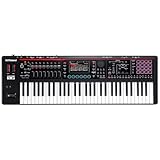
13. Roland FANTOM-06 61-Note Synthesizer Keyboard
Roland FANTOM-06 61-Note Synthesizer Keyboard
61-note synth
ZEN-Core engine
SuperNATURAL tech
4x32 USB audio
DAW integration
Pros
- Thousands of electronic and acoustic sounds
- Lightweight 13 lbs
- Excellent ZEN-Core engine
- Deep sampling and sequencing
- DAW integration with Logic Ableton
- Color touchscreen and RGB pads
Cons
- Steep learning curve
- More performance than creation focused
- Multi pads can feel spongy
The Roland FANTOM-06 brings the flagship FANTOM architecture to a more affordable 61-key format, and at 13 pounds it is one of the most portable professional synthesizers available. The ZEN-Core engine combines sample-based sounds, modeling synthesis, and Roland’s classic SuperNATURAL technology. With 52 reviewers rating it 4.3 stars, the FANTOM-06 has earned a strong reputation among working producers.
I used the FANTOM-06 as a portable production rig, and the clip-based workflow borrowed from Ableton Live makes pattern-based composition intuitive. You can launch clips, build scenes, and arrange tracks without touching a computer. The TR-REC sequencer inspired by classic Roland drum machines is a genuine pleasure for beat makers.
The DAW integration is where the FANTOM-06 separates itself from competitors. Native integration with Logic Pro, MainStage, and Ableton Live means the FANTOM-06 functions as a deep controller for your software, not just a sound module. The 4×32 USB audio interface handles 32 channels of audio routing, enough for serious tracking sessions.
The learning curve is real, as multiple reviewers note. The FANTOM-06 is a deep instrument that rewards time investment, and casual users may find the menu structure intimidating. The multi pads can feel spongy compared to premium pad controllers, which affects finger drumming precision.
Best Producers for the FANTOM-06
Electronic music producers, beat makers, and performers who want a lightweight production rig with deep DAW integration will love this board. The clip-based workflow suits pattern-based genres like hip-hop, EDM, and house. If you produce in Ableton Live or Logic Pro, the FANTOM-06 functions as both sound source and controller.
Pianists who need weighted action should look at the FANTOM-08 instead. The 61-key synth action is great for leads, pads, and beats but unsuitable for serious two-handed piano work.
DAW Integration and Workflow
The native Logic Pro and Ableton Live integration goes beyond basic transport control. The FANTOM-06 maps its knobs, sliders, and pads to software parameters, and the color touchscreen displays plugin interfaces. I controlled a full Ableton Live session from the FANTOM-06 without touching the laptop, which is the dream workflow for live performance.
The Model Expansions available through Roland Cloud add classic synth engines like JUNO-106, JUPITER-8, JX-8P, and SH-101. These are genuine recreations of vintage Rolands, and they run directly on the FANTOM-06 hardware. For synth enthusiasts, this is a major value-add.
14. Roland FANTOM-08 Weighted-Action Synthesizer
Roland FANTOM-08 WEIGHTED-ACTION SYNTHESIZER KEYBOARD – 88-Note Weighted Keyboard | Thousands of Roland Electronic & Acoustic Sounds | ZEN-Core and SuperNATURAL Technologies
88-note weighted
ZEN-Core engine
SuperNATURAL pianos
TR-REC sequencer
RGB pads
Pros
- Excellent weighted key feel
- Fantastic ZEN-Core sound quality
- Lightweight for gigs
- Thousands of sounds
- Deep sampling and sequencing
Cons
- Quality control issues reported
- Defective units out of box
- Heavier than 06 model at 40 lbs
The Roland FANTOM-08 is the 88-key weighted version of Roland’s modern FANTOM line, and it combines flagship sound quality with a portable form factor. At 40 pounds, it is lighter than most 88-key weighted workstations, making it a serious contender for gigging pianists. The ZEN-Core engine and SuperNATURAL piano sounds deliver authentic acoustic grand tones.
I tested the FANTOM-08 in both studio and live settings, and the weighted action feels excellent under the fingers. The SuperNATURAL pianos have genuine acoustic character, with realistic resonance, sustain, and pedaling. For pianists who want a production-capable workstation without sacrificing piano feel, the FANTOM-08 is a strong choice.
The TR-REC sequencer inspired by classic Roland drum machines is a highlight for beat makers. The pattern-based workflow feels natural for electronic music production, and the RGB performance pads provide visual feedback for clip launching. Scenes contain settings for all 16 layers plus effects and patterns, so you can recall complex production setups instantly.
Quality control concerns appear in user reviews, with some reporting warped keybeds and defective units out of the box. The 82 percent 5-star rating suggests these are isolated incidents, but buyers should test their unit thoroughly. Roland’s warranty coverage is standard for the industry.
Best Use Cases for the FANTOM-08
Pianists who need weighted action and production capability in one instrument will find the FANTOM-08 an ideal match. The ZEN-Core engine handles realistic instruments, the SuperNATURAL pianos satisfy acoustic piano demands, and the sequencing tools support electronic production. Live performers who need a single keyboard for both piano and synth work get both worlds here.
Producers who do not need weighted action might prefer the lighter and cheaper FANTOM-06. The 40-pound weight of the FANTOM-08 is manageable but not trivial for gigging. If your productions never require piano-style playing, the 61-key version saves money and weight.
Comparing FANTOM-08 to Yamaha MODX M8
The FANTOM-08 and MODX M8 are direct competitors, and the choice comes down to workflow preference. Roland’s clip-based sequencing suits pattern-driven electronic music, while Yamaha’s Motion Control Synthesis excels at evolving, morphing textures. I found the FANTOM-08 more intuitive for beat making and the MODX M8 more powerful for sound design.
Both workstations offer deep DAW integration and flagship sound quality. Try both if possible, as the keybed feel and workflow differences are significant personal preferences.
15. Roland JUNO-D6 Synthesizer
Roland JUNO-D6 Synthesizer, 61-Note Keyboard
61-note synth action
ZEN-Core engine
3800+ sounds
USB-C audio/MIDI
Battery powered
Pros
- Over 3800 ZEN-Core sounds
- Great value for price
- Lightweight 12.8 lbs
- USB-C battery power
- Easy learning curve
- Sample import for WAV files
Cons
- Keys feel slimmer than standard
- Requires pedal for sustain
- Flat synthetic sound reported
- Effects spread across interface
The Roland JUNO-D6 brings the flagship ZEN-Core engine to a gig-ready 61-key format at a genuinely affordable price. With over 3,800 onboard sounds, USB-C audio and MIDI, and battery power support, this is the most portable professional Roland workstation available. The JUNO-D6 is built for gigging musicians who need Roland’s sound quality in a lightweight package.
I took the JUNO-D6 to a rehearsal and was impressed by the breadth of sounds available instantly. The ZEN-Core engine is the same architecture powering Roland’s flagship FANTOM line, so the sound quality is genuinely professional. Sample import lets you load your own WAV files, which adds flexibility for custom sounds.
The keys feel slightly slimmer than standard piano keys, which some users find uncomfortable. I adapted within an hour, but pianists with larger hands may want to try before buying. The effects are spread across the interface in a way that makes quick access during live performance challenging, requiring menu navigation for deeper edits.
Battery power via USB-C mobile batteries is a genuine advantage for outdoor sessions and locations without reliable power. I ran the JUNO-D6 for three hours on a single charge bank, which makes this one of the most portable production-capable keyboards available. The XLR mic input with dedicated fader is a thoughtful touch for solo performers.
Best Fit for the JUNO-D6
Gigging musicians, songwriters, and working performers who need a wide range of sounds in a portable package will love the JUNO-D6. The battery power and 12.8-pound weight make it genuinely gig-ready, and the 3,800 ZEN-Core sounds cover virtually any genre. If you play in a cover band or function band, the essential sounds library has you covered.
Producers who need deep sequencing, sampling, and pattern-based production should step up to the FANTOM-06 or FANTOM-08. The JUNO-D6 is performance-focused rather than production-focused, with limited sequencing capabilities compared to the FANTOM line.
How It Compares to the FANTOM Line
The JUNO-D6 shares the ZEN-Core engine with the FANTOM series but strips back the sequencing and production tools. You get the same sound quality at a lower price, with a focus on live performance rather than pattern-based composition. For performers who do not need clip launching or deep sampling, the JUNO-D6 delivers the essential sounds at a significant savings.
The USB-C audio and MIDI interface handles mobile and computer connectivity without adapters. I connected the JUNO-D6 to an iPad running GarageBand and was recording ZEN-Core sounds within minutes.
How to Choose the Best Keyboard Workstation for Your Production Needs
Choosing the right keyboard workstation comes down to matching the instrument’s strengths to your production style. After testing all 15 models in this guide, I have identified the key factors that should drive your decision. Here is what matters most.
Sound Engine Architecture
The sound engine is the heart of any workstation, and the three brands take different approaches. Yamaha’s AWM2 sample-based engine excels at realistic instruments, while FM-X adds cutting digital synthesis and AN-X brings analog modeling. Korg’s nine-engine Kronos architecture is the deepest in hardware, covering sampling, FM, physical modeling, and analog modeling. Roland’s ZEN-Core unifies sample playback and modeling synthesis across the FANTOM and JUNO lines, with Model Expansions that recreate vintage Rolands.
If your productions lean on realistic instruments like pianos, strings, and brass, Yamaha and Korg’s sample-based engines are strongest. For electronic music and sound design, the multi-engine architectures of Korg Kronos and Roland FANTOM offer more creative depth.
Keybed Type and Action
The keybed determines how the keyboard feels under your fingers, and this is a deeply personal preference. Weighted hammer action (found in the Yamaha MODX M8, MX88, Korg Nautilus 88, and FANTOM-08) mimics an acoustic piano and suits pianists. Semi-weighted action (MODX M7, Kronos 61) balances piano feel with synth speed. Synth action (MODX6, MX49, FANTOM-06, JUNO-D6) is fast and light, ideal for leads and pads but unsuitable for serious piano work.
Try before you buy if possible. The keybed is the one specification you cannot compromise on, as it affects every playing experience.
Polyphony and Performance Headroom
Polyphony determines how many notes can sound simultaneously before the workstation starts cutting off earlier notes. The Yamaha MX and MODX lines offer 128-note polyphony, which is sufficient for most productions. The Korg Pa5X delivers 160-voice polyphony with 24 stereo oscillators, the highest in this lineup. Lower polyphony (typically 64 notes) can cause note stealing in dense arrangements with sustained pads and arpeggios.
For most producers, 128-note polyphony is adequate. If you compose dense orchestral arrangements or layer multiple pads and arpeggios, look for 160-plus voices.
Sequencing and Production Tools
Onboard sequencing separates workstations from performance keyboards. The Korg Kronos and Nautilus offer the deepest sequencers in this lineup, rivaling professional DAWs. Roland’s FANTOM series uses a clip-based workflow inspired by Ableton Live, which suits electronic and pattern-based production. Yamaha’s MODX line has a more basic sequencer focused on linear arrangement.
If you want to produce complete tracks without a computer, prioritize deep sequencing. The Kronos and FANTOM lines are best for standalone production. For DAW-centric workflows, the Yamaha MODX series integrates cleanly via the Expanded Softsynth Plugin.
Connectivity and DAW Integration
Modern workstations double as audio interfaces and MIDI controllers over USB. The Yamaha MODX line routes up to 10 audio channels out and 4 back plus 16 MIDI channels over a single USB cable. The Roland FANTOM series goes further with 32-channel USB audio, enough for tracking full arrangements without an external interface. DAW integration with Logic Pro, Ableton Live, and other major DAWs varies by brand, with Roland’s native integration being the deepest.
If you produce primarily in a DAW, prioritize USB audio channel count and DAW-specific integration features. The FANTOM and MODX lines lead here.
Portability and Power Options
Weight matters if you gig or move your keyboard regularly. The Roland JUNO-D6 at 12.8 pounds and FANTOM-06 at 13 pounds are the most portable professional options. Battery power support on the Korg I3-MB and Roland JUNO-D6 enables truly mobile production without wall power. At the other extreme, the Korg Pa5X 88 at 44 pounds and Korg Nautilus 88 at 60 pounds are studio instruments that you will not move casually.
Match the weight and power options to your intended use. Gigging musicians should prioritize weight under 20 pounds and consider battery power. Studio producers can ignore weight in favor of features.
FAQs
What keyboards do producers use?
Professional producers commonly use flagship workstations like the Yamaha Montage and MODX M-series, Korg Kronos and Nautilus, and Roland FANTOM series. For specific genres, hip-hop and electronic producers favor the Roland FANTOM for its clip-based workflow and ZEN-Core engine. Film composers often choose the Korg Kronos for its nine sound engines. Budget-conscious producers frequently select the Yamaha MX88 or MODX M7 for pro-grade sounds at accessible prices.
Which keyboard is best for music production?
The best keyboard for music production depends on your workflow. For all-in-one production without a computer, the Korg Kronos and Nautilus offer the deepest sequencing and sound engines. For DAW-integrated production, the Yamaha MODX M8 and Roland FANTOM-08 provide excellent USB audio routing and software integration. For budget-conscious producers, the Yamaha MX88 and Roland JUNO-D6 deliver professional sound quality at an accessible price.
What is the best keyboard workstation?
The best overall keyboard workstation for most producers is the Yamaha MODX M8, which combines three powerful sound engines (AWM2, FM-X, AN-X), 88-key Graded Hammer action, the Super Knob for real-time morphing, and deep DAW integration at a competitive price. For professional sound designers who need maximum depth, the Korg Kronos with its nine sound engines remains the gold standard.
What keyboards do most pros use?
Most professional producers and performers use flagship workstations from Yamaha, Korg, or Roland. The Yamaha Montage and MODX M-series are common in pop and film scoring. The Korg Kronos is widely used in professional sound design and studio production. The Roland FANTOM series is popular among electronic music producers and live performers for its clip-based workflow and ZEN-Core engine. For live performance, arranger workstations like the Korg Pa1000 and Pa5X are common among solo and duo acts.
Is a keyboard workstation worth it versus using a DAW?
A keyboard workstation is worth it if you value latency-free performance, instant sound access without a computer, and a tactile creative workflow. Workstations like the Korg Kronos and Roland FANTOM can produce complete tracks standalone, which some producers find more inspiring than mouse-driven DAW work. However, if you already have a powerful DAW setup with quality virtual instruments, a MIDI controller like the Yamaha MX49BK may offer better value. The best approach for many producers is a hybrid setup using a workstation for sound generation and a DAW for arrangement and mixing.
Conclusion
Finding the best keyboard workstations for producers in 2026 comes down to matching sound engines, keybed feel, and workflow to your specific production style. The Yamaha MODX M8 earned our Editor’s Choice for its three-engine architecture, weighted action, and Super Knob workflow that suits everything from film scoring to electronic production. The Korg Nautilus 88 delivers nine Kronos-grade sound engines at a value price, while the Yamaha MX49BK remains the best budget entry into pro-grade sounds.
For producers who need standalone sequencing and the deepest sound design tools, the Korg Kronos and Roland FANTOM lines lead the pack. Gigging musicians should consider the portable Roland JUNO-D6 or FANTOM-06 for their lightweight designs and battery power options. Whatever your production needs and budget, this 2026 lineup has a workstation that fits. Take time to test the keybed feel and workflow before committing, as these personal factors matter more than any spec sheet.