

The best hobby lathes for woodturning are the ones that match the size of the work you actually want to make, not the biggest machine you can fit in the shop. For most home turners that means a benchtop midi lathe with 12 to 14 inches of swing and true electronic variable speed. After going through specs, owner feedback and shop realities on 12 machines, the WEN 3421 is the one we keep coming back to for most people, the JET JWL-1221VS for serious spindle work, and the JET JWL-1015VS for small shops with cast iron construction.
This roundup covers everything from a 17-pound pen lathe you can carry to a shared bench to a 377-pound floorstanding machine built for table legs. Each machine gets a full review with swing, distance between centers, motor output, speed range, weight, and the accessory kit that actually arrives with the machine.
One thing we found while reading owner posts deserves an early warning. Dust is the single loudest complaint in every woodturning forum we checked. A hobby-machinist user put it plainly: wood lathes generate huge amounts of dust and wood chips, so dust collection and dust masks are invaluable. That one reality drives more purchase decisions than horsepower does, so we cover it in its own section below. If you are still deciding whether turning fits your life, our guide to hobby CNC routers for small workshops is a useful comparison on the other machine most beginners consider first.
Table of Contents
- Top 3 Picks for the Best Hobby Lathes in 2026
- Best Hobby Lathes for Woodturning (October 2026)
- 1. WEN 3421 8×12 Mini Lathe – Our Best Overall Pick for Most Hobby Turners
- 2. JET JWL-1221VS 12×21 MIDI Lathe – Best for Serious Spindle and Bowl Work
- 3. Delta 46-460 12-1/2 Inch MIDI Lathe – Best All-Cast-Iron Build
- 4. WEN LA3424 12×18 Five-Speed Benchtop Lathe – Best for New Turners
- 5. JET JWL-1015VS 10×15 Benchtop Lathe – Our Highest-Rated Pick
- 6. WEN 34035 14×20 Variable Speed Benchtop Lathe – Best for Wide Bowls
- 7. PSI Woodworking KWL-1218VS 12×18 MIDI Lathe – Best 1 HP Power Under 100 Pounds of Class
- 8. ARTYMASTER WM101A-Plus 96W Mini Lathe – Best Portable Pen and Vase Machine
- 9. hightall MC1218 12×18 Five-Speed Lathe – Best Cast Iron Build With Fixed Speeds
- 10. MECHINHUB 12×18 Digital Display Lathe – Best Budget Digital RPM Readout
- 11. Shop Fox W1836 12 Inch Electronic Variable Speed Lathe – Best Simple Controls
- 12. JET JWL-1640EVS 16×40 Floorstanding Lathe – Best for Furniture Parts
- How to Choose a Hobby Wood Lathe
- Dust and Chip Management for a Home Wood Shop
- Frequently Asked Questions
- Which Hobby Lathe Should You Buy?
Top 3 Picks for the Best Hobby Lathes in 2026

WEN 3421 8×12 Mini Lathe
- 8 inch swing by 12 inch capacity
- 750 to 3200 RPM soft-start variable speed
- 3.2-Amp motor with two tool rests

JET JWL-1221VS 12×21 Lathe
- 1 HP motor
- three speed ranges from 60 to 3600 RPM
- MT2 taper with 1 inch by 8 threads
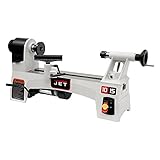
JET JWL-1015VS 10×15 Lathe
- Half HP cast iron bed
- 200 to 3600 RPM across three ranges
- 10 inch swing with a sliding tailstock
Best Hobby Lathes for Woodturning (October 2026)
| Product | Specifications | Action |
|---|---|---|
| WEN 3421 Mini Variable Speed Lathe |
|
Check Latest Price |
| JET JWL-1221VS 1 HP MIDI Lathe |
|
Check Latest Price |
 Delta 46-460 Cast Iron MIDI Lathe Delta 46-460 Cast Iron MIDI Lathe |
|
Check Latest Price |
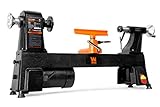 WEN LA3424 12×18 Five-Speed Lathe WEN LA3424 12×18 Five-Speed Lathe |
|
Check Latest Price |
| JET JWL-1015VS Benchtop Lathe |
|
Check Latest Price |
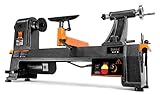 WEN 34035 14×20 Variable Speed Lathe WEN 34035 14×20 Variable Speed Lathe |
|
Check Latest Price |
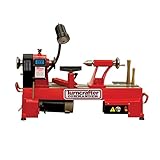 PSI Woodworking KWL-1218VS MIDI Lathe PSI Woodworking KWL-1218VS MIDI Lathe |
|
Check Latest Price |
 ARTYMASTER WM101A-Plus Mini Lathe ARTYMASTER WM101A-Plus Mini Lathe |
|
Check Latest Price |
 hightall MC1218 12×18 Five-Speed Lathe hightall MC1218 12×18 Five-Speed Lathe |
|
Check Latest Price |
 MECHINHUB 12×18 Digital Display Lathe MECHINHUB 12×18 Digital Display Lathe |
|
Check Latest Price |
 Shop Fox W1836 Electronic Variable Speed Lathe Shop Fox W1836 Electronic Variable Speed Lathe |
|
Check Latest Price |
 JET JWL-1640EVS Floorstanding Lathe JET JWL-1640EVS Floorstanding Lathe |
|
Check Latest Price |
1. WEN 3421 8×12 Mini Lathe – Our Best Overall Pick for Most Hobby Turners
WEN 3421 3.2-Amp 8″ by 12″ Variable Speed Mini Benchtop Wood Lathe
8 in. swing by 12 in. capacity
3.2-Amp soft-start motor
750 to 3200 RPM
MT1 spindle and tailstock taper
Pros
- Handles work up to 12 inches long and 8 inches wide
- Soft-start variable speed from 750 to 3200 RPM
- 3.2-Amp motor is more powerful than most 8-inch lathes
- Two interchangeable tool rests included
- Over 1400 owner reviews to learn from
Cons
- MT1 taper is smaller than the MIDI standard
- 8 inch swing caps bowl and platter size
- Small bed limits long spindle work
This is the lathe we recommend first to almost anyone asking about the best hobby lathes for woodturning on a modest budget. It weighs 44.7 pounds, spins from 750 to 3200 RPM with a soft start, and carries the deepest owner-review base of anything we looked at. That matters more than it sounds like it should, because a machine with 1400-plus reviews has a settled reputation rather than a marketing one.
In practice it covers pens, cups, chess pieces, small bowls and spindle work up to 12 inches long and 8 inches wide. The 3.2-Amp motor has more than 50 percent more power than most machines in the 8-inch class, which shows up when you rough out hardwood rather than pine.
The kit is unusually generous for the class. You get a 2.3-inch faceplate, MT1 spindle and tailstock tapers, and two interchangeable tool rests so you can swap between a short one for detail work and a longer one for bigger diameters. That faceplate is the reason this machine can handle small bowls rather than only spindle work.
The MT1 taper is the one compromise that matters long term. It is smaller than the MT2 standard used by every midi lathe here, so the chuck and accessory ecosystem is narrower. If you already know you will grow into larger work, plan on that upgrade later rather than buying a mini first.
Is a small 8 inch swing enough for real projects?
Enough for pens, ornaments, small bowls, cups, handles and spindles up to 12 inches long. Owner photos across thousands of reviews show a lot of finished pen sets and side plates, which is the natural first project set for a machine this size. It is not enough for large salad bowls or table legs.
The swing over bed number is roughly your maximum turning diameter, so an 8-inch swing caps you near 6-inch bowls once you allow for the tool rest and the chisel handle. That is still a satisfying range of work for a first machine.
Who should skip this lathe?
Skip it if your goal is hollow forms, wide platters, or furniture parts from day one. The bed is short and the taper is small, so you would be buying a stopgap. Pick a 12-inch swing midi model instead and you will not have to repeat the purchase.
It is also worth weighing against a route for younger or newer turners. If the person learning is under about 12, our picks for all-in-one hobby starter sets for families bundle safety and supervision considerations that a bare lathe does not cover.
2. JET JWL-1221VS 12×21 MIDI Lathe – Best for Serious Spindle and Bowl Work
JET 12″ x 21″ Variable-Speed Woodworking Lathe, 1 HP, 115V 1Ph (JWL-1221VS)
12 in. swing by 21 in. bed
1 HP, 115V single phase
Three ranges, 60 to 3600 RPM
Acme tailstock thread, 24 indexing positions
Pros
- Quiet 1 HP motor handles large blanks
- Ratchet belt tensioner makes speed changes fast
- Digital readout and integrated spindle lock
- MT2 taper and 1 inch by 8 threads fit standard accessories
Cons
- 121 pounds needs a sturdy dedicated bench
- Included tool rests need finishing work
- Digital readout can read low at low line voltage
This is the machine to buy if spindle turning is going to be a serious part of your hobby rather than an occasional evening. Twelve inches of swing and a 21-inch bed cover fence pickets, table spindles, tool handles and bowls, and the 1 HP motor has the torque to keep pushing through hard maple rather than stalling out.
Three speed ranges (60 to 900, 110 to 1800, and 220 to 3600 RPM) cover everything from faceplate hollowing at walking pace up to sanding speed. Transitions from forward to reverse are smooth, which owners note matters more than they expected when sanding against the grain.
The ratchet-style belt tensioner is the feature experienced turners mention first. Changing speed means moving a lever instead of crawling under the machine with a wrench. Add 24 integrated indexing positions and a spring-loaded spindle lock, and repeat work like a matched set of spindles becomes practical.
At 121 pounds this is not a machine you shuffle around a bench. Bolted to a solid stand it stays put for years, but if your shop space is tight the JET JWL-1015VS later in this roundup does the same job at 72.6 pounds. Note also that some owners report headstock bolts loosening over time and a few report friction getting defective parts handled.
Why the 1 HP motor matters over a 3/4 HP
Horsepower on a lathe is about removing material, not acceleration. A 1 HP motor keeps the tool engaged through a heavy cut instead of bogging down, which means fewer snags, fewer burned shavings and less frustration on figured hardwood. On lighter work the difference disappears.
The flip side is electrical. At 115V this is a 12-amp-class draw, so give it a dedicated circuit rather than sharing an outlet with a table saw or a dust collector.
Who should skip this lathe?
Skip it for a small apartment corner or a light-duty garage bench that cannot take 121 pounds. Skip it if your projects stay under 8 inches, because you would be paying for capacity you never use. New turners who only want pens and ornaments will find the mini class more satisfying per dollar.
3. Delta 46-460 12-1/2 Inch MIDI Lathe – Best All-Cast-Iron Build
Delta Industrial 46-460 12-1/2-inch Variable-Speed MIDI Lathe, Gray
12.5 in. swing over bed
16.5 in. between centers
Three pulley ranges to 4000 RPM
1 HP, 120V, all cast iron
Pros
- All cast iron construction damps vibration well
- 12.5 inch swing is unusual in this class
- Reverse rotation available
- Patented belt tension lever is repeatable
- Includes 3 inch face plate with 6 and 10 inch tool rests
Cons
- Roughly 97 pounds and not portable
- Tool rests and spur center feel rudimentary
- Switch can be damaged during handling
Long-term owners describe this Delta as the benchmark for the mini and midi class. The all-cast-iron construction is the reason: cast iron absorbs vibration instead of passing it into the chisel, and on thin-walled vessels that difference is the difference between a clean cut and chatter.
The 12-1/2 inch swing is a genuinely unusual figure. Most machines in this class stop at 12 inches, so that extra half inch adds real diameter headroom for bowls and platters. Distance between centers is 16-1/2 inches, extending to 42 inches with the optional bed extension for long spindles.
Speed comes from three pulley ranges covering 250 to 700, 600 to 1800 and 1350 to 4000 RPM, with a patented belt tensioning lever that sets tension the same way every time. Long-term owners consistently praise the fit and finish, the quiet running motor and the reverse capability that few midi lathes in this range offer.
The honest criticisms are the included accessories. Owners rate the supplied tool rests as flimsy and the shipping spur center as rudimentary, so budget a replacement tool rest early. A few owners also report the on/off switch arriving damaged after delivery.
Is a 12.5 inch swing worth choosing a machine for?
Half an inch of extra diameter sounds trivial until you work up to the limit, where it is the difference between fitting a piece and reordering it. Bowl turning especially benefits, since diameter is the dimension you actually run out of first. It also gives the tool rest and chisel handle more clearance.
Add reverse rotation into the same comparison and this machine becomes attractive to anyone who has struggled with tearout on a back-cut.
Who should skip this lathe?
Skip it if you plan to move the machine between benches or shops. At roughly 97 pounds it is a permanent fixture, and the all-iron build is the reason for that weight. Skip it if you want a digital readout, since this one uses mechanical pulley ranges rather than an electronic dial.
4. WEN LA3424 12×18 Five-Speed Benchtop Lathe – Best for New Turners
WEN LA3424 4.5-Amp 12-Inch by 18-Inch 5-Speed Benchtop Wood Lathe
12 in. swing by 18 in. capacity
Five speeds, 520 to 3400 RPM
4.5-Amp motor, MT2 tapers
70.3 pounds
Pros
- Four and a half star average across nearly 300 reviews
- MT2 tapers open up the full accessory market
- Faces
- centers and an 8 inch tool rest all included
- Discrete speeds are predictable and easy to learn
Cons
- No true infinitely variable speed
- Step changes mean stopping to move the belt
- Underpowered against large rough logs
If you want one answer to the question of the best wood lathe for beginners, this is the one we give most often. Twelve inches of swing and 18 inches between centers covers the classic beginner list: bowls, cups, spindle work, tool handles and ornaments, with enough room to learn without outgrowing the machine in six months.
The accessory bundle is better than most at this level. You get a 3-1/8-inch faceplate for bowl work, an MT2 headstock spur center, an MT2 tailstock live center, an 8-inch tool rest and an on-board accessory holder. Choosing this one means you can make something on day one instead of ordering parts first.
The five fixed speeds (520, 900, 1400, 2150 and 3400 RPM) are a genuine advantage for a learner. A fixed speed is a known, repeatable number, so when you finish a cut at 1400 RPM and like the result, you know exactly how to repeat it. That feedback loop matters early.
What you give up is mid-cut adjustment. If you need a slightly lower speed in the middle of a bowl wall, you stop the machine, reposition the belt, and start over. Owners moving up from smaller machines also note the 4.5-Amp motor struggles against heavy roughing on big logs compared with a 1 HP midi lathe.
Do fixed speeds make learning harder or easier?
Easier for the first six months, harder after that. Fixed speeds give you repeatable reference points, and only five of them means you can learn the whole machine quickly. Once you start hollowing forms and want fine control near the wall, continuous adjustment starts to matter.
MT2 tapers on both headstock and tailstock mean every chuck, live center and faceplate you buy later fits, which removes the most common beginner lock-in mistake.
Who should skip this lathe?
Skip it if you already know you will be doing faceplate hollowing or heavy roughing, where a fixed speed and a 4.5-Amp motor fight you. Skip it if you want to dial exact RPM without guessing. In both of those cases an electronic variable speed midi lathe is the shorter path.
5. JET JWL-1015VS 10×15 Benchtop Lathe – Our Highest-Rated Pick
JET 10″ x 15″ Variable Speed Wood Lathe, Cast Iron, 1/2 HP (JWL-1015VS)
10 in. swing by 15.5 in. between centers
Half HP, 115V
Cast iron bed, headstock and tailstock
Three ranges, 200 to 3600 RPM
Pros
- Highest rating in this group at 4.7 stars with 87 percent five-star
- Cast iron throughout dampens vibration
- Precise electronic speed dial within three belt ranges
- Tailstock slides off for bowl hollowing
- Live center
- spur center and faceplate included
Cons
- No reverse function for sanding against the grain
- 15.5 inches between centers limits long spindles
- Compact capacity suits small shops
This is the machine we would buy for a one-car garage or a converted closet. At 72.6 pounds it is heavy enough to stay put and light enough to reposition, and the cast iron bed, headstock and tailstock give it the same damped feel as machines nearly twice its size.
Experienced turners call it quiet, well machined and stable. The electronic speed dial is precise within each of its three belt ranges (200 to 1050, 300 to 1750, and 600 to 3600 RPM), so you get continuous control inside each range rather than five hard steps.
It comes with a live center, spur center, 6-inch tool support, a 3-inch faceplate and a knockout rod, so it is complete as delivered. The MT2 taper and 1 inch by 8 threads accept standard chucks, and 24 indexing positions plus a tailstock that slides off entirely make it easy to work on bowls.
At 4.7 stars with 87 percent five-star ratings, it is the highest-rated machine we covered. The most common owner wish is a reverse function for sanding against the grain, which is the one feature missing from an otherwise very clean package.
Why does cast iron matter on a benchtop lathe?
Cast iron is heavy and effectively dead to vibration. A spinning workpiece at 2000 RPM generates energy, and on a thin all-steel benchtop machine that energy travels up the tool post and into the chisel as chatter. Cast iron absorbs it, which is why owners of this JET report cleaner cuts on thin-walled work.
The trade is floor loading. At 72.6 pounds you need a bench rated for it and four bolts into solid material. Thin legs or a folding table will not hold still.
Who should skip this lathe?
Skip it if your longest projects are long spindles. Fifteen and a half inches between centers is short, and extending it means buying a bed extension. Skip it if you regularly sand against the grain, since there is no reverse.
6. WEN 34035 14×20 Variable Speed Benchtop Lathe – Best for Wide Bowls
WEN 34035 6-Amp 14-Inch by 20-Inch Variable Speed Benchtop Wood Lathe
14 in. swing by 20 in. capacity
True variable speed, 250 to 3550 RPM
6-Amp motor
4 inch faceplate, MT2 tapers
Pros
- Widest swing in the WEN benchtop line
- Infinite speed control with no belt moves
- Quiet motor with useful power for small logs
- MT2 tapers and 1 inch by 8 thread for broad accessory fit
Cons
- Knockout rod is flimsy and bends
- Small tailstock hand wheel
- Rounded headstock and tailstock tops
- Some owners report motor bogging under load
Fourteen inches of swing is the widest headstock in this roundup short of the floorstanding JET, and that is the number that decides what you can make. Bowls, platters and wide serving pieces are limited by diameter, not length, so this machine opens up projects the 10-inch and 12-inch lathes simply cannot hold.
Speed runs continuously from 250 to 3550 RPM with no belt moves, which makes it far more pleasant for faceplate work than the fixed-speed machines. Owners who upgraded from smaller WEN lathes rate this as the best of the line for that reason.
The box includes a 4-inch faceplate, an MT2 spur center, an MT2 live center, an 8-inch tool rest and an on-board accessory holder. The 4-inch faceplate is larger than anything else in this group, which means more surface for stabilizing a wide bowl blank.
The hardware nits are consistent across reviews. The knockout rod bends during chuck removal, and the tailstock hand wheel is small if you plan to drive drill bits with it. Owners also report the rounded tops of the headstock and tailstock take some getting used to, and a few owners bog the motor under heavy cutting loads.
Is 14 inch swing overkill for a hobby shop?
Only if you never make anything wide. For most turners it is the largest diameter they will ever need, and the 20-inch bed still handles spindle work comfortably. The cost is footprint and mass, since this is a full-size benchtop machine rather than a compact one.
If you mostly turn long thin spindles instead, that 20-inch bed is a better use of the money than extra swing, and the JET JWL-1221VS covers a similar length with more motor.
Who should skip this lathe?
Skip it if your shop is tight, because the 38-inch machine footprint and cast bed need a real bench rather than a folding table. Skip it if you want a heavy 1 HP motor for roughing large logs, since the 6-Amp motor is not the same thing.
7. PSI Woodworking KWL-1218VS 12×18 MIDI Lathe – Best 1 HP Power Under 100 Pounds of Class
PSI Woodworking KWL-1218VS Turncrafter 12″ Variable Speed Midi Lathe
12 in. swing by 18 in. between centers
1 HP induction motor, 120V
Two belt ranges, 500 to 3800 RPM
Cast iron base, 106 pounds
Pros
- 1 HP induction motor with a microprocessor drive
- Two belt ranges from 500 to 3800 RPM
- Cast iron base stays stable on bigger work
- 24 indexing positions with spindle locking
- Built-in handles make it movable
- ETL certified by Intertek
Cons
- Only two belt positions limits fine speed matching
- 3/8 inch spindle and tailstock bore restrict chuck size
- Three-year warranty is shorter than most
This Turncrafter model puts a 1 HP induction motor on a cast iron base at a fraction of the weight of the 1 HP JET machines. At 106 pounds it still wants a dedicated bench, but built-in handles make it the easiest of the heavy lathes in this roundup to move when you rearrange the shop.
Speed comes from two belt positions: 500 to 1800 RPM and 1950 to 3800 RPM. Owners with 77 percent five-star ratings describe strong smooth power, stable cast iron behavior and easy indexing as the standout qualities.
The headstock thread is 1 inch by 8 TPI with number 2 Morse tapers on headstock and tailstock, so standard chucks and faceplates fit. Distance between centers is 18 inches with a 12-inch swing over bed, and the quill travel is 1-5/8 inches.
The two constraints worth knowing are the bore sizes. Both the spindle and tailstock bore are 3/8 inches, which is smaller than the 15/32-inch self-ejecting bore on the Delta and limits how large a chuck can pass through the headstock. Two belt positions also means coarser speed choices than a three-range design when you are matching a specific RPM.
What does an induction motor change for woodturning?
Induction motors run cooler and more smoothly than universal motors under sustained load, which matters when you spend an evening roughing a long spindle rather than making short cuts. Many buyers also note they are quieter at a given RPM than comparable universal motor machines.
The trade is that some cheap universal motors are more compact and cheaper to replace. For long sessions the cooler running wins.
Who should skip this lathe?
Skip it if you plan to mount large four-jaw chucks for off-center work, since the 3/8-inch bore limits what fits. Skip it if warranty length matters a great deal to you, because three years is shorter than the five years on the JET machines here.
8. ARTYMASTER WM101A-Plus 96W Mini Lathe – Best Portable Pen and Vase Machine
Mini Lathe, WM101A-Plus Mini Wood Lathe Machine, 24VDC 96W Power Lathe, Small Benchtop Lathe with Wood Turning Lathe Tools Kits, Infinitely Variable Speed, Professional for DIY Woodworking
3 in. diameter by 8 in. turning range
96W 24V DC motor, under 65 dB
Infinitely variable speed
17 pounds, 0.4 inch spindle bore
Pros
- Lightest machine here at 17 pounds
- Quieter than 65 dB suits shared spaces
- Most complete accessory kit in the group
- Handles hardwoods as well as POM and copper
- Adjustable tool rest for position and angle
Cons
- 96W motor limits work to small pieces only
- Not suited to bowls
- spindles or furniture parts
- MT1 interface is smaller than the MIDI standard
This is the machine for a small apartment, a shared community workshop bench or a second lathe alongside a larger one. At 17 pounds you can carry it to a different bench, and a rated noise level under 65 dB makes it a realistic option in a shared space.
What makes it genuinely pleasant for its class is the accessory kit. The box includes round, square and diamond turning tools, a 2-inch chuck set, a drive center, a live center, a centering ruler, a drill chuck and three adjustment wrenches. As delivered you can turn pens, small vases and rings without ordering a single extra part.
The solid steel base and headstock keep vibration and noise down, and the tool rest adjusts for position, height, angle and length, which helps when you are working small and need the rest close to the work. Speed is infinitely variable, so you can creep down to slow finishing speeds.
Understand the ceiling before you buy. The 96W motor and 3-inch by 8-inch processing range mean pens, small ornaments, rings and thin-walled small vessels. It is not a bowl machine, and the 0.4-inch spindle with MT1 interface limits the accessory ecosystem. Treat it as a first machine or a dedicated pen lathe rather than a step toward bowls.
When does a tiny lathe make more sense than a midi?
When your work is small, your space is smaller, and noise matters. Pens, rings, chess pieces, small ornaments and instrument parts are all well served by a 3-inch swing, and none of them benefit from more diameter. Buyers commonly pair one of these with a larger lathe rather than replacing one.
It is also the least intimidating machine to learn on. A spindle this small forgives uneven tool control in a way a 14-inch bowl blank does not.
Who should skip this lathe?
Skip it if bowls, hollow forms or furniture are on your list. Skip it if you want to buy one machine and grow into it, since this one has no headroom. The MT1 spindle also means you cannot reuse midi-lathe accessories on it.
9. hightall MC1218 12×18 Five-Speed Lathe – Best Cast Iron Build With Fixed Speeds
Wood Lathe Machine, 12 x 18 inch, 550W 3/4HP, 5 Speed Settings 680-2770 RPM,Benchtop Lathe with MT2 Drive/Live Center
12 in. maximum diameter by 18 in. centers
3/4 HP 550W AC motor
Five speeds, 680 to 2770 RPM
Cast iron bed, 5-year core warranty
Pros
- Cast iron bed stays rigid at higher speeds
- Aluminum alloy housing resists overheating in long sessions
- Five clearly geared speeds are easy to change
- MT2 taper and M33x3.5 thread accept common accessories
- Compact size suits smaller shops
Cons
- M8 mounting bolts are not included
- No electronic variable speed
- Only 29 ratings so long-term data is thin
This is the value route into a cast iron 12-inch midi lathe. The bed is cast iron for rigidity and low vibration, and the 3/4 HP 550W motor sits in an aluminum alloy heat dissipation housing that resists overheating during long turning sessions. That combination is what separates it from lighter steel-bodied machines at the same size.
Five clearly geared speeds (680, 1000, 1420, 2000 and 2770 RPM) change manually, with visible gear positions rather than a dial. The 12-inch maximum working diameter and 18-inch center distance cover the standard beginner project list, and the spindle takes an M33x3.5 thread with an MT2 taper.
Two things to plan around. The machine must be mounted to a worktable with M8 bolts, and those bolts are not included, so pick them up before the lathe arrives. The listing is still recent and carries only 29 reviews, so long-term durability is not yet well established compared with the models with thousands of owner reports.
What does a cast iron bed buy you day to day?
It absorbs vibration so it never reaches the chisel, and it stays flat over years instead of creeping. On a five-speed machine this matters more than it would on an electronic one, because fixed speeds leave less room to correct a chatter by dialing down.
It also adds weight. At 82.8 pounds this is a machine you bolt down once rather than move around.
Who should skip this lathe?
Skip it if you need continuous speed adjustment, since there is no electronic control here. Skip it if buying a machine with a thin owner history makes you uneasy. If you want the cast iron feel with a settled reputation, the JET JWL-1015VS is the safer version of the same idea.
10. MECHINHUB 12×18 Digital Display Lathe – Best Budget Digital RPM Readout
12″ x 18″ Digital Display Wood Lathe Machine, Benchtop Wood Lathe Machine 3/4HP 110V Infinitely Variable Speed 650-3800 RPM Professional for High Speed Sanding and Polishing
12 in. swing by 18 in. between centers
Infinite variable speed, 650 to 3800 RPM
3/4 HP pure copper motor, 110V
Digital RPM display
Pros
- True infinitely variable speed across three bands
- Digital RPM display at this price point
- Quiet running copper motor
- Generous 12 by 18 inch capacity
Cons
- Motor feels underpowered for heavy chip removal
- Digital speed controller failures reported
- Tailstock housing can twist when tightened
- Thin plastic components
- No instructions included in the box
The appeal here is straightforward: true infinitely variable speed from 650 to 3800 RPM across three overlapping bands, plus a digital readout showing RPM during operation, on a 12-inch swing machine with an 18-inch distance between centers. Few machines at this level give you both.
Ratings are genuinely split, and the distribution explains why. Sixty-eight percent of reviews are five-star, while 15 percent are one-star. Beginners like it as an inexpensive learning machine with quiet running; critical buyers point to a motor that bogs under heavy cutting, a digital controller that failed after a few months, and a tailstock housing that can twist when tightened and pull the workpiece out of alignment.
The 1 inch by 8 TPI spindle thread is the right size and pairs with standard accessories, which is a genuine plus. The 3/4 HP pure copper motor is the weak point: it is fine for spindle work, cups and pens, and it struggles when you try to take heavy cuts on a wide bowl blank. No instructions or paperwork arrive with it, so budget an evening for setup.
Is a digital RPM readout worth it on a hobby lathe?
It is genuinely useful, mainly for sanding and finishing where exact speed matters and stopping to check the dial is annoying. It is less transformative for roughing, where you go by sound and feel. On this machine the readout also gives you a reference the previous owner never had, which helps when learning.
The catch is controller reliability. If the electronic speed control is the component most likely to fail, then buying a readout-driven machine carries more long-term risk than a belt-driven one with fewer electronics.
Who should skip this lathe?
Skip it if you are roughing large wet blanks or heavy hardwood, where the 3/4 HP motor will disappoint. Skip it if you want a well-documented support history, since the listing is recent and thin on reviews. Buy it if you want variable speed plus a readout on a budget and your work stays on the lighter end.
11. Shop Fox W1836 12 Inch Electronic Variable Speed Lathe – Best Simple Controls
Shop Fox W1836 Bench Top Wood Lathe, 12″ x 15″
12 in. swing over bed
3/4 HP 110V single phase universal motor
Electronic variable speed with digital readout
Two ranges, 500 to 1800 and 1000 to 3800 RPM
Pros
- Electronic variable speed with a digital RPM readout
- Universal motor gives good low speed control
- Simple approachable controls for newer turners
- 12 inch swing covers bowls and medium spindles
Cons
- Flat 4.0 star average on only 31 reviews
- 12 inch swing is small for larger work
- Two overlapping ranges rather than a wider spread
- Smaller support ecosystem
The Shop Fox W1836 is the least complicated machine in this roundup, and for some beginners that is exactly the right trait. One speed dial, one digital readout, no belt juggling, no menus. The 3/4 HP 110V single-phase universal motor gives good low-speed control, which is the thing you actually need for finishing cuts.
Speed comes from two electronic ranges, 500 to 1800 RPM and 1000 to 3800 RPM. Twelve inches of swing is enough for bowls and medium spindles, and at 85 pounds it needs a solid bench but is not out of place in a garage.
The reservations are honest ones. With 31 reviews averaging 4.0 stars, there is very little long-term owner history to draw on, and half of those reviews are four or five stars with a notable share of one-star. Twelve inches of swing is small compared with the 14-inch machines here, and the two overlapping ranges cover less spread than a three-range design.
Is simplicity worth the smaller swing?
For a first machine, yes. A dial and a readout remove the belt-change step entirely, so you spend your early sessions learning to cut wood rather than learning drive mechanics. That gets you to a finished bowl or set of spindles much sooner.
Once you are chasing a 10-inch platter, the 12-inch swing is the wall you hit. Know which side of that line you are on before you order.
Who should skip this lathe?
Skip it if you want a deep owner-review base to lean on when buying, since 31 reviews is thin. Skip it if you plan furniture or oversized work. It suits small shops and straightforward spindle and bowl work for someone who values easy controls over capacity.
12. JET JWL-1640EVS 16×40 Floorstanding Lathe – Best for Furniture Parts
JET 16″ x 40″ EVS Variable Speed Woodworking Lathe, Reversible Wood Turning Machine, 1-1/2 HP, 115V 1Ph (JWL-1640EVS)
16 in. swing by 40 in. between centers
1.5 HP, 115V, reversible
Speed from 40 to 3200 RPM
Cast iron and steel, 36 indexing positions
Pros
- One and a half HP motor with 40 to 3200 RPM range
- Huge 16 by 40 inch capacity for table legs and bowls
- Reversible rotation for sanding against the grain
- 36 indexing positions with a spindle lock
- Positive locking wedge banjo holds the tool post without marking
Cons
- 377 pounds and needs proper floor load and levelling
- Requires assembly and a dedicated shop location
- Well beyond a hobby-only budget
When you eventually want to turn actual furniture parts, this is the class of machine it takes. Sixteen inches of swing and 40 inches between centers handle table legs, bed posts, large bowls and long spindles, and the 1-1/2 HP motor can rough out a big log without stalling.
Speed is electronic and infinitely variable from 40 to 3200 RPM. The 40 RPM low end matters more than the headline number suggests, because that is where faceplate hollowing and delicate finishing happen. Rotation is reversible, so sanding against the grain is possible, and 36 integrated indexing positions plus a spindle lock latch make repeat work accurate.
Rigidity details separate shop-grade machines from hobby ones. The extended spindle nose housing carries dual headstock spindle bearings, the tailstock quill locks with an anti-rotation key, and a non-marring positive locking wedge banjo secures the tool post without marking the work. The inverter is enclosed for protection.
The list includes legs, riser blocks, a tool rest, a tool shelf, a wrench, a knockout rod, MT2 spindle and tailstock tapers, hardware and leveling feet. Assembly is required. At 4.6 stars with 82 percent five-star ratings, owners consistently praise the speed range, reverse capability and rigidity, and consistently name size, weight and cost as the practical limits.
Do I need this much lathe as a hobbyist?
Almost never at the start. Sixteen inches of swing and 40 inches of capacity serve people turning furniture for income or producing matched sets of long spindles, not someone learning to make a bowl. It is a machine you grow into after a year or two of knowing what you actually want to make.
The honest middle ground for most serious hobbyists is a 12 to 14 inch swing benchtop midi lathe, which covers nearly all home projects at a fraction of the mass and cost.
Who should skip this lathe?
Skip it if your shop cannot take 377 pounds of cast iron on a level floor, or if you have nowhere to put it permanently. Skip it if you have not already turned enough to know you want long spindles. It also needs assembly before the first cut.
How to Choose a Hobby Wood Lathe
Swing over bed is the number to start with, and it roughly equals the largest diameter you can turn. Everything else is secondary. A 10-inch swing caps you near an 8-inch bowl once the tool rest and chisel handle need clearance, a 12-inch swing caps you near 10 inches, and a 14-inch swing reaches 12-inch work. Buying a lathe too small caps every project you will ever attempt, which is why it is the worst mistake in this category.
Distance between centers is the second number and it governs length instead of diameter. A 12-inch between-centers figure handles pens and small spindles. Eighteen inches covers most spindle work, and 40 inches or more is for long spindles and legs.
Mini, midi and full-size are the three tiers. A mini lathe has under 10 inches of swing and handles pens, rings and ornaments. A midi lathe runs 10 to 14 inches of swing and covers bowls, spindles and small furniture parts, and it is the right answer for almost everyone. A full-size lathe starts at 16 inches of swing and exists for legs, large bowls and production work.
Variable speed or fixed speeds?
Variable speed is worth paying for. Low-speed control matters most for faceplate work, bowl walls and finishing, and with a fixed-speed machine you have to stop, move a belt, and restart to adjust. Electronic variable speed also lets you slow down immediately when a cut catches. Fixed speeds have one genuine advantage: they are repeatable numbers, which helps a beginner learn what a specific RPM looks like on a given cut.
Note that many lathes labelled variable speed still use multiple belt ranges. The JET JWL-1221VS offers three ranges covering 60 to 3600 RPM, and the PSI Turncrafter uses two. Continuous control inside each range is the part that actually changes how you work.
How much motor do I need?
Half a HP is adequate for mini and small midi work on dry hardwood. Three-quarter HP handles most home projects comfortably. One HP and above is for roughing larger blanks, turning wet or green wood, and heavy continuous work. The WEN 3421 running a 3.2-Amp motor shows how much usable power can be extracted from a small frame.
Plan the electrical side at the same time. Everything in this roundup except the 1-1/2 HP floorstanding JET runs on 110V or 115V, but any 1 HP machine is a dedicated-circuit job. Running a dust collector and a lathe on the same outlet causes nuisance trips and inconsistent speed.
What about spindle taper, spindle thread and bed material?
Spindle taper is the lock-in decision. MT2 appears on most midi lathes here and opens the entire chuck, center and faceplate market. MT1 appears on the small mini lathes, and buying one means a narrower accessory pool for the life of the machine. Spindle thread of 1 inch by 8 TPI is the standard on every midi machine here.
Bed material controls vibration and mass. Cast iron is heavy and absorbs energy, which produces cleaner cuts on thin walls and delicate work. Steel and aluminum are lighter and cheaper to move. For anything beyond pen turning, cast iron is the better long-term answer.
Should I buy a used hobby wood lathe?
Used is where experienced turners find value, and also where the problems hide. Check bed straightness with a straightedge along the ways, check spindle runout by turning a known-good dowel and watching for wobble, and look for play in the bearings by spinning the spindle by hand. Missing castings, a missing knockout rod, and a headstock with cracked paint around bolt holes all signal a machine that was abused.
Ask specifically whether the spindle lock, tailstock quill and speed control still work, since those electronics fail far more often than the ironwork. And make sure you can get the same tapers and threads as the original machine, or every chuck you own becomes decoration.
Dust and Chip Management for a Home Wood Shop
Dust is the loudest complaint in every woodturning forum thread we reviewed, and the one subject the roundup format usually ignores entirely. A hobby-machinist user warned beginners directly: wood lathes generate huge amounts of dust and wood chips, and dust collection and dust masks are invaluable. The same user described visiting a cabinet maker’s shop with a good dust collection setup and still finding dust on everything, concluding that woodworking equipment needs its own room or shop.
Whether or not you go that far, here is the order we would attack it in. These steps come from what owners actually report, not from a spec sheet.
1. Put a dust port or collection point at the source. Chips and dust leave the machine at the cutting zone, so capturing them there beats chasing them around the room. Some lathes in this roundup have no built-in port, which means a shop vacuum hose held or clamped near the cut is your practical option.
2. Run a shop vacuum with a flexible hose, not a household vacuum. Fine wood dust and flammable dust from oiled finishes are not what a domestic unit is designed to handle.
3. Brush the chips off the lathe before they turn to dust. A large share of airborne particles starts as chips that were allowed to sit and break down on the bed and tool post. A five-minute clean at the end of every session prevents most of what you would otherwise inhale tomorrow.
4. Wear a respirator, not just a cloth mask. This is the point where people push back hardest, and one user put the reason plainly: they had stopped doing much woodworking because they could not stand sawdust in their lungs and all over the shop. If that describes your hesitation, this hobby may not be for you, and no accessory will change that.
5. Plan the room. Users repeatedly describe needing a dedicated shop room for wood equipment. Even with a good extraction setup, some dust escapes, and a dedicated space makes that an inconvenience rather than a conflict.
6. Consider wet wood. Chips from freshly cut branches and green branch tops are heavy and wet, which means far less airborne dust than turning kiln-dried stock. Several people first got into turning by making bowls from a neighbor’s freshly cut-down tree, which is both a cheap source of blanks and a quieter way to learn.
7. Finish outside or in a well-ventilated space. Sprayed finish is a bigger respiratory exposure than the turning itself.
One useful reframe: the mess that scares people away is also the part that tells you whether you will enjoy this hobby. If you can solve the dust problem in your space, the rest of the learning curve is just technique.
Frequently Asked Questions
What is the best wood lathe for beginners?
For most beginners the WEN LA3424 12 by 18 five-speed lathe is the best starting point. It has a 12-inch swing, 18 inches between centers, a 4.5-Amp motor, and it includes a 3-1/8 inch faceplate, MT2 spur and live centers, and an 8-inch tool rest, so you can turn on day one. If you want continuous speed control instead of five fixed speeds, step up to the WEN 34035 or a JET midi lathe.
What is the best lathe for hobbyists?
For an established hobbyist, the JET JWL-1221VS is the strongest all-round machine. Its 1 HP motor handles large blanks quietly, three speed ranges from 60 to 3600 RPM cover roughing through finishing, and the ratchet belt tensioner, digital readout and 24 indexing positions support production-style work. A hobbyist is assumed to already have tools, a sharpening setup and shop space, which is why a 12-inch swing midi machine beats a mini lathe here.
What size wood lathe do I need for bowls?
Your maximum bowl diameter is roughly equal to the swing over bed, minus a couple of inches for the tool rest and chisel handle. A 12-inch swing gives you about 10-inch bowls, a 14-inch swing gives about 12-inch bowls, and the 16-inch swing of a floorstanding lathe reaches 14-inch work. Most home turners are happy with a 12 to 14 inch swing midi lathe.
Do I need a variable speed wood lathe?
Yes, for most people. Low-speed control is what makes faceplate work, bowl walls and finishing cuts clean, and with fixed speeds you have to stop the machine and move a belt whenever you want to adjust. Electronic variable speed also lets you slow down the instant a cut catches. The one advantage of fixed speeds is that they are repeatable numbers, which helps beginners learn what a given RPM looks like.
What is the difference between a mini lathe and a midi lathe?
A mini lathe has under 10 inches of swing and a small motor, and it handles pens, rings, ornaments and small vessels. It is light and quiet enough for an apartment or a shared bench, but you will outgrow it if bowls or spindles are your goal. A midi lathe has 10 to 14 inches of swing, a half to one horsepower motor, and an MT2 taper, so it handles bowls, spindle work and small furniture parts and accepts the full range of chucks and centers.
Which Hobby Lathe Should You Buy?
The best hobby lathes for woodturning come down to one question: how big is the largest thing you want to make. Match the answer to the swing, then choose the motor and speed control that suit how you work.
For most people, the WEN 3421 is the right first lathe. It carries the deepest owner history in this roundup, the power is real for its size, and the 2.3-inch faceplate lets you go beyond pens. If you want the smoothest cut possible in a small footprint, the JET JWL-1015VS is the highest-rated machine we found and its cast iron bed shows it. If you want a fixed, repeatable machine with a full accessory kit included as standard, take the WEN LA3424. Serious spindle and bowl work points to the JET JWL-1221VS, and wide bowl work points to the WEN 34035’s 14 inches of swing.
Before you order, decide how you will handle dust, budget for chisels, a sharpening system and chucks, and make sure your bench can carry the weight. Those three things decide whether your first lathe gets used every week or ends up in the corner of the garage.