

The best electric knife sharpener for home use is the Presto 08800 EverSharp, a two-stage sapphirite machine that handles most straight-edge knives in seconds and carries more long-term owner reports than any other machine here. Every pick below is a powered slot sharpener, reviewed for angle control, noise, serrated support and how much metal it takes out of your blade.
Most people buy a sharpener for one reason: a knife that will not slice a tomato cleanly anymore. A dull edge folds over, tears instead of cutting, and forces you to use more pressure than the blade should need. Factory sharpness on even good steel is usually gone within weeks of daily prep work.
That is where a powered sharpener earns its counter space. You draw the blade through a spinning abrasive stage and it comes out consistent every time, with no stone soaking, no angle chasing and no technique to learn. If you are still choosing knives, our best premium knife sets for home chefs guide covers the steel and geometry side of the conversation.
We compared ten electric sharpeners side by side, weighing the stage layout, the abrasive material, the fixed sharpening angle, serrated compatibility, motor noise and the counter footprint. This is a strictly electric shortlist. Manual pull-through sharpeners, whetstones and guided rod systems are discussed in the buying guide for comparison, but none of them appear in the picks.
Table of Contents
- Top 3 Picks: Electric Knife Sharpeners for Home Use in 2026
- Best Electric Knife Sharpeners for Home Use in 2026
- 1. Presto 08800 EverSharp – The Most-Lived-With Electric Sharpener
- 2. Chef’sChoice 15XV EdgeSelect – Converts 20-Degree Edges To 15 Degrees
- 3. Work Sharp MK2 – Highest Rated And The Only One That Sharpens Scissors
- 4. Narcissus Two-Stage Sharpener – Magnetic Chip Collection In A Slim Body
- 5. Work Sharp CPE2 – Fully Guided With A Built-In Ceramic Hone Wheel
- 6. Secura Two-Stage Diamond Sharpener – Compact And Quiet On A Budget
- 7. SHARPAL 198H – Simultaneous Two-Sided Grinding Under 65 dB
- 8. Chef’sChoice 1520 AngleSelect – Choose 15 Or 20 Degrees Yourself
- 9. Northmas Two-Stage Sharpener – Smallest Body And Global Voltage
- 10. VIDOME Professional Three-Stage – Very Fine Diamond Finish For Ceramic Blades
- What Is An Electric Knife Sharpener And How Does It Work?
- How Many Sharpening Stages Do You Actually Need?
- 15 Versus 20 Degrees: Why The Angle Matters
- Diamond, Sapphirite, Carborundum And Ceramic Abrasives Compared
- Do Electric Knife Sharpeners Ruin Knives?
- Serrated Knives: What Works And What Does Not
- How To Use An Electric Knife Sharpener
- How Often Should You Sharpen Your Knives?
- Noise, Counter Space, Cleaning And Consumable Costs
- Frequently Asked Questions
- The Verdict
Top 3 Picks: Electric Knife Sharpeners for Home Use in 2026
The three machines below cover most home kitchens. The Presto is the one most people should buy, the Chef’sChoice is the upgrade for a mixed knife collection, and the Work Sharp MK2 is the only one in the set that also handles scissors, axes and mower blades.
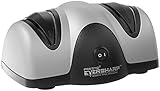
Presto 08800 EverSharp
- Two-stage sapphirite system
- Precision blade guides
- Suction cup base
- 1-year warranty

Chef’sChoice 15XV EdgeSelect
- 3-stage diamond system
- Converts 20-degree to 15-degree
- Handles serrated blades
- 3-year warranty
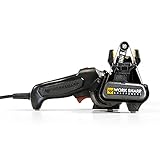
Work Sharp MK2
- Two-speed motor
- Flexible abrasive belts
- Sharpens scissors and axes
- 3-year warranty
Best Electric Knife Sharpeners for Home Use in 2026
This table is the fast version of the whole article. Stages tells you how many passes a blade needs, the angle column tells you what edge you end up with, and the abrasive column tells you how much metal comes off and how smooth the finish is.
| Product | Specifications | Action |
|---|---|---|
| Presto 08800 EverSharp |
|
Check Latest Price |
| Chef’sChoice 15XV EdgeSelect |
|
Check Latest Price |
| Work Sharp MK2 |
|
Check Latest Price |
 Narcissus Two-Stage Sharpener Narcissus Two-Stage Sharpener |
|
Check Latest Price |
 Work Sharp CPE2 Electric Sharpener Work Sharp CPE2 Electric Sharpener |
|
Check Latest Price |
 Secura Two-Stage Diamond Sharpener Secura Two-Stage Diamond Sharpener |
|
Check Latest Price |
 SHARPAL 198H Three-Stage SHARPAL 198H Three-Stage |
|
Check Latest Price |
 Chef’sChoice 1520 AngleSelect Chef’sChoice 1520 AngleSelect |
|
Check Latest Price |
 Northmas Two-Stage Sharpener Northmas Two-Stage Sharpener |
|
Check Latest Price |
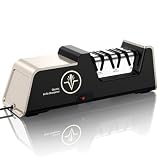 VIDOME Professional Three-Stage VIDOME Professional Three-Stage |
|
Check Latest Price |
1. Presto 08800 EverSharp – The Most-Lived-With Electric Sharpener
Presto 08800 EverSharp Electric Knife Sharpener
Two-stage: precision grind then fine hone
9.9 x 7.2 x 4.8 inch, 3 lb
Sapphirite wheels, suction cup base
120V, 1-year limited warranty
Pros
- Two-stage sapphirite system handles most straight edges
- Precision blade guides remove angle guesswork
- Suction cups keep a light 3-pound unit planted
- Quiet enough for regular use
- Stores easily between sessions
Cons
- Repeated passes can groove thin or soft blades
- Handles one-sided serrations only
- 120V North American unit only
Who it’s for: first-time buyers and anyone who wants one guided two-stage machine that stores away between sessions rather than living on the counter.
This is the machine I recommend to people who ask me what to buy with no other information. Two clearly labelled slots do the work: a precision grinding stage first, then a fine hone and polish stage. You pull the knife through each one a few times and put it back in the block. There is no angle setting to learn, no wheel to change, no technique to practise.
The 4.5 average across more than 18,000 ratings tells you something a spec sheet cannot. This design has been in kitchens long enough that owners are reporting on the third knife it has sharpened, not the first. The suction cups do the quiet work of stability: a 3-pound body that does not walk across the counter while you pull.
Two details decide whether it is right for you. Sapphirite is the abrasive, the same ultra-hard compound used in professional sharpening shops, so it cuts fast and holds its shape longer than a cheap bonded wheel. The precision blade guides hold the knife at the correct angle so you do not have to eyeball it.
What it will not do is finish a serrated bread knife with teeth on both sides, and the 120V spec limits it to North American mains. Reviewers report a small number of examples with an uneven wheel that leaves patterned grooves, so check the edge under light after the first session. If that shows up, the warranty is one year, which is shorter than the three years on the two Work Sharp machines in this list.
When to reach for the Presto instead of something fancier
Reach for it when your knives are European or Asian style straight-edge blades, when you sharpen a few times a year rather than weekly, and when you would rather own one appliance than learn a sharpening system. At under 10 inches long and 7 inches wide, it needs a normal stretch of counter while it is out, then slides into a cabinet.
Where it will disappoint you
It will disappoint you if you own a single-bevel Japanese knife, which needs a fixed flat grind this slot design will not respect. It will also disappoint if you expect a mirror finish: two stages get you a clean working edge, not a razor polish, and owners of thin soft steel report grooving when they run extra passes out of impatience.
That is why our maintenance advice for this machine is simple. Hone with a steel rod between sessions, run stage one only when the edge is actually gone, and finish every sharpening in stage two. Use it as an edge restorer, not a weekly grind, and it will outlast sharper-looking machines.
2. Chef’sChoice 15XV EdgeSelect – Converts 20-Degree Edges To 15 Degrees
Chef’sChoice 15XV EdgeSelect Professional Electric Knife Sharpener with 100-Percent Diamond Abrasives and Precision Angle Guides for Straight Edge and Serrated Knives, 3-Stage, Gray
3 stages: two diamond plus flexible strop
10 x 4.25 x 4.25 inch, 4.2 lb
Converts 20-degree edges to 15 degrees
Straight edge and serrated, 3-year warranty
Pros
- Converts and refines edges to a 15-degree bevel
- Handles straight-edge and serrated blades
- About a minute to sharpen and seconds to touch up
- Spring guides hold the angle automatically
- Heavy build stays put with a quiet hum
Cons
- Skipping the manual can damage a blade
- Bulky footprint for a countertop appliance
- Sharpens knives only and not scissors
Who it’s for: cooks with a mixed knife collection who want a genuinely finer 15-degree edge and need serrated support in the same machine.
Three stages do the work here, and the first two are plated with 100 percent diamond abrasives while the third is a flexible abrasive stropping system. The headline feature is angle conversion: it takes a standard 20-degree factory edge and reshapes it into a 15-degree Trizor XV bevel. That is a finer, tougher-looking edge that slices rather than pushes.
At 4.6 across more than 14,000 ratings, this is the best-reviewed unit in the guide by volume, and the reviews point at one recurring theme: almost every critical review traces back to skipping or misreading the instructions. Learn the stage order before your first pull and the machine performs exactly as described.
Speed is the other argument for it. Roughly one minute for a first-time sharpening and about ten seconds for a resharpen once the profile is set. Most owners report settling into a maintenance rhythm where stage three alone handles upkeep between full sharpenings.
Two practical notes. A badly damaged knife can need 15 to 20 plus pulls per side in stage one before it comes right, so budget time for the first session. And at 10 by 4.25 inches with a 4.2-pound body, this is one of the larger footprints in the set, which matters in a small kitchen. Our other home-appliance roundups, like the best electric meat grinders for home use, hit the same counter-space constraint from a different angle.
What this machine does that the two-stage picks cannot
The third stage matters more than stage count suggests. A stropping stage does not remove metal, it straightens and polishes the edge, so you can refresh an already-sharp knife without thinning it further. That is why owners of a well-used 15XV report maintenance touches taking seconds rather than minutes.
Who should buy something else instead
Skip it if you own a pair of good scissors you also want sharpened, or if you want one compact unit for the whole tool drawer. It sharpens knives and nothing else. It is also overkill if you have one blunt paring knife and no interest in a finer angle.
If you want the option of both angles rather than a fixed 15 degrees, the Chef’sChoice 1520 further down this list does that, and it is the model to compare against this one.
3. Work Sharp MK2 – Highest Rated And The Only One That Sharpens Scissors
Work Sharp MK2 Electric Knife Sharpener – Adjustable 2-Speed Knife Sharpening System for Kitchen Knives, Pocket Knives, Scissors, Axes & Garden Tools
Two-speed motor with flexible abrasive belts
7.02 x 2.26 x 1.27 inch
Handles knives, scissors, axes and tools
3-year warranty
Pros
- Also sharpens scissors
- axes
- mower and garden tools
- Two-speed motor handles thick heavy steel
- Edge guide runs all the way to the tip
- Compact body with replaceable belt options
Cons
- Belt sharpens more than it polishes
- Medium belt grit leaves a rod-finishing step useful
- Replacement belts are an ongoing cost
Who it’s for: owners who sharpen more than kitchen knives, including shears, an axe, lawn mower blades and garden tools.
This is a general sharpening tool that happens to do knives extremely well, and that is the whole pitch. A two-speed motor gives you real power for thick hardened steel and a lower setting for controlled finishing, while flexible abrasive belts conform to the edge of any blade shape instead of grinding a hard line into it.
At 4.7 across more than 8,000 ratings it is the strongest average of any machine in the set, and owners keep pointing at the same two details: the two-speed motor and the edge guide that supports the knife all the way to the tip. Long blades stay consistent because the guide never runs out before the tip does.
Where the trade-off sits is finishing. The belt grit is medium, so this sharpens more than it polishes, and many owners pair it with a honing rod for the final edge. If your priority is a knife that slices paper straight out of the machine, one of the three-stage diamond picks will get you closer.
Maintenance is the other consideration. Belts are consumables and they do wear, so this is the one machine in the set with a recurring replacement cost built into ownership. In exchange you get a 3-year warranty and a machine small enough at 7 by 2.25 inches to live in a drawer rather than on the counter.
When the versatility genuinely pays off
It pays off the first time you put mower blades or a hedge trimmer through it, or the first time your kitchen shears start biting. Dedicated knife sharpeners cannot do those jobs at all, so for anyone who owns outdoor equipment this is a second sharpening tool disguised as one.
When a dedicated knife sharpener is the smarter buy
Buy a dedicated three-stage knife sharpener instead if knives are the only thing you ever sharpen and you care most about the finish quality of the last 10 microns of the edge. You will spend more time on a knife-only machine and it will show in the result.
Do not write this one off for that reason. The edge it produces is entirely usable, and a rod on the end of the routine solves the finishing gap for most cooks in about ten seconds a week.
4. Narcissus Two-Stage Sharpener – Magnetic Chip Collection In A Slim Body
Narcissus Knife Sharpener, Professional 2 Stage Electric Knife Sharpener for Quick Sharpening & Polishing, with Scissors Sharpener and Metal Dust Collection Box, Stainless Steel, Silver
2 stages: coarse grind then fine polish
8.6 x 2.6 x 2.9 inch, 1.6 lb
Carborundum wheels, 30W motor, 100-240V
Pros
- Magnetic box catches metal chips under the unit
- 30-watt motor handles a full knife set in one session
- 100-240V works with no converter
- Side slot sharpens scissors as well
- Recovers a dull edge in seconds
Cons
- Carborundum is a coarser abrasive than diamond
- Straight edges only
- More than five pulls can over-work a thin blade
Who it’s for: small kitchens that want chip collection, worldwide voltage compatibility and a slim body in one mid-range unit.
The detail that sets this one apart is cleanup. A magnetic dust collection box sits underneath the slots and catches the metal filings as they come off, so the mess stays inside the machine instead of ending up on your counter. For anyone in a galley kitchen that is worth more than an extra stage.
Two stages do the work: a coarse sharpening slot then a fine polishing slot. Owners report 2 to 5 pulls per slot being enough to bring a dull knife back, and the 30-watt DC motor is rated to run continuously for over an hour without overheating, so a full knife set in one session is not a problem.
Voltage is the other quiet win. A 100-240V wide voltage design means it works on mains anywhere in the world with no converter, which matters if you travel with it or live outside North America. A side-mounted slot handles scissors, giving you three functions from one body.
Diamond is the harder material, and the result is a functional everyday edge rather than a razor finish. Reviewers describe needing a few extra passes to get from merely sharp to genuinely sharp, and note that wheel alignment tolerance is narrower than on the diamond models. The service terms are 12 months free replacement or refund with 24 months of after-sales cover.
Why the chip box is the feature to judge it on
Compare it to the belt-style units in this list that scatter fine grit along the counter. The magnetic receptacle is the difference between wiping a surface once a month and cleaning around the base of the machine each time you use it. If you have ever had abrasive grit tracked across a worktop, that alone justifies this pick.
Where you will be reaching for a rod afterwards
The fine polishing slot is not a stropping stage, so the edge it leaves is workmanlike rather than refined. Pair it with a steel rod and you close that gap cheaply. Just keep to 2 to 5 pulls per slot, because the coarser wheel over-works thin blades quickly.
It is also straight-edge focused. Serrated knives are not the target use case here, which narrows it compared with the Work Sharp CPE2 below.
5. Work Sharp CPE2 – Fully Guided With A Built-In Ceramic Hone Wheel
Work Sharp Electric Kitchen Knife Sharpener – Get knives ready for cookouts and BBQ’s- Fits in Kitchen Drawer, Sharpens every time, fast & easy
Fully guided sharpening plus ceramic hone wheel
6.77 x 10.82 x 5.89 inch, 16 oz
Knives, serrated edges, scissors and shears
3-year warranty
Pros
- Fully guided
- no angle decisions for beginners
- Built-in ceramic hone wheel for daily upkeep
- Handles serrated knives
- scissors and shears
- Backed by a 3-year warranty
Cons
- Sharpens more readily than it polishes
- Larger footprint than slim belt-style units
- Plastic body scuffs and wheels wear with heavy use
Who it’s for: beginners who want no angle decisions, a built-in honing step, and one machine that covers serrated knives, scissors and shears.
Everything here is button-activated and fully guided, which means the machine decides the angle and you simply draw the blade. For someone who has never sharpened a knife and does not want to learn whetstone technique, that is the whole appeal. There is a premium abrasive stage for sharpening and a separate built-in ceramic hone wheel for keeping the edge between full sharpenings.
Coverage is broad. Kitchen knives, serrated edges, scissors and shears all go through the same unit, which makes it a good single-tool answer for a household that does not want to buy anything else. A 3-year warranty backs it, and it is designed and calibrated in Ashland, Oregon.
Reviews split along a predictable line. People who value the guided simplicity and the convenience of the ceramic wheel love it, and people who compare finishes rate it as serviceable rather than fine. The 4.3 average with a 6 percent one-star share is the softest score among the Work Sharp machines here.
The two complaints worth taking seriously are finishing quality and the durability of the plastic housing. At 16 ounces it is light for a machine that has to resist blade pressure, and some users report the body scuffing and the wheels wearing with heavy use. It is also larger than the slim belt-style units despite the drawer-friendly framing, at 6.77 by 10.82 inches.
When the ceramic hone wheel earns its place
It earns its place if your routine is a short weekly refresh rather than a monthly session. The hone wheel polishes an already-sharp edge without much metal removal, which is exactly what a knife needs between sharpenings and exactly what a two-stage sharpener cannot offer.
When you should step up instead
Step up if finish quality is the point, or if you want a dedicated stropping stage rather than a hone wheel. This machine sharpens readily and finishes lightly, and the housing is the part most likely to disappoint you after a few years of daily use.
It remains the most complete single-unit answer in this list for serrated knives, shears and scissors together, and that combination is hard to find elsewhere.
6. Secura Two-Stage Diamond Sharpener – Compact And Quiet On A Budget
Secura 2-Stage Electric Knife Sharpener with Diamond Abrasives and Precision Angle Guides, Professional Sharpening Tool for Kitchen Straight Edge and Ceramic Knife, Black
2 stages: edge restoration then polish
7.87 x 5.31 x 3.54 inch, 2.3 lb
Diamond wheels, precision angle guide
Suction cup feet, 2-year warranty, 120V
Pros
- Diamond abrasives in a compact two-stage design
- Precision guide can convert 20-degree to 15-degree
- Suction feet keep it firmly planted
- Quiet operation for a small kitchen
Cons
- Not suitable for serrated knives
- Reports of grooving or scoring after repeated passes
- Best for light duty and smaller knives
Who it’s for: straight-edge-only kitchens that want diamond abrasives and angle guidance from a compact two-stage unit.
Two stages, diamond wheels, and a precision guide that can convert a 20-degree edge to 15 degrees. At 7.87 by 5.31 inches with heavy-duty non-slip suction cup feet, it stays planted on the counter, and owners describe the operation as quiet. It is ETL approved, with a 2-year manufacturer limited warranty.
Diamond abrasive is the material to note. It cuts faster and holds a finer finish than carborundum, which means you can get from merely sharp to properly sharp with fewer passes. That efficiency is the main reason this machine is worth considering over a cheaper non-diamond unit.
Now the parts you should know before buying. It is not suitable for serrated knives. It is a 120V 60Hz AC appliance, so outside North America you will need a converter. And at 4.2 it is the lowest average of the ten machines here, with a 10 percent three-star share that reflects inconsistent results rather than slow performance.
The recurring complaint is physical: a thread of reports describes gouging or patterned grooves appearing after multiple passes, and several owners report buying a replacement after the first unit marked up their blades. It is best treated as a light-duty machine for smaller knives, not a workhorse.
When the two stages are enough
When you own two or three straight-edge knives and sharpen them a few times a year. Two stages at a guided angle with a diamond wheel will handle that workload without complaint, and the suction feet mean you can use it on a dry counter without a damp cloth.
When the budget saving costs you
It costs you serrated support, heavy-duty capability and consistency. If you own a serrated bread knife, a thick cleaver or a set of hardened Asian steel, that low average reflects real reports of blade marking rather than slow performance.
Buy it as a first sharpening appliance and expect to move up within a couple of years. Buy it as a be-all tool and you will be disappointed.
7. SHARPAL 198H – Simultaneous Two-Sided Grinding Under 65 dB
SHARPAL 198H Electric Knife Sharpener 3 Stage with Diamond Wheels
3 stages: two diamond wheels plus ceramic strop
8.66 x 4.13 x 2.8 inch
Grinds both sides at once at 20 degrees
Under 65 dB, magnetic filings receptacle
Pros
- Grinds both sides of the edge simultaneously
- Quiet operation under 65 dB
- Overheat protection guards the blade temper
- Magnetic receptacle makes cleanup easy
- Works on straight edges and serrated knives
Cons
- Fixed 20-degree angle with no 15-degree option
- Some reports of scratching or notching near the tip
- Less effective on small pocket knives
Who it’s for: open-plan homes where motor noise matters, and anyone who wants even sharpening in fewer passes.
The design decision that sets this one apart is simultaneous two-sided grinding. Instead of drawing the blade through a slot that works one side at a time, both sides of a double-beveled edge are ground at once, so each side automatically receives the same number of passes. Buyers say it halves the time and evens out the result.
Three stages: two diamond abrasive wheels and a ceramic stropping wheel. The grinding wheel angle is preset at 20 degrees, chosen for durability and reduced chipping, and the machine works on double-beveled straight edges and serrated knives.
Quietness is the headline number. Operation noise is specified under 65 dB, the lowest published figure in this guide, and it is genuinely relevant in an open-plan kitchen. A removable magnetic receptacle collects the iron filings so cleanup takes seconds.
Overheat protection is the sleeper feature. It prevents the blade from being de-tempered by a long session, which extends knife life and is exactly the failure people worry about with powered sharpeners. On the downside, the fixed 20-degree angle means it cannot produce a finer 15-degree edge, some users report scratching or notching near the top of the blade, and it is less effective on very small pocket knives close to the handle.
Who benefits most from two-sided grinding
Beginners, mostly. Because the machine controls both sides, there is no way to accidentally over-grind one face, which is the most common beginner error with one-sided slot sharpeners. It is also fast, which suits a household that sharpens several knives in one sitting.
When 20 degrees is the wrong answer
It is the wrong answer if you want the finest possible slice on a soft tomato or a delicate fish skin, where a 15-degree edge genuinely outperforms. It is also a slower choice for tiny pocket knives, since the working area suits full-size blades better than stubby ones.
At 8.66 by 4.13 inches it is one of the slimmer three-stage machines here, which pairs well with the low noise figure if counter space and sound are your two constraints.
8. Chef’sChoice 1520 AngleSelect – Choose 15 Or 20 Degrees Yourself
Chef’s Choice Professional Electric Knife Sharpeners for 15- and 20-Degree Straight-Edge and Serrated Knives with Diamond Abrasives & Precision Angle Control, 3-Stage, White
AngleSelect: 15 or 20 degree slots
10 x 4.25 x 4.25 inch, 4.2 lb
100 percent diamond plus strop
Straight edge and serrated knives
Pros
- Only pick here with a user-selectable 15 or 20 degree angle
- 100 percent diamond abrasives for sharpening and honing
- Handles straight edges and serrated knives
- Weighted body stays stable in use
- Can build a three-bevel Trizor edge
Cons
- Leaves a micro-serrated edge rather than a razor finish
- Not recommended for premium high-hardness steel
- Sharpens knives only and not scissors or tools
Who it’s for: collectors and serious home cooks holding both Japanese and European blades who need to match the angle rather than accept one.
This is the angle-control answer. The AngleSelect system applies either a traditional 20-degree edge or a finer 15-degree edge at your choice, using 100 percent diamond abrasives for both sharpening and honing. One machine can serve a Japanese-style blade and a European chef’s knife properly, which no fixed-angle unit in this list can do.
Dizor engineered facets form a longer-lasting arch-shaped edge, and precision angle guides keep the sharpening accurate along the entire length. Straight edges and serrated knives are both handled. At 4.5 across 1,526 ratings, owners with some sharpening knowledge rate it highly for exactly that flexibility.
Experienced sharpeners add a caveat that belongs in any honest review: the aggressive diamond wheels leave a micro-serrated edge rather than a true razor finish. It is a better edge than you started with, but it is not a mirror. That same group cautions against using it on premium high-hardness steel, and recommends the stropping stage as the safe part for those knives.
There is a genuine bonus feature too. Passing through the 15-degree slot and then the 20-degree slot before stropping builds a three-bevel Trizor edge, which is the compound bevel found on many factory knives. One owner reported the unit overheating and smoking within seconds of first use, which is rare but worth knowing.
When selectable angles actually matter
They matter when your collection is mixed. A 15-degree edge suits Asian-style slicing knives and delicate protein work, while 20 degrees is tougher and more forgiving on a German chef’s knife that takes more abuse. Fixed-angle machines force one compromise for both.
When the compromise is not worth it
It is not worth it if you own one or two knives of a single type, or if you want the finest finish possible. A dedicated whetstone or a three-stage stropping unit finishes better, and at 10 by 4.25 inches with a 4.2-pound body it needs real counter space for a machine that sharpens nothing but knives.
Choose it for control across a mixed collection. Choose the 15XV if you want the finer 15-degree edge every time and can live with one fixed angle.
9. Northmas Two-Stage Sharpener – Smallest Body And Global Voltage
Northmas Knife Sharpener, Professional Electric Knife Sharpener for Home Use, 2 Stages for Quick Sharpening & Polishing, 100V-240V Global Voltage Design, Blue
2 stages: coarse then fine polish
7.8 x 2.1 x 3.1 inch, 1.2 lb
Suction cups, printed slot arrows, 100-240V
30-second sharpening, removable cord
Pros
- Compact 7.8 by 2.1 inch body with removable power cord
- 100-240V global voltage with no converter
- Arrows printed on top clarify slot order and pull direction
- Handles larger harder blades and antique scissors
Cons
- Aggressive wheels remove a noticeable amount of metal
- Does not reach the very tip near the handle evenly
- Lighter plastic build than metal-bodied rivals
Who it’s for: renters, students and anyone sharpening away from a North American outlet who needs the smallest footprint here.
Two stages, a coarse sharpening slot and a fine polishing slot, and it sharpens in about 30 seconds with 2 to 5 pulls per slot. At 7.8 by 2.1 inches and 1.2 pounds it is the narrowest body in this guide by a clear margin, with a removable power cord and a form that disappears into a crowded drawer.
Two details make it friendlier than the spec sheet suggests. Arrows printed on the top of the body show which slot is coarse, which is fine, and which way to pull, which removes a common beginner mistake. And a 100-240V global voltage design means it works anywhere without a converter.
Owners like that it is more capable than its class suggests, reporting that it handles larger, harder-to-sharpen blades and even antique scissors. A 4.3 average across 1,168 ratings puts it in the middle of the group, and buyers who pair it with a honing rod report the best results of any usage pattern.
There are two consistent warnings. The wheels are aggressive and remove metal quickly, so extra passes shorten the blade, which matters most on thin or soft steel. And it does not sharpen the entire length of the edge evenly on every knife, with the area very near the handle not always fully reached. The plastic body is lighter in feel than the metal-bodied rivals here.
When the printed arrows matter more than the specs
They matter if this is your first powered sharpener. Reaching for the wrong stage first is a common beginner error, and extra pulls through a coarse stage are what shorten a blade. Arrows on the housing remove that guess, which would otherwise cost edge material in the first ten minutes.
When the metal removal is a real concern
It is a real concern on single-bevel Japanese knives and on any thin blade you care about. This machine removes a noticeable amount of metal, and a fixed-angle two-stage design has no fine stropping step to recover from a heavy first pass.
Support is 12 months free replacement or refund with 24 months of after-sales service. For a first appliance in a rental or a second kitchen, that is a reasonable starting point, and it is the least counter-committing option here.
10. VIDOME Professional Three-Stage – Very Fine Diamond Finish For Ceramic Blades
VIDOME Professional Electric Knife Sharpener, Champagne Gold
3 stages: diamond then stropping disks
9.46 x 2.91 x 2.76 inch, 3 lb
Fixed 15-degree output, 60-80 dB
Handles metal and ceramic knives
Pros
- Very fine grit produces a smooth burr-free edge
- Works on ceramic blades as well as metal
- Magnetic chip collector keeps cleanup simple
- German imported energy-saving motor
- About 30 seconds for a first sharpening
Cons
- Audible at 60-80 dB
- Straight edges and ceramic only
- Smallest review base here at under 1000 ratings
- Fixed 15-degree output so it cannot hold a 20-degree edge
Who it’s for: ceramic blade owners and anyone who wants the smoothest finished edge from a machine in this category.
Three stages with 100 percent diamond abrasives in the first two and stropping disks in the third, which is a real stropping stage rather than a fine grind. The very fine grit is what reviewers notice: edges come out noticeably smoother and burr-free, which is the part most machines in this list leave to a honing rod.
Precision angle guides produce 15-degree edges and convert 20-degree knives to 15 degrees, with flexible spring guides and a scratch-protective safety guide around the slots. Timings are around 30 seconds for an initial sharpening and 10 seconds for a resharpen, with 4 to 8 seconds on metal knives and 6 to 10 on ceramic.
Ceramic compatibility is the feature that separates it. Only the Secura is also specified for ceramic blades in this guide, and grinding ceramic takes a different abrasive approach than steel. Magnetic knife chip collection keeps cleanup simple, and the motor is described as a German imported energy-saving unit.
Two things temper the recommendation. Operating noise is specified between 60 and 80 dB, the highest published figure in this guide, and it is the newest listing with the smallest review base at 966 ratings and a 72 percent five-star share. Little long-term durability history exists yet, so treat the reliability picture as unproven rather than settled.
Who benefits most from a real stropping stage
Cooks who chase finish quality, and anyone with ceramic blades. Because stage three strop rather than grinds, you can refresh an edge repeatedly without shortening the blade, which is exactly the habit that keeps knives from thinning out over years of use.
When the noise and fixed angle rule it out
It rules itself out in a quiet open-plan kitchen, at 60 to 80 dB, and for anyone who wants to maintain a 20-degree edge. A fixed 15-degree output cannot hold a coarser angle, and it does not handle serrated blades.
It is the tenth pick here rather than a higher one because the review base is thin, not because the specification is weak. If you want the finest finish and own ceramic blades, the specification justifies the gamble.
What Is An Electric Knife Sharpener And How Does It Work?
An electric knife sharpener is a countertop appliance with motorized abrasive wheels or belts set at a fixed edge angle. You draw the blade through the slot and the rotating abrasive removes metal to restore a cutting edge in about a minute, with no manual technique required.
The process always follows the same order. A coarse stage reshapes the edge and removes the damage or existing burr. A fine stage refines that shape. An optional honing or stropping stage straightens and polishes the edge without removing more metal, which is why three-stage machines wear more slowly than two-stage ones.
Each machine here uses a guide of some kind to hold the blade at the correct angle, either a fixed channel, a precision guide or spring-loaded arms that adapt to blade thickness. That guide is the real reason an electric sharpener is repeatable: it removes the variable that makes hand sharpening hard.
How Many Sharpening Stages Do You Actually Need?
Two stages cover most home kitchens. A coarse stage and a fine stage take a dull knife back to a clean working edge, which is all most people need for chopping vegetables and general prep.
Three stages add a stropping pass that polishes without removing metal. That matters if you sharpen often, if you want a finer finish, or if you care about how much length your blade keeps over a decade of use.
The order is fixed and worth memorising: coarse, then fine, then hone or strop. Skipping to the fine stage on a badly dull knife leaves the damage in place. Running stage one repeatedly on a knife that is already sharp is the fastest way to shorten it, and it is the mistake that drives most of the negative reviews in this list.
One-handed operation and a marked slot order matter more than stage count for beginners. The SHARPAL 198H and the Northmas both telegraph which slot to use, which prevents the first-session error that experienced owners keep describing.
15 Versus 20 Degrees: Why The Angle Matters
The angle number is the total edge angle, split between the two sides. A lower angle cuts more easily and gives a finer, more slicing-prone edge. A higher angle is tougher and more resistant to chipping and hard use. Both are correct, for different knives.
Razor, paring and fillet knives: 12 to 18 degrees, the finest slicing edges
Chef, utility and carving knives: 15 to 25 degrees, the home-kitchen default
Japanese single-bevel knives: 14 to 16 degrees, and they need a flat grind
Sporting and hunting knives: 25 to 30 degrees, built to take abuse
Most electric sharpeners are fixed at one angle. The Chef’sChoice 15XV and the VIDOME produce 15 degrees, the SHARPAL 198H is locked at 20 degrees, and the Chef’sChoice 1520 lets you choose between both. That single spec explains more about compatibility than any other feature on the list.
The trap is single-bevel Japanese steel. Enthusiasts are blunt about this one: a fixed 20-degree machine will quietly over-wedge an Asian knife, and a double-bevel guide will grind a hollow-ground edge into a fixed bevel it was never designed to have. If single-bevel knives are more than a passing interest, use a whetstone or a professional service instead.
Diamond, Sapphirite, Carborundum And Ceramic Abrasives Compared
Diamond is the hardest common kitchen abrasive, and it cuts fast while holding a fine finish. All four three-stage machines in this guide use it in the first two stages, and the Secura uses diamond throughout its two stages.
Sapphirite sits in the same family and is what the Presto EverSharp uses, the same ultra-hard compound found in professional sharpening shops. It grinds an angled edge then fine hones and polishes it in the second slot.
Carborundum is the coarser, cheaper option. It is fast enough to restore a working edge but leaves a functional finish rather than a razor one, and the Narcissus is the pick built around it. Ceramic is used mostly for stropping and honing, as the third stage on the SHARPAL 198H and the built-in hone wheel on the Work Sharp CPE2.
Coarse grit sets the edge, fine grit refines it, and stropping polishes it. Whichever material you buy, the abrasive matters less than the number of stages and the angle guide.
Do Electric Knife Sharpeners Ruin Knives?
No, not if you use them correctly. Every powered sharpener removes metal, because removing metal is how an edge is reshaped. The risk is not the machine, it is frequency and pressure.
The genuine risks are specific. Running a coarse stage on a thin or soft blade can groove the edge, and reviewers report exactly that on the Presto, the Secura and the Northmas. A fully convex or hollow-ground edge, the sheep’s-foot profile found on older German knives, can be turned into something close to a serrated edge by an aggressive first stage. And a fixed 20-degree guide applied to a 15-degree Japanese blade simply cuts the wrong bevel.
Our checklist avoids all three. Use stage one only when the edge is genuinely gone, not as a routine. Use light pressure and let the machine do the work. Skip single-bevel Japanese knives, scissor-shaped blades and anything with a hollow or convex grind. Hone with a steel rod in between so you are not forced back into the coarse stage.
One forum poster describes a multi-stage electric as sacrilege among serious sharpeners, and that view deserves an honest answer rather than a dismissal. For a sharpening hobbyist with a set of whetstones, a machine is slower and less expressive. For a home cook sharpening a dull chef’s knife on a Sunday, the consistency a machine gives is worth far more than the control.
Serrated Knives: What Works And What Does Not
Serrated knives need a dedicated approach, and only some machines in this guide provide it. The teeth are set at alternating angles, so a normal sharpening wheel grinds the tips off rather than realigning them. What a serrated slot does is round the valleys and straighten the teeth without flattening the profile.
The supported picks are the Chef’sChoice 15XV, the Chef’sChoice 1520, the Work Sharp CPE2, the Work Sharp MK2 and the SHARPAL 198H. The Presto EverSharp handles one-sided serrations only. The Narcissus, the Secura, the VIDOME and the Northmas are straight-edge machines, and the Secura states outright that it is not suitable for serrated knives.
For a serrated bread knife specifically, any of the five supported units will do the job. If your collection is mostly serrated, weight the decision toward the Work Sharp CPE2, which also covers shears and scissors in the same body.
How To Use An Electric Knife Sharpener
Step one: clean the blade. Food residue and grit act like a grinding compound and can scratch the edge and clog the wheel. Wipe it before every session.
Step two: identify the stage. Match the wheel to the job, coarse for a dull or damaged edge, fine for routine sharpening, stropping for finishing and maintenance. On the SHARPAL 198H and the Northmas the arrows printed on the housing tell you which is which.
Step three: clamp the blade close to the handle, or use the provided clamp, so your hand is never near the wheel. Every machine in this guide is designed to keep fingers away from the abrasive.
Step four: draw the blade through at a steady, moderate pace. Speed and pressure do the work, not force. Two to five pulls per slot is the range most owners quote for a routine sharpening; a badly damaged knife on a three-stage machine can need 15 to 20 plus pulls per side in stage one.
Step five: check the edge under light, then finish in the final stage every time. Wipe the blade, clear the chip receptacle or dust box, and coil the cord before putting the machine away.
How Often Should You Sharpen Your Knives?
Honing and sharpening are different jobs. Honing straightens an edge that has rolled over from use, and it removes almost no metal. Sharpening reshapes the edge, and it always removes metal. A steel rod does the first; a powered sharpener does the second.
The recurring pattern in sharpening communities is simple: hone every week or two, sharpen every few months. That schedule keeps the coarse stage almost entirely out of your routine, which is the best way to protect blade length over the years.
Two tests tell you which one you need. A knife that slices a tomato cleanly but snags on paper is due for a hone. A knife that skates, crushes, or needs pressure to get through a tomato skin has lost its edge and needs a full sharpening.
A dull knife is also the more dangerous one. It slips and tears instead of cutting, and a clean cut from a sharp blade heals faster than a ripping cut from a dull edge. That is the reason most cooks should sharpen more often than they think they need to.
Noise, Counter Space, Cleaning And Consumable Costs
Noise is the specification nobody in this category publishes consistently, and it matters in an open-plan kitchen. The measured figures here range widely: the SHARPAL 198H is specified under 65 dB, the VIDOME between 60 and 80 dB, and the Presto is described by owners as quiet enough for regular use. The belt-style units tend to be the loudest because a belt dragging across a spinning wheel simply makes more noise than a bonded wheel.
Footprint ranges from 7.8 by 2.1 inches for the Northmas up to 10 by 4.25 inches for the two Chef’sChoice machines. The slim belt units and the Northmas store in a drawer, the mid-size units need a stretch of counter while in use, and the two Chef’sChoice bodies are the ones that will stay out on the counter longest.
Cleaning is easier on some machines than others. The Narcissus and the SHARPAL 198H collect filings in a removable magnetic receptacle, the VIDOME has magnetic chip collection, and the belt machines leave fine grit that needs wiping around the base. Unplug before cleaning, and never immerse an appliance with a motor inside it. Only the Northmas in this guide has a removable power cord, which is the one to consider if you travel or keep a second kitchen.
Consumables are where the price gap recurs. Most machines in this list run for years without a replacement part, and the two Chef’sChoice units carry 3-year warranties while the Presto carries one year and the Secura two. The Work Sharp MK2 is the one machine here with a consumable you will replace: its abrasive belts. A related look at ownership costs over time is in our best cordless routers for home use guide.
Frequently Asked Questions
What is the best knife sharpener for home cooks?
The Presto 08800 EverSharp is the best electric knife sharpener for most home cooks, because two guided sapphirite stages handle straight-edge knives in seconds, the suction cups keep a light 3-pound body stable, and it stores away between uses. Cooks with a serrated bread knife, shears or a mixed collection should look at the Chef’sChoice 15XV or the Work Sharp CPE2 instead.
Do electric knife sharpeners work on serrated knives?
Some do, and you need one built for it. A serrated slot rounds the valleys and realigns the teeth instead of grinding the edge flat, which a straight-edge wheel will not do. The Chef’sChoice 15XV, the Chef’sChoice 1520, the Work Sharp CPE2, the Work Sharp MK2 and the SHARPAL 198H all support serrated blades. The Secura states outright that it is not suitable for them.
Which Chef’s Choice electric sharpener is considered the best?
The Chef’sChoice 15XV EdgeSelect is the strongest all-round choice, rated 4.6 across more than 14,000 ratings, with three stages, 100 percent diamond abrasives, a flexible stropping stage and a 15-degree output that works on straight and serrated blades. The 1520 AngleSelect is the pick when you want to choose between 15 and 20 degrees for a mixed knife collection.
How do I know if my knife is 15 or 20 degrees?
Check the manufacturer’s specification, since most brands list the factory edge angle. A European or German chef’s knife usually ships at 20 degrees and a Japanese slicing knife at 15 degrees. If the packaging is gone, a 20-degree edge is tougher and fits a western chef’s knife, while 15 degrees suits a thinner Asian blade. Japanese single-bevel knives need a flat grind that no electric slot sharpener provides.
How often should kitchen knives be sharpened?
Hone every week or two and sharpen every few months. Honing straightens a rolled edge with almost no metal loss, while a powered sharpening removes metal to reshape the edge. Running the coarse stage weekly is what shortens a blade, so keep a steel rod in the drawer and reserve the machine for an edge that genuinely will not slice.
The Verdict
The best electric knife sharpener for home use is the Presto 08800 EverSharp. Two guided sapphirite stages, a suction cup base, a compact body and more long-term owner reports than any other machine in this category make it the pick we would put in the drawer of almost any kitchen in 2026.
Step up to the Chef’sChoice 15XV EdgeSelect if you want a 15-degree edge and serrated support, to the Work Sharp MK2 if sharpening scissors, axes or mower blades is part of the job, and to the SHARPAL 198H if motor noise in an open-plan kitchen is the deciding factor. The one case where no machine here fits is a collection of single-bevel Japanese knives, which is better served by a whetstone or a professional sharpener.
Whichever you pick, keep a steel rod in the drawer and hone weekly. An electric sharpener that only runs when an edge is genuinely gone will keep your knives sharp and keep their length, and it will still be working years from now. If you are still assembling the rest of the kitchen, our best electric log splitters for home use guide covers the other end of the property.