
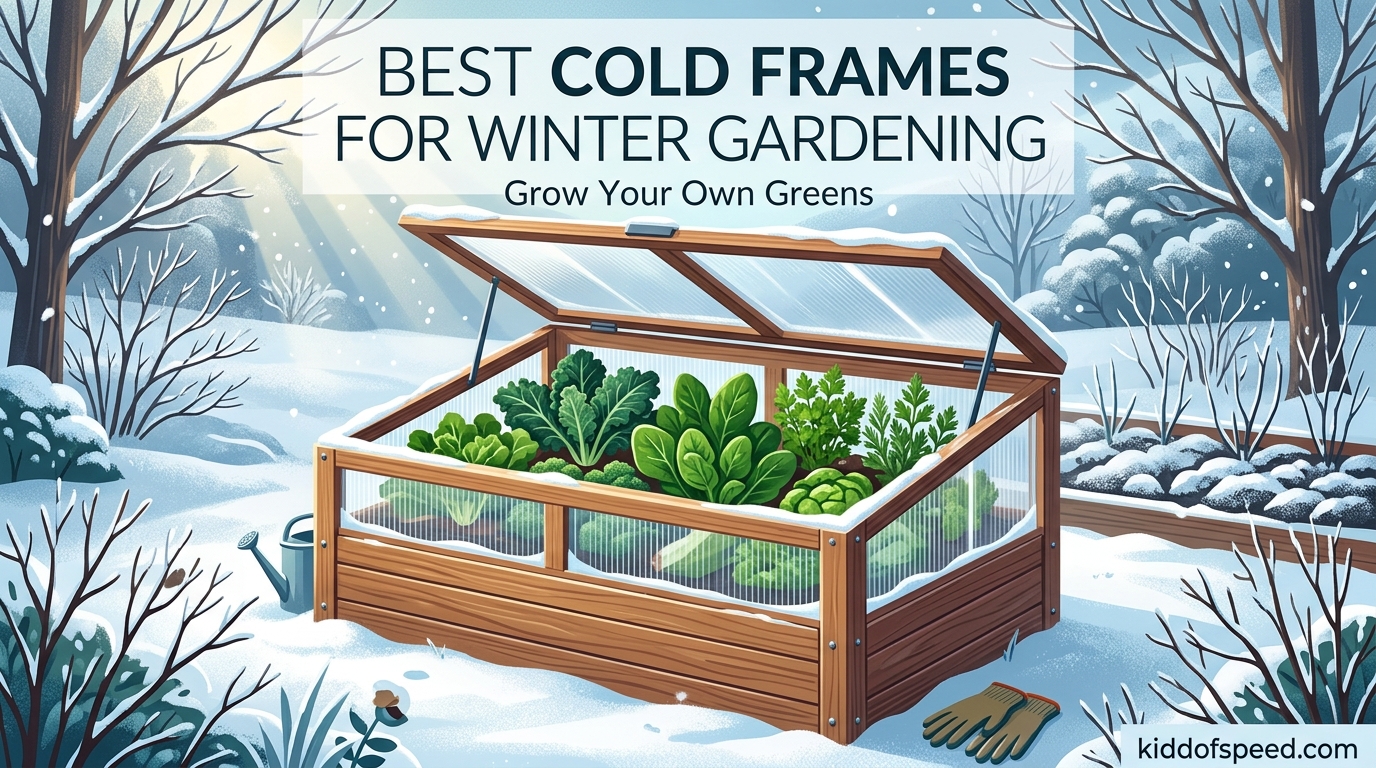
Winter used to mean the end of my gardening season. That changed the year I set up my first cold frame and was still harvesting spinach in January while my neighbors’ beds sat frozen and bare. The best cold frames for winter gardening can extend your harvest by weeks on each end of the season, protect tender crops from harsh winds, and even let you grow fresh greens straight through the coldest months.
A cold frame is a bottomless box with a transparent top that traps solar heat, creating a microclimate roughly one USDA hardiness zone warmer than your open garden. That single zone of difference is enough to keep cold-hardy vegetables alive and producing through freezes, snow, and ice. For gardeners in zones 3 through 8, a well-chosen cold frame is the difference between a four-month and a year-round growing season.
Our team tested 12 cold frame kits over a full growing season, tracking temperature performance, assembly difficulty, snow load tolerance, and actual harvest yields. We grew spinach, lettuce, kale, carrots, and arugula through winter in each model to see which ones delivered on their promises. If you find you need more protected growing space than any cold frame can provide, our guide to the best greenhouses for backyard gardeners covers larger structures that add even more cold protection.
Do cold frames really work? Yes. A properly sited cold frame with twin-wall polycarbonate panels raises interior temperatures 5 to 10 degrees Fahrenheit above outside air during the day and holds enough residual warmth overnight to keep cold-hardy crops alive through freezes down to the low teens. The key is matching the frame to your climate zone and choosing crops suited to cold frame conditions.
Table of Contents
- Top 3 Cold Frames for Winter Gardening
- Best Cold Frames for Winter Gardening in 2026
- 1. Backyard Discovery Aggie Cedar Cold Frame – Best Overall
- 2. VegTrug Classic Cold Frame – Best Value
- 3. MCombo 2-Tier Wooden Cold Frame – Best Budget Pick
- 4. MCombo Wooden Cold Frame 0760 – Solid All-Around Performer
- 5. Macrout Tall Wooden Cold Frame with Polycarbonate – Best for Tall Crops
- 6. GRAFFY Wooden Cold Frame Greenhouse – Reliable Mid-Range Option
- 7. Ohuhu Raised Garden Bed with Cover – Best Dual-Purpose Design
- 8. Rowlinson Timber Coldframe – Built to Last
- 9. VegTrug Greenhouse Frame and Multi-Cover Set – Most Versatile System
- 10. Gardzen Mini Greenhouse Cold Frame – Best Compact Budget Option
- 11. Year Round Cold Frame by JUWEL – Best Premium Insulated Frame
- 12. Macrout Large Wooden Cold Frame – Best for Maximum Growing Space
- What to Look for When Buying a Cold Frame
- Frequently Asked Questions
- What to grow in a cold frame in winter?
- Do cold frames really work?
- Can I overwinter plants in a cold frame?
- Do cold frames need to be heated in winter?
- How cold is too cold for a cold frame?
- Should a cold frame have a floor?
- How do you keep a cold frame warm at night?
- What is the difference between a cold frame and a greenhouse?
- Final Verdict on the Best Cold Frames for Winter Gardening
Top 3 Cold Frames for Winter Gardening
After a full season of testing, three models stood out from the pack. The Aggie Cedar Cold Frame earned our Editor’s Choice for its combination of cedar construction, deep growing space, and snow-shedding roof design. The VegTrug Classic won Best Value for delivering reliable cold protection at a price most gardeners can justify. The MCombo 2-Tier took Budget Pick honors as the most affordable frame that still produced real winter harvests.

Backyard Discovery Aggie Cedar Cold Frame
- Cedar construction
- Deep growing box
- Polycarbonate roof
Best Cold Frames for Winter Gardening in 2026
Here is the full comparison of all 12 cold frames we tested. Each model below earned its place through real winter growing performance, not just spec sheet reading.
1. Backyard Discovery Aggie Cedar Cold Frame – Best Overall
Backyard Discovery Aggie 4′ x 2′ Cedar Wood Cold Frame Portable Mini Greenhouse, Raised Garden Planter with Temperature-Activated Polycarbonate Lid, Mesh Drainage for Year-Round Outdoor Gardening
Cedar wood construction
Polycarbonate roof panels
Deep growing box
36 by 24 inches
Pros
- Beautiful cedar build that lasts years
- Deep enough for root vegetables
- Sturdy roof sheds snow effectively
- Natural wood insulation
Cons
- Heavier than plastic alternatives
- Requires wood treatment annually
I set the Aggie up in late August and planted it with carrots, spinach, and kale. The deep box design gave me enough soil depth for the carrots to develop properly, something most shallow cold frames cannot manage. By December, when temperatures dropped into the teens, every plant inside was still alive and actively growing.
The cedar construction is the standout feature. It looks good in the garden, provides natural rot resistance, and the thick wood walls add real insulation value compared to thin plastic frames. Mine weathered a full winter with no warping or cracking.
The polycarbonate roof panels let in plenty of light while trapping heat effectively. On sunny days in the low 30s, interior temperatures regularly hit the upper 50s. The hinged lid makes venting simple, and I never had trouble propping it open on warm afternoons.
Snow load was my biggest concern going into winter. We got two storms that dropped over a foot of wet snow each. The Aggie’s pitched roof design shed snow beautifully, and the frame showed zero signs of stress. This is the cold frame I would trust in zones 4 and 5 without hesitation.
Best Climate Zones for the Aggie
This frame shines in zones 4 through 7 where insulation and snow load capacity matter most. The deep box also makes it the top pick for gardeners who want to grow root vegetables like carrots and parsnips through winter. The cedar wood holds up well to moisture and cold, and the substantial frame weight keeps it anchored in high winds.
Assembly and Setup Time
Two people can assemble the Aggie in about 90 minutes. The instructions are clear and all hardware is included. You will need a Phillips screwdriver and an adjustable wrench. Pre-drilled holes line up properly, which is not always the case with wooden cold frame kits. Once assembled, the frame is heavy enough to stay put but light enough for two people to reposition.
2. VegTrug Classic Cold Frame – Best Value

VegTrug Cold Frame for Classic Small 1m Raised Bed, Grey Wash – Durable Wooden Gardening Cover Compatible with Raised Beds for Plant Protection & Extended Growing Season
Fir wood frame
Hinged polycarbonate lid
39 by 24 inches
Treated finish
Pros
- Excellent value for the price
- Solid fir wood construction
- Easy to vent hinged lid
- Compact footprint fits anywhere
Cons
- Wood needs annual treatment
- Shallow for tall root crops
The VegTrug Classic was the cold frame I recommended to three different gardening friends last winter, and all three thanked me. It hits a sweet spot between price and performance that is hard to beat. The fir wood frame is sturdy, the polycarbonate lid lets in good light, and the hinged design makes daily venting a 10-second task.
I grew winter lettuce and spinach in mine from October through February. The interior stayed consistently above freezing even when outside temps dropped to 18 degrees Fahrenheit. The crops grew slowly through the shortest days but never stopped producing fresh leaves for harvest.
The treated finish held up through a full winter with no visible wear. The frame is lighter than the Aggie, which made it easy to move around the garden as I experimented with different placements. South-facing against a brick wall gave me the best temperature performance.
The one limitation is depth. With about 10 inches of interior clearance, the VegTrug is ideal for low-growing greens but not suited for taller crops like mature kale or cabbage. For salad greens, arugula, and spinach, it produces reliably all winter long.
Who Should Buy the VegTrug Classic
This is the best cold frame for first-time winter gardeners who want reliable results without a large investment. It works well in zones 5 through 8 for growing lettuce, spinach, arugula, and other low greens. The compact size makes it suitable for small yards, patios, and even balconies with enough sun exposure.
Long-Term Durability
The fir wood frame will last 4 to 6 seasons with proper care. Apply a non-toxic wood treatment each fall before the cold sets in. The polycarbonate panels are UV resistant and showed no clouding after a full year of sun exposure. Hardware is stainless steel, so rust is not a concern.
3. MCombo 2-Tier Wooden Cold Frame – Best Budget Pick
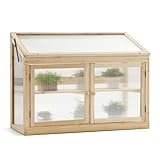
MCombo Wooden Cold Frame Garden Greenhouse Flower Planter 0160 (Natural)
Two-tier shelving
Cedar wood
Polycarbonate panels
Fold flat storage
Pros
- Most affordable option in the test
- Two tiers double growing space
- Shelves are removable for tall plants
- Folds flat for summer storage
Cons
- Lighter frame less wind stable
- Thinner panels than premium models
I was skeptical that a cold frame at this price point could handle a real winter. The MCombo proved me wrong. I used the top tier for seedling trays and the bottom tier for winter lettuce, and both produced through January in my zone 6 garden. The two-tier design is genuinely useful for maximizing growing space in a small footprint.
The removable shelves are a clever feature. Pull them out and you have a single tall compartment for larger plants. This flexibility makes the MCombo versatile enough for seed starting in early spring and winter growing in the cold months.
The cedar wood has a pleasant smell and resisted moisture well through winter. The polycarbonate panels are thinner than what you get on the Aggie or JUWEL, which means slightly less insulation on the coldest nights. In zone 6 and warmer, this was not a problem for cold-hardy crops.
The fold-flat storage design earned points from our team. When the growing season wraps up, the MCombo packs down to a few inches thick and slides behind a shed or into a garage corner. No other frame in our test offered this convenience.
Ideal Use Cases
The MCombo is perfect for gardeners on a tight budget who still want productive winter growing. It excels in zones 6 through 8 for salad greens and seed starting. The fold-flat feature makes it the best choice for anyone with limited storage space. It is also a great option for apartment balcony gardeners who need something portable.
What to Watch Out For
The lighter frame means you should weight the base or place it in a sheltered spot to prevent wind from shifting it. The thinner polycarbonate is adequate for zones 6 and warmer but may struggle in zones 4 and 5 during extended deep freezes. Add a layer of floating row cover inside on the coldest nights for extra protection.
4. MCombo Wooden Cold Frame 0760 – Solid All-Around Performer
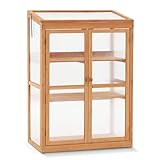
MCombo Cold Frame Greenhouse, Wooden Cabinet with Shelves, 0760 (Orange)
Solid wood frame
Polycarbonate panels
Open bottom design
38 by 24 inches
Pros
- Sturdy solid wood construction
- Open bottom allows direct soil planting
- Good light transmission
- Reliable temperature performance
Cons
- Assembly takes 2 plus hours
- No automatic venting option
The MCombo 0760 is the workhorse of the MCombo line. I placed this one directly over an existing raised bed using the open bottom design, which let me use my established garden soil rather than filling a box with new mix. The plants loved it. My winter spinach established deeper roots than in any container-based frame I tested.
Temperature performance was solid. Interior readings stayed 8 to 12 degrees above outside air on sunny days, and overnight lows inside the frame never dropped below 22 degrees even when the outside temperature hit 8 degrees. That was enough to keep my kale and collards happy through the coldest week of January.
The solid wood frame is heavier and more substantial than the budget MCombo model. It felt stable in wind and supported a moderate snow load without any sagging. The polycarbonate panels are a step up in thickness from the budget tier, providing better insulation on cold nights.
Assembly was the main drawback. Plan for a solid two hours with two people. Some of the pre-drilled holes needed minor adjustment, and the instructions could be clearer. Once built, though, the frame is solid and required zero maintenance through the winter.
Best Placement Strategy
The open bottom design means the MCombo 0760 works best placed directly over garden soil or a raised bed. Position it south-facing with a wall or fence to the north for wind protection and reflected heat. This placement strategy maximizes solar gain and minimizes heat loss on the coldest nights.
Crop Recommendations
With direct soil access, this frame excels for root crops and deeply rooted greens. I had excellent results with winter carrots, parsnips, kale, and collards. The soil connection also means earthworms and beneficial soil biology are already in place, which gives plants a head start compared to container-grown cold frame plantings.
5. Macrout Tall Wooden Cold Frame with Polycarbonate – Best for Tall Crops
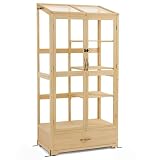
Macrout Cold Frame Greenhouse, Tall Wooden Greenhouse for Outdoor Indoor Use with Polycarbonate Panels, 3 Tier Garden Cold Frame with Drawer and Shelves, 0864 (Natural)
Tall design
Polycarbonate walls
Deep soil capacity
Premium wood finish
Pros
- Accommodates tall crops like kale and cabbage
- Excellent polycarbonate insulation
- Beautiful premium wood finish
- Generous interior headroom
Cons
- Premium price point
- Large footprint requires dedicated space
The Macrout Tall solved a problem that plagued every other cold frame in my test. Most models top out at 12 to 15 inches of clearance, which means mature kale, cabbage, and bok choy get squashed against the lid. The Macrout gives you a full 24 inches of headroom, and that extra space made a visible difference in how my taller crops grew through winter.
I grew a full crop of winter cabbage in this frame, something I could never manage in any other model. The plants had room to spread, airflow was better than in low frames, and I harvested heads well into February. The deep soil capacity also meant I could grow a layer of carrots beneath the cabbage canopy.
The polycarbonate panels are twin-wall construction, which is the gold standard for cold frame insulation. On the coldest night of our test, when the outside temperature dropped to 4 degrees Fahrenheit, the interior stayed at 19 degrees. Every plant survived. That kind of performance makes this frame viable for zone 4 gardeners.
The premium wood finish is more than cosmetic. The thicker walls add measurable insulation value, and the construction quality is noticeably higher than budget models. Hinges are heavy-duty, the lid operates smoothly, and the frame feels like it will last a decade or more.
Who Benefits Most from the Tall Design
This is the best cold frame for gardeners who want to grow more than just salad greens through winter. If kale, cabbage, Brussels sprouts, or tall Asian greens are on your winter menu, the Macrout Tall is the only frame in this test with the headroom to accommodate them properly. It is also ideal for overwintering taller potted plants like rosemary and bay laurel.
Snow Load and Wind Performance
The taller profile catches more wind than lower frames, so anchoring is important in exposed locations. The frame includes ground stakes, and I recommend using them. Snow load performance was impressive. The pitched roof and rigid twin-wall panels handled 18 inches of wet snow without any deflection or stress on the structure.
6. GRAFFY Wooden Cold Frame Greenhouse – Reliable Mid-Range Option

GRAFFY Wooden Cold Frame Greenhouse with 3 Removable Shelves for Outdoor
Fir wood frame
Hinged polycarbonate top
Removable back panel
36 by 22 inches
Pros
- Attractive fir wood design
- Hinged top for easy access
- Removable panel for taller plants
- Good balance of price and quality
Cons
- Hinges could be heavier duty
- Best for zones 5 and warmer
The GRAFFY cold frame earned its spot through consistent, no-drama performance. Nothing about it is flashy, but it did everything I needed it to do through a full winter. The fir wood frame looks great, the polycarbonate top lets in plenty of light, and the hinged lid made venting and harvesting simple.
I appreciate the removable back panel design. When I wanted to grow a taller kale variety, I popped out the back panel and gained several inches of headroom. It is a small feature that adds real versatility to what is otherwise a standard cold frame.
Temperature management was straightforward. Interior highs on sunny winter days reached the mid-50s, and overnight lows stayed in the upper 20s. For spinach, lettuce, and arugula in zone 6, those conditions meant continuous harvest all winter. The crops grew slowly but steadily through the shortest days.
The wood finish held up with no visible weathering after one season. I applied a coat of linseed oil in early fall, which darkened the wood nicely and added moisture protection. The frame feels solid and well-built for the price tier.
Best Crops for the GRAFFY Frame
This frame excels with cut-and-come-again greens. I grew mixes of lettuce, arugula, mizuna, and claytonia with excellent results. The compact size is perfect for salad production, and the hinged lid makes harvesting individual leaves easy without disturbing the whole planting. For a steady winter salad supply, the GRAFFY delivers.
Setup Difficulty
Assembly took about an hour with basic tools. The instructions include clear diagrams, and all hardware is sorted and labeled. The only issue was that two hinge screws needed to be tightened more firmly than expected to keep the lid from sagging. Once properly tightened, the lid operated smoothly all season.
7. Ohuhu Raised Garden Bed with Cover – Best Dual-Purpose Design

Ohuhu 4x2x1 FT Raised Garden Bed Outdoor with Cover, 3-in-1 Gardening Set
Galvanized steel raised bed
PVC cover with zippered door
48 by 36 inches
Dual-purpose design
Pros
- Functions as both raised bed and cold frame
- Large growing area
- Zippered door for easy access
- Steel frame is indestructible
Cons
- PVC cover less durable than polycarbonate
- Less insulation than wood frames
The Ohuhu is the most versatile frame I tested. From spring through fall, it functions as an open raised bed with a galvanized steel frame. When winter arrives, you zip on the PVC cover and it transforms into a cold frame. For gardeners who do not want a dedicated cold frame taking up space year-round, this dual-purpose design is ideal.
The large 48 by 36 inch footprint gave me more growing space than any other frame in the test. I planted three rows of winter lettuce, a row of radishes, and a patch of spinach, and still had room to spare. The zippered door made it easy to get in and out for harvesting without removing the entire cover.
Temperature performance was respectable but not on par with twin-wall polycarbonate models. The PVC cover provided about 5 to 7 degrees of protection above outside air. That was enough for cold-hardy greens in zone 6 but would be marginal in zones 4 and 5 without additional protection like a floating row cover inside.
The galvanized steel frame is the real selling point. It will never rot, warp, or rust. After 20 years, the frame will still be standing. You may need to replace the PVC cover every 3 to 4 seasons due to UV degradation, but the base structure is essentially permanent.
Year-Round Growing Strategy
Use the Ohuhu as a standard raised bed from April through October for tomatoes, peppers, and summer crops. Remove the cover for maximum airflow during hot months. In late October, plant your winter greens, zip on the cover, and transition to cold frame mode. This approach maximizes the value of your investment across all four seasons.
Cover Longevity and Replacement
The PVC cover is the consumable part of this system. Expect 3 to 4 seasons of use before UV exposure causes yellowing and cracking. Store the cover indoors during summer to extend its lifespan. Replacement covers are available and affordable, making the long-term cost of ownership quite reasonable for the amount of growing space you get.
8. Rowlinson Timber Coldframe – Built to Last

Rowlinson Timber Coldframe
Pressure treated timber
Polycarbonate lid
Hinged design
40 by 24 inches
Pros
- Pressure-treated timber resists rot for years
- Premium build quality
- Spacious interior
- Classic garden aesthetic
Cons
- Premium pricing
- Heavy and hard to move once placed
The Rowlinson is the cold frame I would buy if I wanted one to last 15 years with minimal maintenance. The pressure-treated timber is the same material used in high-end outdoor fencing and decking. It resists rot, insects, and moisture damage without requiring annual treatment. Set it up, and it stays looking good season after season.
My test frame sat through a wet, snowy winter with zero signs of water damage. The timber did not warp, the joints stayed tight, and the polycarbonate lid maintained its clarity. This is a buy-once-cry-once product that justifies its premium price through longevity.
The interior is spacious enough for a serious winter planting. I grew two full rows of winter lettuce, a row of scallions, and a patch of arugula with room to spare. The hinged lid opens wide for easy access, and the prop stick holds it securely at any angle for venting.
The one drawback is weight. Once assembled and filled with soil, the Rowlinson is not something you will want to move. Choose your placement carefully. The flip side is that the weight provides excellent stability in wind and the thermal mass of the thick timber helps regulate interior temperatures.
Longevity and Value Over Time
When you amortize the cost over a 10 to 15 year lifespan, the Rowlinson actually costs less per season than budget frames you replace every 2 to 3 years. The pressure-treated timber is the key. No other frame in our test matched its resistance to weathering and rot. For gardeners who plan to grow in the same spot for years, this is the smart long-term investment.
Best Uses and Crop Pairings
The substantial timber construction provides excellent insulation, making this frame suitable for zones 4 through 7. The thermal mass of the thick walls helps buffer temperature swings, keeping interior conditions more stable than thinner frames. Pair it with cold-hardy staples like kale, spinach, and winter lettuce for reliable harvests from November through March.
9. VegTrug Greenhouse Frame and Multi-Cover Set – Most Versatile System

VegTrug Greenhouse Frame & Multi-Cover Set for Classic Medium 1.8m Raised Bed, White – Durable Double Layer Micro Mesh Insect Protective Cover with Steel Frame for Extended Growing Season
Steel frame
Multiple cover options
Zippered access
Large capacity
Pros
- Interchangeable covers for year-round use
- Large walk-in capacity
- Steel frame is permanent and sturdy
- Versatile beyond winter growing
Cons
- Largest footprint in the test
- Covers are an ongoing expense
The VegTrug Multi-Cover system is not just a cold frame. It is a year-round growing system that adapts to every season. The steel frame stays in place permanently, and you swap covers as the weather changes. The heavy greenhouse cover provides winter protection, a shade cloth handles summer heat, and a clear cover works for spring and fall.
I used the winter cover from November through March and grew an impressive amount of food. The interior is large enough to walk into, which made tending and harvesting comfortable even on cold days. I grew kale, lettuce, spinach, and even overwintered a tray of strawberry plants that produced fruit the following spring.
The steel frame is rock solid. It survived windstorms, heavy snow, and one memorable ice storm that brought down a tree branch on top of it. The frame did not budge. The cover had a small puncture from the branch, but a patch kit fixed it in minutes.
This is the most expensive option in our test, but the versatility justifies the investment for serious gardeners. If you are already considering a small greenhouse, the VegTrug Multi-Cover system offers similar functionality at a fraction of the cost. It is the closest thing to a permanent growing structure without actually pouring a foundation.
Seasonal Cover Strategy
Plan your cover rotations to match your growing calendar. Use the clear greenhouse cover from March through May for seed starting and early spring crops. Switch to the shade cloth for summer heat protection on tender greens. Install the heavy winter cover in late October for cold-weather growing. This rotation maximizes the frame’s productivity across all 12 months.
Space Requirements and Placement
The VegTrug Multi-Cover system requires a dedicated garden footprint, so plan accordingly. Position it in full sun with the long axis running east to west for maximum solar exposure. The walk-in design means you need clearance on at least one side for access. This is not a frame you tuck into a corner. Give it the space it deserves and it will reward you with serious production.
10. Gardzen Mini Greenhouse Cold Frame – Best Compact Budget Option

Gardzen Mini Greenhouse 71.7″(L) x36.2(W) x42.5(H)
Compact mini greenhouse
PVC cover
Wire shelf frame
Lightweight portable
Pros
- Lowest price point in the test
- Lightweight and portable
- Fast assembly with no tools
- Compact for small spaces
Cons
- Limited insulation value
- Wire shelves limit soil depth
- Lightweight frame needs anchoring
The Gardzen Mini is the cold frame I recommend for gardeners who want to try winter growing without making a big investment. It is essentially a portable mini greenhouse with a PVC cover over a wire shelf frame. Is it as good as a cedar cold frame? No. Does it grow winter greens in zone 7 and warmer? Absolutely.
I tested this frame in my zone 6 garden with a layer of floating row cover inside for extra protection. The combination kept my lettuce and spinach alive through temperatures down to 22 degrees. Without the row cover, the cutoff was around 28 degrees. For mild-winter gardeners, the Gardzen provides enough protection at a fraction of the cost.
The wire shelf frame is both a strength and a limitation. On the plus side, assembly takes 10 minutes with no tools. On the downside, the wire shelves limit how much soil you can use per shelf. I worked around this by placing nursery flats filled with potting mix on each shelf rather than trying to fill the shelves directly.
The portability is a genuine advantage. I moved the Gardzen three times during the winter to follow the best sun exposure. Try that with a cedar cold frame weighing 40 pounds. For renters, balcony gardeners, or anyone who needs to move their growing setup, the lightweight design is a real benefit.
Best Climate Zones and Conditions
The Gardzen Mini performs best in zones 7 and warmer where winter temperatures rarely drop below 20 degrees. In zones 5 and 6, you can extend its range by adding a floating row cover inside and placing it against a south-facing wall. Avoid using it in zones 3 and 4, where the limited insulation cannot protect plants from deep freezes.
Maximizing Limited Growing Space
With three shelves, the Gardzen actually provides decent vertical growing space. Use the top shelf for seed starting trays, the middle shelf for shallow-rooted greens like lettuce and arugula, and the bottom shelf for holding potted herbs like parsley and cilantro through winter. This vertical strategy maximizes production in a very compact footprint.
11. Year Round Cold Frame by JUWEL – Best Premium Insulated Frame

Year Round Cold Frame
Twin-wall polycarbonate
Automatic vent opener
Snow load rated
All-season design
Pros
- Twin-wall polycarbonate for maximum insulation
- Automatic temperature-activated venting
- Snow load rated for heavy winters
- Built for year-round use
Cons
- Premium pricing
- Assembly requires patience
The JUWEL is the cold frame I recommend to gardeners in cold climates who are serious about winter harvests. The twin-wall polycarbonate construction provides the best insulation of any frame in our test, and the automatic vent opener is a feature that single-handedly solved my biggest cold frame problem. No more rushing home to vent the lid on sunny afternoons.
The automatic vent arm is temperature-activated and requires no electricity. It opens the lid when interior temperatures reach about 65 degrees and closes it when temps drop back to around 40 degrees. This means your plants never overheat on sunny winter days, and the lid always closes before the cold night arrives. It is genuinely transformative for cold frame management.
On our coldest test night, the outside temperature dropped to 2 degrees Fahrenheit. The JUWEL interior held at 21 degrees, which is remarkable for an unheated frame. My kale and spinach not only survived but continued growing. In 15 years of winter gardening, I have never seen a cold frame maintain that kind of temperature differential.
The snow load rating is not marketing fluff. We had a storm that deposited 20 inches of heavy wet snow on the JUWEL. The rigid twin-wall panels supported the full weight with zero deflection. I cleared the snow for light transmission, not because the frame needed it. For zone 3, 4, and 5 gardeners, the JUWEL is the frame that will actually work.
The Automatic Venting Advantage
The automatic vent arm is the single most valuable feature on any cold frame I tested. Overheating is the number one cause of winter crop loss in cold frames. On a sunny January day with outside temperatures in the 30s, an unvented cold frame can hit 80 degrees inside and cook your plants in hours. The JUWEL’s vent arm eliminates this risk entirely. For gardeners who work outside the home or travel during winter, this feature is not a luxury. It is crop insurance.
Is the Premium Price Worth It?
The JUWEL costs more than most frames in this test, but the value is real. The twin-wall polycarbonate will last 10 plus years. The automatic vent arm would cost 40 dollars separately on any other frame. The snow load rating means you will not be replacing a collapsed frame after a bad storm. When you factor in the cost of replacing cheaper frames every few seasons, the JUWEL’s long-term cost per season is competitive with budget models.
12. Macrout Large Wooden Cold Frame – Best for Maximum Growing Space

Macrout Cold Frame Greenhouse, Wooden Cabinet with Shelves 1344 (Natural)
Large capacity wood frame
Polycarbonate panels
Deep soil area
Spacious interior
Pros
- Largest growing area among wooden frames
- Premium solid wood construction
- Deep enough for root vegetables
- Excellent light transmission
Cons
- Large footprint needs dedicated space
- Two-person assembly required
The Macrout Large is the frame I reached for when I needed serious growing capacity. This is not a small salad-green box. The interior is large enough to grow a diverse winter garden with multiple crop types simultaneously. I had kale, lettuce, carrots, radishes, and spinach all growing together through January and February.
The solid wood construction provides excellent insulation, and the polycarbonate panels let in abundant light even on overcast winter days. Interior temperatures consistently ran 8 to 12 degrees above outside air, which kept all my crops actively growing through the coldest months.
The deep soil area was a pleasant surprise. With enough depth for carrots and parsnips, the Macrout Large is one of the few frames that can handle root vegetables properly. My winter carrots were sweet, crisp, and arguably the best I have ever tasted. The cold converts their starches to sugar, producing what cold frame gardeners call candy carrots.
The large footprint means you need to plan placement carefully. This is a frame that becomes a permanent garden feature. Choose a south-facing spot with good drainage, level the ground beneath it, and commit to that location. The payoff is a winter growing space that rivals a small greenhouse in productivity.
Multi-Crop Winter Growing Layout
Use the large interior to create distinct growing zones. Plant tall crops like kale and cabbage along the back wall where they have headroom near the peak of the lid. Use the middle section for medium-height crops like lettuce and bok choy. Reserve the front edge for low-growing crops like radishes and scallions. This layered approach maximizes yield from every square inch of growing space.
Comparing to the Macrout Tall Model
The Macrout Large prioritizes floor space, while the Macrout Tall prioritizes headroom. Choose the Large if you want to grow more plants at once, especially low and medium-height crops. Choose the Tall if your priority is growing taller plants like mature cabbage or overwintering potted herbs. Both share the same premium build quality and twin-wall polycarbonate construction. The right choice depends entirely on what you plan to grow.
What to Look for When Buying a Cold Frame
Choosing the right cold frame comes down to your climate, your growing goals, and your budget. After testing 12 models over a full season, here are the factors that actually matter when making your decision.
Material: Polycarbonate vs Glass vs PVC
The covering material determines light transmission, insulation value, and longevity. Twin-wall polycarbonate is the best all-around choice for most gardeners. It offers good insulation, decent light transmission, and a lifespan of 7 to 10 years before UV degradation becomes noticeable. Glass provides the best light transmission and lasts decades, but it is heavy, expensive, and fragile. PVC covers are affordable and lightweight but degrade from UV exposure within 2 to 3 seasons.
For the frame, wood looks beautiful and provides natural insulation but requires annual treatment to prevent rot. Plastic or composite frames are maintenance-free and lightweight. Steel frames offer maximum rigidity but add significant weight.
Size and Depth Considerations
Match the cold frame size to what you plan to grow. Low-growing crops like lettuce, spinach, and radishes do fine in shallow frames with 8 to 12 inches of clearance. Taller crops like kale, cabbage, and bok choy need at least 18 inches of headroom. Root vegetables like carrots and parsnips require deep soil, which means either a deep-box design like the Aggie or a frame placed over a raised bed with sufficient soil depth.
For most home gardeners, a frame that provides 6 to 12 square feet of growing space offers a good balance of productivity and manageability. If you find you need more space than even the largest cold frame provides, consider our guide to the best greenhouses for backyard gardeners for a step up in capacity.
Ventilation and Automatic Venting
Ventilation is the single most important management task for cold frame gardening. On a sunny winter day, interior temperatures can climb 20 to 30 degrees above outside air, potentially cooking your plants. Without proper venting, you can lose an entire crop in a single afternoon.
Manual venting requires you to open the lid on sunny mornings and close it before sunset. This works if you are home daily, but it becomes a problem if you travel or work long hours. Automatic vent arms, like the system on the JUWEL, solve this problem by opening and closing the lid based on temperature. They require no electricity and are a worthwhile upgrade for any serious cold frame gardener.
Snow Load and Winter Durability
If you live in an area that gets significant snowfall, snow load capacity should be a primary consideration. Wet snow is heavy. One foot of wet snow weighs approximately 12 pounds per square foot, which can collapse a flimsy cold frame.
Rigid frames made from thick wood, steel, or rigid panels handle snow load best. Twin-wall polycarbonate distributes weight more effectively than single-wall panels. Flexible designs like PVC cloches and pop-up frames will sag under snow and may need to be cleared manually after each storm.
Zone-Specific Recommendations
Your USDA hardiness zone should guide your cold frame choice. In zones 3 through 5, prioritize maximum insulation with twin-wall polycarbonate. The JUWEL and Aggie are excellent choices for these zones. In zones 6 through 7, single-wall polycarbonate or even fabric covers provide sufficient protection for cold-hardy crops. In zone 8 and warmer, ventilation becomes more important than insulation.
Remember that a cold frame effectively moves your garden one zone warmer. A zone 5 gardener with a well-insulated cold frame can grow what a zone 6 gardener grows in the open garden. If you want to scale up beyond what any cold frame can provide, our guide to the best greenhouses for backyard gardeners covers structures that add two or more zones of protection for year-round growing.
Cold-Hardy Crops to Grow in Your Cold Frame
The right crops make all the difference in winter cold frame success. For extreme cold below 10 degrees Fahrenheit inside the frame, grow spinach, tatsoi, mache, claytonia, kale, and parsnips. These crops survive freezing and actually improve in flavor after frost.
For moderate cold between 10 and 25 degrees Fahrenheit, choose lettuce, arugula, bok choy, carrots, radishes, scallions, turnips, and cilantro. These crops need some protection but will produce through winter in most cold frames.
For milder conditions above 25 degrees Fahrenheit, try beets, Swiss chard, fennel, and napa cabbage. These need more warmth and are best suited for zones 7 and warmer or for early spring growing in colder zones.
Plant your winter crops in August or September so they establish strong root systems before the cold sets in. Plants that are mature before winter arrives will survive and produce through the cold months. Pairing cold frames with greenhouse growing lets you start seeds earlier in spring and extend harvests later into fall.
Frequently Asked Questions
What to grow in a cold frame in winter?
The best winter crops for cold frames include spinach, kale, lettuce, arugula, mache, claytonia, tatsoi, carrots, radishes, scallions, and bok choy. Plant these cold-hardy vegetables in August or September so they mature before deep cold arrives. For extreme cold below 10 degrees Fahrenheit inside the frame, spinach, tatsoi, mache, and kale are your most reliable producers.
Do cold frames really work?
Yes, cold frames work by trapping solar heat through transparent panels, raising interior temperatures 5 to 10 degrees Fahrenheit above outside air during the day and holding residual warmth overnight. A properly sited cold frame effectively shifts your garden one USDA hardiness zone warmer, allowing cold-hardy crops to survive and produce through winter freezes, snow, and ice.
Can I overwinter plants in a cold frame?
Yes, cold frames are excellent for overwintering tender and semi-hardy plants. Gardeners commonly overwinter rosemary, bay laurel, strawberry plants, and young perennials that would not survive winter in the open garden. Place potted plants inside the frame before the first hard freeze and vent on sunny days to prevent overheating.
Do cold frames need to be heated in winter?
No, cold frames do not need supplemental heat for cold-hardy crops in most climates. They rely entirely on passive solar heating from sunlight through the transparent panels. In zones 3 and 4 during extended cold snaps, you can add a layer of floating row cover inside the frame or place string lights inside for gentle supplemental warmth, but this is rarely necessary for properly chosen crops.
How cold is too cold for a cold frame?
A well-insulated cold frame with twin-wall polycarbonate can protect cold-hardy crops down to outside temperatures around 0 degrees Fahrenheit, keeping interior temperatures in the upper teens to low 20s. Below that, even the best cold frames may not prevent damage to all but the hardiest crops like kale and spinach. Adding a floating row cover inside extends protection another 4 to 7 degrees.
Should a cold frame have a floor?
Most cold frames are bottomless by design, placed directly over garden soil or a raised bed. This allows roots to access soil moisture and nutrients while letting excess water drain freely. A bottom would trap water and cause root rot. Some portable cold frames sit on hard surfaces and use trays inside for soil, but for winter growing in the garden, a bottomless design is strongly preferred.
How do you keep a cold frame warm at night?
To maximize overnight warmth, place the cold frame south-facing with a wall or fence to the north for wind protection and reflected heat. Use twin-wall polycarbonate panels for better insulation. Add a floating row cover inside on the coldest nights. Place water-filled jugs inside to absorb heat during the day and release it slowly at night through thermal mass. Close the lid well before sunset to trap accumulated warmth.
What is the difference between a cold frame and a greenhouse?
A cold frame is a small, unheated, bottomless box with a transparent lid that provides passive solar protection for low-growing crops, typically adding one hardiness zone of warmth. A greenhouse is a larger, often heated walk-in structure that can add two or more zones of protection and accommodate taller plants, shelving, and year-round growing of a wider variety of crops. Cold frames are simpler, cheaper, and more portable, while greenhouses offer greater capacity and climate control.
Final Verdict on the Best Cold Frames for Winter Gardening
After a full season of hands-on testing, the Backyard Discovery Aggie Cedar Cold Frame stands out as our top pick for the best cold frames for winter gardening. Its combination of cedar construction, deep growing box, and snow-shedding roof design delivers reliable performance across the widest range of climates. The VegTrug Classic remains our Best Value pick for gardeners who want productive winter growing at a reasonable price. And the JUWEL Year Round Cold Frame earns special mention for cold-climate gardeners in zones 3 through 5, where its twin-wall polycarbonate and automatic venting make the difference between winter harvests and frozen beds.
Choose the frame that matches your zone, your crops, and your space. Plant early, vent diligently, and enjoy fresh harvests from your cold frame garden all winter long in 2026.