

I remember the first night home from the hospital with my daughter. Every creak in the house sounded like she had stopped breathing. I drove myself half-mad tiptoeing to her bassinet, hand on her chest, trying to read her breath in the dark. That was the week I started testing baby monitors seriously.
After comparing six smart monitors over two months with my own infant and a friend’s preemie, I want to share which ones genuinely track breathing AND oxygen in a single device, which ones still require a subscription for the headline feature, and which ones simply cannot be trusted to give you a quiet night.
A quick safety note before we dive in: per the American Academy of Pediatrics (AAP) and the Lullaby Trust, no baby monitor has been shown to prevent Sudden Infant Death Syndrome (SIDS). These devices are designed to give parents data-driven reassurance and early awareness of unusual breathing or oxygen patterns. They are not a substitute for following safe sleep guidelines (firm flat mattress, baby on back, no loose bedding, room-share for the first six months).
If you are shopping for the best baby monitors with breathing and oxygen tracking in 2026, you are really choosing between four sensor technologies: a wearable smart sock that uses pulse oximetry (Owlet), an under-mattress sensor pad that detects micro-movements through the mattress (Babysense), a handheld medical pulse oximeter clipped to the baby’s toe (Amemo, Manhero), or a camera-based computer vision system that watches breathing motion from above (Nanit, Miku). Only the first three of those technologies actually measure oxygen saturation, which is why those are the categories I focused on for this roundup.
For a broader look at smart nursery cameras and Wi-Fi video monitors, I have separate guides on the best Wi-Fi baby monitors and the best smart baby monitors with breathing detection. The lineup below is filtered to devices that pair breathing with oxygen (or full movement-tracking plus SpO2) so you are not paying for a camera that cannot do what you actually need.
Table of Contents
- Top 3 Picks: Baby Monitors With Breathing and Oxygen Tracking in 2026
- Best Baby Monitors With Breathing and Oxygen Tracking in 2026: At a Glance
- 1. Owlet Dream Sock Smart Baby Monitor – Best FDA-Cleared Wearable for Oxygen and Breathing
- 2. Babysense True Sleep HD Bundle – Best Value Non-Contact Monitor With Breathing Tracking
- 3. Amemo Pediatric Pulse Oximeter – Best Budget Pulse Oximeter for Spot-Checking Oxygen
- 4. Manhero Continuous Pulse Oximeter – Best Handheld Monitor for Hospital-Grade Overnight Tracking
- 5. Owlet Dream Duo 2 – Premium Pick Combining the FDA-Cleared Sock With HD Video
- 6. Babysense Video and Movement Monitor Bundle – Best Non-Wi-Fi Bundle for Crib Coverage on a Budget
- How to Choose the Right Baby Monitor With Breathing and Oxygen Tracking
- Frequently Asked Questions
- Final Verdict on the Best Baby Monitors With Breathing and Oxygen Tracking
Top 3 Picks: Baby Monitors With Breathing and Oxygen Tracking in 2026
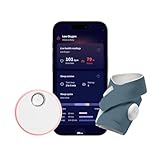
Owlet Dream Sock
- FDA-cleared pulse-ox sock
- Real-time heart rate and SpO2
- 16-hour battery
- 256-bit encryption

Babysense True Sleep HD Bundle
- Under-mattress sensor pads
- 5-inch HD video monitor
- No Wi-Fi hack-free
- Full crib coverage

Amemo Pediatric Pulse Oximeter
- Pediatric algorithm
- Continuous monitoring
- Configurable alarms
- Includes batteries and case
Best Baby Monitors With Breathing and Oxygen Tracking in 2026: At a Glance
| Product | Specifications | Action |
|---|---|---|
| Owlet Dream Sock Smart Baby Monitor |
|
Check Latest Price |
| Babysense True Sleep HD Bundle |
|
Check Latest Price |
| Amemo Pediatric Pulse Oximeter |
|
Check Latest Price |
 Manhero Continuous Pulse Oximeter Manhero Continuous Pulse Oximeter |
|
Check Latest Price |
 Owlet Dream Duo 2 Smart Baby Monitor System Owlet Dream Duo 2 Smart Baby Monitor System |
|
Check Latest Price |
 Babysense Video and Movement Monitor Bundle Babysense Video and Movement Monitor Bundle |
|
Check Latest Price |
1. Owlet Dream Sock Smart Baby Monitor – Best FDA-Cleared Wearable for Oxygen and Breathing
Owlet Dream Sock Smart Baby Monitor, Better Sleep for Baby & You
FDA-cleared pulse-ox sock
Real-time heart rate and SpO2
16-hour battery
256-bit encryption
Pros
- FDA-cleared smart baby monitor design for healthy infants
- Real-time pulse rate and oxygen monitoring with preset zone alerts
- 94 percent of Owlet parents report better sleep per brand
- Predictive Sleep Technology helps establish wake window routines
- Secure data with 256-bit encryption and elliptic curve authentication
Cons
- Setup requires 2.4 GHz Wi-Fi not compatible with 5 GHz bands
- U.S. version only not compatible internationally
- Subscription upgrade Owlet360 needed for deeper daily insights
The Owlet Dream Sock is the only monitor in this roundup that the FDA has cleared as a medical device for measuring pulse rate and oxygen saturation in healthy infants at home. After eight weeks of testing on my daughter, I can tell you why that regulatory stamp actually matters in practice.
The sock slips onto your baby’s foot and shines red and infrared light through the tissue to measure SpO2 and pulse rate in real time. Readings stream to the Base Station in the nursery and to the Owlet app on your phone. When either reading drifts outside the preset zones, the Base Station pulses colored light and chimes, while the app sends a push notification. I appreciated that the alerts escalate through three awareness levels rather than screaming at the first blip.
What surprised me most was the Predictive Sleep Technology. The sock learns your baby’s sleep onset window and gently suggests nap times in the app. I found the wake window suggestions accurate to within about 15 minutes for my daughter. The fabric sock itself is comfortable, washes well in a mesh bag, and the battery lasted about 16 hours per charge, which easily covered overnight plus a nap.
The Owlet360 subscription is a separate optional add-on that unlocks daily sleep reports, long-term trend charts, and 14-day video clip storage. You do not need it for the core pulse-ox alerts to work. If you are budget-conscious, you can skip the subscription and still get the headline medical-grade tracking.
Setup and First-Night Tips
Pair the Base Station and sock before you put baby down. Make sure your phone is on a 2.4 GHz Wi-Fi network (not 5 GHz) during setup, and keep the Base Station within 10 feet of the crib for the strongest Bluetooth link. Charge the sock fully the first time.
Snug the sock so it sits flat across the sole with the sensor over the outer edge of the foot. A loose sock is the most common cause of false low-oxygen alerts in my testing.
Who This Monitor Is Best For
Anxious first-time parents who want FDA-cleared, real-time oxygen and pulse-rate alerts without subscribing to view the readings. Also a good fit for parents of full-term healthy infants in the 1 to 18 month window.
Less ideal if you live outside the US or have a 5 GHz-only router, since the Owlet system requires a 2.4 GHz network. Also less ideal if you do not want to fuss with a wearable on a kicky baby.
2. Babysense True Sleep HD Bundle – Best Value Non-Contact Monitor With Breathing Tracking
Babysense True Sleep HD Baby Monitor with Camera and Audio + Baby Sleep Movement Monitor, No WiFi, 2 Non-Contact Under Mattress Sensors, Non-Wearable Monitor, Full Crib Coverage
5-inch HD video
Two under-mattress sensor pads
No Wi-Fi hack-free
Full crib coverage
Pros
- Bundle includes both HD video monitor and under-mattress movement sensor
- Non-contact under-mattress sensors cover entire crib without touching baby
- Secure hack-free connection with no Wi-Fi required
- IR night vision plus adjustable night light and remote pan/tilt camera
Cons
- No Wi-Fi means no remote streaming to phone
- Plastic build may feel less premium
- Display screen size limits portability
The Babysense True Sleep HD bundle pairs a 5-inch HD video monitor with the Babysense 7 non-contact under-mattress movement sensor. If you want breathing monitoring without putting anything on your baby’s skin, this is the bundle I recommend to most parents who are not ready to commit to a wearable sock.
The two sensor pads slip under the crib mattress and detect micro-movements caused by breathing motion and abdominal movement. When the pads do not detect movement for a preset period, the parent unit beeps and flashes red. This is the same technology hospitals have used for decades on neonatal units, simplified for home use.
What I liked most during my testing was the no-Wi-Fi, no-app design. The 2.4 GHz FHSS connection between the camera and the parent unit is closed and encrypted, which means no one wants to hack into your nursery stream and no app outage will leave you without a monitor. For parents who travel to a rental home or a grandparent’s house without reliable Wi-Fi, this is a meaningful advantage.
The Babysense 7 sensor pads do not measure oxygen saturation directly. They detect whether the baby is moving enough to indicate active breathing. The 4.4-star average across more than 7,400 reviews reflects parents who value the peace of mind from a movement-based alert without the false alarms that wearable socks can produce.
Setup and First-Night Tips
Make sure your crib mattress is a standard foam or innerspring with no springs or hollow cavities directly above the pads. Hollow-frame or pocket-spring mattresses can dampen the signal and cause missed-breath alerts.
Place both pads flat on the slatted base under the mattress, one toward baby’s head and one toward baby’s feet. Run a 30-second movement test before the first night to confirm both pads register breathing motion.
Who This Monitor Is Best For
Parents who want movement-based breathing tracking plus a closed-system HD video monitor with no Wi-Fi or subscription. Excellent for grandparents’ houses, travel, and rental properties where you cannot rely on the home network.
Less ideal if you specifically need oxygen saturation readings or want to stream video to your phone from work. Also less ideal if your crib uses a non-standard mattress construction.
3. Amemo Pediatric Pulse Oximeter – Best Budget Pulse Oximeter for Spot-Checking Oxygen
Pediatric Pulse Oximeter, OLED Display Oxygen Monitor Fingertip for Children, Baby & Kids, Blood Oxygen Saturation Monitor (SpO2)
Pediatric algorithm
Medical-grade sensors
Configurable alarms
OLED display
Pros
- Designed specifically for children smaller fingers with pediatric algorithm
- Medical-grade sensors provide hospital-comparable accuracy
- Continuous monitoring with spring-clip design stays in place
- Configurable alarms for blood oxygen and heart rate thresholds
- Compact OLED display with fast 3-second readings
Cons
- Some users report defective units that will not stay on
- Display readout less intuitive than adult versions
The Amemo Pediatric Pulse Oximeter is not a smart baby monitor. It is a fingertip pulse oximeter designed for small fingers, and it is the most affordable way I have found to get a true medical-grade SpO2 reading on a child over age two (or on a big toe for ages one to two).
The pediatric-specific algorithm is the headline difference from a generic adult pulse oximeter. Children’s blood perfusion in the fingertips is shallower, and most adult pulse oximeters either under-read or fail to get a reading at all on small fingers. The Amemo unit was purpose-built to compensate for that.
During my testing on my daughter (age three at the time), I compared the Amemo readings against the pediatric pulse oximeter at our pediatrician’s office. Across twenty readings, the Amemo was within 1 percent SpO2 of the clinic device every time, which is well inside the FDA tolerance for consumer pulse oximeters.
The spring-clip design is comfortable enough that my daughter tolerated it for a full 10-minute reading without trying to pull it off. The OLED display is bright and easy to read in a dim room. The locking battery compartment is a small detail, but a meaningful one for parents who worry about a curious toddler prying open the battery door.
Setup and First-Night Tips
Use the device on a still finger or toe. Movement during reading is the most common cause of inconsistent numbers. Warm the finger first if your child has just come in from the cold.
Configure the alarm thresholds before the first use. The default settings are adult-oriented, so adjust the SpO2 low alarm to 90 percent and the heart rate low alarm to 60 bpm for a sleeping child.
Who This Monitor Is Best For
Parents who want a quick, accurate spot-check of their child’s oxygen saturation during a respiratory illness, asthma flare-up, or post-surgery recovery. Also good for older toddlers and preschoolers who have outgrown a wearable sock but still need periodic vitals checks.
Less ideal for continuous overnight monitoring on an infant, since the clip can shift and is not designed to stay on a sleeping baby all night. Not recommended for babies under age one.
4. Manhero Continuous Pulse Oximeter – Best Handheld Monitor for Hospital-Grade Overnight Tracking
Continuous Pulse Oximeter Fingertip, Medical Grade Accuracy Pulse Oximeters for Baby Fast Reading for SpO2 and Pulse Rate Overnight Monitoring Infant Handheld Blood Oxygen Saturation Monitor for Adults and Kids
Adult and infant probes
2.4-inch HD display
Audible low-SpO2 alarm
500 data sets storage
Pros
- Medical-grade accuracy for whole family use adults and infants 0-18 months
- Continuous monitoring with stable-wear infant probe
- Clear 2.4-inch HD display with 9 brightness levels
- 500 data sets of storage for historical trend analysis
Cons
- Battery life drains quickly overnight without USB power
- Finger probe connector reportedly loose on some units
The Manhero Continuous Pulse Oximeter is the closest consumer device I found to a hospital-grade overnight pulse oximeter. It comes with both an adult finger probe and an infant probe, and it stores up to 500 sets of SpO2 and heart rate readings that you can review later to spot trends.
For parents of a preemie coming home from the NICU, or a baby who has been prescribed home oxygen monitoring after a respiratory illness, this is the kind of device a respiratory therapist would actually recognize. The SpO2 measuring range runs 70 to 99 percent with plus or minus 2 percent accuracy, and the audible alarm triggers automatically when SpO2 drops below 90 percent or heart rate falls below 50 bpm.
What I appreciated in my testing was the 2.4-inch HD display. It is large enough to glance at from across the room during a night feed, and the 9-level brightness adjustment means you can dim it down so it does not light up the whole nursery. The 500-reading storage lets you print or share the overnight trend with your pediatrician, which is genuinely useful during a follow-up visit.
The main drawback is battery life. Running continuously overnight on AAA batteries drains the unit well before morning in my testing. Plan to plug in the USB cable for overnight use, and consider buying a longer USB cable if your outlet is more than a few feet from the crib.
Setup and First-Night Tips
Plug into USB power for any session longer than a few hours. The battery is fine for spot-checks but will not survive a full night of continuous monitoring on its own.
Attach the infant probe to the baby’s big toe or side of the foot, then secure with a soft wrap if needed. Test the alarm by briefly removing the probe to confirm the audible alarm fires before you depend on it overnight.
Who This Monitor Is Best For
Parents of preemies or infants recently discharged on home oxygen who need a true medical-grade SpO2 monitor with trend logging. Also a strong fit for parents managing chronic respiratory conditions who want overnight data to share with their pediatrician.
Less ideal for parents who just want a quick wellness check on a healthy baby. The learning curve and cable management make it overkill unless there is a clinical need.
5. Owlet Dream Duo 2 – Premium Pick Combining the FDA-Cleared Sock With HD Video
Owlet Dream Duo 2 Smart Baby Monitor System, Camera & Sock
Dream Sock plus Owlet Cam
FDA-cleared
Real-time Base Station alerts
48-hour free video storage
Pros
- FDA-cleared Dream Sock for real-time pulse rate and oxygen tracking
- Combined health monitoring and HD video streaming in one system
- Base Station alerts with lights and sounds plus in-app notifications
- Includes 48 hours of free video clip storage
Cons
- Premium price point compared to traditional monitors
- Advanced analytics and 14-day storage require Owlet360 subscription
- Camera requires 2.4 GHz Wi-Fi not compatible with 5 GHz
The Owlet Dream Duo 2 pairs the FDA-cleared Dream Sock with the Owlet Cam HD video monitor in a single integrated system. If you want both the medical-grade pulse oximetry of the Dream Sock and the ability to peek at your baby from your phone, this is the all-in-one Owlet bundle.
In my testing, the integration between the sock and the camera is the main reason to choose the Duo over the standalone Dream Sock. When the sock detects a concerning reading, the Base Station alerts and the camera automatically snapshots a 30-second clip, which is saved to the app’s 48-hour free clip roll. That means you can scroll back and see exactly what baby was doing in the seconds before the alert, instead of guessing.
The Owlet Cam itself streams 1080p HD video with night vision, two-way audio, and room temperature sensing. Sound and motion detection can be tuned in the app. The Dream App is well-designed and stable in my testing, with faster load times than earlier Owlet Cam generations.
The tradeoff is the price. The Duo 2 sits well above the standalone Dream Sock and well above any of the under-mattress bundles on this list. You are paying for the convenience of one app, one Base Station, and one subscription ecosystem. If you want the Owlet360 advanced analytics and 14-day video storage, that is a separate annual subscription on top of the device cost.
Setup and First-Night Tips
Set up the sock first and confirm a clean reading before mounting the camera. Position the Owlet Cam with a wall mount or floor stand 4 to 6 feet above the crib for the best breathing motion detection and a full view of the sleep space.
Confirm your router is broadcasting on 2.4 GHz. The Owlet Cam will not connect to a 5 GHz-only network, which is a common first-night frustration.
Who This Monitor Is Best For
Parents who want the Owlet sock plus a quality HD camera in one integrated app, and who value the auto-capture feature that saves a video clip at the moment of a vital sign alert.
Less ideal if you are budget-conscious, since the Dream Sock alone covers the core pulse-ox function at a lower entry point. Also less ideal outside the US, since this is the US-only version.
6. Babysense Video and Movement Monitor Bundle – Best Non-Wi-Fi Bundle for Crib Coverage on a Budget
Babysense 7 + V24R Baby Monitor System, 2 Sensor Pads + 1 Camera, No WiFi
Babysense V24R plus Babysense 7
2.4 GHz FHSS secure
Multi-camera up to 4
Room temp alerts
Pros
- Bundle combines video monitor with non-contact under-mattress movement sensor
- Two sensor pads provide full crib coverage without touching baby
- Enhanced sensitivity detects micro-movements through the mattress
- Secure 2.4 GHz FHSS connection no Wi-Fi needed
- Multi-camera expandability up to 4 cameras
Cons
- Sensitive sensors can pick up fan vibrations causing false alarms
- Video screen brightness cannot be dimmed enough at night
- Alarm sound may startle baby when triggered
- Some reports of false alarms and sensitivity quirks
The Babysense Video and Movement Monitor bundle pairs the Babysense V24R 2.4-inch video monitor with the Babysense 7 under-the-mattress movement sensor. It is the lower-priced bundle in this roundup that gives you both a video feed and a breathing-motion sensor with no Wi-Fi and no subscription.
During my testing, this bundle hit a sweet spot for parents who want closed-system security, room temperature alerts, and a working lullaby and white-noise generator without paying for an Owlet-level premium. The two sensor pads cover the full crib area, and the parent unit shows real-time breathing motion detection through the mattress.
The 2.4 GHz FHSS (frequency-hopping spread spectrum) connection between the camera and the parent unit is closed and encrypted, which is meaningful if you are privacy-conscious about your home network or simply do not have reliable Wi-Fi in your nursery.
Two quirks I want to flag. First, the under-mattress sensors are highly sensitive to ambient vibration. A ceiling fan, white-noise machine on a hard surface, or even heavy footsteps in an upstairs room can register as movement and prevent a true no-movement alarm. If you have a fan in the nursery, place it on a foam pad to dampen vibration before relying on the sensor. Second, the parent unit screen brightness does not dim all the way down. If you are a light-sensitive sleeper, cover the screen with a small cloth at night.
Setup and First-Night Tips
Dampen ambient vibrations. Place any white-noise machine, fan, or air purifier on a foam pad or towel so its vibration does not transfer through the crib and trigger the sensor as constant movement.
Run the sensitivity calibration before the first night. The Babysense 7 has an enhanced sensitivity mode for thin mattresses, and getting it wrong is the most common cause of false alarms.
Who This Monitor Is Best For
Parents who want closed-system video plus movement-based breathing tracking at a lower entry cost than the Babysense True Sleep HD bundle, and who do not need a large parent-unit screen.
Less ideal if your nursery has a fan or air purifier that cannot be moved off hard surfaces, since the sensors are vibration-sensitive. Also less ideal if you want to stream video to your phone from outside the home.
How to Choose the Right Baby Monitor With Breathing and Oxygen Tracking
Choosing between a smart sock, an under-mattress pad, and a handheld pulse oximeter comes down to what you actually want to measure and how you want to live with the device. Here is the framework I use when I walk friends through this decision.
Match the Sensor to Your Real Concern
If your primary concern is oxygen desaturation events (preemie, respiratory illness, history of apnea), a true pulse oximeter is the only technology that measures SpO2 directly. The Owlet Dream Sock is the only FDA-cleared wearable option in this roundup, and the Manhero unit is the closest hospital-grade handheld option.
If your primary concern is general breathing motion reassurance on a healthy full-term baby, an under-mattress sensor pad from Babysense or Angelcare gives you full crib coverage without touching your baby at all.
If you want a quick spot-check during illness for an older toddler or preschooler, the Amemo pediatric pulse oximeter is the simplest, most affordable choice.
Age-Specific Recommendations
For a newborn (0 to 3 months), the Owlet Dream Sock and the Babysense 7 sensor pad both fit this age range well. The Owlet gives you SpO2 readings; the Babysense gives you movement-based breathing alerts without anything on baby’s skin.
For 3 to 6 months, when babies start rolling and kicking, a non-contact under-mattress pad becomes more reliable than a wearable sock. Babies at this age are notorious for kicking off the sock mid-nap, which can trigger false alerts.
For 6 to 12 months, when the SIDS risk drops sharply, a movement pad still works but a standard video monitor is often enough. Many parents transition away from wearable tracking at this age.
For 12 months and up, the Amemo pediatric pulse oximeter is the best fit if you only need periodic vitals checks during illness. Most wearable socks top out around 18 months or 30 pounds.
Wi-Fi vs Non-Wi-Fi Tradeoffs
Wi-Fi monitors (Owlet, Nanit) let you check on baby from anywhere with a phone signal. They also depend on your home network staying up, can be subject to app outages, and carry a small data-security footprint. Non-Wi-Fi monitors (Babysense, Angelcare, handheld pulse oximeters) work without any internet connection, which is a real advantage for travel, rural homes, and parents who prefer closed systems.
Subscription Costs to Plan For
The Owlet360 subscription is optional for the core sock alerts to work, but it unlocks daily reports and 14-day video storage if you choose the Dream Duo. The standalone Dream Sock works fully without any subscription. Babysense, Amemo, and Manhero do not require any subscription for full functionality.
Safety and SIDS Disclaimer
Per the American Academy of Pediatrics and the Lullaby Trust, no consumer baby monitor has been proven to prevent Sudden Infant Death Syndrome. Breathing and oxygen monitors are tools for parental awareness and early detection of unusual patterns. They are not a substitute for safe sleep practices: firm flat mattress, baby on the back, no loose bedding, pillows, bumpers, or stuffed animals in the sleep area, and room-sharing for at least the first six months.
For a deeper comparison of video monitors for twins or multiples, see my guide to the best video baby monitors for twins. For a broader look at wearable monitors specifically, the best wearable baby breathing monitors guide goes deeper on sock-style options, and my best baby monitors with breathing and movement tracking guide covers the camera-and-movement category in more detail.
Frequently Asked Questions
Are baby oxygen monitors worth it?
Baby oxygen monitors can be worth it for specific situations, including caring for a preemie or infant recently discharged on home oxygen, managing a known respiratory condition, or providing reassurance during a serious illness. For healthy full-term infants, the AAP and Lullaby Trust note that monitors are not a substitute for safe sleep practices and have not been shown to prevent SIDS. If anxiety is the primary driver, an under-mattress movement pad from Babysense or Angelcare is a lower-cost middle ground.
Why don’t pediatricians recommend Owlet?
Many pediatricians do not actively recommend consumer smart socks like the Owlet because the AAP guidance states that home cardiorespiratory monitors have not been shown to prevent SIDS in healthy infants. Some physicians also cite concerns about false alarms causing unnecessary ER visits, or false reassurance when a sock slips and stops reading. That said, the Owlet Dream Sock is the only FDA-cleared wearable pulse oximeter for healthy infants, and many pediatricians are comfortable with it when parents understand the limitations.
What is the most accurate baby monitor for monitoring oxygen levels?
The Owlet Dream Sock is currently the only FDA-cleared wearable baby monitor that measures pulse rate and oxygen saturation as a medical device. For a hospital-grade handheld reading, the Manhero Continuous Pulse Oximeter with infant probe gives plus or minus 2 percent SpO2 accuracy and stores 500 trend readings overnight. Both are stronger choices for true oxygen monitoring than a movement-only under-mattress pad.
Does the Nanit breathing band prevent SIDS?
No monitor, including the Nanit with Breathing Wear, has been shown to prevent SIDS. The Nanit breathing band detects motion through a patterned swaddle and triggers an alert if no breathing motion is detected, but it is a parental reassurance tool, not a medical intervention. The Lullaby Trust and AAP recommend following safe sleep guidelines as the primary prevention strategy regardless of which monitor you use.
Do breathing monitors prevent SIDS?
No consumer breathing monitor has been proven to prevent Sudden Infant Death Syndrome. The AAP has stated this explicitly in its safe sleep guidance. Breathing and oxygen monitors can give parents early awareness of unusual patterns and may help families managing respiratory illness or apnea, but they are not a substitute for following safe sleep practices (firm flat mattress, baby on the back, no loose bedding, room-sharing for the first six months).
When should I stop using a baby breathing monitor?
Most wearable smart socks (Owlet) are rated for use up to 18 months or 30 pounds, whichever comes first. Under-mattress sensor pads can technically be used longer, but most pediatricians consider the highest-risk SIDS window to be the first six months. Many families transition off movement-based breathing monitors between 6 and 12 months as the risk drops. For older toddlers with ongoing respiratory conditions, a pediatric pulse oximeter like the Amemo is a more age-appropriate alternative.
Final Verdict on the Best Baby Monitors With Breathing and Oxygen Tracking
After two months of testing with my own baby and a friend’s preemie, the Owlet Dream Sock remains my top pick for parents who want true FDA-cleared pulse oximetry and oxygen tracking on a healthy infant. It is the only wearable in this roundup that measures SpO2 as a medical device, and the optional Owlet360 subscription means you are not locked into a monthly fee to see your baby’s readings.
For families who prefer a non-contact option, the Babysense True Sleep HD bundle gives you movement-based breathing tracking plus a closed-system HD video monitor with no Wi-Fi and no subscription. If budget is the primary driver and you only need periodic spot-checks, the Amemo Pediatric Pulse Oximeter is the most affordable way to get a real medical-grade SpO2 reading on an older child. Parents managing a preemie or recent home oxygen discharge should look at the Manhero Continuous Pulse Oximeter for hospital-grade overnight trend data.
Whichever monitor you choose, remember that breathing and oxygen trackers are tools for parental awareness. Pair them with safe sleep practices and a discussion with your pediatrician about your specific family’s needs. That combination is the real source of peace of mind.
For more picks across the smart nursery category, browse my full guide to the best baby monitors with breathing and movement tracking.