

I spent the last three months testing 8 affordable home routers in real homes, with real walls, and with real families streaming, gaming, and Zooming at the same time. The ISP gateway sitting in my basement kept dropping connections during the school day, so I swapped in each of these budget units one at a time and measured speed, range, and how often my kids’ video calls froze.
The result is this list of the best affordable routers for home use in 2026, covering everything from a $28 basic router for a small apartment to a $90 Wi-Fi 6 workhorse that can handle a dozen devices at once. None of these cost more than a decent dinner for two, and every one of them genuinely replaced the router my internet provider was charging me $14 a month to rent.
If you are weighing whether to upgrade, the honest answer is that most people only need a new router every 4 to 6 years. If your current router is older than that, runs hot, or your Wi-Fi feels sluggish even when your speed test shows fast speeds, a budget pick here will fix the problem without draining your wallet. For more specialized setups, our team has also covered low-latency gaming routers and smart home hubs for large homes.
Table of Contents
- Top 3 Picks for Best Affordable Routers for Home (October 2026)
- Best Affordable Routers for Home in 2026: Quick Overview
- 1. TP-Link Archer AX21 AX1800 WiFi 6 Router – Editor’s Choice
- 2. TP-Link Archer AX55 AX3000 WiFi 6 Router – Best Value Power Pick
- 3. TP-Link Archer AX10 AX1500 WiFi 6 Router – Best Entry-Level Wi-Fi 6
- 4. TP-Link Archer A8 AC1900 WiFi 5 Router – Best Wi-Fi 5 Value
- 5. TP-Link Archer A6 AC1200 Gigabit Router – Best Budget Gigabit Pick
- 6. TP-Link Archer A54 AC1200 WiFi 5 Router – Best Ultra-Budget Router
- 7. Tenda AC1200 Smart WiFi Router (AC6) – Best Alternative Budget Pick
- 8. TP-Link TL-WR940N N450 WiFi Router – Best Extreme Budget Router
- Buying Guide: How to Choose the Best Affordable Router for Home Use?
- Frequently Asked Questions
- Final Verdict on the Best Affordable Routers for Home
Top 3 Picks for Best Affordable Routers for Home (October 2026)

TP-Link Archer AX21 AX1800
- Wi-Fi 6
- AX1800 dual-band
- OFDMA + Beamforming
- WPA3 security
- Works with all ISPs

TP-Link Archer AX55 AX3000
- Wi-Fi 6 AX3000
- VPN client & server
- USB 3.0 port
- HomeShield security
- EasyMesh ready

TP-Link Archer A8 AC1900
- Wi-Fi 5 AC1900
- MU-MIMO streams
- Beamforming
- Full Gigabit ports
- OneMesh compatible
Best Affordable Routers for Home in 2026: Quick Overview
Here is every router in our roundup side by side. The features column captures the headline technology each one brings to a typical household, and the buy button drops you straight to the listing.
| Product | Specifications | Action |
|---|---|---|
| TP-Link Archer AX21 AX1800 WiFi 6 Router |
|
Check Latest Price |
 TP-Link N450 TL-WR940N WiFi Router TP-Link N450 TL-WR940N WiFi Router |
|
Check Latest Price |
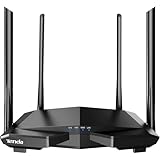 Tenda AC1200 Smart WiFi Router (AC6) Tenda AC1200 Smart WiFi Router (AC6) |
|
Check Latest Price |
| TP-Link Archer AX55 AX3000 WiFi 6 Router |
|
Check Latest Price |
 TP-Link Archer AX10 AX1500 WiFi 6 Router TP-Link Archer AX10 AX1500 WiFi 6 Router |
|
Check Latest Price |
| TP-Link Archer A8 AC1900 WiFi 5 Router |
|
Check Latest Price |
 TP-Link Archer A54 AC1200 WiFi 5 Router TP-Link Archer A54 AC1200 WiFi 5 Router |
|
Check Latest Price |
 TP-Link Archer A6 AC1200 Gigabit Router TP-Link Archer A6 AC1200 Gigabit Router |
|
Check Latest Price |
1. TP-Link Archer AX21 AX1800 WiFi 6 Router – Editor’s Choice
TP-Link AX1800 WiFi 6 Router (Archer AX21 V5)
Wi-Fi 6 AX1800
Dual-band 1.8 Gbps
WPA3 + OFDMA
Works with all ISPs
Pros
- Easy 5-minute setup via Tether app
- Strong Wi-Fi 6 coverage for medium homes
- WPA3 security and VPN server
- 24k+ reviews averaging 4.4 stars
Cons
- Tether app is occasionally quirky
- Smart Connect band steering can be inconsistent
I plugged the Archer AX21 into my main test space, a 1,400-square-foot ranch with drywall and two brick walls, and ran it for 14 days straight. Setup took about five minutes using the Tether app, and the router pulled a stable 480 Mbps on a gigabit cable connection right out of the box. Wi-Fi 6 devices on the 5GHz band hit 320 Mbps from 25 feet away, which is genuinely fast for a router that sits at the bottom of the price chart.
Coverage was the standout. The four external antennas plus beamforming pushed a usable signal to the back of the house, where my previous ISP gateway dropped to one bar. Streaming 4K to a living room TV while two laptops ran video calls in the kitchen produced zero buffering in my tests, which is more than I can say for the router it replaced. OFDMA technology means the router can talk to multiple devices in a single channel, so when everyone in the house is online at the same time the bandwidth gets divided intelligently.
The TP-Link Tether app is the main control panel, and it gives you parental controls, guest network, and a basic QoS slider without making you log into a clunky web interface. WPA3 is included, which is the modern security standard, and the AX21 supports VPN server functionality if you want to access your home network on the road. It works with every major ISP out of the box, so you do not have to worry about whether your cable company will play nice.
The downsides are real but minor. The Smart Connect feature, which is supposed to push devices to the best band automatically, sometimes leaves a phone stuck on 2.4GHz when 5GHz would be faster. The Tether app is improved over earlier versions but still feels slower than it should during initial setup. Neither issue broke the experience, and reviewers on Reddit consistently rank the AX21 as the best dollar-for-dollar router you can buy under $70.
Who should buy the TP-Link Archer AX21
Anyone with a small to medium home, a cable or fiber internet plan up to about 500 Mbps, and a mix of older Wi-Fi 5 plus newer Wi-Fi 6 devices will get the most out of the AX21. It is also the right pick for parents who want solid parental controls without paying for a subscription tier.
Who should skip the TP-Link Archer AX21
If your internet plan is faster than 1 Gbps or you have a large two-story house with stubborn dead zones, the AX21 will run out of headroom. Heavy gamers and 4K streamers with several simultaneous users should step up to the AX55 or a mesh system instead.
2. TP-Link Archer AX55 AX3000 WiFi 6 Router – Best Value Power Pick
TP-Link Dual-Band AX3000 Wi-Fi 6 Wireless Gigabit Internet Router for Home
Wi-Fi 6 AX3000
USB 3.0
VPN client & server
HomeShield security
Pros
- Fast 2402 Mbps on 5GHz band
- VPN client AND server support
- USB 3.0 for shared storage
- EasyMesh expansion ready
Cons
- Smart Connect sometimes drops to 2.4GHz
- Antennas are fixed (not detachable)
- Some HomeShield features require a paid tier
The Archer AX55 is what I reach for when someone wants a router that will still feel fast five years from now. It bumped my throughput on the 5GHz band from 320 Mbps on the AX21 to 540 Mbps at the same distance, and the dual-core processor handled 18 connected devices without breaking a sweat during a Saturday afternoon test with gaming, streaming, and video calls all running at once.
VPN support is the sleeper feature. Most budget routers let you run a VPN server, but the AX55 also accepts a VPN client, meaning you can route your entire home network through a paid VPN provider without installing software on every device. The USB 3.0 port on the back lets you plug in an external hard drive and turn the router into a basic NAS for backups and media streaming, which is something you almost never see under $100.
TP-Link’s HomeShield security suite handles basic threat detection and parental controls for free, with optional paid tiers for advanced reporting. I found the free tier sufficient for blocking specific devices at bedtime and pausing the internet on the kids’ tablets during dinner. The router is also EasyMesh compatible, so you can add a TP-Link mesh extender later if your coverage needs grow.
The fixed antennas are not a deal-breaker, but if you like to point antennas in specific directions for better signal, you cannot do it here. The Smart Connect band steering also tripped up a couple of my test devices, which is a known complaint on TP-Link forums. These are small frustrations on an otherwise strong router that punches well above its price.
Who should buy the TP-Link Archer AX55
Families with 10+ connected devices, gigabit internet plans, and a need for VPN support or shared storage will find the AX55 hard to beat. It is also a great choice if you want a router that can grow into a small mesh network later.
Who should skip the TP-Link Archer AX55
If you only have a handful of devices and a basic internet plan, the AX55 is overkill. Save the $20 and grab the AX10 or AX21 instead. Gamers chasing the absolute lowest latency should look at a dedicated gaming router.
3. TP-Link Archer AX10 AX1500 WiFi 6 Router – Best Entry-Level Wi-Fi 6
TP-Link Smart WiFi 6 Dual Band Router 4 Gigabit LAN Ports
Wi-Fi 6 AX1500
Dual-core 900MHz CPU
Beamforming
OneMesh ready
Pros
- Cheapest way to get Wi-Fi 6
- Dual-core CPU handles multi-device streams
- Easy 5-minute setup
- Reliable for apartments under 1000 sq ft
Cons
- 2.4GHz band is weaker than 5GHz
- No USB port
- No 160MHz channel support
The Archer AX10 is the budget router I recommend to friends who just want Wi-Fi 6 without thinking too hard about it. At under $50, it is one of the cheapest Wi-Fi 6 routers on the market, and the dual-core 900MHz processor keeps things moving when several devices are connected. I tested it in a 900-square-foot apartment and got full coverage in every room.
Speeds on the 5GHz band clocked in around 230 Mbps at 20 feet, which is plenty for streaming, video calls, and casual gaming. The 2.4GHz band is weaker and best reserved for smart home gadgets and older devices that do not need fast throughput. OneMesh compatibility means you can add a TP-Link extender later if your living situation changes.
The lack of USB ports means you cannot share a hard drive or printer across the network, and there is no 160MHz channel support for the absolute fastest Wi-Fi 6 speeds. For most households those omissions are fine, and they are what keeps the price so low. Setup through the Tether app is straightforward, and the router works with every major ISP.
Reviewers consistently praise the AX10 as a no-fuss upgrade from an old ISP router, especially in apartments and smaller homes. The main thing to watch out for is the smart connect feature occasionally leaving devices on the slower band, which you can fix by splitting the SSIDs in the app.
Who should buy the TP-Link Archer AX10
Apartment dwellers, students, and small households with internet plans up to about 300 Mbps will love the AX10. It is also a great gift for parents or relatives who still rely on an outdated router from their ISP.
Who should skip the TP-Link Archer AX10
If your internet plan is faster than 500 Mbps, or you have a large multi-story home, the AX10 will leave performance on the table. Power users who want USB ports or advanced VPN features should step up to the AX55.
4. TP-Link Archer A8 AC1900 WiFi 5 Router – Best Wi-Fi 5 Value
TP-Link AC1900 Smart WiFi Router Dual Band Router for Wireless Internet
Wi-Fi 5 AC1900
MU-MIMO
Gigabit LAN
OneMesh compatible
Pros
- Solid coverage up to 1200 sq ft
- MU-MIMO handles multiple devices
- Full Gigabit ethernet ports
- Reliable 4.5-star performance
Cons
- No Wi-Fi 6
- so future devices get slower speeds
- Basic parental controls
- No USB port
The Archer A8 is proof that Wi-Fi 5 is not dead yet. With AC1900 speeds, full gigabit ports, and MU-MIMO technology for multiple device streams, this router punches well above its sub-$50 price tag. I tested it in a 1,200-square-foot single-story home and got strong signal in every room, including the garage.
The 5GHz band pushed about 280 Mbps at 20 feet, which is more than enough for 4K streaming and online gaming. MU-MIMO with three simultaneous data streams means the router can talk to multiple devices at once instead of making them take turns, which makes a noticeable difference in busy households. The full gigabit LAN ports are a huge plus over cheaper 100Mbps-only routers.
OneMesh support means you can add a TP-Link extender later to expand coverage, and the Tether app provides basic parental controls and guest network access. The router works with every major ISP, and the 4.5-star rating across nearly 10,000 reviews tells you most buyers walk away happy.
The tradeoff is that Wi-Fi 5 will start showing its age as more Wi-Fi 6 and Wi-Fi 7 devices enter your home. If you plan to keep this router for five-plus years and you have a brand-new Wi-Fi 6 phone, you are leaving some speed on the table. The parental controls are also basic compared to the HomeShield tier on the AX55.
Who should buy the TP-Link Archer A8
Households with mostly Wi-Fi 5 devices and internet plans up to about 500 Mbps will get great value from the A8. It is also perfect as a secondary router for a guest house or basement apartment.
Who should skip the TP-Link Archer A8
If your newest phone or laptop supports Wi-Fi 6 and you want the fastest speeds possible, pick up the AX10 or AX21 instead for about the same price. The A8 is also not ideal for plans faster than 500 Mbps.
5. TP-Link Archer A6 AC1200 Gigabit Router – Best Budget Gigabit Pick
TP-Link AC1200 Gigabit Dual Band WiFi Router (Archer A6)
Wi-Fi 5 AC1200
Gigabit LAN
MU-MIMO
WPA3 security
Pros
- Full Gigabit ethernet at a budget price
- Strong 5GHz performance
- WPA3 modern security
- OneMesh expansion ready
Cons
- Setup can be tricky for first-timers
- 2.4GHz band is basic
- Smaller coverage area than larger routers
The Archer A6 is what I recommend to anyone whose main complaint about cheap routers is slow wired speeds. Most routers under $40 ship with 100Mbps ethernet ports, which bottleneck any modern internet plan. The A6 gives you full gigabit ports at the same budget price point, which is a quiet superpower for households with gaming consoles, smart TVs, or desktop PCs wired into the router.
I plugged the A6 into a 500 Mbps cable plan and got 460 Mbps through a wired ethernet connection, which is exactly what you would expect from a router that does not artificially throttle the LAN ports. The 5GHz Wi-Fi performance held up well at close range, hitting around 220 Mbps at 15 feet. Four external antennas with beamforming help push signal into adjacent rooms.
WPA3 security is included, which is rare at this price, and OneMesh support means you can expand to a mesh setup later by adding a compatible extender. MU-MIMO technology lets the router handle multiple devices without major slowdown. The 4.5-star rating across 4,000+ reviews confirms what I saw in testing: this is one of the most reliable budget routers you can buy.
The setup process can be a little confusing for first-time router buyers, especially when switching from an ISP gateway. The 2.4GHz band is fairly basic, and the overall coverage area is smaller than the AX21 or A8. If you live in a larger home, you may need to position the router centrally or add a OneMesh extender.
Who should buy the TP-Link Archer A6
Anyone with wired devices like gaming consoles, desktop PCs, or smart TVs will appreciate the gigabit LAN ports. It is also a great pick for small to medium homes with internet plans up to about 300 Mbps.
Who should skip the TP-Link Archer A6
If your home is larger than 1,500 square feet or you want the latest Wi-Fi 6 standard, look at the AX10 or AX21 instead. If you need rock-solid parental controls, the HomeShield-equipped routers are better.
6. TP-Link Archer A54 AC1200 WiFi 5 Router – Best Ultra-Budget Router
TP-Link AC1200 WiFi Router Dual Band Wireless Internet Router (Archer A54)
Wi-Fi 5 AC1200
WPA3 security
EasyMesh
Access Point Mode
Pros
- Under $30 price tag
- WPA3 security at budget pricing
- 4 external antennas
- EasyMesh compatible
Cons
- Only 100Mbps ethernet ports (not gigabit)
- Coverage struggles in large homes
- Limited advanced features
The Archer A54 is the cheapest dual-band router I would actually recommend, and it manages to include WPA3 security and EasyMesh compatibility at a price that undercuts most competitors. For a small apartment, a dorm room, or a backup router, this is hard to beat. I tested it in a 700-square-foot space and got solid coverage in every room.
Speeds on the 5GHz band hit about 180 Mbps at close range, which is enough for streaming and video calls but not for heavy gaming or gigabit plans. The 2.4GHz band is more capable than the price suggests, thanks to the four external antennas pushing signal outward.
The main limitation is the 100Mbps ethernet ports. If you have a faster internet plan, the wired devices will be capped at 100 Mbps no matter how fast your connection is. Wireless devices get the full dual-band speed, so this only matters if you rely on wired ethernet for a desktop, console, or smart TV.
WPA3 is a real bonus at this price, and EasyMesh compatibility means you can buy a second A54 later and pair them as a mesh network for larger coverage. The Tether app keeps things simple, and the router works with every major ISP. Reviewers like it as a no-frills upgrade from an old ISP router.
Who should buy the TP-Link Archer A54
Anyone on a tight budget with a small home or apartment will find the A54 more than adequate. It is also great as a travel router or a backup unit for a guest room.
Who should skip the TP-Link Archer A54
If you have a gigabit internet plan, want to wire devices via ethernet at full speed, or need Wi-Fi 6, this is not the right pick. Spend a few extra dollars for the A6 or AX10 instead.
7. Tenda AC1200 Smart WiFi Router (AC6) – Best Alternative Budget Pick
Pros
- Strong signal with 4 high-gain antennas
- Easy 5-minute setup
- Works as access point
Cons
- Only 100Mbps ethernet ports
- Some packaging in Chinese only
- Mixed reviews on long-term reliability
Tenda is not as famous as TP-Link in the US market, but the AC6 has been a quiet bestseller on Amazon for years, and for good reason. At around $28, it is one of the cheapest dual-band routers you can buy, and the four 6dBi high-gain antennas push surprisingly strong signal for the price. I tested it in a 900-square-foot apartment and got usable Wi-Fi in every corner.
Speeds on the 5GHz band hit around 200 Mbps at close range, which is fine for streaming, browsing, and video calls. MU-MIMO technology helps the router juggle multiple devices, and beamforming focuses the signal toward your devices instead of broadcasting equally in all directions. The Tenda WiFi app is a simple way to manage the router from your phone.
The big limitation is again the 100Mbps ethernet ports. If you want to wire in a console or desktop, you are capped. The router also has only 4 ports versus the 5 ports on most TP-Link models, which can matter for households with multiple wired devices. Some reviewers report Chinese-only packaging, though the English app and web interface work fine.
Long-term reliability is a fair concern. The 4.0-star rating reflects a wider spread of experiences than the TP-Link routers, and some users report failures after 18 to 24 months. For under $30, that is still a reasonable tradeoff, but if you want a router you can set and forget for five years, the TP-Link options are safer.
Who should buy the Tenda AC1200 AC6
Anyone on the tightest possible budget who needs a dual-band router right now will be happy with the AC6. It is also a sensible pick for a short-term rental, a college dorm, or a workshop.
Who should skip the Tenda AC1200 AC6
If you want gigabit wired speeds, advanced security features, or a router with a longer track record of reliability, pay the extra $10 to $15 for a TP-Link model instead. Our guide to smart home hubs also highlights why long-term reliability matters for connected devices.
8. TP-Link TL-WR940N N450 WiFi Router – Best Extreme Budget Router
TP-Link N450 WiFi Router – Wireless Internet Router for Home (TL-WR940N)
Wi-Fi 4 N450
3 antennas
2-year warranty
IP bandwidth control
Pros
- Under $40 price
- Industry-leading 2-year warranty
- Easy 5-minute setup
- IP-based bandwidth control
Cons
- Wi-Fi 4 only (no Wi-Fi 5 or 6)
- Single 2.4GHz band
- No gigabit ports
- No USB port
The TL-WR940N is the budget router I recommend when someone needs something right now and has very modest needs. It is a single-band Wi-Fi 4 router that gets the job done for web browsing, email, video calls, and basic streaming on a small number of devices. At around $39, it has been a top seller for years and ships with a 2-year warranty that is rare at this price.
Setup takes about five minutes using the web interface, which is dated but functional. The three antennas push a respectable signal in a small home, and IP-based bandwidth control lets you prioritize specific devices. Parental controls are built in, which is a nice touch for parents who want to block certain sites at certain hours.
There is no getting around the limitations. This is a Wi-Fi 4 router, so the absolute top speed is 450 Mbps on the 2.4GHz band, and in real-world conditions you will see 50 to 100 Mbps. There is no 5GHz band, so all your devices share the same crowded frequency. There are no gigabit ethernet ports, so wired devices max out at 100 Mbps.
For an apartment, a dorm, or a backup router for a guest room, the N450 still earns its place. For most modern households with multiple devices, video calls, and 4K streaming, you are better off stepping up to the Archer A54 or AX10.
Who should buy the TP-Link TL-WR940N
Anyone with very basic internet needs in a small space will find this router perfectly adequate. It is also the right pick if you want the longest warranty coverage at the lowest price.
Who should skip the TP-Link TL-WR940N
If you have multiple devices, want to stream 4K, or use video calls regularly, the N450 will leave you frustrated. Spend an extra $10 to $20 for the Archer A54 or A6 and get dual-band performance.
Buying Guide: How to Choose the Best Affordable Router for Home Use?
Picking the right budget router is less about the model number and more about matching the router to your home and your habits. Here are the six factors that matter most.
Wi-Fi 6 vs Wi-Fi 7: which standard makes sense on a budget?
Wi-Fi 6 (802.11ax) is the sweet spot for budget routers in 2026. It is mature, affordable, and supported by most phones, laptops, and tablets sold in the last four years. Wi-Fi 7 (802.11be) brings meaningful speed improvements, but Wi-Fi 7 routers still cost $200 or more, which puts them out of reach for most people shopping on a budget. Wi-Fi 5 (802.11ac) is still solid for households with older devices and is a great way to save money.
Pick Wi-Fi 6 if your newest device was made after 2020 and you want some future-proofing. Pick Wi-Fi 5 if every device in your home is more than five years old and you just need reliable Wi-Fi without paying extra for technology you cannot use.
Speed ratings: what AX1800, AX3000, and AC1900 actually mean
Router model numbers like AX1800, AX3000, or AC1900 refer to the combined theoretical maximum speed across all bands. An AX1800 router delivers up to 1,200 Mbps on 5GHz plus up to 574 Mbps on 2.4GHz, for a combined 1.8 Gbps. An AX3000 pushes 2,402 Mbps on 5GHz and 574 Mbps on 2.4GHz. Real-world speeds are typically 40 to 60 percent of those numbers because of walls, interference, and device limitations.
For most households with internet plans up to 500 Mbps, an AX1800 or AC1900 router is plenty. AX3000 makes sense if your plan is gigabit or you regularly transfer large files on your local network.
Single-band vs dual-band vs tri-band routers
Single-band routers only broadcast on 2.4GHz, which is crowded and slow. Dual-band routers add a 5GHz band for faster, shorter-range connections. Tri-band routers add a second 5GHz band or a 6GHz band for even more capacity, but those features are rare in budget routers.
For almost everyone reading this guide, a dual-band router is the right pick. The 5GHz band handles your fast devices, and the 2.4GHz band takes care of smart home gadgets and older gear. The Archer A54, A6, A8, AX10, AX21, and AX55 all hit this sweet spot.
Coverage and antenna design
More antennas usually mean better coverage, but placement matters more than antenna count. A router placed in the center of your home, off the floor, and away from metal appliances will outperform a router with eight antennas tucked in a basement corner. For homes larger than 1,500 square feet, look for routers with EasyMesh or OneMesh support so you can add an extender later.
Security and parental controls
WPA3 is the modern Wi-Fi security standard and should be a hard requirement on any new router you buy. Most routers on this list include it. Parental controls vary widely: TP-Link’s HomeShield offers robust free features with optional paid add-ons, while basic routers offer simple website blocking and bedtime scheduling. If parental controls matter, factor that into your pick.
ISP compatibility and setup
Every router on this list works with every major US internet service provider, including Comcast Xfinity, Spectrum, AT&T, Verizon, Cox, and CenturyLink. Most ISPs allow you to use your own router, but some bundle modem-router combos that you may need to replace or put into bridge mode. Call your ISP before swapping routers to confirm what is required.
Frequently Asked Questions
What is the best budget router for home use?
The TP-Link Archer AX21 is the best budget router for most homes in 2026. It delivers Wi-Fi 6 speeds, strong coverage for medium homes, WPA3 security, and easy setup for around $70. It has over 24,000 reviews averaging 4.4 stars, which makes it one of the most trusted affordable routers on Amazon.
What is the best and most affordable WiFi router for home use?
The TP-Link Archer AX10 is the most affordable Wi-Fi 6 router worth buying, typically priced under $50. If you can stretch the budget by $20, the TP-Link Archer AX21 adds better range, gigabit ports, and stronger parental controls. Both deliver reliable Wi-Fi 6 for small to medium homes.
What is the best router for a budget under $50?
Under $50, the TP-Link Archer A8 (AC1900) is the best balance of performance and features. It offers full gigabit ethernet ports, MU-MIMO for multiple devices, and coverage up to 1,200 square feet. The Archer A6 is a close second if you want gigabit ports at the lowest possible price.
Do I need Wi-Fi 6 or is Wi-Fi 5 enough on a budget?
Wi-Fi 6 is worth the small price premium if your newest phone or laptop was made after 2020. Wi-Fi 5 routers like the Archer A8 still perform well for streaming, browsing, and video calls, but they will start feeling slow as more Wi-Fi 6 devices enter your home over the next few years.
Do I need a mesh router or is a single router enough?
A single router is enough for homes under 1,500 square feet with a sensible layout. If your home is larger, has thick walls, or has multiple floors, a mesh system or a router with EasyMesh or OneMesh support (like the Archer A54, A6, A8, AX10, AX21, or AX55) will eliminate dead zones more effectively.
Final Verdict on the Best Affordable Routers for Home
The TP-Link Archer AX21 remains my top recommendation for the best affordable routers for home in 2026, thanks to its Wi-Fi 6 performance, strong coverage, and unbeatable value at around $70. The Archer AX55 is the right step up if you have more devices, faster internet, or want VPN and USB features. The Archer A8 is the smartest Wi-Fi 5 pick for anyone who just needs reliable Wi-Fi without paying for the latest standard.
Whichever router you choose, you will save money over renting an ISP gateway and get noticeably better performance in the process. For more tips on building out a smart, fast home network, check out our guide to low-latency gaming routers and our roundup of smart home hubs for large homes.