
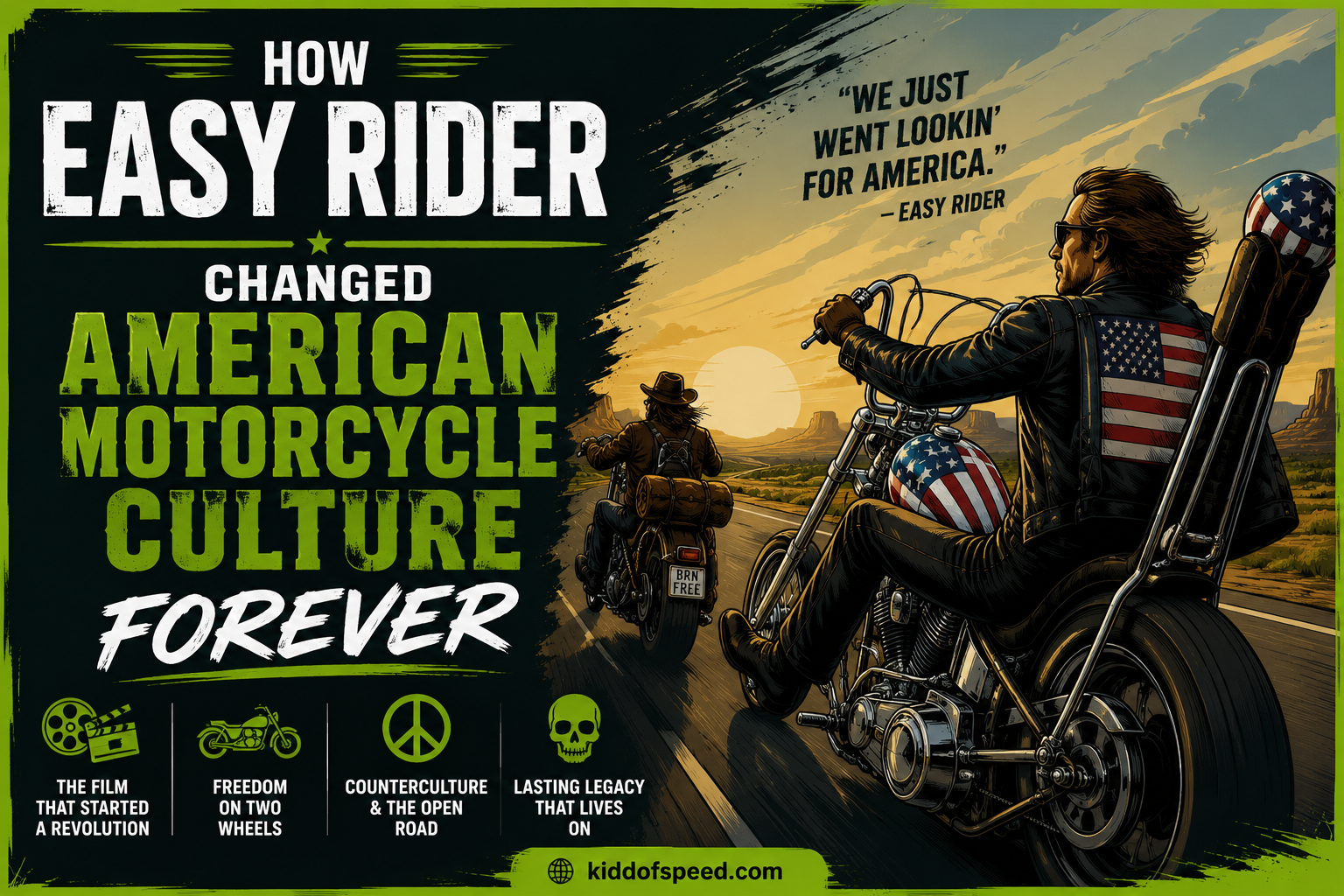
When Dennis Hopper and Peter Fonda fired up their chromed Harley-Davidson choppers on that dusty highway in 1969, they did not just make a movie. They ignited a cultural revolution that would reshape American motorcycle culture for generations to come. Easy Rider arrived at the perfect moment, capturing the restless spirit of a counterculture movement while transforming how mainstream America viewed motorcycles, motorcyclists, and the freedom of the open road.
In this guide, I will walk you through exactly how Easy Rider changed motorcycle culture forever. We will explore the state of motorcycling before 1969, dive into the film’s impact on bike customization and sales, examine how it shifted public perception of riders, and look at why its influence still echoes through every chopper rally and motorcycle gathering today.
Table of Contents
- How Easy Rider Changed American Motorcycle Culture Forever: The Complete Story
- American Motorcycle Culture Before Easy Rider
- The Film That Captured a Generation
- The Bikes: Captain America and the Chopper Revolution
- The Chopper Customization Boom
- The Harley-Davidson Renaissance
- How Easy Rider Changed the Biker Image
- Fashion, Style, and the Easy Rider Look
- Real Biker Perspectives: Then and Now
- The Soundtrack That Became an Anthem
- The Lasting Legacy of Easy Rider
- Frequently Asked Questions
- Conclusion: How Easy Rider Changed American Motorcycle Culture Forever
How Easy Rider Changed American Motorcycle Culture Forever: The Complete Story
Easy Rider did not merely document motorcycle culture. It fundamentally altered its trajectory in seven distinct ways that we will explore throughout this article.
American Motorcycle Culture Before Easy Rider
To understand Easy Rider’s impact, you first need to grasp what American motorcycle culture looked like before 1969. The picture was far different from what most people imagine today.
In the 1950s and early 1960s, motorcycling in America carried a heavy stigma. The public largely associated motorcycles with outlaw gangs, criminal activity, and social deviance. Films like The Wild One (1953) starring Marlon Brando had cemented the image of motorcyclists as rebellious troublemakers who threatened mainstream society.
Harley-Davidson, the iconic American motorcycle manufacturer, was actually struggling during this period. The company faced intense competition from British and Japanese imports, and its reputation had suffered from associations with criminal motorcycle clubs. Sales were stagnant, and the brand desperately needed reinvention.
The typical motorcyclist of the early 1960s was either a dedicated enthusiast willing to brave social stigma or someone drawn to the outlaw image itself. Mainstream acceptance seemed distant, and the idea of motorcycling as a legitimate lifestyle choice for average Americans was practically unthinkable.
The Film That Captured a Generation
Easy Rider premiered in July 1969, just one month before the Woodstock music festival would define the summer of love’s final crescendo. Directed by Dennis Hopper, who also starred alongside Peter Fonda and Jack Nicholson, the film told the story of two counterculture bikers traveling from Los Angeles to New Orleans.
The movie cost less than $400,000 to make but grossed over $60 million worldwide. More importantly, it spoke directly to a generation questioning authority, rejecting materialism, and searching for authentic experiences. The film’s themes of freedom, alienation, and the death of the American dream resonated with young audiences who saw themselves reflected in Wyatt and Billy’s journey.
What made Easy Rider different from previous motorcycle films was its authenticity. Hopper and Fonda were not just actors playing bikers. They lived the lifestyle, understood the culture, and captured something genuine about the motorcycle experience that Hollywood had never portrayed before.
The Bikes: Captain America and the Chopper Revolution
The motorcycles in Easy Rider became just as famous as the actors who rode them. These were not stock factory bikes. They were radical custom creations that would inspire a nationwide chopper movement.
The Captain America bike, ridden by Peter Fonda’s character Wyatt, remains one of the most recognizable motorcycles in cinema history. Built by African-American bike builder Ben Hardy and his partner Cliff Vaughs, this machine started life as a 1952 Harley-Davidson FL Hydra-Glide panhead. The builders stripped it to essentials, added chromed raked forks, extended the front end, installed ape-hanger handlebars, and painted it with the iconic stars-and-stripes motif.
Dennis Hopper’s bike, ridden by his character Billy, followed similar design principles. Both machines featured the signature chopper elements that would become standard: stretched frames, sissy bars, high-mounted handlebars, teardrop gas tanks, and minimalistic styling that emphasized form over function.
These bikes were not practical transportation. They were rolling sculptures, expressions of individuality, and statements of rebellion. Every component was chosen for visual impact rather than comfort or convenience. That was exactly the point, and that philosophy would drive the chopper movement for decades.
The Chopper Customization Boom
After Easy Rider hit theaters, something remarkable happened across America. Motorcycle enthusiasts stopped wanting stock factory bikes and started dreaming of custom creations.
Chopper shops began opening in cities and small towns nationwide. Backyard builders started experimenting with frame modifications, fork extensions, and radical paint jobs. The do-it-yourself ethic that would later define punk rock and hacker culture first found expression in garage workshops where ordinary people learned to weld, fabricate, and customize their rides.
The chopper aesthetic spread quickly. Extended front forks, sometimes stretching six feet or more from the steering head to the front axle, became the signature look. Ape-hanger handlebars rose high above the rider’s head, creating a distinctive silhouette that screamed rebellion. Teardrop gas tanks, sissy bars, and plenty of chrome completed the transformation from transportation to personal statement.
Magazines like Easyriders, which launched in 1970, documented this burgeoning culture and provided how-to guides for aspiring builders. The chopper movement became a genuine subculture with its own heroes, styles, and philosophies that persist today at events like the Sturgis Motorcycle Rally and Daytona Bike Week.
The Harley-Davidson Renaissance
No company benefited more from Easy Rider than Harley-Davidson. The struggling Milwaukee manufacturer suddenly found itself at the center of American popular culture, and the effects on its business were dramatic.
Harley-Davidson sales surged throughout the 1970s as the Easy Rider generation came of riding age. The company’s panhead and shovelhead engines, once considered outdated technology, became sought-after platforms for custom builds. Harley went from facing bankruptcy to becoming a symbol of American manufacturing pride.
The film’s influence extended beyond immediate sales. Harley-Davidson embraced its counterculture image, marketing its motorcycles as vehicles of freedom and rebellion rather than mere transportation. This branding strategy, born from Easy Rider’s cultural moment, would define the company’s marketing for the next five decades.
By 2026, Harley-Davidson had become one of the most recognized brands in the world. Its logo appears on everything from t-shirts to dog collars, and the company’s motorcycles remain the default choice for anyone seeking to capture that Easy Rider spirit.
How Easy Rider Changed the Biker Image
Perhaps Easy Rider’s most significant achievement was transforming how Americans viewed motorcyclists. The film did not eliminate the outlaw biker stereotype entirely, but it added layers of nuance that made motorcycling accessible to mainstream audiences.
Before 1969, motorcyclists were widely perceived as criminals, degenerates, or social misfits. Easy Rider presented a different narrative. Wyatt and Billy were counterculture heroes, seekers of freedom who questioned materialism and rejected conventional society’s constraints. They were not villains. They were protagonists audiences could root for.
Jack Nicholson’s character George, the alcoholic lawyer who joins the journey, provides the film’s most direct commentary on motorcycle culture’s transformation. His speech about freedom, delivered around a campfire, articulated values that would define motorcycling for generations: “You know, this used to be a hell of a good country. I can’t understand what’s gone wrong with it.”
After Easy Rider, motorcycling became associated with authenticity, adventure, and spiritual seeking rather than criminal activity. The biker image shifted from threatening to romantic, from dangerous to liberating. This repositioning opened motorcycling to demographics that would never have considered riding before, including professionals, artists, and middle-class Americans seeking escape from suburban conformity.
Fashion, Style, and the Easy Rider Look
The visual impact of Easy Rider extended far beyond motorcycles themselves. The film created an entire aesthetic that influenced fashion, style, and popular culture for decades.
Leather jackets, once associated primarily with aviation and motorcycling subcultures, became mainstream fashion staples. The fringe jackets worn by Wyatt and Billy inspired countless imitations. Denim, boots, and aviator sunglasses became the uniform of rebellion.
The motorcycle itself became a fashion accessory. Owning a chopper was not just about transportation. It was about projecting an image of freedom and individuality. This aesthetic influenced everything from advertising photography to music videos to automotive design.
Even today, the Easy Rider look persists in motorcycle culture. Visit any bike night or rally, and you will see echoes of Wyatt and Billy’s style in the leather, denim, and customized machines that fill the parking lot.
Real Biker Perspectives: Then and Now
I spent time reading through motorcycle forums and discussion boards to understand how actual riders view Easy Rider’s legacy. The perspectives I found reveal both appreciation for the film’s impact and recognition of its limitations.
Older riders who lived through the 1969 release describe the film as genuinely transformative. One rider in his seventies recalled seeing Easy Rider in a theater and immediately knowing he needed a motorcycle. “It wasn’t just a movie,” he wrote. “It was a permission slip to be different.”
Modern riders often express more complicated feelings. Many appreciate the film’s cultural significance while acknowledging its romanticized portrayal of motorcycle life. “The funniest thing about the bikes in Easy Rider,” one Reddit user noted, “has always been how EVERYONE wanted the Capt America bike.”
Some riders critique the film for creating unrealistic expectations about freedom and rebellion. They point out that real motorcycle culture requires mechanical knowledge, safety awareness, and community connections that Easy Rider largely ignores. Others note the irony of a film celebrating anti-materialism becoming a massive commercial success.
Despite these critiques, virtually every rider acknowledges Easy Rider’s massive influence on motorcycle culture. Without it, motorcycling might never have achieved mainstream acceptance in America.
The Soundtrack That Became an Anthem
No discussion of Easy Rider’s cultural impact would be complete without mentioning its soundtrack, particularly Steppenwolf’s “Born to Be Wild.” The song, which plays during the film’s opening credits, became the unofficial anthem of motorcycling.
Released in 1968, “Born to Be Wild” perfectly captured the spirit of freedom and rebellion that defined both the counterculture and motorcycle movements. Its heavy guitar riffs and lyrics about “heavy metal thunder” created an indelible association between rock music and motorcycling that persists today.
The song’s cultural impact was immediate and lasting. It reached number two on the Billboard Hot 100 and has been featured in countless films, commercials, and motorcycle events ever since. For many non-riders, “Born to Be Wild” remains their primary association with motorcycle culture.
The Lasting Legacy of Easy Rider
More than 55 years after its release, Easy Rider continues to influence motorcycle culture in ways both obvious and subtle. The film’s DNA can be found in every custom bike show, every motorcycle rally, and every rider who hits the open road seeking freedom.
The chopper aesthetic that Easy Rider popularized remains vibrant today. Custom bike builders still create machines inspired by the Captain America bike. Events like the Born-Free Motorcycle Show in California celebrate the chopper culture that Easy Rider launched.
Harley-Davidson’s marketing continues to draw on Easy Rider’s imagery. The company’s advertising emphasizes freedom, rebellion, and the open road in ways that directly echo the film’s themes. When Harley markets its motorcycles as vehicles for personal liberation, it is selling the dream that Easy Rider created.
The film also influenced generations of filmmakers. From Mad Max to Sons of Anarchy, creators continue exploring the themes and imagery that Easy Rider established. The road movie genre, which Easy Rider helped define, remains a staple of American cinema.
Most importantly, Easy Rider gave motorcycling a mythology that endures. Every rider who talks about “the freedom of the road” or describes their motorcycle as an expression of individuality is speaking language that Easy Rider introduced to American culture.
Frequently Asked Questions
How did Easy Rider influence American culture?
Easy Rider captured the spirit of 1960s counterculture and transformed public perception of motorcyclists from outlaws to counterculture heroes. The film popularized chopper customization, made Harley-Davidson motorcycles culturally iconic, influenced fashion trends with its leather and denim aesthetic, and reflected the era’s generational conflicts and social tensions. Its impact extended beyond motorcycling to influence Hollywood filmmaking, music, and American attitudes toward freedom and rebellion.
What impact did Easy Rider have on motorcycle sales?
Easy Rider triggered a massive boom in motorcycle sales throughout the 1970s. Harley-Davidson sales increased significantly as the film made their motorcycles desirable status symbols. The chopper customization industry exploded, with custom bike shops opening nationwide. Mainstream Americans who had never considered motorcycling before were inspired to purchase bikes, fundamentally expanding the motorcycle market beyond its previous outlaw and enthusiast demographics.
What bikes were used in Easy Rider?
The two main motorcycles were custom-built choppers created from 1952 Harley-Davidson FL Hydra-Glide panhead engines. Peter Fonda’s Captain America bike featured the iconic stars-and-stripes paint job, chromed raked forks, ape-hanger handlebars, and a teardrop gas tank. Dennis Hopper’s Billy bike followed similar design principles. Both machines were built by African-American bike builder Ben Hardy and his partner Cliff Vaughs, though their contributions were largely uncredited at the time.
Why was Easy Rider important to the 1960s?
Easy Rider captured a pivotal moment in American cultural history when the 1960s counterculture movement reached its peak. Released in July 1969, just before Woodstock, the film reflected the era’s ideals of freedom, anti-establishment sentiment, and spiritual seeking while also acknowledging the darkness and violence lurking beneath the surface. It bridged the gap between mainstream cinema and counterculture sensibilities, influencing the New Hollywood movement and giving voice to a generation questioning traditional American values.
Conclusion: How Easy Rider Changed American Motorcycle Culture Forever
Easy Rider transformed American motorcycle culture by reimagining what motorcycling could mean. Before 1969, motorcycles were primarily associated with outlaws and social deviants. After Easy Rider, they became symbols of freedom, individuality, and the open road.
The film’s impact touched every aspect of motorcycle culture. It launched the chopper customization boom, revitalized Harley-Davidson, shifted public perception of riders, created lasting fashion trends, and gave motorcycling a mythology that still resonates today. The image of Peter Fonda and Dennis Hopper riding their stars-and-stripes choppers became an American icon as recognizable as any flag or monument.
Whether you are a dedicated rider, a casual enthusiast, or simply someone interested in American cultural history, understanding Easy Rider’s impact is essential. The film did not just document motorcycle culture. It created the motorcycle culture that we know today.
More than half a century later, every time someone fires up a Harley and points it toward the horizon, they are continuing the journey that Wyatt and Billy started in 1969. That is the true measure of how Easy Rider changed American motorcycle culture forever.